Local Government Magnolia Springs
Forestry Officials From Across the Southeast Tour Baldwin County’s Future Magnolia River Wetlands and Longleaf Project
Baldwin County planners and forestry officials from across the Southeast toured the 130-acre Magnolia River restoration site, where former dirt pits are set to become constructed wetlands, detention ponds and longleaf pine habitat.
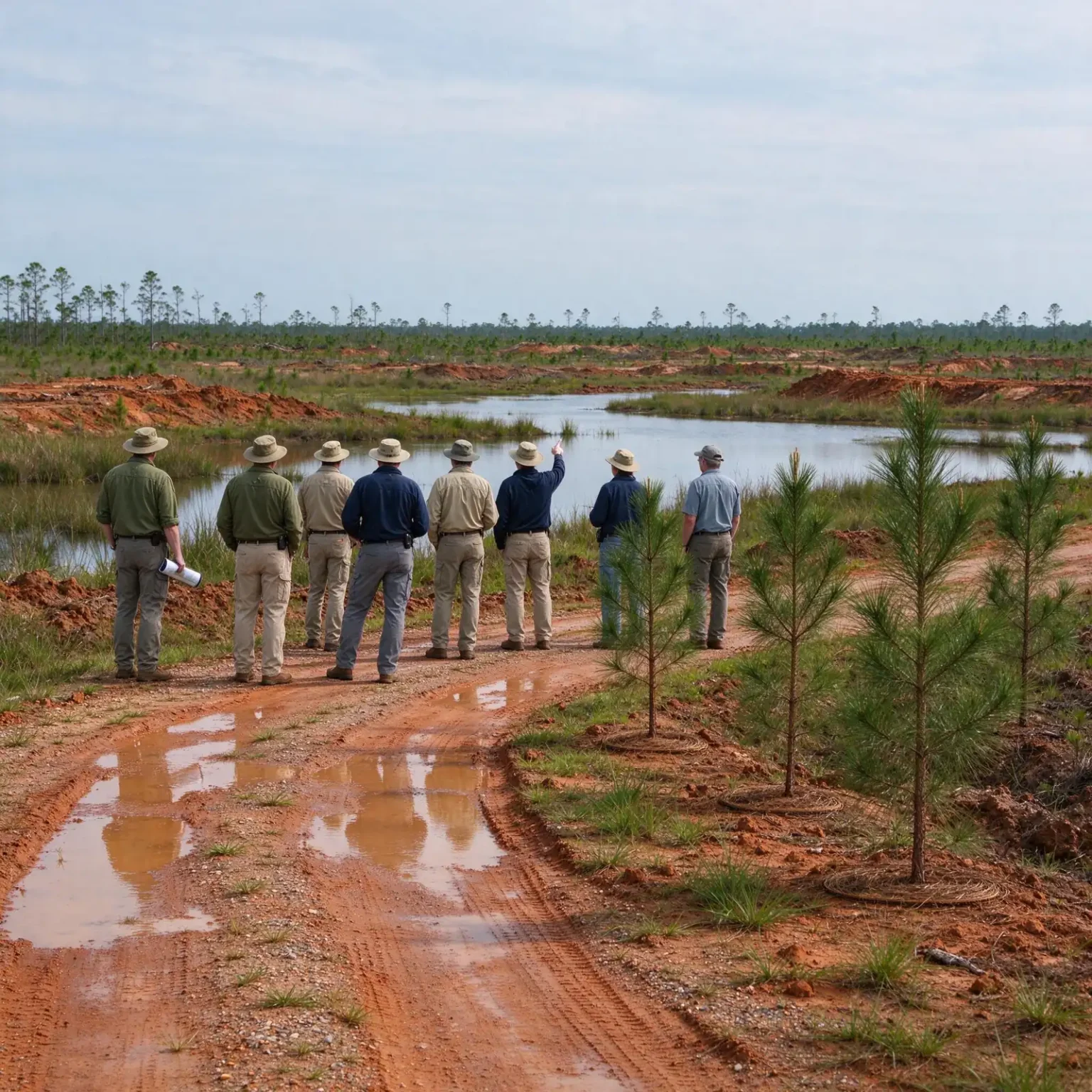
BALDWIN COUNTY, Ala. — A set of old dirt pits in south Baldwin County drew forestry officials from three states recently, as county planners showed off plans to turn the site into wetlands and longleaf pine forest.
Members of Baldwin County’s Planning Department joined forestry officials from across the Southeast for a tour of the future Magnolia River Watershed Constructed Wetlands and Habitat Restoration Project, according to an update from the Baldwin County Commission.
The visit focused on restoration plans for the county’s 130-acre property, including the planting of up to 40 acres of longleaf pine and other habitat improvements.
Representatives from the Alabama Forestry Commission, the Mississippi Forestry Commission, the Florida Forest Service and the U.S. Forest Service Southern Research Station attended the tour.
From dirt pits to wetlands
County records offer a fuller picture of the project. In 2022, according to a September commission agenda item, the county received $4 million in Gulf of Mexico Energy Security Act funding from the Alabama Department of Conservation and Natural Resources to buy several historic borrow pits, which are places where dirt was dug out, and to design a flood mitigation and habitat restoration project.
The properties were purchased and engineering plans developed using a portion of that money, with the rest set aside for construction.
The plan is to convert the pits and the land around them into constructed wetlands and regional detention ponds. County documents list three goals: improving water quality, restoring habitat and reducing flooding in the Magnolia River and Weeks Bay watersheds.
Who’s paying, and who’s in charge
On Sept. 1, the Baldwin County Commission took up a construction agreement with the Dauphin Island Sea Lab and the Mobile Bay National Estuary Program. County records list the item as passed on the commission’s consent agenda.
Under the arrangement, the estuary program offered to administer the project and to provide about $3.2 million in National Fish and Wildlife Foundation money to help with construction. Grant appropriations are to fund the work, with the estuary program invoicing the county for grant funds at the appropriate stages.
The agreement runs from Sept. 1, 2026, through Sept. 1, 2029.
Why longleaf pine matters
The longleaf component explains why foresters are paying attention. Longleaf pine forests once dominated much of the Southeast but have declined dramatically over the past century and a half, and restoration has become a regional priority. America’s Longleaf Restoration Initiative, a broad conservation effort, set a goal of restoring 8 million acres across the tree’s historic range, according to The Conservation Fund.
Up to 40 of the site’s 130 acres would be planted in the species, which would place a restored longleaf stand alongside the constructed wetlands and ponds.
Project at a glance
- Project: Magnolia River Watershed Constructed Wetlands and Habitat Restoration Project
- Site: 130 acres owned by Baldwin County, including historic borrow pits
- Plan: Constructed wetlands, regional detention ponds, up to 40 acres of longleaf pine and other habitat improvements
- Goals: Better water quality, restored habitat and less flooding in the Magnolia River and Weeks Bay watersheds
- Funding: $4 million in GOMESA funds awarded in 2022, part of which went to land and design; about $3.2 million in National Fish and Wildlife Foundation funds through the Mobile Bay National Estuary Program
- Agreement term: Sept. 1, 2026, to Sept. 1, 2029
The county’s update did not include a construction start date. Residents can follow commission agendas through the Baldwin County Commission’s website.