

Three weeks after a Tampa newspaper report set off a wave of speculation that the Senior Bowl might abandon Mobile for Florida, the organization that owns the college all-star game moved to shut the story down entirely. Vic Lott, chairman of the Mobile Arts and Sports Association (MASA), the private nonprofit that has run the Senior Bowl since its founding, issued a point-by-point rebuttal in mid-April 2009 aimed squarely at what he described as a firestorm of falsehoods and rumor mongering that had taken hold in Mobile.
The statement, delivered in response to questions from local media, arrived at an awkward moment for city leaders. Mayor Sam Jones told reporters he had not been aware that the Senior Bowl needed additional money from the city, even though Jones held a seat on the Senior Bowl’s own board and the organization had already filed a formal funding request with the City Council through the city’s CitiSmart process. The disconnect between the mayor’s public comments and his position on the board did little to calm nerves in a city that had built six decades of civic identity around the game.
The Tampa Claim
At the center of the controversy was a report in the Tampa Tribune stating that the Tampa Sports Commission had begun negotiating exclusively to bring the Senior Bowl to Tampa, home of the NFL’s Buccaneers and Raymond James Stadium. The Senior Bowl organization denied the characterization outright. Tampa’s pitch was an obvious one on paper: a modern, NFL-caliber stadium, a market already steeped in professional football infrastructure, and a metro area eager to add another marquee sporting event to its calendar. For Mobile, a city roughly a third the size of Tampa without a direct NFL market nearby, the comparison stung even before anyone confirmed whether serious talks were happening at all.
Lott’s statement pushed back point by point. According to MASA, neither the Senior Bowl organization nor anyone acting on its behalf had been in contact with anyone connected to Tampa about anything. The organization said it had, in fact, been waiting on Mobile’s own institutions to act: a new lease and operating agreement with the Ladd-Peebles Stadium Board, a process MASA said had been officially opened in early December 2008 when the board’s legal counsel first reached out. MASA said it subsequently confirmed its interest in receiving a new proposal with a member of the City Council, and it rejected any suggestion that it had asked to slow down or delay the negotiation. The organization said it remained ready to devote its full attention to working through a new contract with the Stadium Board as soon as a proposal arrived.
On the funding question, MASA acknowledged what was already public: that it had gone through the city’s CitiSmart grant process, including a formal presentation to the City Council, in pursuit of additional support over the previous two budget cycles. But the organization noted that it had done so at the specific suggestion of city officials, who had directed MASA toward that process as the proper channel for requesting municipal dollars. In other words, MASA’s position was that it had followed the rules the city itself had laid out, only to watch the request become fodder for a narrative about the game threatening to leave town.
A Six-Decade Fixture Under Pressure
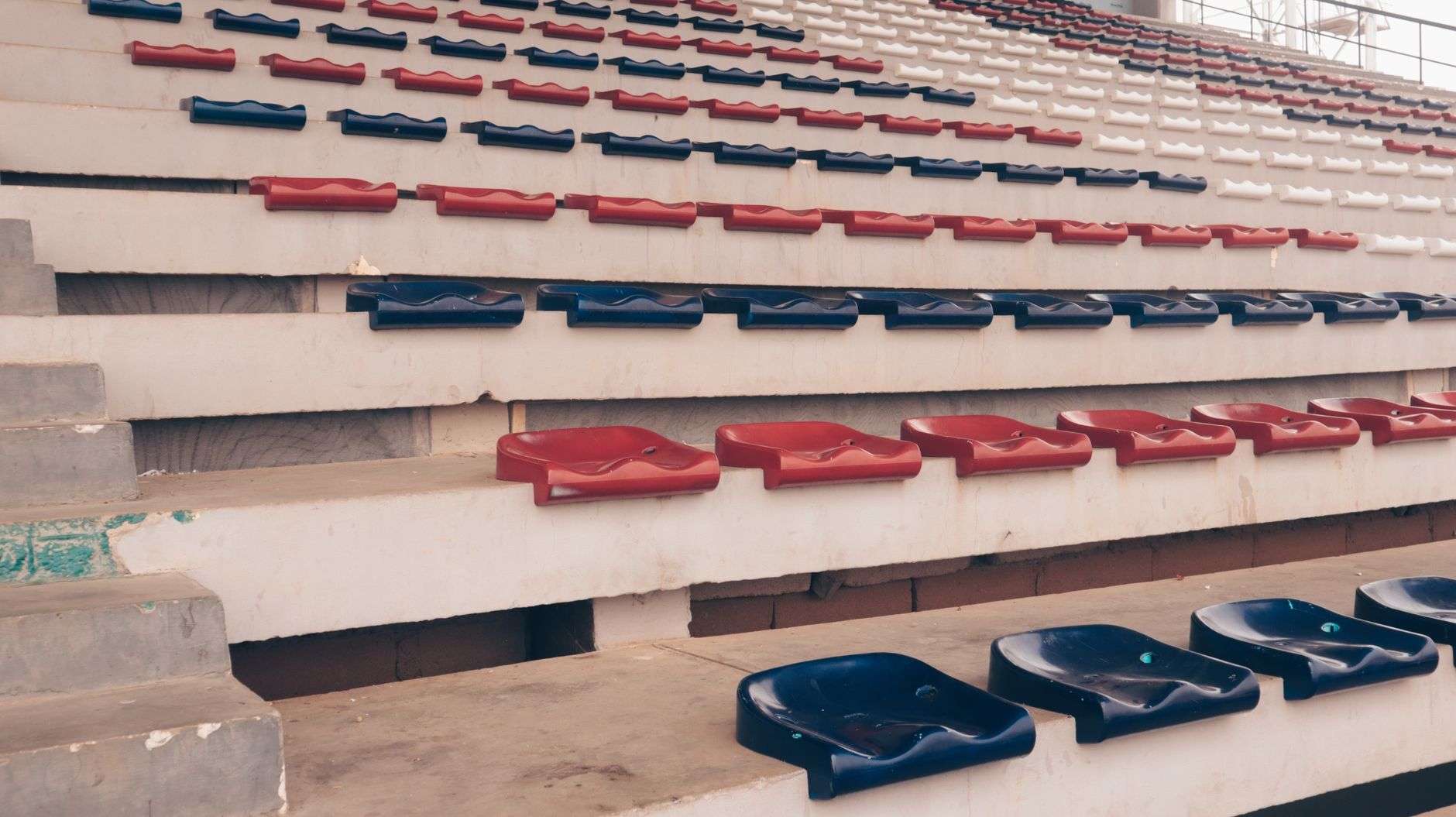
The Senior Bowl had been played in Mobile since 1951, a year after its inaugural staging in Jacksonville, Florida, making the spring 2009 dispute a threat to one of the longest continuously running traditions in the city’s sporting history. For most of that run, the game was held at Ladd-Peebles Stadium, a facility built in 1948 that had also hosted Alabama Crimson Tide football, the Mobile Alabama Bowl, and the Alabama-Mississippi All-Star Classic over the decades. By 2009, the stadium was more than sixty years old, and its aging infrastructure had become part of the underlying tension: Mobile had invested in upgrades over the years, including a shift to an artificial FieldTurf surface in 2004 and renovations that continued into 2009, but the facility still lagged behind the newer, NFL-caliber stadiums that competing cities could offer.
The Senior Bowl’s value to Mobile went well beyond the three-hour game itself. Bowl week traditionally combines a pre-draft evaluation camp where NFL scouts, coaches, and general managers assess prospects in practice settings, a gathering of NFL personnel that functions almost as an informal league meeting, a run of charitable and social events, and a large-scale community tailgate. Losing any single piece of that ecosystem, even without the game officially relocating, would have represented a significant blow to hotel occupancy, restaurant traffic, and the city’s standing in the pre-draft evaluation calendar that NFL teams rely on every winter.
How Cities Typically Handle Stadium and Event Negotiations
Disputes like the one that played out between Mobile and the Senior Bowl organization in the spring of 2009 are common in the world of municipal sports facilities. Stadium leases and event-hosting agreements are usually negotiated on multi-year cycles, and it is standard practice for a facility’s governing board, whether it is a stadium authority, a parks and recreation department, or, as in Mobile’s case, a stadium board with its own legal counsel, to formally reopen negotiations months before a lease expires. It is equally common for the tenant organization, particularly a nonprofit event operator like MASA, to seek public funding to offset costs tied to marketing, hospitality, and operations, especially when a signature event generates measurable tourism revenue for the host city.
What often turns a routine negotiation into a public controversy is the appearance of a competing suitor, real or rumored, during the same window. Cities and event organizers alike are aware that a relocation threat, whether genuine or simply the byproduct of ordinary market interest, can function as leverage in stalled lease talks. That dynamic is precisely what MASA’s statement sought to head off: by denying any contact with Tampa while simultaneously confirming that it was still waiting on the city’s own Stadium Board to deliver a new contract proposal, the organization tried to draw a clear line between an outside rumor it said had no basis and an internal Mobile negotiation that it said was proceeding on the city’s own timetable.
City Council Divided on the Money
Behind the Tampa rumor sat a more mundane, and in some ways more consequential, fight over city dollars. MASA had gone before the City Council seeking additional funding through the CitiSmart process in each of the two years preceding the controversy, without success. That the Senior Bowl, a nonprofit with substantial reserves and a decades-long record of charitable giving in the region, needed to lobby for city support at all was itself a point of friction among council members, some of whom argued the city should prioritize funding for newer events with room to grow, while others maintained that an internationally recognized tradition like the Senior Bowl deserved continued municipal backing regardless of its own balance sheet.
Mayor Jones’ insistence that he had not known about the funding request, despite his position on the Senior Bowl’s board, added a layer of confusion for residents trying to follow the story in real time. Whether the disconnect reflected a genuine gap in communication between the mayor’s office and the board, or simply reflected the awkwardness of a sitting mayor being asked to weigh in publicly on a request his own administration would ultimately have to approve or deny, the episode underscored how tangled the lines of accountability had become around the city’s flagship sporting event.
What the Rumor Meant for Mobile’s Bigger Picture
Even setting aside the specific dispute over the Ladd-Peebles lease and CitiSmart funding, the Tampa story forced a broader conversation in Mobile about what it would actually take to keep the Senior Bowl anchored in the city for another sixty years. Money alone, city leaders and Senior Bowl officials alike seemed to agree, would not be enough. Keeping pace with an NFL evaluation industry that generates billions of dollars annually, and that increasingly expects modern practice facilities, convenient air travel, upscale downtown hospitality, and a deep bench of corporate sponsors, would require sustained investment well beyond any single budget appropriation. A city the size of Mobile, without a franchise of its own and without the airline connectivity of a major NFL market, faced a structural challenge that no one City Council vote could fully resolve.
That tension between local pride and a rapidly professionalizing national sports industry is not unique to Mobile. Cities across the country that host legacy amateur or all-star sporting events, from bowl games to Olympic trial sites, have wrestled with similar questions as the economics of sports have shifted toward markets that can offer the newest facilities and the deepest corporate bases. For a game with the Senior Bowl’s history, the challenge was less about proving its cultural value, which was rarely in dispute, and more about proving it could keep up logistically and financially with cities actively courting NFL-caliber events.
Where Things Stood
As of MASA’s mid-April statement, the practical status of the dispute was straightforward even if the public narrative around it was not: the Senior Bowl organization said it had not engaged with Tampa in any capacity, said it was still waiting on the Ladd-Peebles Stadium Board to deliver the new lease proposal first raised in December 2008, and said it intended to keep working through the city’s own process once that proposal arrived. The Senior Bowl went on to remain a fixture of Ladd-Peebles Stadium through the 2020 game, a run of seven decades at the same Mobile venue, before the event moved a short distance across the city to the University of South Alabama’s Hancock Whitney Stadium starting with the 2021 game. That longer arc suggests the relocation rumor that dominated headlines in the spring of 2009 did not represent a serious threat to the game’s presence in Mobile, even as it exposed real strain in how the city funded and negotiated with one of its most storied institutions.
For a community that had hosted the Senior Bowl since 1951, the episode was a reminder of how quickly a single out-of-town news report can reshape a local conversation, and how much work goes on behind the scenes, in stadium board rooms, council budget hearings, and nonprofit board meetings, to keep a signature event rooted in the place that built it.