LED Field Lights, Buried Power Lines Coming to Foley’s Max Griffin Park
The Foley City Council has approved LED lighting for the softball field, underground power lines, electrical upgrades and exterior restrooms at Max Griffin Park, where the city plans to build its new indoor Aquatic Center.
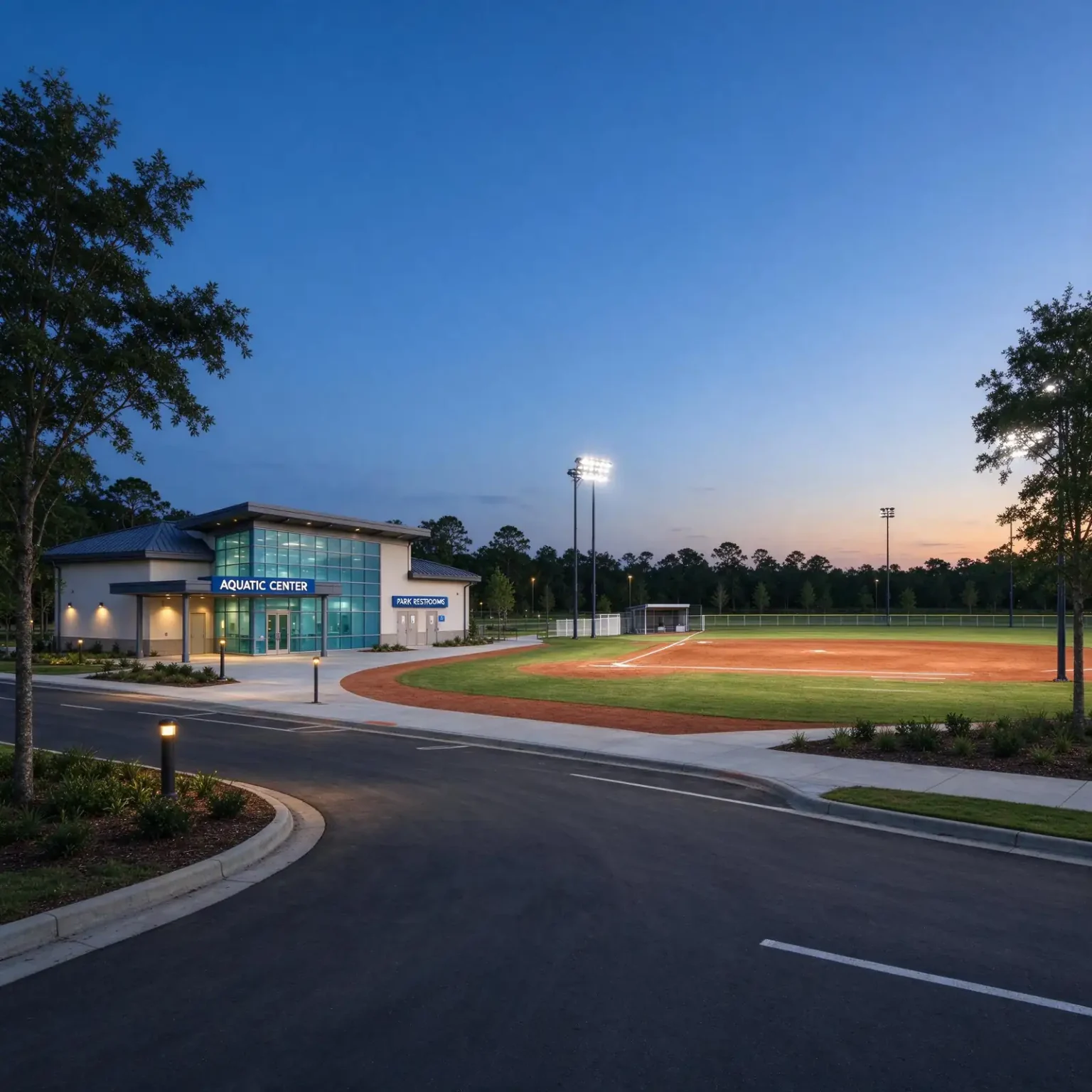
FOLEY, Ala. — Foley is preparing a round of upgrades at Max Griffin Park to go hand in hand with the city’s planned indoor Aquatic Center, including new LED lights for the park’s softball field, power lines moved underground and stronger electrical service to handle the new facility.
The Foley City Council approved the plans, which make $204,000 available for upgraded lighting and other improvements at the park. The work is designed to prepare the site for the Aquatic Center while also improving the parts of Max Griffin Park that will remain in use after construction.
LED Lighting for the Softball Field
The most visible change for park users will be on the softball field, which will stay at Max Griffin Park once the Aquatic Center is built. Foley Parks and Recreation Director Jeff Lee told council members the city wants to put the available funding toward modern lighting there.
“We would like to use this available funding and put LED lighting on the softball field that is going to remain in Max Griffin Park,” Lee said.
LED sports lighting has become a common upgrade for municipal ballfields across the country. Compared with older metal halide fixtures, LED systems generally use less electricity, last longer and require less maintenance, and they can provide more even light across the playing surface. For a city facility that hosts games and practices in the evening, those benefits can add up over time for both taxpayers and the athletes who use the field.
Power Lines Going Underground
Along with the lighting, the project calls for replacing the overhead power lines at the park with an underground electrical system. Foley and Riviera Utilities, the public utility that provides electric service in the Foley area, will also work together to upgrade electrical service and transformers so the park can support both the new Aquatic Center and the new lighting systems.
Moving utility lines underground is often done during major construction projects because it can improve the appearance of a site and reduce the number of poles and wires overhead. Underground lines are also less exposed to wind and falling limbs, a consideration in a coastal community where tropical storms and severe weather are a regular part of life.
An indoor aquatic facility typically places significant demands on a site’s electrical system, with equipment for pumps, filtration, water heating, ventilation and humidity control running throughout the day. Upgrading transformers and service ahead of construction is intended to make sure the park’s infrastructure can keep up with that load.
Restrooms Accessible From Outside
The plans also include exterior restrooms at the new Aquatic Center. Because they can be reached from outside, visitors using other parts of Max Griffin Park, such as the softball field, will be able to use the restrooms without having to enter the building.
City information released earlier this year indicated the new exterior restrooms will replace the restrooms that currently serve the outdoor pool.
About the Indoor Aquatic Center
The Aquatic Center will replace Foley’s municipal swimming pool, which opened at Max Griffin Park in 1953. For more than seven decades, the outdoor pool has been a summertime fixture for Foley families. The new indoor facility is intended to make swimming and other aquatic activities available year-round, rather than only during the warm months.
When the city announced it was moving ahead on the project in June, officials said the center will include two pools under one roof: a competition pool and a therapy pool. Residents had asked for both during public meetings held as part of the planning process, which has been underway for several years.
At the time, Mayor Ralph Hellmich said the center will expand opportunities for swimmers of all ages and give the city a modern, year-round facility. “It’s time we had this in Foley,” Hellmich said.
City officials have also pointed to growing interest in swimming in Foley. David Thompson, the city’s executive director of leisure services, said in June that the city has had more than 100 children in its swim program in recent years. An indoor facility means local swim teams will be able to keep training when weather would otherwise force them out of an outdoor pool. Thompson also noted that having two pools allows the center to keep operating if one of them has to close.
Timeline and What Happens to the Old Pool
City officials hope to seek construction bids for the Aquatic Center later this year. Once work begins, construction is expected to take about 18 months.
The existing outdoor pool will remain open until the Aquatic Center is finished, so swimmers will not lose access to a city pool during construction. After the new facility opens, the outdoor pool will be replaced with another park amenity. City officials have previously said options under consideration include a splash pad or a pavilion.
Key points for residents:
- The softball field will remain at Max Griffin Park and will receive LED lighting.
- Overhead power lines at the park will be replaced with an underground system.
- Foley and Riviera Utilities will upgrade electrical service and transformers for the new facilities.
- The Aquatic Center will include exterior restrooms open to park visitors.
- The city hopes to seek construction bids later this year, with about 18 months of construction expected.
- The 1953 outdoor pool stays open until the new center is complete.
Part of a Growing Community’s Recreation Plans
Foley has been one of the fastest-growing cities in Baldwin County, and its parks and recreation facilities serve a mix of longtime residents, newcomers and visitors. Max Griffin Park, home to the city’s pool for more than 70 years, will take on a larger role once the indoor center opens, combining year-round aquatics with outdoor athletics in one location.
The infrastructure improvements approved by the council are among the first steps toward that transformation. More details about the Aquatic Center’s design, bidding and construction schedule are expected as the project moves forward. Residents with questions about park programs or the project can contact the Foley Parks and Recreation Department or follow updates through the City of Foley.