

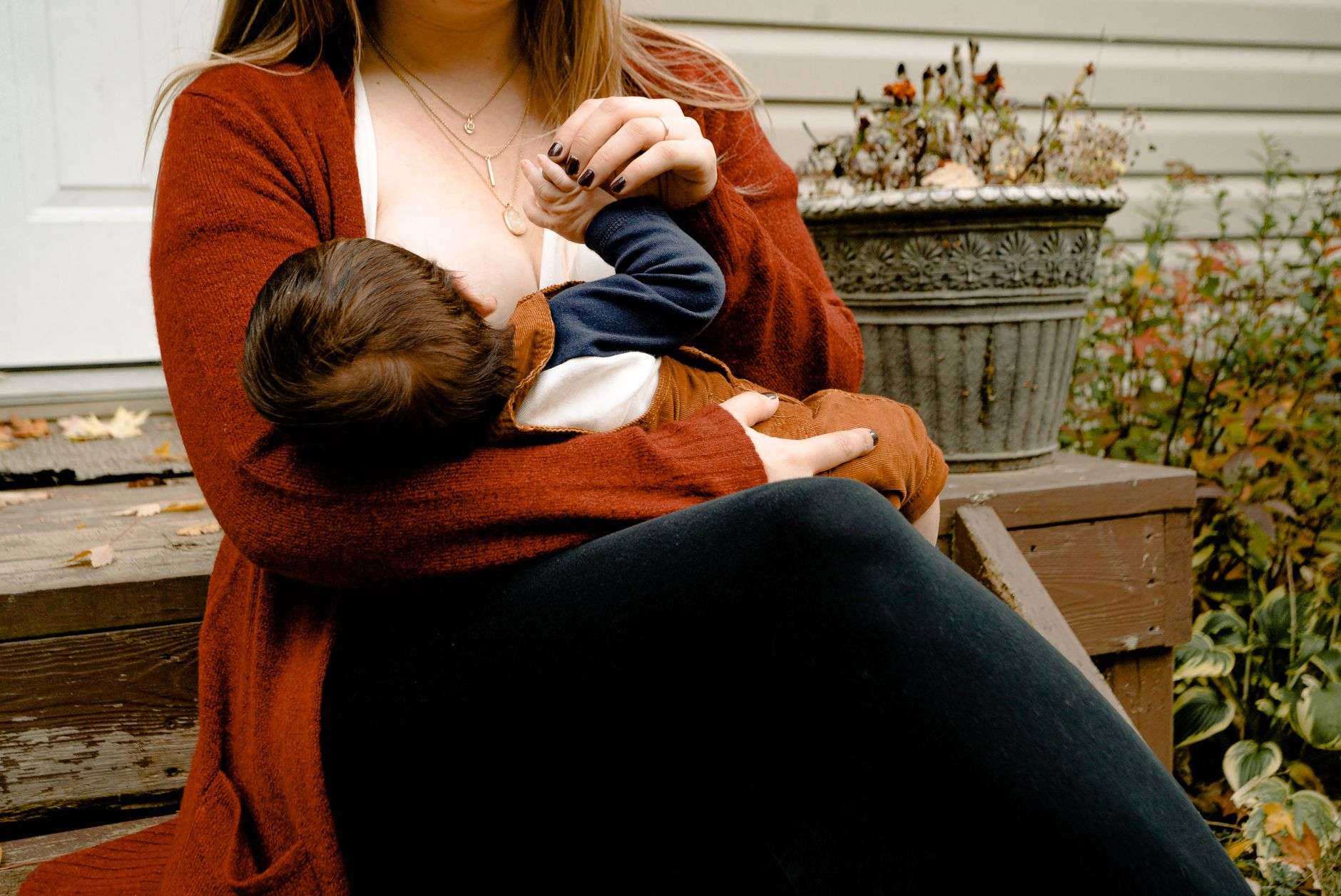
MOBILE, Ala. — The Mobile County Health Department is observing National Breastfeeding Month throughout August, joining health agencies nationwide in promoting breastfeeding education and support for local families. This year’s national theme, “RISE: Resilience, Interdependence, Self-Determination, Empowerment,” is meant to highlight the challenges many mothers face while breastfeeding and the community resources available to help them succeed.
Virginia Stabler, who directs the health department’s WIC program, said supporting breastfeeding families is central to the agency’s mission. “Mobile County’s WIC Program is committed to both empowering mothers to provide the best breastmilk for their babies and providing breastfeeding support for families through our breastfeeding peer counseling program, nutrition education and supplemental foods,” Stabler said.
A month set aside for nursing families
National Breastfeeding Month has grown into one of the most visible public health observances on the maternal and child health calendar. The observance traces its roots to World Breastfeeding Week, observed internationally during the first week of August, and health agencies across the United States have since expanded the recognition to span the entire month. Public health organizations use the period to remind families that breastfeeding is supported by leading medical authorities, and to push back against the practical barriers — workplace schedules, lack of privacy, unsupportive environments and simple lack of information — that cause many mothers to stop earlier than they planned.
The RISE theme chosen for this year’s observance is aimed directly at those barriers. Resilience speaks to the persistence breastfeeding often requires in the early weeks; interdependence underscores that successful nursing usually depends on support from partners, employers, family members and health systems rather than on the mother alone; self-determination and empowerment address a mother’s right to make informed choices about how she feeds her child and to have those choices respected and supported.
For the Mobile County Health Department, the month is also an opportunity to advertise services that operate quietly year-round. Many families learn about WIC’s breastfeeding support programs only after a struggle begins; the August observance puts the department’s counselors, classes and support groups in front of expectant mothers before the difficult early days arrive.
The Lactation Circle returns
As part of the observance, the health department has relaunched its “Lactation Circle” support group, which is overseen by breastfeeding coordinator LaDina Hudson along with three peer counselors: Andrea Portis, Terilyn Hodges and Nafeesah As-Salafeeyah. The team works directly with families to address milk supply concerns and other common breastfeeding challenges.
Support groups like the Lactation Circle occupy a distinctive place in maternal health services. A mother wrestling with latching pain, worries about milk supply, or the logistics of returning to work while nursing can find in a peer group what a short clinic appointment rarely provides: time, shared experience and the reassurance that the difficulties she is facing are common and survivable. Peer counselors add another layer. Because they have nursed children of their own and been trained to support other families, they combine practical tips with a credibility that comes from lived experience.
The relaunch of the group reflects a broader emphasis in public health on peer support as a proven tool. Studies cited by national health agencies have consistently found that mothers who have access to peer counseling breastfeed longer and are more likely to reach their own goals, which is why WIC agencies across the country have invested in peer counselor programs alongside clinical lactation services.
August events across the county
The department has several events planned throughout the month. A “Paint and Pump” expo, combining a painting activity with breastfeeding education, is scheduled for Aug. 8 at Keeler Auditorium. The format pairs a creative, social activity with practical instruction, an approach organizers of similar events say lowers the pressure that can come with a formal class and makes it easier for mothers of young children to attend.
Educational booths will also be set up at four MCHD clinic locations during mid-to-late August to provide information and resources to WIC participants and the wider community. Staff at the booths can answer questions about breastfeeding basics, connect families with the peer counseling program and hand out materials on topics ranging from milk storage to feeding schedules. The clinic setting means the information reaches families at the very places they already visit for prenatal checkups, childhood immunizations and WIC appointments.
The distributed schedule — one central expo plus booths across four clinics — is designed around the geography of Alabama’s second-most-populous county. Mobile County families are spread from downtown Mobile and the corridor along Government Street to Prichard, Saraland, Tillman’s Corner and communities out toward the western county line. Bringing services to neighborhood clinics rather than requiring families to travel downtown removes one more barrier for mothers managing work schedules, transportation limits and newborn routines.
What WIC does in Mobile County
The WIC program, short for the Special Supplemental Nutrition Program for Women, Infants, and Children, provides nutrition education, breastfeeding support and supplemental foods to income-eligible pregnant women, new mothers and young children across Mobile County. The program is federally funded and administered locally through the health department, serving families who meet income guidelines and have a nutritional need.
WIC’s structure reflects decades of public health experience. Participants receive benefits for nutritious foods, but the program pairs those benefits with education — breastfeeding classes, nutrition counseling and health screenings — on the theory that information and food together produce better outcomes than either alone. Breastfeeding support sits at the center of that mission. Federal WIC policy has for years encouraged agencies to build robust lactation services, including peer counselors, certified lactation staff and Breastfeeding Centers in some locations, because mothers who continue nursing reduce infant illness and long-term health risks for both mother and child.
Supplemental foods also matter to nursing mothers specifically, who have increased calorie and nutrient needs while breastfeeding. WIC food packages are designed to support milk production and postpartum recovery, and the program’s nutritionists help mothers adjust their diets during the months of nursing.
Why the support matters locally
Alabama has historically ranked near the bottom of national tables for infant health outcomes, and Mobile County mirrors many of the statewide challenges: infant mortality rates above the national average, and large gaps in outcomes between ZIP codes. Public health officials in the county have pointed to breastfeeding as one of several protective factors within families’ reach — breastfed infants experience fewer ear infections, respiratory illnesses and hospitalizations, and mothers who breastfeed lower their own long-term risks for certain cancers and chronic conditions.
The obstacles are equally well documented. Many local mothers return quickly to jobs without break time or private space for pumping, a particular issue in hourly retail, food service and manufacturing work that is common across the Gulf Coast. Family and community attitudes, gaps in insurance coverage for lactation consultants and plain lack of awareness of available services all contribute to early weaning. Programs like the Lactation Circle and the peer counseling service are built to address exactly those failure points.
How families can take part
Residents interested in breastfeeding support services or the August events can contact the Mobile County Health Department for schedules and registration details. Expectant mothers enrolled in WIC can ask their WIC nutritionist or clinic staff for a referral to the peer counseling program, and families not yet enrolled in WIC can ask about eligibility during any clinic visit.
The Lactation Circle and the peer counselors are available to families regardless of experience level. First-time mothers who have not yet delivered can meet counselors before the baby arrives to talk through what to expect in the first days of nursing; experienced mothers facing a new challenge — a return to work, a sudden drop in supply, a fussy infant — can drop in for troubleshooting. Fathers and other family members are encouraged to learn about breastfeeding support as well, since household support is one of the strongest predictors of how long a mother continues.
Health department staff stress that no question is too small for the counselors. Many of the calls they receive concern the same handful of issues — latching discomfort, feeding frequency, how to know the baby is getting enough milk — and each has practical, well-established answers that a short conversation can supply.
A broader push for healthier starts
The August observance fits into a longer arc of maternal and child health work at the Mobile County Health Department, which has made infant health one of its signature priorities. Beyond WIC, the agency runs home-visiting and family support programs, immunization clinics and child health services aimed at giving children in the county a healthier start.
Breastfeeding support threads through all of it. A mother who gets skilled help in the first weeks after delivery is more likely to keep nursing through the critical early months, when an infant’s immune system is still developing and when the financial relief of not buying formula is most felt by stretched household budgets. That is the practical logic behind this month’s calendar of events: put counselors, support groups and information in front of as many families as possible, in as many neighborhoods as possible, during the month when the national spotlight makes the topic easiest to discuss.
For mothers across Mobile County, the message of the month is straightforward. Help exists, it is close by, and it is free through the health department’s programs. Whether the question is raised at the Paint and Pump expo on Aug. 8, at a clinic booth later in the month, or through the relaunched Lactation Circle, the department’s staff will spend August making sure local families know it — and know how to reach them long after the month ends.