Meet the Sharks That Swim Along the Gulf Coast
From tiger sharks to blacktips, a closer look at the shark species swimming Gulf waters off Gulf Shores, Orange Beach and Dauphin Island.
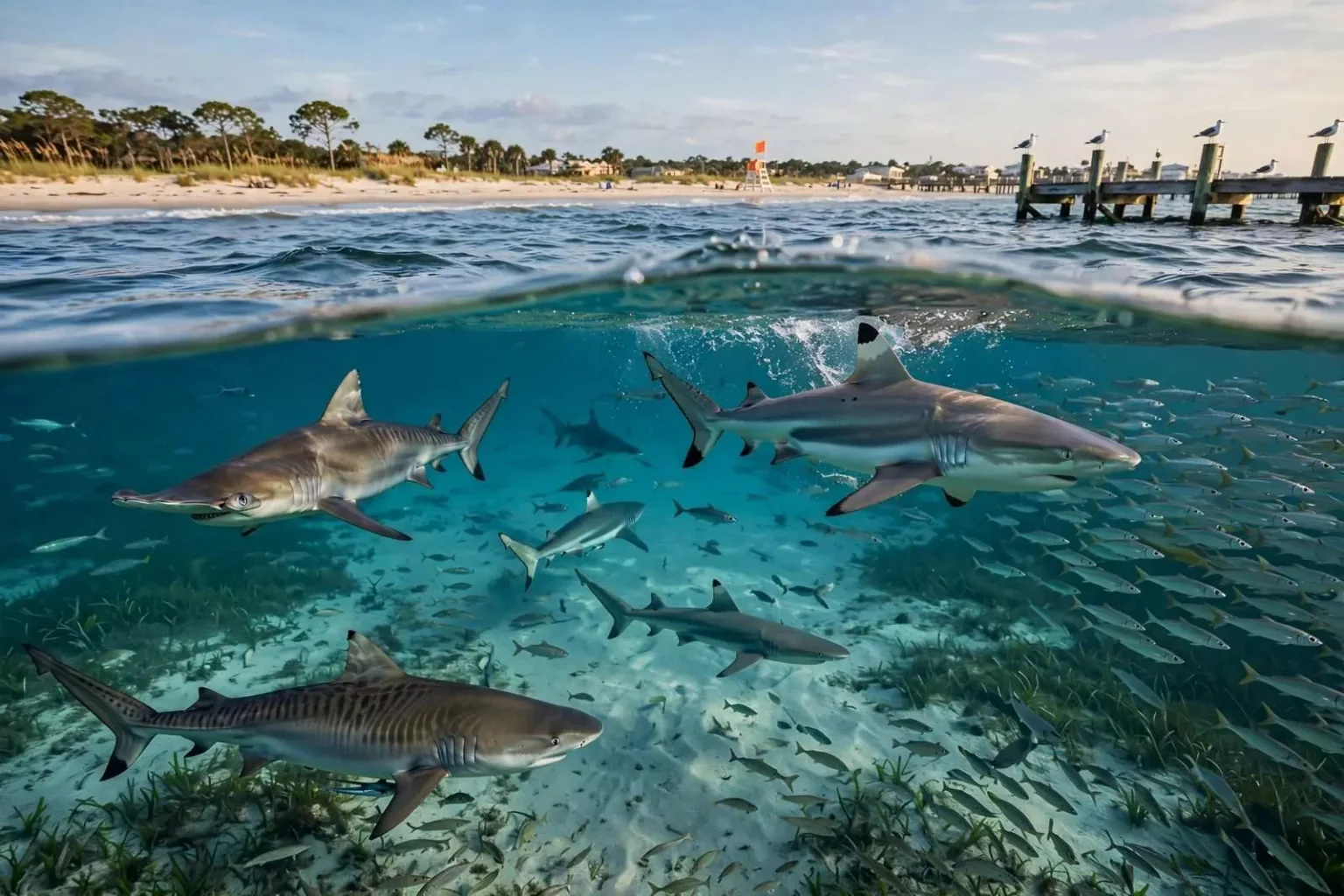
Step into the Gulf of Mexico and you are stepping into the home of thousands of marine species, sharks included. Beachgoers along the Alabama coast know the sightings are not unusual, from hammerheads cruising past Orange Beach to blacktips patrolling the surf line, and every summer brings a fresh round of photographs, videos and questions about what exactly is swimming beyond the sandbar. Understanding those animals, and the real scale of the risk they pose, has become part of coastal life from Gulf Shores to Destin.
The Gulf’s shallow, warm shelf waters make it one of the most productive shark habitats in the western Atlantic. Rivers along the northern Gulf pour nutrients into bays and estuaries, and those nurseries support the menhaden, mullet and other baitfish that larger predators follow. that food web runs close to shore, which is why sharks are spotted from the beach, behind the breakers and around the passes that connect Mobile Bay and Pensacola Bay to the open Gulf.
How dangerous are Gulf sharks?
Hollywood tropes aside, sharks pose little real risk to swimmers. Since 1900, the United States has recorded roughly 1,600 unprovoked shark attacks, about 13 per year nationwide, according to SharkAttackData.com. Millions of people swim Gulf waters every summer without incident, and the overwhelming majority of encounters end with nothing more than a shadow passing through the waves. Rip currents, lightning and even driving to the beach all present larger statistical dangers than the animals patrolling offshore.
Experts stress that most Gulf sharks are small, shy and uninterested in people. The species most often seen from the beach, including blacktips and spinner sharks, feed on schools of baitfish and generally flee human presence. Larger species do pass through the region, but attacks remain rare enough that each one becomes a topic of regional conversation for months. Simple precautions, such as swimming in groups, avoiding dawn and dusk, staying near lifeguards and leaving the water where baitfish are running, account for most of the practical advice that marine scientists offer beach visitors.
A species-by-species look
To better understand these misunderstood ocean dwellers, a closer look at the most prominent shark species swimming the upper Gulf of Mexico shows just how varied the population is. Some are far more common in the waters between Dauphin Island and Destin than others, but any of them might appear along local beaches including Gulf Shores and Pensacola Beach. Size, feeding habits, tolerance for brackish water and how close each species ventures to shore all differ, and those differences explain which sharks beachgoers are most and least likely to see.
The series spotlights eight species across Labor Day weekend, opening with the tiger shark and closing with the blacktip shark. Dr. Sean Powers, director of the University of South Alabama’s School of Marine and Environmental Sciences, helped explain what makes each of these Gulf denizens distinct, from feeding habits to how close they typically venture to shore. The holiday timing is no accident: Labor Day marks one of the busiest beach weekends of the year, when the largest number of swimmers shares the water with the Gulf’s late-summer shark activity.
Tiger sharks, the series’ opening subject, are among the largest predators in the Gulf and are known for an extraordinarily broad diet, which has earned them a reputation as the ocean’s scavengers. They favor deeper waters but roam widely, and their distinctive stripes fade as they mature. Powers and other researchers study the species through tagging programs that trace how far these animals travel, and the data has shown that Gulf tiger sharks cover enormous distances across their lives.
Blacktip sharks, the closing subject, are the species most likely to be seen breaking the surface near swimmers, sometimes leaping clear of the water while chasing bait. They are nimble, fast and generally small compared with the Gulf’s giants, and they patrol the surf line in search of mullet and menhaden. Their comfort in shallow water makes them a familiar silhouette for anglers and beachgoers from Perdido Pass to the Florida state line.
Between those bookends, the upper Gulf hosts a cast of regulars. Bull sharks are notable for tolerating fresh water and have been documented far up coastal rivers, making them one of the region’s most adaptable predators. Hammerheads cruise the passes in warmer months, and smaller species such as Atlantic sharpnose sharks are so abundant that they are among the first sharks young anglers catch from the pier. Each occupies a different niche in the same coastal ecosystem.
The science behind the sightings
Research along the northern Gulf has expanded rapidly in recent decades. The University of South Alabama’s School of Marine and Environmental Sciences, based in part at the Dauphin Island Sea Lab, runs long-term monitoring of the region’s fish populations, including sharks, using gillnet surveys, acoustic tagging and aerial observation. That work gives scientists a moving picture of where sharks congregate, what they eat and how their numbers respond to changes in the ecosystem.
Those findings matter to more than curiosity. Sharks sit at the top of the coastal food web, and their health reflects the health of the estuaries, seagrass beds and baitfish stocks beneath them. Commercial and recreational shark fishing in federal waters is regulated under federal management plans, and Gulf states enforce their own rules inside three miles of shore. For Alabama’s coastal economy, which depends heavily on beach tourism, a balanced message from scientists helps keep shark sightings in perspective during the peak season.
Locals and visitors can do their part as well. Discarding fish scraps near swimming areas, chumming close to beaches and swimming where birds are diving into bait schools all raise the odds of an unwanted close encounter. Lifeguarded beaches along the Gulf Coast post flags for surf conditions, and the same common-sense habits that keep swimmers safe in rough water, staying in groups and within sight of a lifeguard, also reduce the already slim chance of an incident with a shark.
The timing of the series also highlights a seasonal pattern regulars know well. Late summer brings warmer water, migrating bait and a visible uptick in shark activity near the passes, which is why sightings reports tend to cluster around the holiday weekend. After Labor Day, crowds thin, water cools and many of the region’s sharks shift offshore or southward, following the food and the temperature through the fall.
For all the attention they attract, sharks remain a minority presence in the daily life of the Gulf. Fishermen land trout, redfish and flounder without a second thought, and most swim days pass without anyone seeing a fin. But the animals are there, playing the role they have played for millions of years, and a better-informed public, equipped with facts rather than movie plots, is better for both the beaches and the sharks that share them.
That balance is the quiet takeaway of the Labor Day series. The Gulf of Mexico is not an aquarium, and everyone who swims at Gulf Shores or Pensacola Beach is a visitor in a living ecosystem. Knowing which species cruise the coast, why they come close and how rarely they harm anyone turns fear into context. With researchers like Powers and institutions like the University of South Alabama explaining the science, the Gulf’s sharks become less a lurking threat and more what they are: a sign that one of the country’s most productive coastal ecosystems is still working.
The economics of shark perception are real for coastal towns. Tourism officials along the Alabama and Florida beaches track how coverage of shark sightings affects bookings, and a single dramatic video can ripple through summer travel plans even when nothing happened to a swimmer. That is one reason marine scientists in the region put effort into public education, appearing at schools, civic clubs and festivals to walk audiences through the actual data. Informed beachgoers, the reasoning goes, make better decisions and keep panic out of the conversation when a fin does appear offshore.
Fishing piers and charter boats offer another window into the Gulf’s shark population. Anglers targeting other species regularly hook small sharks accidentally, and pier regulars can identify most of the common species on sight. Those informal observations, gathered by thousands of fishermen over decades, complement the formal surveys and give researchers a coarse but useful picture of seasonal patterns. Catch-and-release practices, required for many protected species, have become standard along the coast as conservation rules have tightened.
Estuaries are the hidden half of the story. Mobile Bay, Perdido Bay and the Choctawhatchee Bay system near Destin all function as nurseries where juvenile sharks grow up among the marsh grasses before moving into the open Gulf. The health of those nurseries depends on water quality, freshwater flows and habitat protection, issues that local governments balance against development pressure. When a bay system degrades, the effects show up years later in the numbers of the species that depend on it.
For families heading to the beach this weekend, the practical checklist is short. Swim near a lifeguard, keep an eye on posted flags, avoid schools of bait and areas where people are fishing, and leave the water if large fish are thrashing nearby. Beyond that, enjoy the water: the odds of a serious encounter remain vanishingly small, and the chance of watching a blacktip explode through a bait school or a hammerhead silhouette past the sandbar is part of what makes the Gulf Coast the Gulf Coast.