County Commission Set to Part Ways With Longtime Attorney Merceria Ludgood
Sources said the all-Republican Mobile County Commission did not intend to renew the contract of assistant county attorney Merceria Ludgood, a Democrat with 17 years in the legal department.
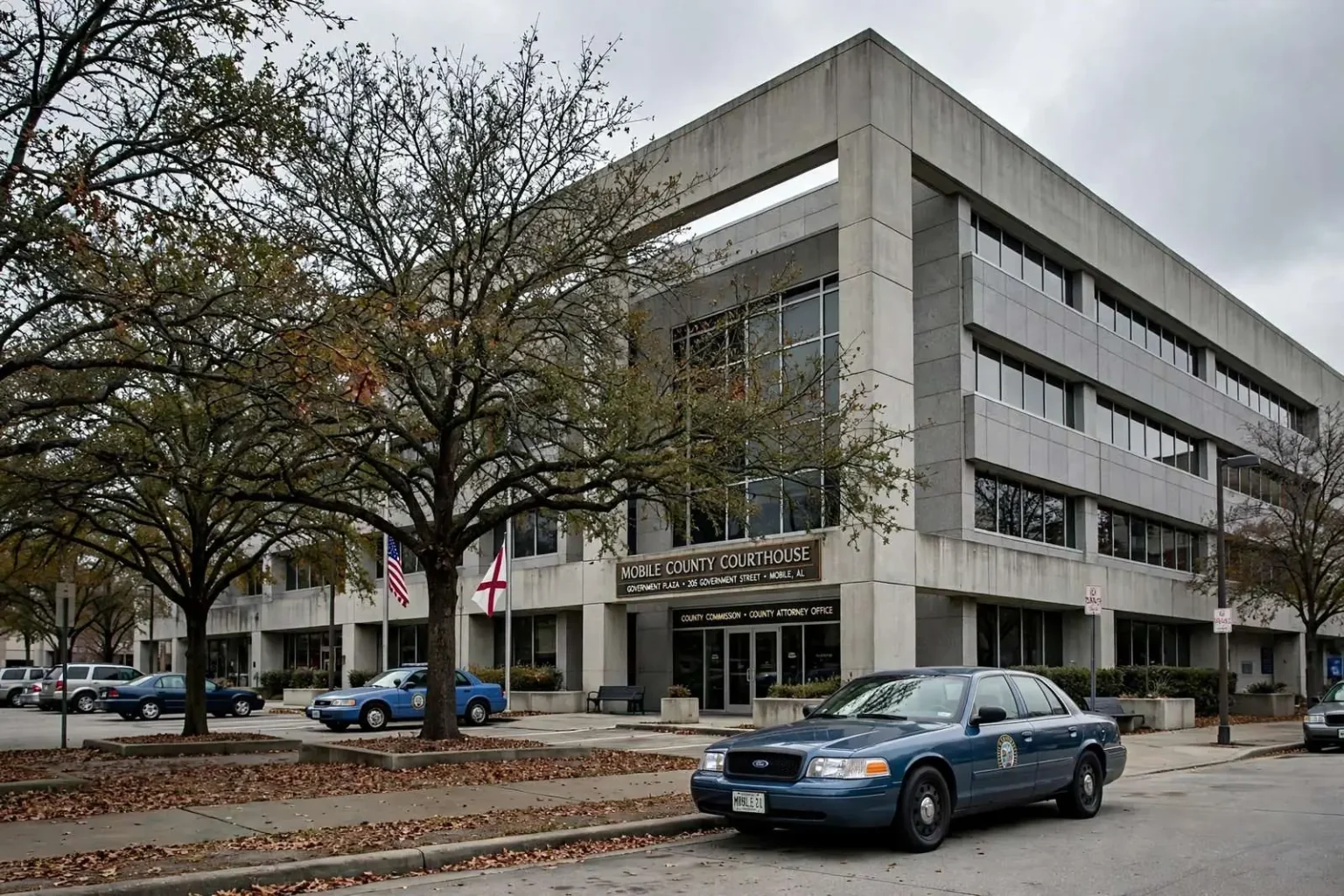
Merceria Ludgood, a longtime assistant Mobile County attorney, and the Mobile County Commission appeared headed for a parting of the ways in late 2006, as sources indicated the commission did not intend to renew her contract when it expired roughly four months later. Ludgood had worked in the county’s legal department for about 17 years and was reported to be compensated in the upper $80,000s annually.
On its face, the decision involved a single contract and a single career. In practice, it landed at the intersection of party politics, patronage and one of the most closely watched local offices in South Alabama — and it preceded, by less than two years, Ludgood’s own arrival on the commission she had served as a lawyer.
The political undercurrent
The split carried unmistakable political overtones. All three members of the Mobile County Commission were Republicans. Ludgood was an active Democrat. That alone would have made the relationship a matter of comment, but her situation was complicated further by her own political ambitions.
Ludgood had formed a campaign committee in anticipation of a possible run for the District One seat on the County Commission, a seat that came open when former County Commissioner Sam Jones was elected mayor of Mobile. Jones’s move to City Hall — the product of a municipal election that reshaped Mobile’s leadership — left the district without a sitting commissioner and set off the contest that would define county politics in the district for years.
The vacancy was not filled by special election. Instead, and in circumstances that remained a matter of legal dispute, the governor appointed Republican executive committeeman Juan Chastang to the post. The appointment bypassed the district’s voters entirely, and it left a Republican officeholder occupying a seat in a district where many observers considered the electorate favorable to a Democrat. The legal questions surrounding the appointment were not resolved quickly, and they shadowed the commission’s composition throughout the period.
Ludgood’s name continued to appear routinely in discussions of potential District One candidates for the 2008 election cycle. Ludgood said she had no comment.
The commission’s explanation
Commissioner Stephen Nodine said “many administrative changes” might be in the offing for the county, and argued that no overtly political or retaliatory message should be read into the moves. What was happening, he said, was the natural operation of government in a two-party democratic system.
“Whether it’s a county attorney or any other non-merit system position, my duty is to get qualified Republicans into positions of government to ensure conservative, accountable and consolidated government,” Nodine said. He added that were the shoe on the other foot, a Democratic county commission would act similarly, and had.
Whatever one made of the explanation, its candor was notable. Personnel decisions in county government are usually described in the language of budgets and reorganization; Nodine described his own in the language of party. He did not dispute that party affiliation was the operative consideration — he embraced it as a duty, and framed it as something the other party practiced when it held the majority.
Merit system and the limits of protection
Nodine’s reference to “non-merit system” positions is the crux of the matter. Mobile County, like many Alabama jurisdictions, operates a personnel merit system that shields most public employees from being hired or fired for political reasons. Positions outside that system, including many contract and professional roles, enjoy no such protection.
An assistant county attorney serving on contract sat squarely in the exposed category. Seventeen years of service conferred institutional knowledge and, presumably, considerable goodwill, but no tenure. The merit system exists precisely to remove personnel decisions from political calculation, but its coverage is bounded, and Alabama county governments retain wide discretion over the contract positions that sit beyond it.
For county attorneys, department heads on contract and other professional staff, the lesson of the episode was plain: continuity of employment in those roles depends, ultimately, on the confidence of the majority on the commission.
What was actually at stake
Two things gave this personnel matter more weight than it might otherwise have carried. The first was the underlying dispute over District One. The seat had been filled by appointment rather than by the votes of the people who live in the district, and the appointee was a Republican in a district that many observers regarded as favorable to a Democrat. That the commission would decline to renew the contract of a Democratic attorney who had organized to run for that very seat was, at minimum, awkward.
County commissions in Alabama hold broad authority over the attorneys who represent them. The county attorney’s office handles litigation, contracts, public records questions and the day-to-day legal advice that keeps a government of Mobile County’s size — the state’s most populous at the time — functioning. An abrupt change at the top of that office is not a minor administrative event, whatever its motivation.
The second was what came next. Ludgood did in fact go on to win election to the Mobile County Commission, becoming a durable and prominent figure in county government for many years afterward. The District One seat she had been eyeing in 2006, when her prospects were being discussed as a 2008 matter, ultimately became hers — a reversal that makes the commission’s 2006 calculation one of the more consequential personnel decisions in recent Mobile County history.
Read from a distance, the 2006 decision not to renew her contract looks less like the end of a career than a hinge in one. The lawyer the commission declined to keep became, within a few years, the commissioner deciding the commission’s own direction.
Two parties, one courthouse
The episode illustrated a broader transition then under way across South Alabama. County governments that had operated for generations under Democratic control were changing hands, and with them the staff, counsel and contractors who served at the pleasure of whoever held the majority.
The realignment had been building for years. Once-dependably Democratic courthouses in Mobile, Baldwin and the surrounding counties moved into the Republican column as voters shifted, and each transfer of majority control carried the same consequence: the layer of non-merit positions above the protected civil service turned over with it. Employees with decades of service found that their jobs followed the party that governed, not the quality of their work.
Nodine’s candor about the process — that his duty was to place qualified Republicans in positions of government — was in its way refreshing. It was also an accurate description of how patronage has always worked, in both parties, in Alabama and everywhere else. What distinguished the moment was that it was said aloud, about a named 17-year employee, while the legal dispute over how her prospective seat had been filled was still unresolved.
The longer arc of District One
The District One controversy did not end with the appointment. The legal challenge to the process by which Chastang was seated kept the question alive, and the eventual resolution returned the seat to the voters — with results that confirmed the district’s leanings. The sequence, from Sam Jones’s move to City Hall through the disputed appointment to Ludgood’s ultimate election, became a case study in how a vacancy can travel a long, winding road before the people it affects actually get to decide.
For Mobile County residents, the practical stakes were unglamorous but real: district commissioners control road and bridge priorities, drainage projects and the county services that touch daily life in Prichard, Chickasaw, and the communities of north Mobile County that make up much of the district. The question of who cast that vote — and how he came to hold it — was never merely a personnel story.
By the time Ludgood took her place on the commission, the 2006 contract episode had receded into the background of a much longer public career. But it remained the clearest single illustration of how thoroughly party and government had become intertwined in the county courthouse — and of how quickly the person on the receiving end of a majority’s decision can end up holding the majority’s votes.
The episode also became part of the background against which Ludgood would later serve. Commissioners who had once weighed whether to keep her as the county’s lawyer would find themselves voting alongside her, and the institutional knowledge she carried from 17 years inside the legal department proved an asset few incoming commissioners possess. Former staff attorneys who join the boards they once advised arrive already fluent in the county’s budget process, its contract practices and its litigation history.
For the commission itself, the turnover in legal counsel came during a period of considerable demands on the county’s lawyers — growth pressures in the county’s unincorporated areas, infrastructure disputes, and the ordinary volume of contracts and personnel questions that a government of its scale generates. A change in the office’s leadership is felt in that work regardless of the reason for it.
The story’s remaining lesson concerns transparency. Residents reading about the non-renewal in late 2006 were left to weigh a commissioner’s frank statement of party purpose against sources’ indications of timing and motive. In Alabama county government, where so many positions turn on the good graces of an elected majority, that kind of public accounting is the closest thing to a check that exists — and the episode showed both how bluntly it can be acknowledged and how little it constrains.
What began as a contract decision in the courthouse thus ended up marking a turning point in two directions at once: in the career of the attorney who left, and in the political composition of the commission she would later join.