Convicted Killer Silent at Sentencing in Kyser Miree Home Invasion Case
Michael Lee, convicted in the home invasion and murder of Kyser Miree, drew criticism for staying silent at his sentencing. His attorney said the silence was on advice of counsel amid a planned appeal.
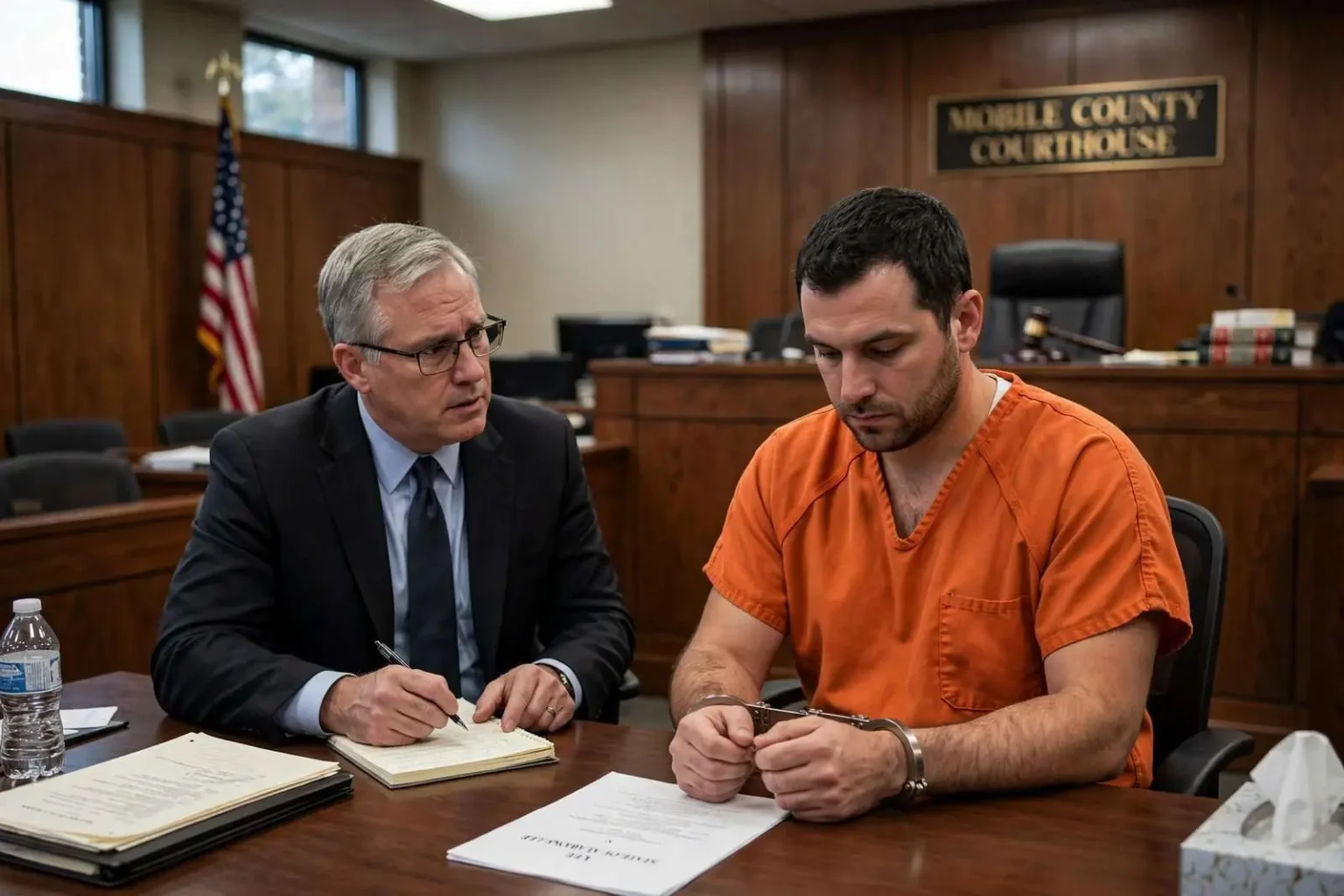
Michael Lee stood before a Mobile County judge having already been convicted of one of the most disturbing crimes the city had seen in years, and he said nothing. The sentencing hearing for the murder of Kyser Miree drew criticism precisely because of that silence: no statement of remorse, no expression of regret, no words directed to the victim’s family. In many sentencing proceedings, defendants use their final opportunity to speak to apologize, to appeal for leniency or to address the people their actions have harmed. Lee declined all of it, and observers in the courtroom and beyond noticed.
His attorney, however, told a different story about the silence. Art Powell, who represented Lee, said the decision to remain quiet was a deliberate legal strategy rather than a sign of indifference or coldness. Powell explained that his client did not speak on the advice of counsel, for reasons tied directly to the legal road still ahead of him. The explanation offers a window into how defense attorneys weigh every word a convicted client might say once the trial itself has ended and the appellate phase begins.
The case had unsettled Mobile from the start. Kyser Miree was killed in a home invasion at Macy Place, a crime that struck a community already familiar with stories of violence but unprepared for the particulars of this one. The home invasion format, in which intruders force their way into a residence and confront the occupants directly, registers differently than many other categories of homicide. It violates the one place residents expect to be safe, and it leaves surviving family members and neighbors with questions that a conviction alone does not fully answer.
Against that backdrop, the sentencing hearing carried weight beyond the formal pronouncement of punishment. The community that had followed the case wanted to hear something from the man a jury had held responsible. What it got instead was silence, and the silence became its own story.
Silence in the courtroom
The absence of any statement from Lee stood out to everyone watching. Sentencing hearings occupy a particular place in the American criminal justice process. After a conviction, before the judge pronounces sentence, defendants in Alabama and every other state have a right to make a statement on their own behalf. Defense attorneys typically walk clients through the choice carefully, weighing whether words of remorse might soften a sentence against the risk that anything said could be used against the defendant later.
Lee made no such statement, and that choice became a point of criticism. Members of the public and observers of the case read the silence as an insult added to injury, a final refusal to acknowledge what had been done. For the victim’s family, who had already endured a trial and its revelations, the defendant’s refusal to speak could feel like one more wound.
Powell stepped in to supply the reasoning that his client would not. The explanation he offered was practical rather than emotional, grounded in the mechanics of appellate law rather than any claim about his client’s feelings. Whatever the private motivations, the public record of the sentencing now contains both the silence and the attorney’s account of why it happened, and the two together tell the story more completely than either would alone.
An appeal and a second case
According to Powell, Lee stayed quiet because he intended to appeal his conviction. Anything he said at sentencing could complicate that effort, and defense attorneys routinely counsel clients against volunteering statements while an appeal is pending. The logic is straightforward. An appeal examines the trial record for legal error, and statements made at sentencing, particularly admissions or characterizations of the crime, can close off arguments that might otherwise remain available. A defendant who expresses remorse in one breath can undercut an innocence claim in the next.
Powell offered a second reason as well. He said Lee’s silence was also meant to avoid tainting the pending defense of his mother, who was accused of threatening a witness in the case. With a related prosecution still unresolved, the defense had an interest in ensuring that Lee’s words could not be used to affect those separate proceedings. A statement at sentencing, however carefully worded, might be quoted, characterized or twisted in a different courtroom, against a different defendant.
The situation illustrates a reality of criminal defense work that rarely appears in courtroom dramas: a single case can generate multiple proceedings, and every statement in one of them can ripple into the others. When a family member faces her own charges connected to the underlying case, the defense team must account for two dockets at once. Silence in one forum protects options in the other.
Witness intimidation allegations occupy a serious place in the justice system. Prosecutors treat threats against witnesses as attacks on the process itself, because the credibility of any trial depends on witnesses being able to testify without fear. When such allegations arise in connection with a murder case, they add a second layer of legal exposure for everyone involved and give defense counsel yet another reason to keep their client’s public statements to an absolute minimum.
None of this explains the silence to everyone’s satisfaction, and Powell’s account did not pretend to. It explained the strategy. Whether Lee felt remorse privately is a question no courtroom record can answer, and the attorney’s job was not to vouch for his client’s inner life but to protect his legal position. That distinction, between what silence means emotionally and what it means strategically, sat at the center of the criticism the sentencing drew.
A case that shook Mobile
The murder of Kyser Miree had registered as one of the more wrenching crimes in recent Mobile memory. Home invasions unsettle a community’s sense of safety in a way few other crimes do, because they strike at the assumption that a locked door and a familiar street offer protection. Residents who followed the case saw in it the fear that any neighborhood can feel when violence arrives uninvited at a doorstep.
The conviction of Lee marked a milestone in the case. It converted an accusation into a judgment, and it gave the legal system’s answer to the question the crime had posed. The sentencing that followed brought a measure of resolution, the formal closing of the punishment phase, even as the defendant’s own posture in the courtroom generated fresh scrutiny. Resolution and closure are not the same thing, and families of victims often discover the gap between them.
The tension on display at the sentencing, between a public expectation of remorse and a defense strategy built around silence, is a familiar one in the criminal justice system. What can look like coldness from the gallery is often, as Powell described it, a calculated choice made with an eye toward appellate courts and unfinished legal business. Judges understand this calculus. Prosecutors understand it. But the public, and especially the families of victims, experience the silence directly, without the legal scaffolding that explains it.
Mobile’s experience with high-profile murder prosecutions has repeatedly shown how much weight the sentencing phase carries in the public’s relationship with a case. A trial answers legal questions; a sentencing hearing is where the community looks for a moral accounting. When a defendant declines to participate in that accounting, the disappointment is real, even among people who understand exactly why the defense made the choice it did.
What comes next for the case
With the sentence handed down, the case moved toward its next phase. Lee’s stated intention to appeal meant the matter was far from closed. Appeals in Alabama criminal cases proceed through the state appellate courts, where a panel of judges reviews the trial record for legal errors rather than reweighing the evidence. The process can take months or longer, and it rarely produces the dramatic reversals the public imagines, but it is a genuine second look at everything that happened between arrest and verdict.
The separate accusation against Lee’s mother also remained to be resolved. Her case would proceed on its own schedule, in front of its own judge, with its own set of arguments. The connection between the two proceedings meant that developments in one could continue to shape the other, and that the family’s legal entanglement with the justice system would outlast the sentencing hearing that drew the public’s attention.
For the Miree family, the sentencing offered accountability, even if the defendant’s silence denied them the words some had hoped to hear. Accountability and words are related but distinct. The conviction and the sentence are the system’s formal answer to the crime; an apology would have been a personal offering the court could not compel. Many victims’ families say the absence of an apology leaves a wound of its own, one that no verdict fully treats.
The case also leaves behind a broader lesson for a community watching its justice system work. Trials produce outcomes, but they do not always produce the emotional catharsis the public expects from them. A defendant advised by counsel to stay silent is doing what the law permits, and the law permits it because compelled speech has no place in American courtrooms, even from the convicted. The price of that protection is that sometimes the community hears nothing at all from the person it most wants to hear from.
Mobile, like every city its size, carries the memory of its most disturbing crimes long after the courtrooms empty. The Kyser Miree case entered that memory in full, from the home invasion at Macy Place through the conviction and the sentencing that closed this phase of the legal process. The silence that marked the sentencing became part of the record too, explained by an attorney who understood that in the justice system, what a defendant does not say can matter as much as anything he does, and that protecting an appeal and a family member’s pending defense required keeping his own counsel in the most literal sense. For now, the appeals process and the related prosecution remain the unfinished business of a case Mobile will not quickly forget, and the question of what Michael Lee might eventually say, if anything, stays open with them.