

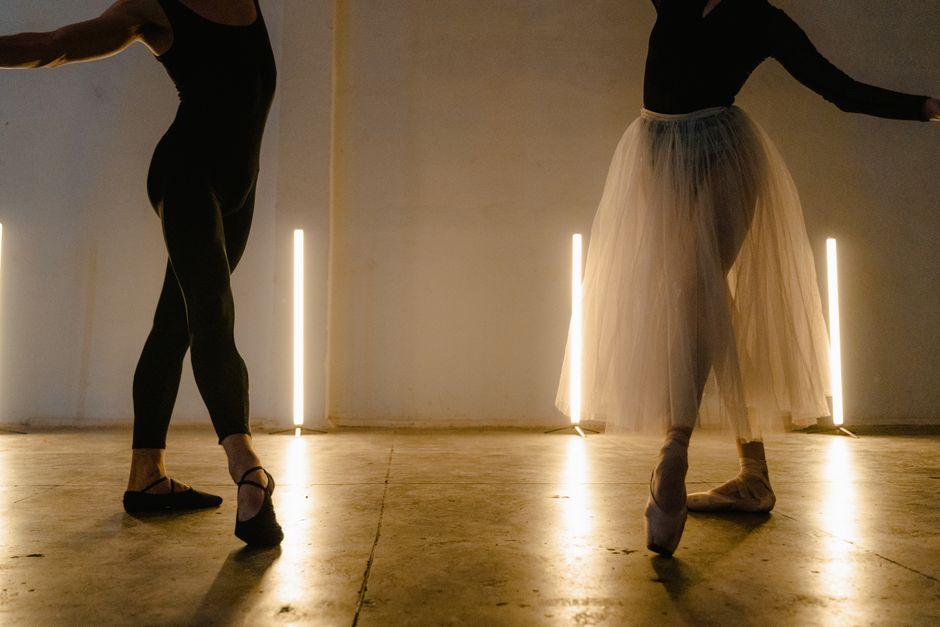
For years, dancers on the Eastern Shore commuted across Mobile Bay to train. Now the commute runs in reverse. Mobile Ballet’s Eastern Shore studio has purchased and moved into a much larger building on Equity Drive in Daphne, ending a long stretch of rented rooms and giving the region’s leading classical ballet organization a permanent foothold in Baldwin County.
The new space is a significant upgrade by any measure: three studios, a dedicated dressing room area, and offices, all under one roof. It is large enough to accommodate full rehearsals for the professional company itself, something the old rental space could never manage. Amanda Napper, Mobile Ballet’s manager of development and communications, has pointed out that roughly half of the company’s members live in Baldwin County, which makes the Daphne facility less an outpost than a homecoming.
A legacy studio with deep roots
Mobile Ballet has been part of the cultural fabric of the Gulf Coast since 1987, operating as a nonprofit organization dedicated to dance education, professional performance, and community outreach. Its school serves more than 300 students a year across its Mobile and Daphne locations, from toddlers in their first leotards to pre-professional dancers preparing for company auditions. Each season, the organization stages major full-length productions at the Mobile Civic Center Theater, and its Discover Dance program brings fully staged performances to thousands of K-12 students across the region who might otherwise never sit inside a theater.
At the artistic helm is Katia Garza, a native of Piedras Negras, Coahuila, Mexico, who trained at the Escuela Superior de Musica y Danza de Monterrey and joined Ballet de Monterrey after graduating in 1995. Within two years she had risen from soloist to principal dancer under the direction of Fernando Bujones, one of the most celebrated American ballet dancers of his generation. In 1997, the Compania Nacional de Danza in Mexico City invited her to dance the Black Swan in “Swan Lake.” She later became an American citizen in 2011, settled in Mobile with her husband, the dancer Israel Rodriguez, and became the subject of an inspirational documentary, “Katia Garza: My Life in Dance.” Under her leadership, Mobile Ballet has premiered her original full-length productions of “A Midsummer Night’s Dream,” “The Little Mermaid,” “Giselle,” “Beauty and the Beast,” “The Princess and the Frog,” and a new “Nutcracker” introduced in 2017.
Sleeping Beauty takes the Civic Center stage
The Eastern Shore expansion arrived in the same season that Mobile Ballet staged one of the grandest works in the classical canon. In March 2024, the company presented “Sleeping Beauty” at the Mobile Civic Center Theater, in a new adaptation by Garza after the original 19th-century choreography of Marius Petipa. The Saturday evening performance featured the Mobile Ballet Orchestra playing Tchaikovsky’s score live under conductor David Ott, with guest artists including Philadelphia Ballet principal dancer Nayara Lopes as Princess Aurora. Audiences watched the familiar spell play out in full: the malevolent fairy Carabosse curses Princess Aurora to a hundred years of slumber on her sixteenth birthday, and only a prince’s kiss can wake her.
Because the new Eastern Shore location wanted to become more involved in its own community, the Daphne studio paired the production with a fundraiser of its own design: the “Sleeping BeauTea,” a fairytale tea party held in March 2024. Young guests and their families enjoyed tea and treats, performances by company dancers, a storytime, and photo opportunities, all in support of the studio’s Relève Project. For non-dancers, the name is a small vocabulary lesson: “releve” is the ballet term for rising onto the balls of the feet — to rise. Proceeds from the event fund tuition assistance for young dancers on the Eastern Shore, lowering the financial barre between a child and an arts education.
Outreach beyond the barre
The tuition program is only one thread in a broader commitment to community programming. At the Mobile studio, a program called Day of Dance brings in groups from the Dumas Wesley Community Center and the Boys and Girls Clubs for a day of movement, music, and instruction, opening the studio doors to children who might never otherwise encounter ballet. The size of the new Daphne facility is expected to let the Eastern Shore location build similar programs of its own, and the organization has expanded its summer dance offerings, with registration for camps and intensives open to students across the coastal area.
The move also changes the day-to-day experience of the families it serves. Eastern Shore students who once planned their afternoons around a Bayway crossing can now reach class in minutes, and parents waiting out a rehearsal can run errands in Daphne instead of sitting in cross-bay traffic. Those small logistical gains compound: easier access means more consistent attendance, more consistent attendance means stronger training, and stronger training is exactly what feeds a professional company that already draws half its dancers from Baldwin County addresses.
That outreach mindset reflects a philosophy that runs through the whole organization: dance education is not solely a pipeline for professionals. It is training in discipline, coordination, confidence, and creative expression for anyone willing to step onto the floor.
The director who trained in London
Leading the Eastern Shore studio is Kimberley Sears, who has been part of Mobile Ballet’s faculty for 18 years and took over as director of the Daphne location in 2020. Her path to Baldwin County is anything but typical. Sears grew up in Lancashire in the United Kingdom, and at 11 years old she moved to London to study at the Royal Ballet School, the training ground that has produced generations of dancers for Britain’s great companies.
At 16, she joined the Northern Ballet, the United Kingdom’s foremost narrative ballet company, where she danced many of the classics — “Sleeping Beauty,” “Cinderella,” “The Nutcracker,” and more. From there she moved into musical theater, and eventually auditioned for — and was hired to perform on — cruise ships. Her favorite line, she has said, was Princess Cruises, for its elaborate costumes and full-scale productions. It was also where she met her husband, Tim, who worked on the same ships.
Tim’s career eventually took the couple to St. Louis, Missouri, where Sears auditioned for The Muny, the storied outdoor Broadway-style theater in Forest Park that has launched countless musical theater careers. She toured twice with “Joseph and the Amazing Technicolor Dreamcoat” and “Crazy for You.” Her advice to students draws directly on that career: to succeed in dance, you have to be versatile. She had to learn jazz and tap alongside ballet, and to this day she tells her students to train in as many genres as possible.
From Fairhope to the front of the studio
Tim’s job kept the family on the move, and after the couple’s two children arrived — a 2-year-old and a 4-year-old at the time — the plan was for Sears to be a stay-at-home mother. When a pharmaceutical industry transfer brought the family to Mobile 22 years ago, they settled in Fairhope. The pivot came through an unlikely channel: on a sales call, Tim mentioned to Dr. Sands, a client who sat on Mobile Ballet’s board, that his wife was a ballerina. Dr. Sands arranged a meeting with Anne Duke, the company’s ballet mistress, and in 2005 Sears joined the faculty. She has been there ever since.
She did not entirely give up the stage, either. Sears performed with the company in “The Nutcracker,” and took on villain roles as the evil Queen in “Snow White” and “Sleeping Beauty” — a turn she has described with evident relish, noting she was fully committed to being evil.
Ask her about the challenges of running a ballet school and she speaks from long experience, in a profession she has now worked in for more than four decades across two continents. Her message to parents is that dance education can serve almost any ambition. A student may want to dance professionally, or at the collegiate level, or in pageants; another may want exercise, coordination, stress relief, or simply fun. Ballet technique remains the foundation of all dance training, but the school also offers jazz, tap, contemporary, hip-hop, and musical theater. In her telling, there are a hundred and one things dance can bring into a life.
What the expansion means for the Eastern Shore
The move to Equity Drive signals something larger than a bigger studio. Baldwin County is one of the fastest-growing counties in Alabama, and its arts infrastructure has raced to keep pace with its rooftops. A permanent, company-scale ballet facility in Daphne means young dancers no longer have to cross the bay for serious classical training, professional dancers who live on the Eastern Shore can rehearse close to home, and community programs modeled on Day of Dance can take root without fighting for studio time.
Mobile Ballet continues to offer classes for students aged 3 through adult, from absolute beginners to pre-professionals, at both its Mobile and Daphne locations. For a nonprofit that has spent nearly four decades building the region’s appetite for classical dance, the new Eastern Shore home is less an ending than a running start — proof that when a community shows up for the arts, the arts will plant themselves and grow.