Mobile Baykeeper, SELC sue Alabama Power over Plant Barry coal ash
Mobile Baykeeper and the Southern Environmental Law Center sued Alabama Power over coal ash stored in an unlined pond on the Mobile River.
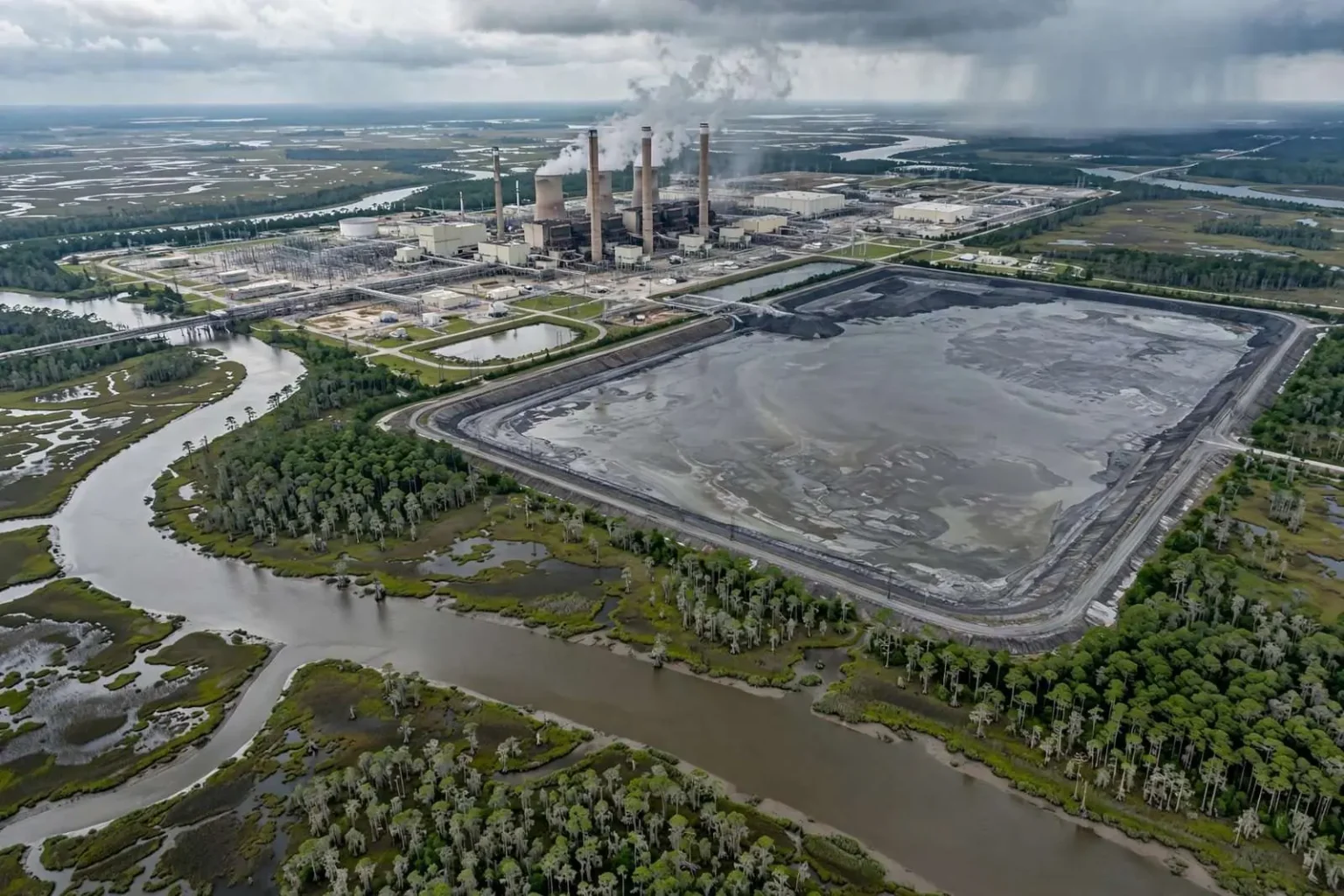
Mobile Baykeeper and the Southern Environmental Law Center filed a federal lawsuit Monday against Alabama Power, challenging the utility’s plan to leave roughly 21 million tons of coal ash in an unlined pond along the Mobile River. The conservation groups argue the storage plan is illegal under federal rules and poses a lasting threat to the Mobile-Tensaw Delta, one of the most biologically significant river systems in North America.
At the center of the dispute is Plant Barry, Alabama Power’s coal-fired generating station in northern Mobile County. For decades, the plant’s coal combustion residuals — the ash left behind after coal is burned to make electricity — have been held in an unlined pond adjacent to the Mobile River. The lawsuit contends that the ash is contaminating groundwater and violates the U.S. Environmental Protection Agency’s Coal Combustion Residuals rule, a federal regulation that bars storing coal ash in unlined ponds where the material stays in contact with water.
The plaintiffs are asking the court to order the utility to excavate the ash and move it to a lined, permitted landfill away from the river. That approach, they argue, is the only one that permanently separates the ash from groundwater and from the waterways that surround the site. The filing follows a 60-day notice of intent to sue issued in July, the step federal law requires before citizens can bring an enforcement action over the coal ash rule.
Two very different closing plans
Alabama Power has proposed a different path for the pond. The utility’s plan calls for removing the surface water from the impoundment, building new engineered barriers around the site and capping the ash in place. Utility officials have characterized closure-in-place as a safe, engineered solution that satisfies federal requirements while avoiding years of trucking and rail traffic through nearby communities.
The plaintiffs disagree with that assessment. They point out that even with a cap on top, the bottom of the pond remains unlined, leaving millions of tons of ash sitting in saturated ground beside a tidal river. They also stress the site’s vulnerability to flooding. The Mobile region is among the rainiest in the nation, and hurricanes and tropical systems regularly push storm surge and torrential rain up Mobile Bay. In the plaintiffs’ view, those conditions raise the odds that floodwaters could eventually breach the pond and carry contaminants downstream.
A coast at risk
Mobile Baykeeper’s Cade Kistler said leaving the ash beside the river puts coastal Alabama at risk of a catastrophic spill like the ones that have already struck other parts of the Southeast. The reference is to two disasters that reshaped the nation’s approach to coal ash. In December 2008, a dike failure at the Kingston Fossil Plant in eastern Tennessee released more than a billion gallons of coal ash slurry across riverside property and into the Emory and Clinch rivers, in what remains the largest spill of its kind in American history. In 2014, a drainage pipe beneath a retired coal ash pond on the Dan River in North Carolina and Virginia failed, sending tens of thousands of tons of ash into the river and darkening the water for dozens of miles.
Those accidents helped drive the EPA to adopt the Coal Combustion Residuals rule in the first place, requiring utilities across the country to close their ash ponds and to stop storing coal ash where it sits in contact with water. Advocates in Mobile argue that a capped but unlined pond on a tidal river is exactly the kind of setup the rule was written to end, and that the rule’s own language leaves no room for ash that remains saturated by groundwater.
The groups also point across the state line to what Alabama Power’s own parent company has done elsewhere. The Southern Company has committed to excavating coal ash from unlined waterfront ponds at plants in Georgia, digging the material out and moving it to lined landfills rather than capping it beside rivers. Against that backdrop, advocates note that Alabama is the only Southeastern state where no unlined waterfront coal ash lagoon is being dug out, a distinction they argue makes the Plant Barry pond an outlier within the same corporate family.
Why the delta matters so much
The concern is not simply about the plant site itself. The Mobile-Tensaw Delta, where the Alabama, Tombigbee and Coosa river systems converge north of Mobile Bay, is a sprawling wetland complex of bottomland hardwood forest, cypress-tupelo swamps, marshes and open water. Biologists have long ranked it among the richest ecosystems of its kind in the country, home to hundreds of species of birds, fish, reptiles, amphibians and freshwater mussels, including several that are rare or endangered.
The delta also anchors the regional economy in ways residents experience directly. Commercial and recreational fishing in Mobile Bay depends on fresh water and nutrients flowing down through the delta, and the wetlands act as a natural filter for sediments and pollutants before they reach the bay. Tourism, from bass tournaments on the delta’s rivers to birding along the Causeway, draws visitors through the same waters. A coal ash release or a slow leak of contaminants into the aquifer and river would put all of those uses at risk, which is why the lawsuit frames the issue as a question about the long-term health of the coast rather than a dispute over one utility site.
Groundwater contamination is the other central worry. Coal ash contains arsenic, mercury, lead, chromium and other heavy metals that can leach into water the ash touches. Once those elements reach the groundwater moving beneath the pond, they can migrate toward the river and the wetlands that depend on it. The lawsuit argues that monitoring data show the contamination is not hypothetical, and that only full excavation with the ash placed in a lined facility will stop it.
The long fight over Plant Barry’s ash
The lawsuit is the latest turn in a fight that has stretched on for years. Mobile Baykeeper has pressed Alabama Power over the pond since federal coal ash rules first took effect, pushing for groundwater testing results to be made public and for the utility to commit to excavation. The 60-day notice of intent to sue issued in July set the clock running on this week’s federal filing, which was long expected by both sides.
For Alabama Power, the stakes are substantial. Excavating 21 million tons of ash would be one of the largest cleanup projects in the state’s history, requiring years of removal work, lined storage capacity and transport logistics that the utility has argued would burden nearby communities with truck and rail traffic. The company maintains that its closure plan, with the water removed and the ash sealed under an engineered cap, will isolate the material from the environment and comply with the federal rule.
The plaintiffs’ answer is that compliance is not a matter of engineering preference but of law. The Coal Combustion Residuals rule, they argue, does not allow ash to remain in unlined ponds in contact with water, no matter how well the top of the pond is sealed. If the court agrees, Alabama Power could be ordered to excavate the pond regardless of the cost and inconvenience.
What happens next
Whatever the court decides, the outcome will shape environmental policy along the Gulf Coast for decades, since coal ash remains where it is placed long after the plants that produced it are gone. Communities in other states that fought similar battles have seen both paths: excavated ponds that cost more up front but ended the risk, and capped sites that cost less but left neighbors living beside buried ash and ongoing monitoring wells. Mobile County now finds itself at the same crossroads, with 21 million tons of ash, a tidal river and a federal courtroom standing between them.
The case now moves into federal court, where it is likely to take months or years to resolve. Utilities facing similar suits elsewhere in the Southeast have typically contested the claims while negotiating closure plans in parallel, and outcomes have varied by state. In Georgia, the Southern Company system ultimately agreed to dig out its ash ponds after regulatory pressure and litigation; in other states, some capped-in-place closures have survived legal challenge.
For residents of coastal Alabama, the practical questions are familiar ones: whether the water they fish and boat in will stay clean, whether property values and the seafood industry will be protected, and whether a storm will ever test the pond the way hurricanes have tested so much else along the Gulf Coast. Those are the questions the plaintiffs say the lawsuit is meant to answer before a disaster does it for them.
Neither the filing itself nor the 60-day notice changes the plant’s daily operation, and Alabama Power continues to manage the site under existing state permits while the litigation proceeds. But the lawsuit marks the most aggressive step yet taken by the groups that have watched the pond for years, and it puts a federal judge in the position of deciding whether the last unlined waterfront coal ash lagoon in the Southeast stays where it is.