Mobile broadcasting legend Mel Showers headed to Alabama Broadcasters Hall of Fame
Mobile native and veteran broadcaster Mel Showers will be inducted into the Alabama Broadcasters Hall of Fame at a Birmingham ceremony on August 15.
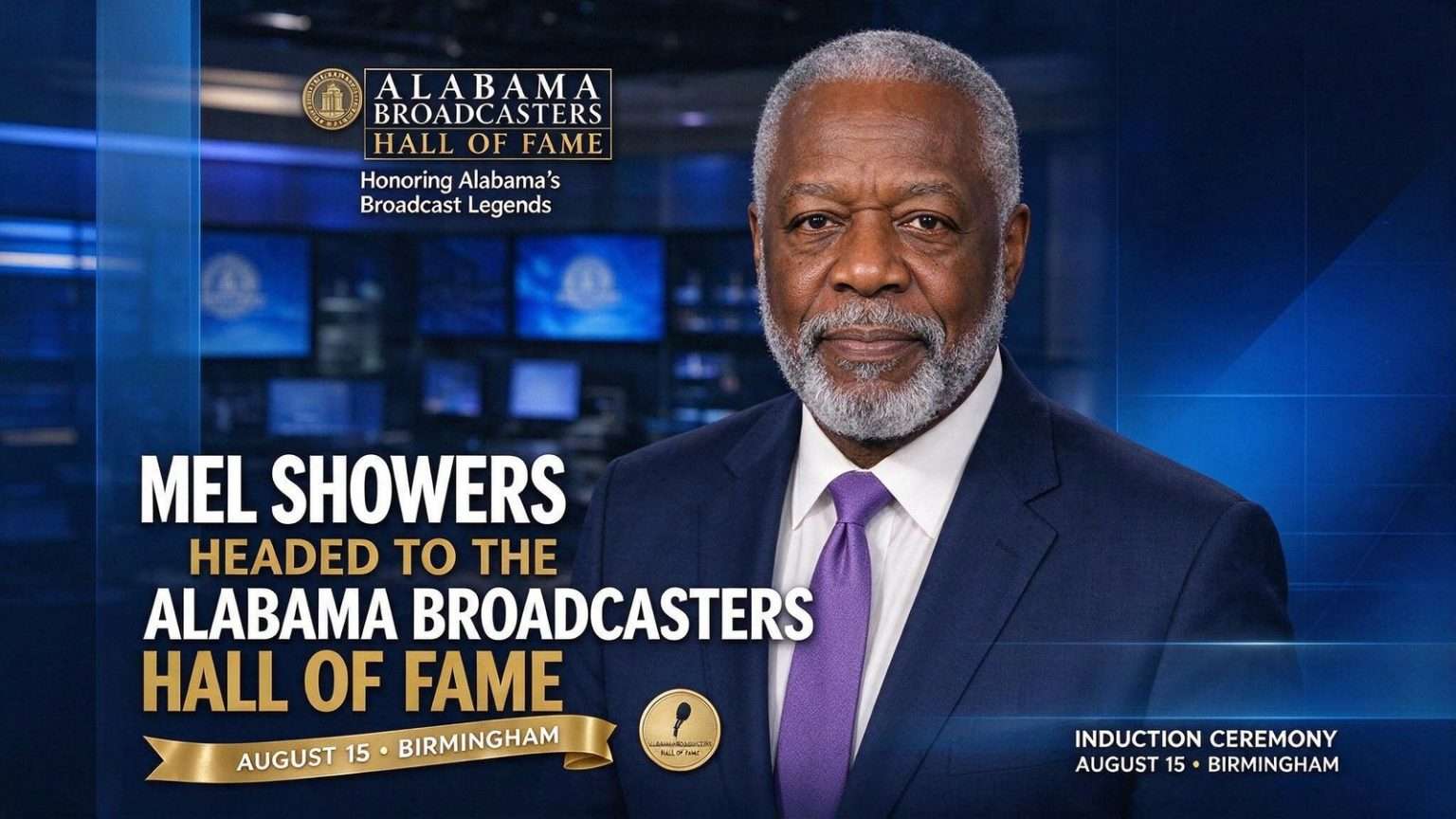
A familiar face on Gulf Coast television for nearly five decades is joining Alabama’s broadcasting elite. Mel Showers, a Mobile native and broadcasting veteran of more than 46 years, will be inducted into the Alabama Broadcasters Hall of Fame during a ceremony in Birmingham on August 15.
Showers, who describes himself with characteristic humility, has been a fixture on the Gulf Coast since launching his career as a street reporter. He covered the courts, local police, the Alabama Legislature and Mobile city and county government before moving to the anchor desk in 1980. Generations of Mobile-area viewers have welcomed him into their living rooms ever since, making his one of the longest continuous on-air careers in the region’s history.
He has spent his entire on-air career at one Gulf Coast station, an unusual feat in a business where anchors routinely move between markets. That longevity has made Showers more than a presenter of the news; in Mobile, he is part of the community’s shared memory, the man who was there — on the air, in the streets — for the storms, elections and trials that shaped the city.
“Mel has been an exemplary ambassador for the broadcasting profession,” said General Manager Mark Bunting. “Mel Showers is a broadcasting icon in this community and in this state.”
A career that began in the streets
Showers did not start at the anchor desk. He came up as a street reporter, the kind of journalist who covers the day’s events by being where they happen: at the courthouse when verdicts came down, at police headquarters when the day’s cases were recounted, outside City Hall when the Mobile City Council debated, and in the county building when commissioners made decisions that touched every corner of Mobile County.
That grounding shows in the way local news is judged by the people who watch it. A reporter who covers a community’s institutions year after year learns the players, the history behind every fight and the difference between a real story and a manufactured one. By the time Showers moved to the anchor desk in 1980, he had spent years learning Mobile’s government and its people from the ground up, and viewers could tell the difference.
Reporting on the Alabama Legislature also connected Mobile viewers to Montgomery, explaining how decisions made in the State House — from taxes to roads to schools — reached the Gulf Coast. Local broadcasters have long served that function in Alabama, where many communities rely on their television stations for coverage of state government that daily newspapers can no longer provide in depth.
Service before broadcasting
Before his broadcast career began, Showers served in the United States Air Force after high school. His military work included duty as a Military Intelligence Analyst, with assignments in the Far East, the Middle East and other regions of the world — experience that took him far from Mobile and back, and that preceded the discipline and composure viewers would later see on the air.
Military service is a common thread among American broadcasters of his generation, but intelligence work is a less common background. Analyzing information, weighing sources and presenting conclusions clearly are the same skills a good reporter and anchor use every day, and Showers’s years in uniform gave him a start on all three before he ever read a script on camera.
After his service, Showers continued his education at Bishop State College in Mobile, the historically black institution that has educated generations of the city’s residents. His path from the military to Bishop State to local television mirrors the story of Mobile itself over the last half-century: a port city whose people have served around the world and come home to build the institutions that bind the community together.
Anchoring a city through its history
Since 1980, Showers has anchored through the events that defined the Gulf Coast: hurricanes that aimed at the Alabama coast and occasionally delivered, political eras that began and ended at Government Plaza, and the everyday news of a metro area that has grown steadily along both sides of Mobile Bay. Anchors who last that long become the community’s constant — the voice people instinctively turn to when something is happening.
Anchor roles carry that weight because television news is still where the Gulf Coast turns in a crisis. When a hurricane threatens the Alabama coast, viewers keep the television on for hours at a stretch, and the anchor is the steady presence that translates a shifting storm into instructions a family can use. In quieter times, the anchor is the face on the screen each evening, a routine so consistent that the anchor becomes part of the household. Forty-six years of that presence is a kind of service in itself.
One station, one city
Showers’s entire on-air career has unfolded at a single Gulf Coast station. In an industry where the usual path runs from small markets to larger ones, and where contracts and ownership changes move anchors around the country, staying home for a full career is rare. It is also telling: Mobile never stopped being the place Showers wanted to work, and the station never had reason to let him go.
The loyalty runs in both directions, and viewers notice. Local news is built on trust, and trust compounds over decades. A family that watched Showers report the news in 1985 watched with him in 2005 and again last week, and the continuity carries authority no new hire can manufacture. When he reports on a story in Africatown or downtown Mobile, he brings with him the memory of every story that came before it.
His career also tracks the changes in the industry itself. Television news in 1980 ran on film and videotape, with a newsroom the size of a single studio and three networks defining the national agenda. Since then the station has moved through satellite feeds, digital editing, the internet, social media and streaming, while the daily mission — finding out what happened in Mobile today and telling people about it clearly — has stayed the same. Showers has adapted through all of it without losing the local focus that made him a fixture in the first place.
The Hall of Fame honor
The Alabama Broadcasters Hall of Fame recognizes broadcasters who have made lasting contributions to the profession and to the state, and induction is among the highest honors Alabama broadcasting offers. The ceremony in Birmingham on August 15 will place Showers alongside the radio and television figures who built the state’s broadcasting industry, from the early AM stations to the modern network affiliates that serve Alabama’s markets today.
For the Mobile market, the honor is a recognition of the city’s own broadcasting tradition. The Gulf Coast has produced and nurtured broadcasters whose work reached across Alabama and beyond, and the people who staff local stations day after day are the ones who keep communities informed — who show up when the courthouse lets out, when the storm makes landfall and when the election returns come in. Showers’s induction is a statement about the value of that work done steadily, in one place, for a very long time.
General Manager Mark Bunting’s tribute captured the professional side of the honor. Calling Showers “an exemplary ambassador for the broadcasting profession” points to the example he has set for younger journalists coming up through Mobile newsrooms — that the job is about the community, that credibility is earned slowly and spent quickly, and that a broadcast career can be built entirely at home. Calling him “a broadcasting icon in this community and in this state” extends the claim beyond Mobile: the honor is a statewide one, and it comes from an industry that has watched his work for almost five decades.
Showers’s own description of his career, delivered with the humility viewers know well, has always been simpler than his résumé. He covered the news, he says, and he has been fortunate to do it at home. The record tells a fuller story: a Mobile native, an Air Force intelligence veteran, a Bishop State graduate, a street reporter who mastered every beat that mattered in his hometown, an anchor for more than four decades, and now a Hall of Famer whose career will be remembered every time Alabama honors the people who told its stories.
The honor also arrives as local broadcasting faces its own era of change, with audiences spread across streaming platforms and newsrooms smaller than they once were. In that context, a career like Showers’s stands as a reminder of what local stations mean to the places they serve: they are the witnesses, the archives and the emergency lifelines of their communities, staffed by people who stayed through every change. Induction into the Hall of Fame honors not just one broadcaster’s longevity, but the standard he set for everyone who follows him at the anchor desk on the Gulf Coast.