A Mobile Broker Remembers the Week His Firm Walked Out and Took the Clients With It
In a January 2005 installment of his recollections of a bygone Mobile, a retired stockbroker described the frantic fortnight in which he and his partners opened a new office and persuaded their clients to follow.
MOBILE — The memoirs of ordinary working life rarely get written down, which is part of what makes a retired Mobile stockbroker’s serialized recollections, published in installments in January 2005, worth preserving. This one records a fortnight of controlled panic in the mid-20th-century brokerage business on Alabama’s coast. The setup was this. The author and several colleagues had resolved to leave the local brokerage house where they had built their careers — referred to here only by initials, as the writer preferred — and to open a new Mobile office under a different firm. The old partners fought it. For a week they held the departing men in place while they arranged reinforcements: two men brought down from New York and another sent over from New Orleans to staff the Mobile office in the interim. At the end of that week, the partners conceded that their mission was hopeless and told the men they were free to go.
Two Weeks to Build a Business
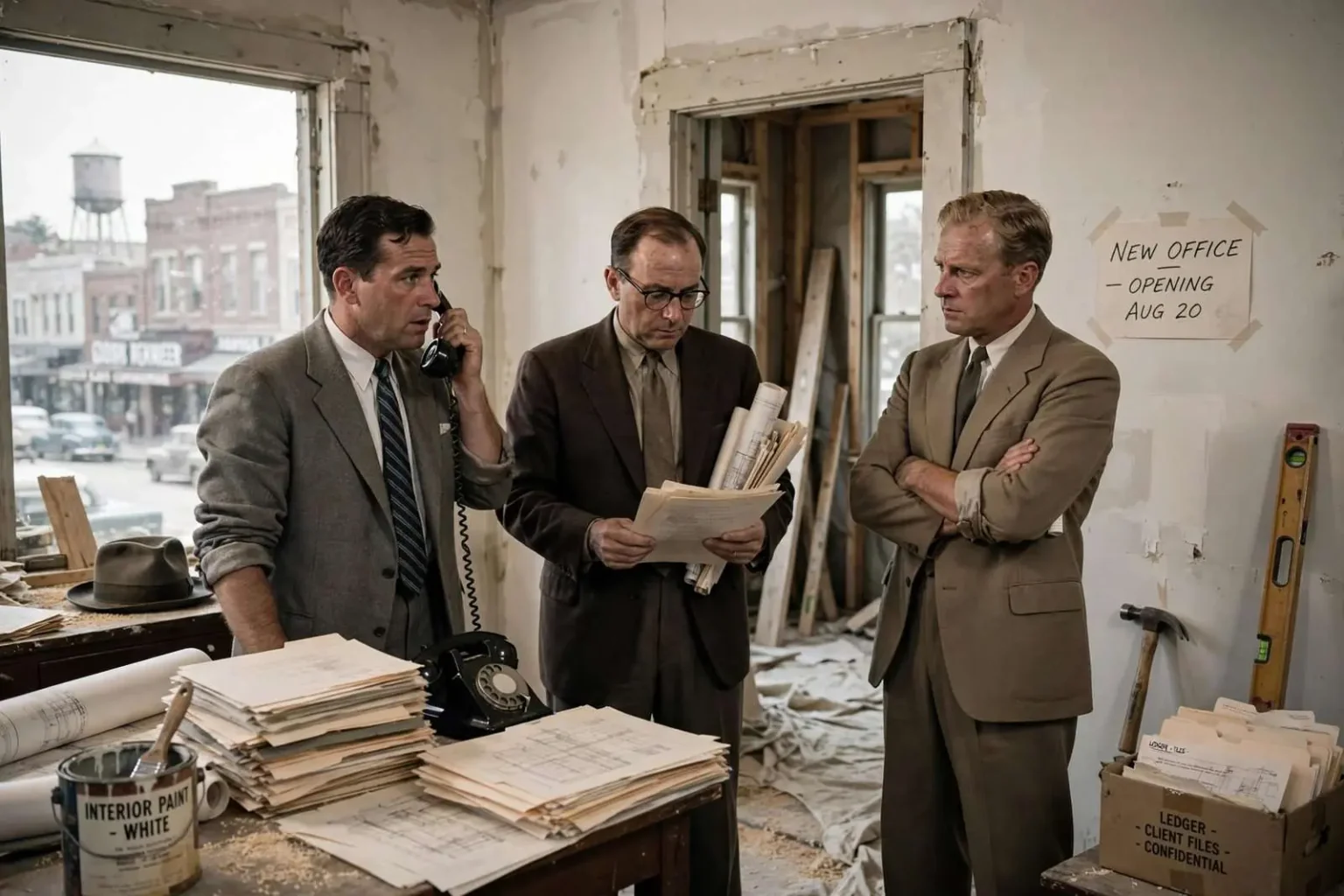
The new office could not open until August 20. That left roughly a fortnight, and it was, by the author’s account, hectic in the extreme. The men were simultaneously supervising the construction of the new office and working the telephones night and day, calling their customers and asking them to move. This was no small request. Perhaps 95 percent of these clients had never in their lives transferred an account from one broker to another. The old firm held their stock certificates. Many of the accounts were on margin. And the men were asking them to sign papers moving everything to a firm that most of them had never heard of. All the while, their former colleague — the man whose conduct had precipitated the walkout — was working the same phones with his new helpers, urging those same clients to stay put.
The Only Real Asset
What the departing brokers had, and all they had, was loyalty. Years of relationships, built one account at a time in a city where business was still conducted largely on the strength of a handshake. The author describes the moment one of his partners closed a particularly important account by walking across the street to a customer’s office and securing, with no paperwork and no formal commitment, a verbal agreement to move. In Mobile in those years, a verbal agreement was often as binding as a contract. The departing brokers knew which of their clients could be relied upon, and which would stay with the old firm out of habit or inertia. They concentrated their efforts on the former, and they took what they could get from the latter.
Building the Office From Scratch
The new office, like the old one, was downtown — within a few blocks of the same clients the men had been calling. The physical setup was modest: a small suite on one of the upper floors, freshly painted and minimally furnished. The author and his partners worked alongside carpenters and electricians, answering the phone with sawdust on their shoes and paperwork stacked on the floor. The pace was exhausting, but the men were accustomed to long hours and short deadlines. Several of them had been through similar transitions before, either at this firm or at previous employers. They knew that the first two weeks set the tone for everything that followed, and they were determined to be operational by August 20.
Why the Walkout Happened
The memoir does not go into great detail about the specific conduct that led to the walkout, but it is clear that the relationship between the partners and the men had deteriorated badly. The author describes a brokerage house in which the partners took an ever-larger share of the profits, in which the working brokers felt their contributions were increasingly undervalued, and in which one particular partner’s behavior had crossed a line that the men could no longer tolerate. The decision to leave was not impulsive. It had been discussed for months, and several potential landing spots had been considered before the new firm was chosen. The new firm, identified in the memoir only by initials, was a national company with a regional office in New Orleans and a willingness to open a Mobile branch.
The Customers Who Stayed and the Customers Who Left
When the dust settled, the departing brokers had kept roughly three-quarters of their joint book of business. That was enough to make the new office viable, and it was a vindication of the relationships they had spent years building. The customers who left with them tended to be older, more established investors who had been with one of the brokers for a decade or more. The customers who stayed tended to be newer accounts, or accounts that had been opened by the partners themselves rather than by the working brokers. The man whose conduct had precipitated the walkout kept a smaller book than he had before, but he remained in business, and the old firm continued to operate from the same downtown offices.
Why the Story Still Resonates
The memoir captures a moment when the brokerage business was changing in ways that would have lasting consequences for Mobile. National firms were beginning to push into regional markets, local partnerships were being absorbed into larger organizations, and the kind of personal, handshake-based business the men had built was becoming harder to sustain. The walkout described in this installment was, in a sense, a small example of that broader transition. The men who left went on to build successful careers at the new firm, and several of them stayed in Mobile for the rest of their working lives. The customers who moved with them did so because they trusted the men, not because they had any particular loyalty to the firms involved. That trust, carefully built over years, was the asset that made the whole move possible.
The walkout was more than a business story. It was a window into how a small Southern brokerage worked in the middle of the 20th century, when the relationships between brokers and clients were built on personal contact and when a single telephone call could mean the difference between a viable firm and a failed one. The author’s recollections preserve that world in a way that official records never could. The names are obscured, but the texture is intact. Anyone who has worked in a small professional office will recognize the personalities, the rivalries and the long hours described in this installment.
What Came Next
The memoir continues in later installments with the author’s long career at the new firm. He would remain there for decades, becoming one of the firm’s senior partners and a fixture of the Mobile business community. The walkout described in this chapter was, in retrospect, the moment that defined his career. It is also the moment that established him, in the eyes of his clients and his peers, as a man who was willing to walk away from a bad situation and start over when the situation demanded it. That reputation followed him through the rest of his working life and into his retirement, when he finally sat down to write the memoir that produced the chapters now being republished for a wider audience.
For modern readers, the story is a reminder that the brokerage business, for all its later transformation by computers, electronic trading and discount commissions, was once a deeply personal business. The clients described in these chapters were not just account numbers. They were people the broker saw at church, at the country club and at the grocery store. Their accounts were not just lines on a statement. They were the college funds, the retirement nest eggs and the inheritance plans of families the broker had come to know over many years. The trust that made the walkout possible was the product of that closeness, and the memoir is at pains to preserve it.
The walkout also illustrates the close ties between Mobile’s brokerage community and the city’s broader civic life. Many of the brokers involved were active in civic organizations, charities and church groups, and their clients were the same people they saw in those settings. The decision to leave a firm, and the decision to follow a broker to a new firm, were not just business decisions. They were social and personal decisions that rippled through the city’s white-collar community. The memoir captures that ripple effect with a clarity that no business record could.
A Note on the Era
For younger readers, the world described in this installment can seem almost unrecognizably slow. There were no computers, no electronic trading, no instant access to market data. Brokers relied on the ticker, the quotation board and the morning newspaper to keep up with what was happening on Wall Street. Customer orders were phoned in or hand-delivered. Account statements were typed on carbon paper and mailed at the end of each month. Yet the business ran, and ran profitably, because the relationships at its core were strong enough to compensate for the limitations of the technology. The walkout described here succeeded because the trust between brokers and clients was deeper than the inertia that kept them at the old firm.