
Mobile County Child Sex Offender Faces New Abuse Charges After Earlier Conviction
A Mobile County man who served five years for first-degree sodomy of children is back behind bars on new sodomy and child sexual abuse charges.
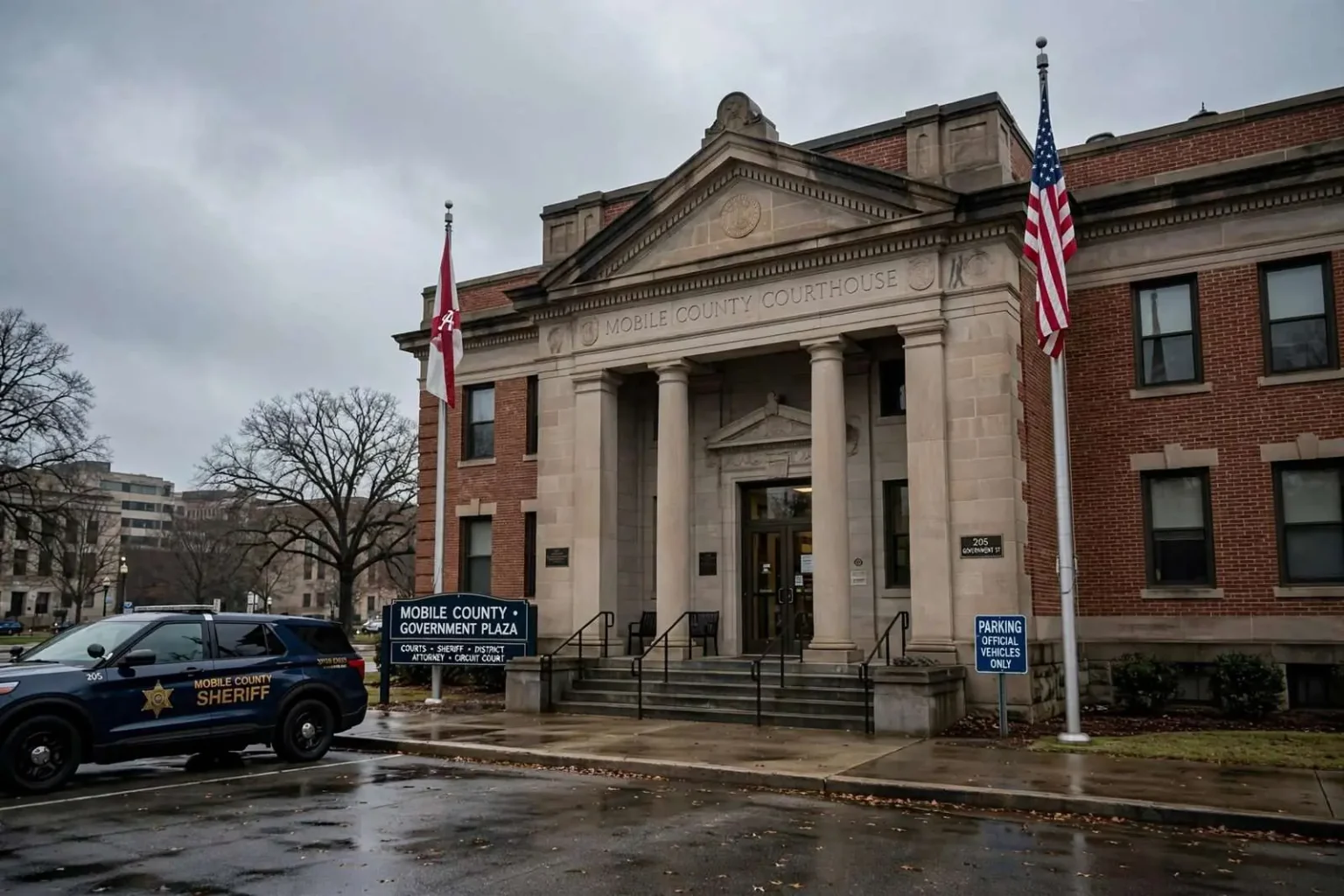
A Mobile County man previously convicted of a child sex crime is back in jail, now facing new charges of sodomy and sexual abuse of a child under the age of 12, according to court records in Mobile County.
James Lollar’s return to custody has drawn attention to a case that stretches back nearly two decades, and to the questions that arise when a person convicted of crimes against children is released and later charged again. The new charges remain pending, and officials have not announced a trial date.
The earlier case
Lollar was arrested in 2007 and pleaded guilty to first-degree sodomy in a case involving children who were two, seven, and nine years old at the time. The plea resolved charges arising from conduct that investigators said involved multiple young victims, all of them far too young to protect themselves or fully understand what was happening to them.
He received a 20-year sentence but served five years in custody, followed by five years of probation. The gap between the sentence imposed and the time actually served reflected the way Alabama’s sentencing structure worked in that era, when many offenders became eligible for release through parole or correctional incentive programs well before their full terms expired.
During his probation period, Lollar was subject to supervision by the state’s probation office, with standard conditions that applied to anyone convicted of a serious offense — regular reporting to an officer, compliance with curfews and travel restrictions, and requirements to avoid contact with the victims in the case. In cases involving child victims, courts often add further restrictions intended to limit access to children.
The letter to the court
In 2010, Lollar wrote a letter to Judge Youngpeter asking that his sentence be reduced, writing that he understood what he had done was wrong and saying he would never repeat it. Letters of that kind are not unusual in felony cases; defendants and their families frequently petition courts for leniency, particularly after a defendant has served part of a sentence.
The letter is now part of the public record of the earlier case, and it has taken on new significance now that Lollar faces allegations of a strikingly similar nature. Court documents from the original proceedings, including the plea and the sentencing record, remain available through the Mobile County court system.
New charges filed
According to court records, the new allegations involve charges of sodomy and sexual abuse of a child under the age of 12. Those are among the most serious offenses on Alabama’s criminal code, and a conviction for sodomy of a child under 12 carries a minimum sentence of life imprisonment under state law.
Lollar is being held in the Mobile County jail while the case proceeds. As with any criminal defendant, the new charges are accusations at this stage, and he is presumed innocent unless and until prosecutors prove the allegations beyond a reasonable doubt in court.
Prosecutors in the Mobile County District Attorney’s Office will now prepare the case for presentation, a process that includes reviewing evidence, interviewing witnesses and coordinating with investigators before any trial date is set. Officials have not announced when that process might conclude.
How Alabama handles repeat offenders
The case arrives at a moment when Alabama lawmakers have repeatedly revisited the state’s sentencing laws, particularly as they apply to crimes against children. The state’s sentencing reform efforts over the past decade were aimed largely at reducing prison overcrowding by steering non-violent offenders away from prison, while directing prison space toward violent and sexual offenses.
Under Alabama’s truth-in-sentencing framework adopted in later years, offenders convicted of certain serious crimes against children are required to serve a much larger share of their sentences in custody than was the case when Lollar was sentenced in the late 2000s. Cases like this one are often cited in legislative debates about whether earlier release practices left communities exposed to risks that a longer period of incarceration might have reduced.
Registered sex offenders in Alabama are also subject to notification and residency requirements under the state’s sex offender registration laws. Those requirements, enforced by local sheriffs’ offices, include periodic in-person reporting, restrictions on where an offender may live and work, and criminal penalties for violations. Failure to comply is itself a felony.
The impact on young victims
Child advocacy professionals in Mobile County point out that cases involving very young victims place enormous demands on the systems built to support them. The Gulf Coast Regional Child Advocacy Center, which serves children in Mobile and surrounding counties, provides forensic interviews, counseling and victim support services designed to minimize further trauma as a case moves through investigation and prosecution.
Forensic interviews are conducted by trained specialists in settings designed to be neutral and non-leading, so that a child’s account can be documented in a way that is both accurate and admissible in court. Medical examinations, when needed, are performed by practitioners experienced in identifying signs of abuse.
Victim advocates also help families understand each stage of the process, from arrest through trial and sentencing, and can connect caregivers with counseling resources that continue long after a criminal case ends. The recovery for a child who has experienced abuse is typically measured in years, and support services remain available regardless of how a criminal case is resolved.
What happens next
The new charges remain pending in Mobile County, and officials have not announced a trial date. The next steps in the process will include the initial court appearances and, eventually, a decision by prosecutors on how to present the case to a grand jury for indictment.
Bond in cases of this nature is often set high or denied altogether, depending on the circumstances and the defendant’s criminal history. Court records in Mobile County are accessible to the public, and updates in the case — including any rulings on bond, motions filed by the defense, or scheduling orders — will appear in the docket as the case advances.
For now, the case stands as a data point in an ongoing conversation across Alabama about how the justice system balances rehabilitation, punishment and public safety when the defendant has a prior conviction for crimes against children. Residents with information relevant to the pending case can contact the Mobile County Sheriff’s Office or the District Attorney’s Office.
Reporting child abuse in Mobile County
Child welfare officials in Mobile County urge anyone who suspects a child is being abused or neglected to report it promptly. Reports can be made to the Alabama Department of Human Resources, to local law enforcement, or through the statewide child abuse hotline operated by DHR. Alabama law requires certain professionals — teachers, doctors, nurses, social workers and others who work with children — to report suspected abuse, but any resident can make a report, and reports can be made anonymously.
Investigators say the earliest reports make the greatest difference. Physical evidence and clear recollections are easier to gather close in time to an incident, and children can be connected with support services sooner when a concern is raised quickly. Delayed reporting, which is common in abuse cases because of fear or confusion, can complicate prosecution even when the underlying allegations are strong.
Schools across the Mobile County Public School System also play a role in prevention and detection, with counselors and teachers trained to recognize warning signs and to route concerns to the appropriate authorities. Community organizations that serve children — churches, sports leagues, after-school programs — have increasingly adopted child protection policies that require background checks and limit one-on-one contact between adults and children.
The court process ahead
If the case is indicted, it will be assigned to a Mobile County circuit court judge, and the pretrial process will begin in earnest. That stage typically includes discovery, during which prosecutors share evidence with the defense; pretrial motions on everything from the admissibility of evidence to questions about how young witnesses will be questioned; and scheduling conferences that eventually produce a trial date.
Trials involving child victims often include special accommodations under Alabama law. Courts can allow children to testify via closed-circuit television in certain circumstances, and prosecutors work closely with child advocacy staff to prepare young witnesses while shielding them from unnecessary stress. Cases of this type can take many months — sometimes longer than a year — to reach trial, given the complexity of the evidence and the care required in handling young witnesses.
The defendant’s prior conviction and the 2010 letter seeking a reduced sentence are part of the record in the earlier case. How much of that history may be presented during the new proceedings will depend on rulings by the court, since Alabama’s rules of evidence limit when prior conduct can be mentioned in front of a jury.
A community response
News of the new charges has circulated widely in Mobile County, where cases involving prior offenders returning to court tend to generate strong community reaction. Advocates for child protection say that reaction, while understandable, is most useful when it translates into practical steps: supporting victim services, learning the signs of abuse and making sure children in a family or neighborhood have trusted adults they can tell when something is wrong.
The pending charges against Lollar will be resolved in the courts, where the standards of proof and the protections of a fair trial apply to every defendant regardless of the nature of the allegations. Until that process concludes, the case remains open, and updates will appear in the Mobile County court docket as it moves forward.


