County Commissioner Hospitalized as Investigators Probe Gulf Shores Shooting Death
Mobile County Commissioner Stephen Nodine was under psychiatric care at Mobile Infirmary as Baldwin County detectives worked to determine how Angel Downs died outside her Gulf Shores townhouse.
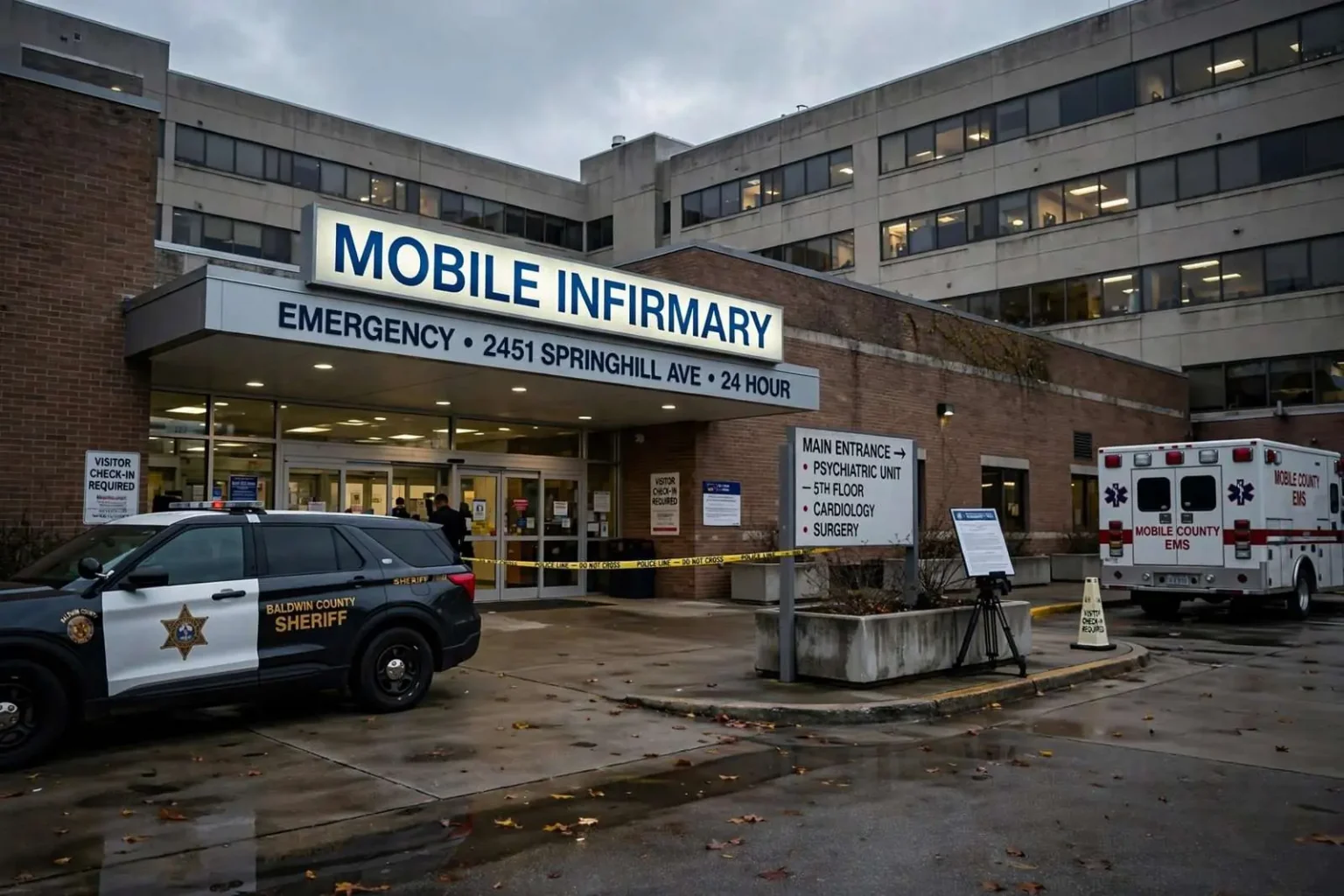
Mobile County Commissioner Stephen D. Nodine was under medical care in the psychiatric unit on the fifth floor of Mobile Infirmary, sources close to the commissioner confirmed, as investigators in two counties pressed separate inquiries touching on his conduct.
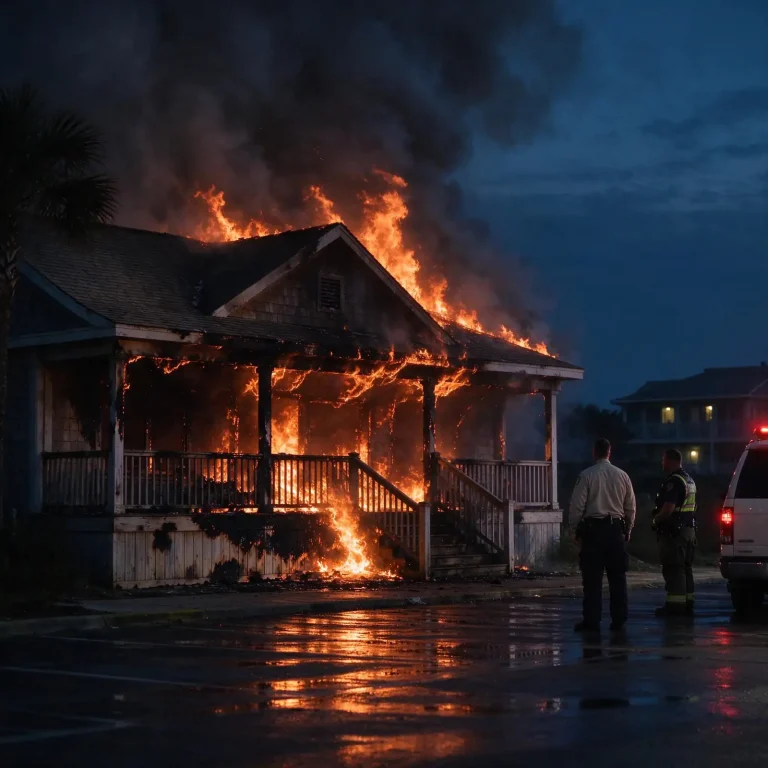
Nodine, 46, was taken to the Springhill Avenue hospital after being questioned by Baldwin County authorities following the shooting death Sunday night of Angel Downs, a 45-year-old real estate broker with whom he had a longstanding relationship. Downs was found dying in the driveway of her townhouse off Fort Morgan Road in Gulf Shores, shot in the head.
What neighbors reported
Neighbors told investigators they heard a gunshot and then saw a red, extended-cab Ford pickup truck with Mobile County tags leaving the area shortly afterward. Nodine drove a truck matching that description.
No one had been charged with a crime, and authorities had not alleged that a crime occurred, as detectives continued to weigh evidence to determine whether the death was an accident, a suicide or a homicide. That triad — accident, suicide, homicide — framed the investigation from its first hours, and each possibility carried a different legal path. An accidental discharge would close the case as a tragedy; a suicide would end it as a personal one; a homicide would set in motion murder proceedings in one of Alabama’s fastest-growing coastal counties.
Sources near the investigation said Baldwin County authorities might disclose their thinking within 36 hours. The timeline reflected the pressure on Gulf Shores police and Baldwin County District Attorney’s office, which were handling the county’s highest-profile death investigation in years in a resort community whose police force is built for a seasonal beach town rather than a case drawing statewide attention.
Nodine is married and the father of one son. His relationship with Downs was described as longstanding, with the couple seen together regularly in public from Pensacola Beach to New Orleans — a social visibility that made the circumstances of her death all the more jarring to people in both counties who knew them as a couple.
Friends describe a man in distress
Friends and political associates who had spoken with Nodine earlier in the week said his mental state was “not good.” Political and legal figures in Mobile said his use of prescription painkillers to manage hip and back pain had escalated in recent years, producing behavior erratic enough that some of them had urged him to seek treatment for addiction.
According to those sources, Nodine and some of those closest to him rejected the advice, treating it as the product of jealousy and a desire to damage him politically. The dynamic — escalating dependence, and a circle that explains away the evidence — is a common one in cases of prescription drug addiction, and it had left the commissioner’s allies without a mechanism to intervene short of a crisis.
Nodine’s health problems were no secret in Mobile political circles. His hip and back pain had visibly affected him, and the prescription painkillers used to manage such injuries carry well-documented risks of escalation. What friends described was a man in the grip of both chronic pain and the medications meant to treat it, a combination that those around him said had changed his temperament and judgment over several years.
A second investigation, already under way
Well before the shooting, Nodine had been the subject of a criminal investigation. It began after workers at the Mobile County garage discovered a marijuana-like substance in his county pickup truck when the vehicle was brought in for servicing.
In recent weeks, state authorities had issued a second round of subpoenas for witnesses to appear before a grand jury in connection with that inquiry. Sources familiar with the investigation said the Alabama Bureau of Investigation had shifted its focus away from the drugs found in the truck and toward ethical questions involving the use of public property and the handling of expenses. Those sources said they did not know whether Downs herself had received a subpoena to appear before the grand jury.
The shift mattered. Questions about the use of a county vehicle — where it went, who drove it, how its mileage squared with its official purpose — are the kind of records-based inquiry that grand juries pursue through fuel logs, maintenance records and witness testimony. An investigation that begins with a discovery in a repair bay can end as a public integrity case about the daily conduct of a countywide officeholder.
Escambia County District Attorney Stephen Billy was named special prosecutor to lead that investigation after Mobile County District Attorney John Tyson Jr. asked that his own office be excused, in order to remove any appearance of political calculation from the process. Billy did not return calls seeking comment.
The recusal was a rare and consequential step. Mobile County’s district attorney routinely prosecutes cases involving county employees and officials, but a sitting county commissioner — a figure the office works alongside and answers to indirectly through budget and policy — presents a conflict that obligates the office to step aside. Bringing in a district attorney from another part of the state, in this case from Escambia County on the Florida line, is the standard mechanism for ensuring that a prosecution of a powerful local official is not tainted by the perception of local politics.
A commissioner at the center of county government
Nodine represented District 2 on the three-member Mobile County Commission, a body that controls the county budget, roads and a long list of contracts. The commission’s reach in daily life is difficult to overstate: county government in Alabama paves and maintains roads outside city limits, funds the sheriff’s office and the court system’s support staff, manages garbage collection and drainage in unincorporated areas, and awards the contracts that connect local firms to public money.
A Republican first elected in 2004, Nodine had cultivated a combative public image and was among the most visible county officials on the Gulf Coast. He had run for the seat after building a profile in business and civic circles, and he distinguished himself quickly by his willingness to fight — with fellow commissioners, with mayors, with the media — in a style that supporters called refreshing and critics called abrasive.
His district took in western Mobile County and its fast-growing suburbs, and his visibility extended beyond the county: Nodine had sought higher office before, and he was frequently mentioned as a candidate for other posts, a trajectory that made the accumulating investigations all the more consequential for his political future.
The convergence of a death investigation in Baldwin County and a grand jury inquiry in Mobile County left the commission facing questions it had no immediate way to answer, with the June 1 party primaries three weeks away. The timing compounded everything. The commission’s agenda, its contract decisions and the county’s political calendar all now intersected with an unanswered question about one of its three members.
As of this report, Nodine had not been charged in connection with the death of Angel Downs, and the cause of her death had not been officially determined.
What happens next
The immediate decisions belonged to Baldwin County authorities, who controlled the death investigation and, according to sources, expected to say something within a day and a half of this report. Everything else — the commissioner’s hospitalization, the grand jury’s timetable, the commission’s response — was hostage to that determination.
The dual-track structure of the inquiries is worth understanding. The Baldwin County investigation into Downs’s death proceeds under that county’s coroner and district attorney, and it will turn on forensics: the autopsy, the ballistics, the physical evidence around the townhouse off Fort Morgan Road, and the timeline established by witnesses. The Mobile County grand jury inquiry, led by a special prosecutor, proceeds separately and concerns the commissioner’s public conduct — the truck, the expenses, the use of county property. The two investigations share a central figure but not their evidence, their standards or their potential outcomes.
For Mobile County government, the situation was unprecedented in recent memory. A sitting commissioner hospitalized in a psychiatric unit, named in connection with a death investigation in a neighboring county, while under grand jury scrutiny at home, presented the two remaining commissioners with questions for which county government has no playbook. The commission’s work — budgets, roads, contracts for an unincorporated county of hundreds of thousands of residents — does not pause for the difficulties of one of its members.
For the Gulf Shores community where Downs lived and worked, the case was closer to home than any headline. Real estate brokers are central figures in a beachside economy, and a death in the driveway of a Fort Morgan Road townhouse — the very kind of property the local market exists to sell — made the investigation personal to the town’s professionals and residents in a way that official statements could not soften.
The facts established as of this report were these: a 45-year-old woman shot in the head in her driveway; a gunshot heard by neighbors; a red, extended-cab Ford pickup with Mobile County tags seen leaving; a county commissioner who drove a matching truck, questioned and then hospitalized; a longstanding relationship between the two that was publicly visible from Pensacola Beach to New Orleans; a grand jury inquiry already under way into the commissioner’s use of public property; and a special prosecutor appointed to oversee it. The remaining questions — what happened in that driveway, and what it means for the commissioner — awaited the answers that Baldwin County authorities had suggested were coming within 36 hours.