Mobile County Health Officials Warn of ‘Gas Station Drugs’ and New Opioid Cychlorphine
The Mobile County Health Department is warning residents about tianeptine, kratom and the emerging synthetic opioid cychlorphine, and urging them to keep naloxone on hand.
MOBILE, Ala. — The Mobile County Health Department is warning residents that so-called “gas station drugs” — products containing tianeptine, kratom and other unregulated substances — can cause serious harm, and that a powerful new synthetic opioid known as cychlorphine may be turning up in the illicit drug supply.
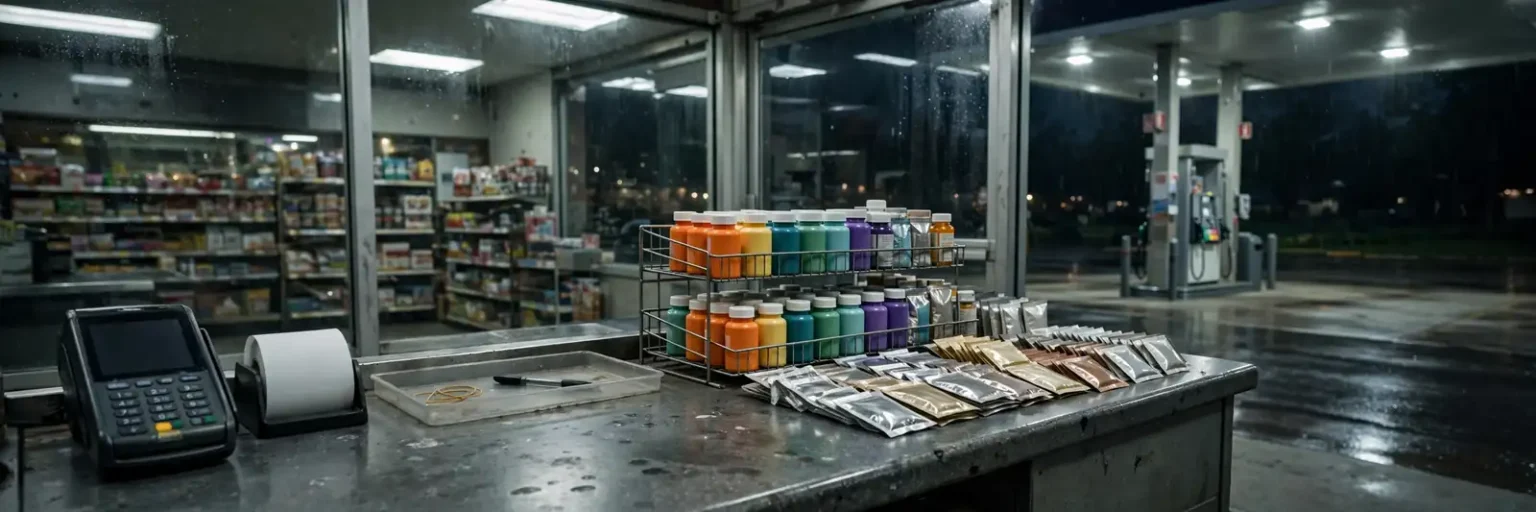
The health department said these products are often sold in convenience stores, smoke shops, gas stations and online, and are frequently marketed as dietary supplements, energy boosters, pain relievers, mood enhancers or wellness products. Bright packaging, easy availability and labels touting a product as “natural,” officials stressed, are no guarantee that it is safe, legal or effective.
“Just because a product is sold at a gas station, convenience store, smoke shop, or online does not mean it is safe,” said Dr. Kevin Michaels, the health officer for Mobile County. “These substances can lead to dependence, overdose, and death. Residents should seek proven medical care rather than rely on dangerous, unregulated products.”
Tianeptine: ‘gas station heroin’
Tianeptine is a drug prescribed as an antidepressant in some countries in Europe, Asia and Latin America, but it is not approved by the U.S. Food and Drug Administration for any medical use. In the United States, it has been sold in liquid and pill form at convenience stores, vape shops and gas stations, which has earned it the nickname “gas station heroin.”
The health department said tianeptine products may be sold under names including Neptune’s Fix, ZaZa Red, Tianna and TDD Red. The FDA has repeatedly warned consumers not to buy or use tianeptine products, saying they have been linked to serious harm, overdose and death. The maker of Neptune’s Fix recalled its products in 2024 after reports of serious harm.
Some people turn to tianeptine as an alternative to opioids or to try to treat anxiety or depression on their own. Because these products are not regulated, the amount of drug they contain can vary widely. One published medical case study found that some U.S. products contained doses many times higher than those used in countries where tianeptine is a prescription medicine.
Kratom is illegal in Alabama
Kratom, made from the leaves of a Southeast Asian tree, is also not approved by the FDA for any medical use. In Alabama, kratom and its primary alkaloids, mitragynine and 7-hydroxymitragynine, are Schedule I controlled substances, meaning they are illegal to possess, sell or offer for sale. The state added kratom to its list of controlled substances in 2016.
Despite that, kratom products continue to surface in the region. In recent weeks, southalnews.com has reported on an Atmore case in which parents were charged after a toddler ingested kratom, and on kratom being found at the scenes of two University of Mississippi student deaths.
Concentrated products containing 7-hydroxymitragynine, often called 7-OH, have drawn particular concern nationally because the compound acts on the same brain receptors as opioids. In 2025, the FDA recommended that 7-OH be placed under federal drug control.
Cychlorphine: a new synthetic opioid
The health department is also urging residents to be aware of cychlorphine, an emerging synthetic opioid that may be present in illicit drugs or in products with unclear or misleading ingredient labels. Like other opioids, it can slow or stop a person’s breathing and may cause a fatal overdose.
Cychlorphine is a relatively new arrival. According to the U.S. Drug Enforcement Administration, a DEA laboratory first reported the substance in Florida in April 2024. The Center for Forensic Science Research and Education issued a public alert about it in January 2026, citing laboratory data suggesting it is roughly 10 times more potent than fentanyl.
The drug has since been detected in several states, including Tennessee, where it has been linked to multiple overdose deaths, as well as Louisiana, Texas, California and New York. Sheriffs in western North Carolina warned their communities about it this spring. Experts have noted that standard fentanyl test strips do not detect it, which means people may take it without knowing.
Health experts believe naloxone can still reverse a cychlorphine overdose, though more than one dose may be needed because of the drug’s potency.
Health risks and dangerous combinations
According to the health department, reported harms from these substances include:
- Confusion and seizures
- Liver injury
- Dependence and withdrawal symptoms
- Slowed or stopped breathing
- Overdose and death
The risks grow when the products are combined with alcohol, opioids, benzodiazepines or other medications, officials said. Because many of these products have inconsistent or inaccurate labels, users often have no reliable way to know what they are actually taking or how much.
Recognizing and responding to an overdose
The health department urged residents to learn the warning signs of an overdose and act quickly. A person may be overdosing if he or she:
- Is unresponsive or very difficult to wake
- Is breathing slowly or irregularly, or has stopped breathing
- Has blue, gray or purple lips or fingernails
If you suspect an overdose, officials recommend these steps:
- Call 911 immediately.
- Give naloxone if it is available. Naloxone, widely known by the brand name Narcan, can reverse an opioid overdose and restore breathing.
- Do not wait to be sure. Give naloxone whenever an opioid overdose is suspected, even if the substance is unknown. It will not harm someone if opioids are not involved.
- Give a second dose if needed. If the person does not respond or breathing does not improve within two to three minutes, give another dose if one is available.
- Stay with the person until emergency responders arrive.
Where to get naloxone in Mobile County
The FDA approved naloxone nasal spray for over-the-counter sale in 2023, so it can be bought at pharmacies without a prescription. The nasal spray is designed to be used by people with no medical training.
Mobile County residents can also pick up free naloxone at the health department’s Prevention and Wellness Kiosks located around the county, with no appointment needed. The county launched the kiosks in November 2024 as the first program of its kind in Alabama, and by August 2026 they had dispensed 692 items, including 377 two-dose naloxone packages.
On National Save A Life Day, Sept. 24, the health department handed out 164 boxes of naloxone nasal spray, or 328 doses, while the peer-run nonprofit People Engaged in Recovery distributed kits across Mobile, Baldwin and Washington counties.
Because naloxone’s effects are temporary and overdose symptoms can return, anyone who receives it should still get a medical evaluation, even if he or she wakes up and seems to recover.
Where to find safe care
The health department encouraged anyone dealing with pain, mental health concerns or substance use challenges to talk with a licensed health care provider about safe, evidence-based treatment instead of turning to unregulated products.
Mobile County residents can access primary and preventive care through:
- Family Health
- Accordia Health
- Franklin Primary Health Center
- Mostellar Medical Center
The warning comes as the health department continues to track overdose trends across the county. Its latest overdose surveillance report showed overdose-related emergency department visits fell 27% and overdose-related 911 runs fell 17% from September 2025 to September 2026, even as opioid-related visits rose. Officials have said the improvement is encouraging but must be protected — and the arrival of new, more potent substances such as cychlorphine is one reason they are urging residents to stay alert.