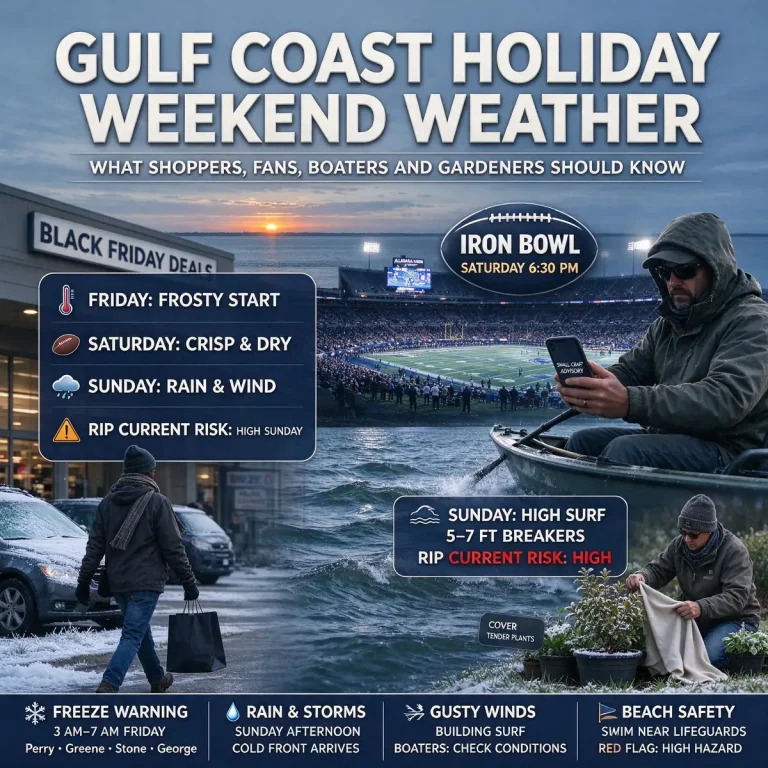
Mobile County Warming Centers Open Through Saturday: Locations, Phone Numbers and Cold Safety Tips
The Mobile County Emergency Management Agency is opening three warming centers from Thanksgiving Day through Nov. 28, each starting at 5 p.m., with 211 available for information.
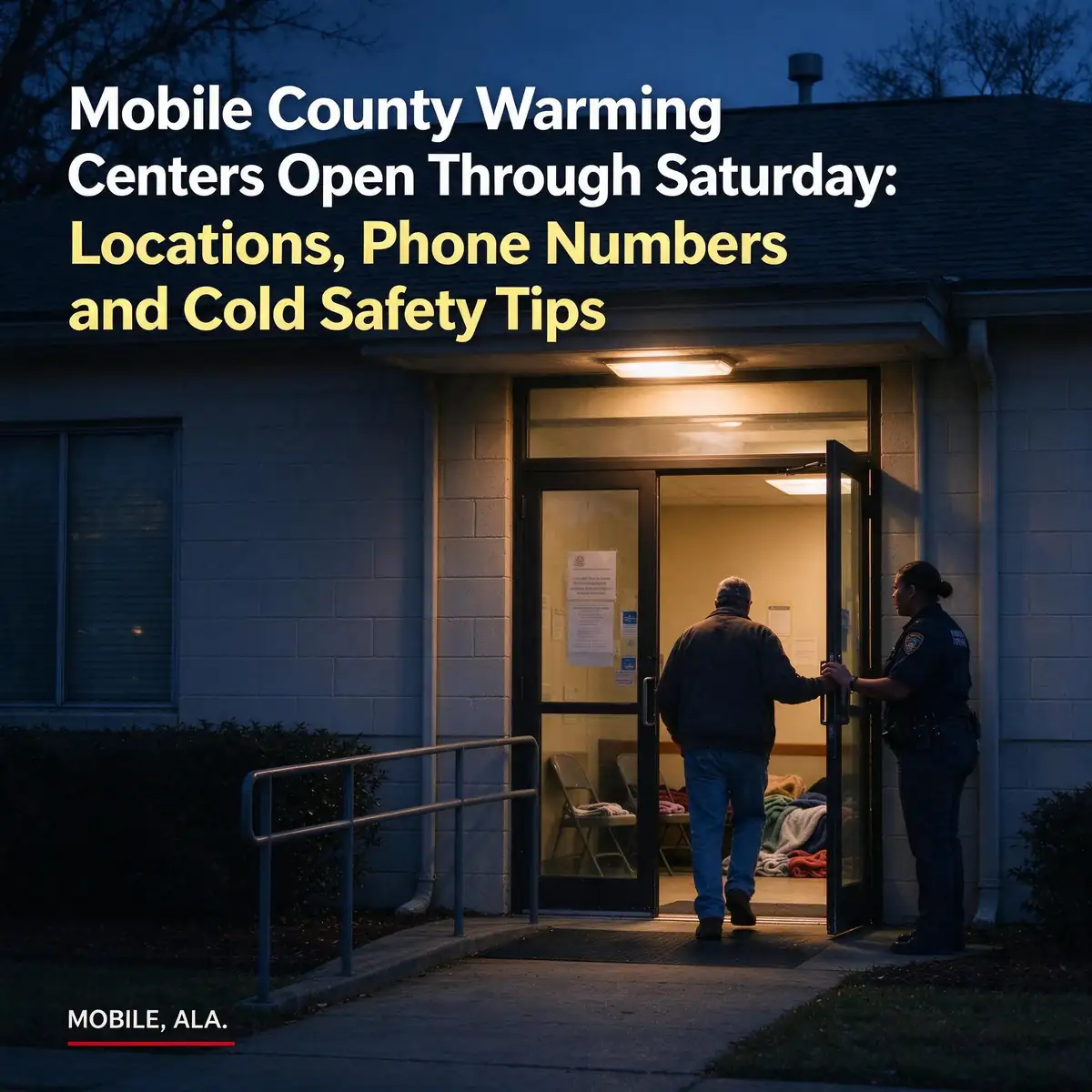
MOBILE, Ala. — Mobile County warming centers are opening their doors this holiday weekend to give people a safe, heated place to go as cold temperatures settle over the area. The Mobile County Emergency Management Agency announced that three locations will operate from Thursday, Nov. 26, which is Thanksgiving Day, through Saturday, Nov. 28, with each site opening at 5 p.m.
The agency said the centers are being made available because cold weather is expected during that stretch. Anyone who lacks reliable heat, is staying outdoors or simply needs a warm place for the evening is encouraged to use them. For general questions, the agency directs residents to call 211.
Where the Warming Centers Are
All three sites can be reached by phone ahead of time. Because the centers open at 5 p.m., calling first is the best way to confirm availability and ask about anything you should bring.
Waterfront Rescue Mission
The Waterfront Rescue Mission is located at 279 North Washington Avenue in Mobile. The mission can be reached at 251-433-1847 or at 251-408-1254.
The Salvation Army
The Salvation Army’s location at 1009 Dauphin Street in Mobile is also serving as a warming center. Its phone number is 251-438-1625.
McKemie Place
McKemie Place is the third participating site. The agency listed two ways to reach it: by calling 251-287-2225 or by dialing 211.
Calling 211 for Help
The county emergency management agency is pointing residents to 211 for more information about the warming centers. Across the United States, 211 is a free, easy-to-remember phone number that connects callers with local health and human services, including shelter, food assistance and help with utility bills. It is not a substitute for 911. Anyone facing a medical emergency, a fire or a life-threatening situation should call 911 immediately.
Residents who know someone who may need a warm place to stay, such as a neighbor without heat or a person sleeping outside, can share the 211 number and the addresses above, or help arrange a ride to one of the sites.
Why Cold Weather Is Dangerous
Even on the Gulf Coast, where winters are generally mild, a cold snap can be risky. Many households rely on space heaters, fireplaces or other supplemental heat sources that carry their own hazards. People who spend extended time outdoors are especially vulnerable when temperatures drop overnight.
According to the Centers for Disease Control and Prevention, hypothermia can occur even at cool temperatures above 40 degrees Fahrenheit if a person becomes chilled by rain, sweat or immersion in cold water. Older adults, infants, people with chronic medical conditions, people who live alone and people experiencing homelessness are among those at greatest risk.
Warning signs of hypothermia
Hypothermia happens when the body loses heat faster than it can produce it, causing body temperature to fall to dangerously low levels. Because it affects the brain, a person may not realize it is happening. Federal health officials list the following warning signs.
- In adults: shivering, exhaustion or feeling very tired, confusion, fumbling hands, memory loss, slurred speech and drowsiness.
- In infants: bright red, cold skin and very low energy.
A body temperature below 95 degrees Fahrenheit is a medical emergency. If you notice signs of hypothermia, the CDC advises getting the person into a warm room or shelter, removing any wet clothing and warming the center of the body first, including the chest, neck, head and groin, using dry layers of blankets or clothing. Warm, nonalcoholic drinks can help raise body temperature, but they should never be given to someone who is unconscious. Seek medical attention as soon as possible, and call 911 if the person becomes unresponsive.
Warning signs of frostbite
Frostbite is less common in South Alabama, but it is possible with prolonged exposure, particularly on fingers, toes, ears, the nose and cheeks. Early signs include redness or pain in the affected area. As it progresses, skin may turn white or grayish-yellow, feel unusually firm or waxy and become numb. Anyone with signs of frostbite should get to a warm place and seek medical care, and should avoid rubbing the affected area or using a heating pad, heat lamp or fireplace to warm it, since numb skin can burn easily.
Heating Your Home Safely
Heating equipment is one of the leading causes of home fires in the United States, and the risk tends to rise during cold snaps when people turn to portable heaters and other alternatives. Fire safety organizations recommend these precautions.
- Keep anything that can burn, including bedding, curtains, furniture and clothing, at least 3 feet away from space heaters, fireplaces and wood stoves.
- Plug space heaters directly into a wall outlet rather than an extension cord or power strip.
- Choose heaters that shut off automatically if they tip over, and place them on a level, hard, nonflammable surface.
- Turn space heaters off when you leave the room or go to sleep.
- Keep children and pets away from heaters and open flames.
- Never use an oven or stovetop to heat your home.
- Test smoke alarms to make sure they work.
Guarding Against Carbon Monoxide
Carbon monoxide is a colorless, odorless gas produced by burning fuel, and it can build up quickly in enclosed spaces. The CDC notes that common symptoms of carbon monoxide poisoning include headache, dizziness, weakness, upset stomach, vomiting, chest pain and confusion, and that people who are sleeping can be overcome before they ever notice symptoms.
- Never run a generator, pressure washer or other gasoline-powered engine inside a home, garage, basement or crawl space, even with doors or windows open. Generators used outdoors should be kept well away from windows, doors and vents.
- Never use a charcoal grill, camp stove or gas grill indoors or in a garage.
- Never leave a vehicle running inside an attached garage.
- Install battery-operated or battery backup carbon monoxide detectors near sleeping areas and check the batteries regularly.
- If a carbon monoxide alarm sounds, or if anyone in the home feels dizzy, light-headed or nauseated, get everyone outside to fresh air right away and call 911.
Checking on Neighbors and Loved Ones
A quick phone call or knock on the door can make a real difference during cold weather. Emergency managers routinely encourage residents to check on older relatives and neighbors, people with disabilities or chronic illnesses and families with young children. Ask whether their heat is working, whether they have enough blankets and warm clothing, and whether they have food and any medications they need. If someone does not have a safe way to stay warm, the warming centers and the 211 line are good places to start.
Protecting Pets, Pipes and Plants
Cold weather affects more than people. A few simple steps can protect the rest of the household.
- Pets: Bring dogs and cats indoors during cold nights. Animals that must stay outside need a dry, draft-free shelter raised off the ground, with bedding and fresh water that is not frozen. Outdoor cats sometimes seek warmth near car engines, so knocking on the hood before starting the vehicle can prevent injuries.
- Pipes: Disconnect garden hoses, cover outdoor faucets and insulate exposed pipes. During a hard freeze, letting a faucet drip slightly and opening cabinet doors under sinks can help keep water moving and warm air circulating.
- Plants: Bring potted plants inside or into a garage, and cover tender plants in the ground with sheets or frost cloth overnight.
Dressing for the Cold
For anyone who has to be outside, dressing in several loose layers traps warmth better than a single heavy garment. A hat, gloves, a scarf or face covering and water-resistant shoes help prevent heat loss from the head, hands and feet. Wet clothing pulls heat away from the body quickly, so changing out of damp clothes as soon as possible is important. Avoiding alcohol also helps, since it can make the body lose heat faster even while creating a false sense of warmth.
Quick Reference
- Dates: Thursday, Nov. 26, through Saturday, Nov. 28
- Opening time: 5 p.m. at all locations
- Waterfront Rescue Mission: 279 North Washington Avenue, Mobile; 251-433-1847 or 251-408-1254
- The Salvation Army: 1009 Dauphin Street, Mobile; 251-438-1625
- McKemie Place: 251-287-2225 or 211
- General information: Call 211
- Emergencies: Call 911
The Mobile County Emergency Management Agency encourages residents to monitor local forecasts throughout the holiday weekend and to reach out early, rather than waiting until temperatures fall, if they or someone they know needs a warm place to go.