Mobile’s Golden Age: A Retired Banker Traces the City’s Rise, Its Missed Container Revolution and Its Long Plateau
Asked to name Mobile's golden age, a 76-year-old retired banker names three, then explains how the city that hosted the inventor of the container ship failed to capitalize on it while Charleston and Savannah did.
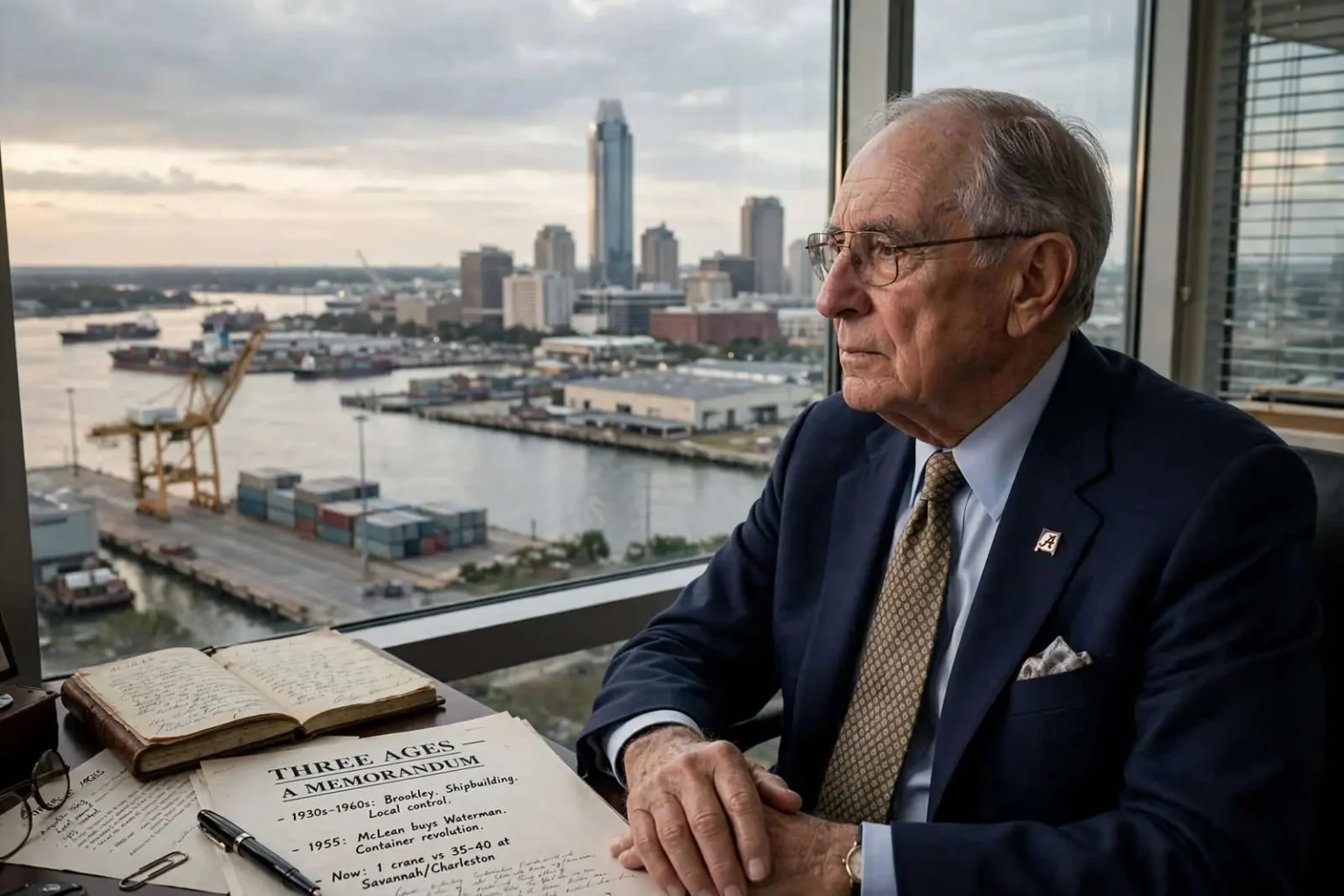
MOBILE — Asked to identify Mobile’s golden age, a 76-year-old retired Mobile banker gave the only honest answer available to a man with a long memory: there was more than one, and he lived through only the last of them.
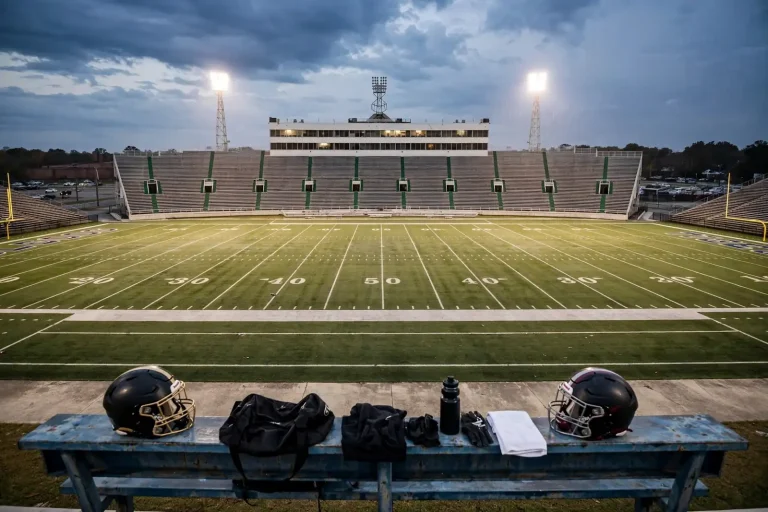
His response opened a series in which longtime Mobilians were invited to say when the city was at its best. The answers ranged widely — golden ages for commerce, for fishing, for hunting, for high school football, for race relations. The banker’s answer was about money, ships and the men who ran things, and it doubles as a working theory of why Mobile stopped growing.
Three Ages
The first, he says, was the antebellum cotton era, when the Port of Mobile ranked among the three or four largest in the country and goods from all over Europe came in and went out directly. A great many people made a great deal of money; very few held onto it.
The second ran from the late 1800s until the Depression, driven by the same forces and yielding the same results. It carried one great affliction: yellow fever, which returned with regularity, killed a number of his own relatives, and prompted honest doubt that a city so afflicted could ever come into its own. The port nonetheless ranked in the national top five.
The third is the only one he can speak to personally — the late 1930s through the 1960s. The economy was good most of the time. Many businesses were headquartered in Mobile. Brookley Field was established and flourished until its closing was announced in 1964, though the base did not shut down for another five years. Alabama Dry Dock and Shipbuilding built 104 ships during the war, and newly arrived workers crowded the city.
The Men Who Ran It
What distinguished that era, in his telling, was the caliber of the men at the top — and the fact that they were locals with a stake in the place. The heads of the individual businesses exercised real influence over local politics, and he judges them men of integrity.
He names them the way a man names a ship’s crew: Finley McRae taking over from Ernest Ladd, and Austill Pharr from LeBaron Lyons, at the two larger banks; D.R. Dunlap exercising a quiet but firm influence at Alabama Dry Dock; E.B. Peebles at Waterman and Gulf Shipbuilding. Ed Roberts expanded Waterman beginning in the late 1930s until, by the end of the war, it was the largest steamship company in the United States. Alcoa and International Paper were running full blast, and Hollingsworth & Whitney — later Scott — began an expansion that lasted years.
In politics, he singles out Joe Langan as one of the two or three best people ever to serve the city — absolutely honest, and working for the city rather than for his own account — and pays the same compliment to Arthur Outlaw. Whatever the shortcomings of the commission form of government, he argues, it functioned well by the city’s standards and was far more honest than the aldermanic system it replaced. He does not pretend it was clean: he doubts there is a government at any level free of influence-peddling and sweet deals for the friends of incumbents. You could hardly expect them, he notes, to do favors for their enemies.
The Revolution Mobile Watched Go By
The sharpest passage concerns the greatest opportunity the city ever had, and let pass.
Mobile was fortunate, he writes, that Malcom McLean and his family bought Waterman in 1955. In 1956, McLean invented and built the container ship — an innovation maritime historians rank alongside the steam engine and the steel hull in its importance to marine transport. Waterman and Sea-Land were headquartered in Mobile. The McLean family lived here.
And Mobile did not take advantage of it. Between Charleston and Savannah today, he observes, there are some 35 to 40 container unloaders. In Mobile there is one.
He is fair enough to doubt that Mobile, given its geography, could ever have captured the full prize. But he offers a memory as evidence of how much was in play. When he lived in Savannah from 1953 to 1955 and frequently visited Charleston, where he had gone to school, there was very little private marine business in either place: a Navy yard in Charleston, and in Savannah rats playing in the downtown streets near the waterfront amid long-shuttered warehouses. The situation today, he notes, is very, very different. Mobile’s docks faded largely because the Atlantic ports built and expanded aggressively while it did not.
The Long Plateau
By 1970 or thereabouts, he writes, all the old business leaders had turned over, and political management had been handed down a couple of notches. The economy eventually came back, and some individuals did extremely well. But the 1990s and the first years of the new century have been mixed: most of the influential corporate headquarters have moved, and industry has declined with the closure of several large employers. Home building has been the bright spot.
He is ambivalent about the RSA tower rising downtown — good or bad, he says, depending on whether you own commercial property and must compete in the rental market against an entity that pays no taxes.
His conclusion is bleak and offered without malice. The city’s population has been essentially stagnant since 1980; only its racial demographics have changed. Efforts to annex have failed and will likely keep failing, because the people who left do not wish to return. Some in city government have called them leeches, he notes, and they are insulted by the term. Leaving was their choice, based on what they judged good for themselves and their families, and that is their first duty. They see the city, rightly or wrongly, as headed the way of Prichard, and want no part of it.
“It is, and should be, their choice,” he writes — and the pursuit of them, in his view, is probably futile and certainly expensive.
What the Banker’s Memory Adds Up To
The banker’s essay is not a lament. It is a working theory of why Mobile stopped growing, told by a man who watched two of the city’s three golden ages pass from his own desk. The cotton trade and the early-twentieth-century port era ended before he was born; the third he lived through as a young banker watching Finley McRae and Austill Pharr succeed the men who had built the local banks, watching Ed Roberts turn Waterman into the largest steamship company in the country, watching D.R. Dunlap keep Alabama Dry Dock running while ships came off the ways by the dozen.
The story of why Mobile did not catch the container revolution is the sharpest passage, because the prize was, briefly, on the city’s doorstep. Malcom McLean, the inventor of the modern container ship, owned Waterman and lived in Mobile. The infrastructure was there. The headquarters were there. And yet the Atlantic ports of Charleston and Savannah, sleepy and warehouse-lined in 1955, built out their container facilities aggressively while Mobile did not. The banker’s arithmetic — 35 to 40 unloaders between Charleston and Savannah, one in Mobile — is the kind of figure that residents can repeat to each other for decades, because it captures in a single comparison what was lost.
The essay also offers something rarer in retrospective writing about Mobile: an honest accounting of who ran things in the third golden age, and what happened after they stopped running them. The banker names the men — McRae, Pharr, Dunlap, Peebles, Roberts — and says plainly that they were locals with a stake in the place, and that the city ran more honestly under their watch than it had under the aldermanic system that preceded them. By 1970 or so, he says, all of them had turned over, and political management passed down a notch. The economy came back, but the corporate headquarters moved. The population stagnated. Annexation efforts failed.
Why Mobile’s Story Resonates Beyond the Port
The banker’s account is also a portrait of how Southern port cities negotiated the second half of the twentieth century. Mobile was not alone in losing headquarters and population to outlying suburbs; what is distinctive is the way the city’s maritime potential kept appearing and disappearing in the same story. The cotton trade ended. The yellow-fever years ended. The wartime shipbuilding boom ended. The container shipping revolution — the one McLean invented in 1956 and headquartered in Mobile — passed the city by.
For a reader who did not live through those decades, the banker’s essay functions as a kind of local economic history compressed into a single voice. It records what worked, what did not, and what was lost, without pretending the answer is simple. The bankers and shipbuilders of the third golden age were men of integrity, he says, but they were also men of a particular time and place. The container revolution asked for different instincts, different capital and a willingness to think about the port as a regional battleground rather than a hometown asset.
What remains, in his telling, is a city whose people are ambivalent about the RSA tower, whose suburbs continue to draw residents who have little reason to come back to the urban core, and whose port still matters enormously to the regional economy even as it accounts for a much smaller share of corporate headquarters than it once did. That tension between a city with deep assets and a city that has struggled to convert those assets into population growth is what the banker’s memory is really trying to explain.