Water, Heat and the Weight of History: Mobilians Sound Off, Part Three
A third round of candid replies found Mobile residents praising the bay, live oaks and Southern charm while venting about crime, the school board, sprawl and a feeling of being ignored by Montgomery.
The newspaper’s running conversation with Mobile residents about the city they call home continued with a third round of replies, and the familiar themes returned with fresh voices. Once again residents were asked what they liked most and least about Mobile, and what single conviction they held more strongly than they figured their neighbors did. The answers, gathered from readers across the city and its suburbs, ranged across the same ground earlier installments had covered, but the volume of feeling they carried was a reminder of how deeply Mobilians hold opinions about their own hometown.
The pull of the water and the past
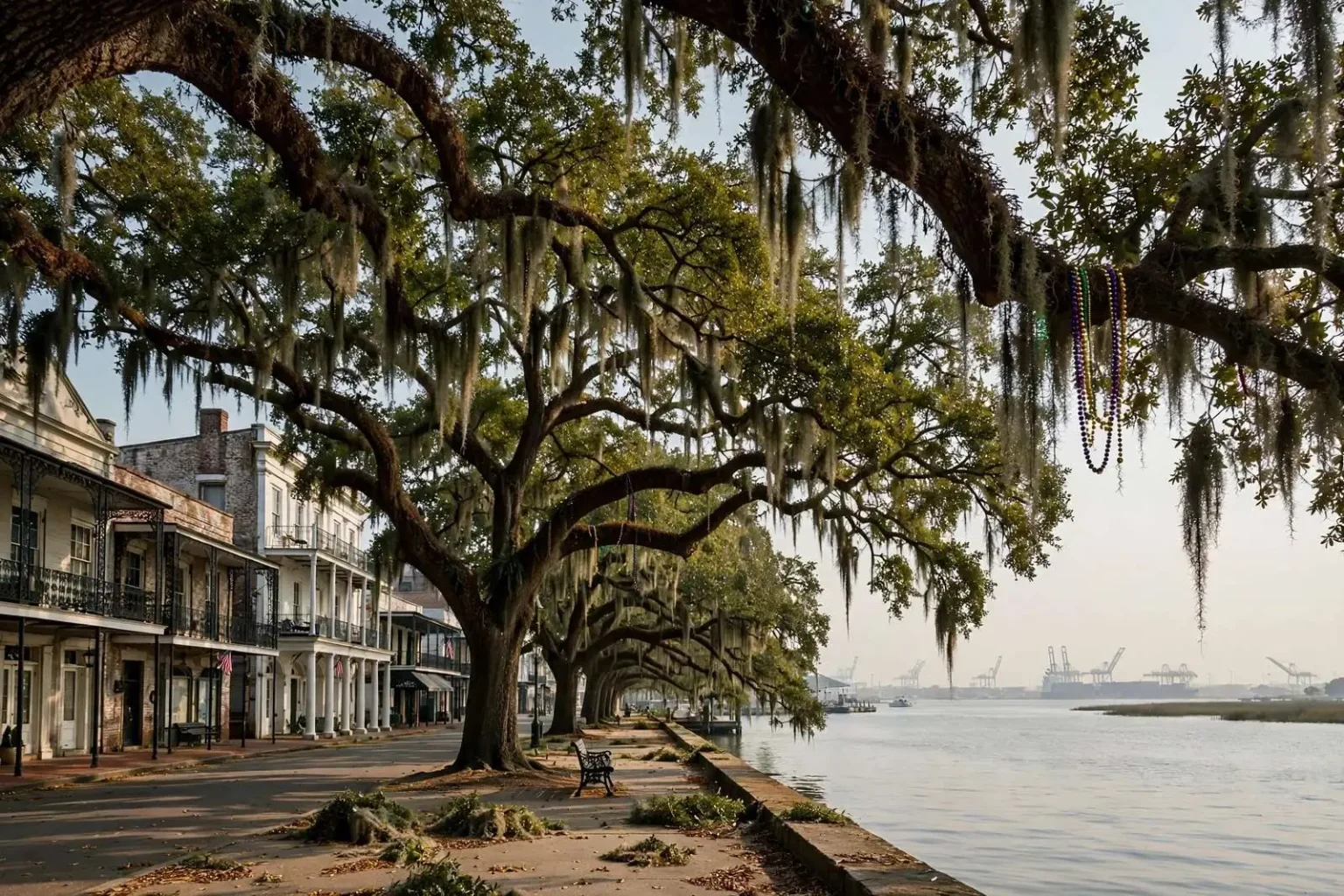
As in earlier installments, the bay and the Gulf anchored the affections. Respondents praised the serenity of tree-lined streets, the beauty of the waterfront and the abundance of blue sky in every direction. Mobile’s geography gives it gifts few Southern cities can match: Mobile Bay opens the city to the Gulf of Mexico, the delta’s rivers thread the region, and the city’s streets, particularly in the old districts, run beneath live oaks whose limbs reach across the pavement like architecture of their own. Residents who moved away frequently named those oaks and the waterfront first when asked what they missed.
Woven through those answers was a deep attachment to Mobile’s history, its antebellum architecture, live oaks and Mardi Gras traditions. The attachment is grounded in fact: Mobile is the oldest city in Alabama, founded by French colonists in 1702 and moved to its present site in 1711, and its Carnival celebration predates New Orleans by more than a century, with mystic societies whose parades and balls have marked the city’s winters since the eighteenth century. The historic districts south of downtown hold some of the finest antebellum and Victorian housing stock in the South, and the oak-lined avenues of the old city are among the most photographed streetscapes in Alabama.
Attorney Gordon Armstrong reached for the phrase Southern graciousness without sleaze to describe what he most valued, and several others echoed the sense that the city’s fascinating past was its greatest asset. The phrase captures something residents struggled to name in earlier rounds: a manner of public life, courteous and unhurried, that Mobile shares with the older Gulf and Atlantic cities but that transplants often notice immediately. For the respondents who cited it, graciousness was not nostalgia but a living quality of daily commerce, from downtown shops to church vestibules.
When heritage becomes a habit
Yet that same reverence for tradition became, for many, the sharpest criticism. One respondent named the city’s history as both what he liked most and least, arguing that an unwillingness to depart from the way things have always been done had cost Mobile chances to grow. He invoked the phrase the city of perpetual potential and pointed to New Orleans, Savannah and Charleston as places that had pulled ahead. The comparison is a familiar one in Mobile civic discussion, and it cuts because the peer cities share Mobile’s colonial pedigree while having converted their historic fabric into economies, tourism in Savannah and Charleston, culture and commerce in New Orleans, that Mobile has pursued with less consistency.
The complaint about perpetual potential recurs across decades of commentary about the city. Mobile has repeatedly seen major assets arrive, a convention center, an aerospace plant, a growing port, and then watched the surrounding development, dining scene and public amenities grow more slowly than boosters predicted. The respondents who framed history as a habit were describing that pattern as they saw it: a city so proud of its past that it underinvests in its future, content to be gracious where it might be ambitious.
A teacher named Rusty Glover listed the historic past among the city’s virtues and the humidity among its burdens, a pairing many others would have recognized. South Alabama’s climate is a genuine part of daily life, with summers that run hot and heavy from May into October, and residents have long made the same double-edged tally, crediting the climate for the live oaks, the azaleas and the nearly year-round green while counting the months of thick air among the costs.
Crime, cliques and the school board
The complaints grew pointed. Crime and a feeling of unease in crowds surfaced repeatedly, along with frustration at what one developer called the good old boy clique he believed had held the city back socially and politically. The developer’s phrase named a complaint about civic structure rather than individuals: the sense that decisions in Mobile flow through a network of established families and institutions, that newcomers and outsiders struggle to break in, and that the city’s leadership class has too often chosen comfort over change. Whether fair or not, the perception itself was offered as a liability, the kind of reputation that discourages the investment the city says it wants.
The Mobile County school board drew heavy fire, with several residents demanding vocational programs and structural change. The school system, the largest in Alabama, is governed by an elected board whose disputes have spilled into public view repeatedly over the years, and the respondents’ criticism carried two distinct threads: a call for career and technical education that would serve students not headed to four-year colleges, and a broader impatience with the board’s governance. The demand for vocational programs reflected a national debate as much as a local one, as communities across the country reconsidered the disappearance of shop, trade and technical training from public high schools just as skilled trades across the Gulf Coast faced shortages.
Others lamented litter, sprawl, clear-cut lots and the disappearance of the city’s tree canopy and green space. These complaints, small on their face, describe the everyday landscape of a growing Sun Belt city: development pushing west and out along the highway corridors, subdivisions rising where pine forest stood, and the older parts of the city struggling with maintenance and illegal dumping. For the residents who raised them, the concerns were inseparable from the things they loved about Mobile, since the oaks, the water and the greenery that define the city’s beauty are precisely what careless growth consumes.
What residents hold most strongly
The third question, what conviction each respondent held more strongly than they figured their neighbors did, produced the round’s most individual answers. Across the installments, this prompt has drawn out the views residents suspect are lonely ones, and the replies in this round continued the pattern, mixing civic optimism with contrarian diagnoses. The question does useful work for a city: it surfaces the beliefs people hold privately and rarely hear echoed in public discussion, from faith in the city’s trajectory to skepticism about its institutions.
Read together, the three rounds of the conversation trace a consistent portrait of Mobile as its residents see it. The assets named are remarkably stable, the water, the oaks, the history, the graciousness, and so are the complaints, crime, cliques, schools, sprawl and the gap between potential and performance. What changes from round to round is the emphasis, and the persistence of the same short list on both sides of the ledger suggests the honest conclusion many respondents reached: Mobile’s greatest strengths and its most stubborn problems grow from the same root, a city so attached to what it has been that it argues with itself about what it might become.
The conversation, now three installments deep, has become something of a civic mirror. Residents keep volunteering for it, keep naming the bay and the oaks as the reason they stay and the schools and the old-boy network as the reason the city underperforms, and keep holding, more strongly than they figure their neighbors do, convictions about which of those realities will define Mobile’s next chapter.
The city behind the answers
The affection respondents express for Mobile’s past is easy to understand from the ground. The city’s historic districts hold churches and houses that date to the decades before the Civil War, their ironwork balconies and columned galleries maintained by generations of owners, and the city’s Mardi Gras season turns downtown into a fortnight of parades, floats and moon pies each winter. The mystic societies, some dating to the early eighteenth century, keep membership rolls passed down through families, and theirballs and parades are as much social institution as celebration. To a resident, all of this is simply Mobile; to a visitor, it is one of the most distinctive small-city cultures in the American South.
The waterfront the respondents praised has been the city’s reason for being since the French colonial era. Mobile grew as a port, first shipping cotton and timber down the bay, then steel, coal and forest products, and today moving containers and project cargo through one of the Gulf’s busiest deepwater harbors. The working waterfront coexists with the pleasure craft and the restaurants along the river, and the harbor’s growth has become one of the city’s strongest economic stories, which makes the respondents’ affection for the water both sentimental and practical: the bay pays a large share of the region’s bills.
Against those assets, the complaints carry weight because they come from people who know the city’s promise firsthand. The developer who named the good old boy clique was describing the experience of trying to build in a city where relationships decide outcomes; the parents criticizing the school board were describing the system their children attend; and the residents who named perpetual potential were measuring Mobile against the peer cities they visit, where historic character and modern growth visibly coexist.
A conversation Mobilians keep having
There is a reason the newspaper keeps asking the questions. Self-examination is a Mobile tradition in its own right, visible in decades of civic study groups, chamber reports and editorial pages devoted to the question of why the city has not grown faster. Every generation has produced its own version of the perpetual potential critique, and every generation has produced the counterargument, that Mobile’s quality of life, its affordability and its graciousness are worth more than growth for its own sake. The sound-off series puts both sides of that old argument in the residents’ own words.
The third round’s answers also show how the city’s debates have shifted with time. The demand for vocational programs in the schools echoes a conversation now happening in every Alabama county as employers struggle to fill skilled trades, and the complaints about clear-cut development reflect growth pressures that barely existed in the Mobile of earlier decades, when the concern was disinvestment rather than sprawl. The same oaks and waterfront keep appearing in the praise, but the threats residents perceive around them are modern ones, which suggests the city’s civic conversation is adapting even as its themes persist.
What emerges from the installment is a city whose residents are neither complacent nor despairing. They name their treasures with confidence, their water and oaks, their history and their manners, and their disappointments with equal confidence, their schools, their crime and their habits of leadership. The single convictions they hold more strongly than their neighbors are, in the end, versions of a bet on Mobile: that the city of perpetual potential is also the city of genuine gifts, and that the gap between the two is the work of the generation now writing the next round of replies.