Mobile Mardi Gras 101: How to Pick Your Parade Spot and Survive the Season
Where to park, when to arrive and how to catch the best throws: practical tips for watching Mobile's Mardi Gras parades during Carnival season.
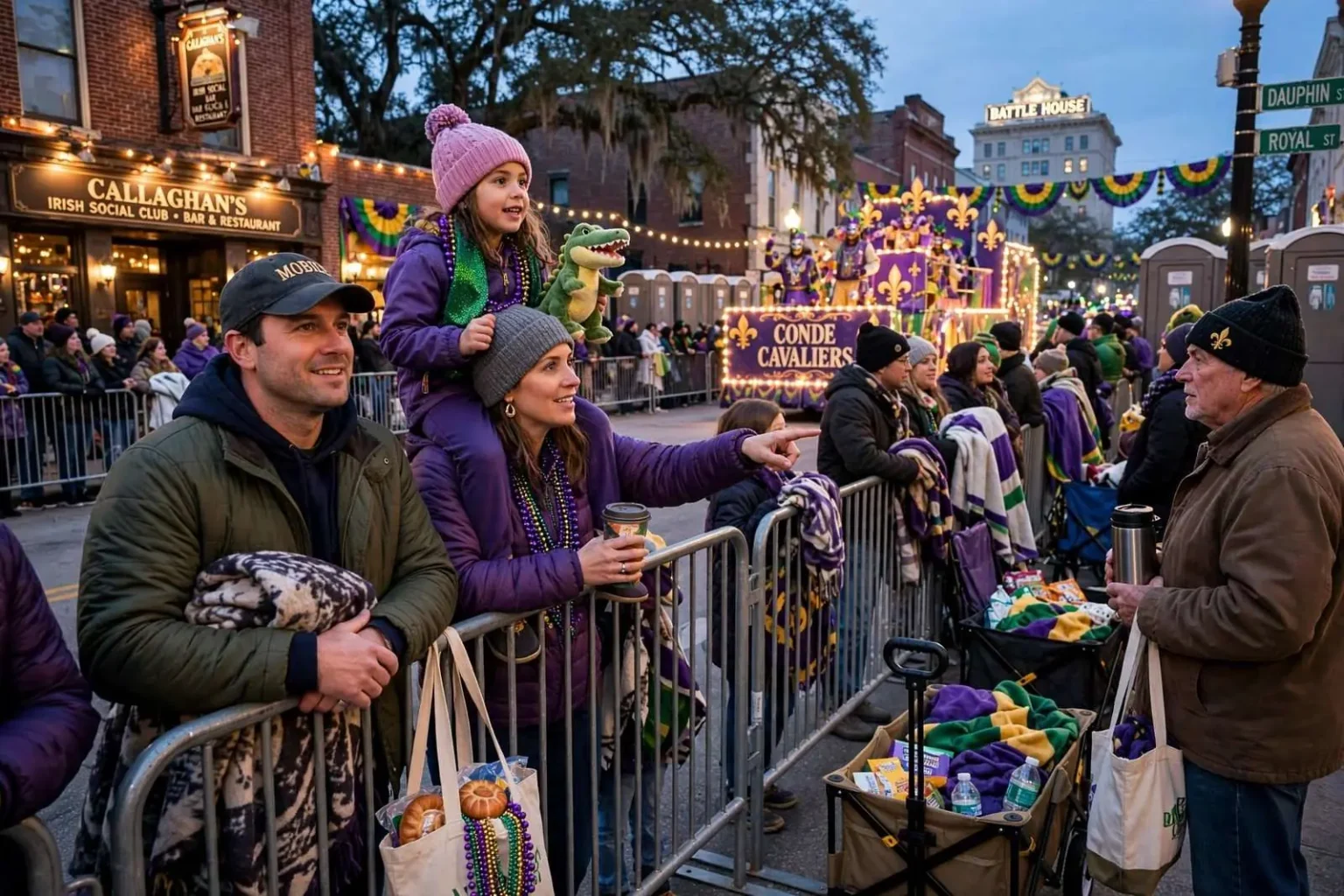
Carnival season is in full swing in the Port City, and the Conde Cavaliers are set to roll as downtown Mobile’s first parade of the season Friday night. For newcomers and out-of-towners, the spectacle can feel like organized chaos — beads flying, marching bands blaring, streets packed shoulder to shoulder — but a little strategy goes a long way toward turning that first chaotic night into an annual tradition. Veterans of the season approach a parade night the way they approach anything else in Mobile: with a plan, a parking spot and a good idea of where the nearest restroom is.
Mobile’s celebration is the oldest Carnival tradition in the United States, with roots stretching back to the city’s colonial era and a mystic society culture that has produced generations of masked balls, floats and throws. Each winter, downtown transforms as parade after parade winds through the same core corridors, and families who learned the ropes years ago pass their spots down like heirlooms. For those planning a first season, understanding how the city organizes the fun — where to stand, when to arrive and how to actually come home with something — separates a frustrating night on the barricades from a memorable one.
Location, Location, Location
Veteran parade-goers size up a spot by three essentials: parking, restrooms and nearby refreshments. A wide-open stretch of barricade means little if the car is stranded a mile away, the kids need a bathroom an hour in and there is nowhere to grab a bite before the first float appears. The best locations solve all three problems at once, and in Mobile a handful of areas have earned loyal followings for exactly that reason.
The Oakleigh Garden District usually offers ample street parking, and from there it is a short walk to Broad and Canal to watch the parade roll by. The historic neighborhood, best known for the antebellum Oakleigh mansion complex at its heart, sits just south and west of the main parade corridors, which keeps the residential streets calmer than downtown on a busy night. Just as important for many regulars is the chance to stop at Callaghan’s Irish Social Club beforehand — and patrons can use the facilities, always a consideration on parade night. A neighborhood bar and restaurant with a devoted local following, Callaghan’s fills early on parade evenings, so arriving ahead of the crowd is part of the routine for those who make it a tradition.
On the other end of downtown, parking near St. Michael or St. Joseph puts viewers on Royal Street, close to the hotels around the Battle House. That cluster of hotels makes an easy meeting point for a pre-parade gathering, whether out-of-town guests are staying there or simply ducking in out of the cold before the route fills up. Just as valuable is the quick getaway: Water Street runs along the river side of downtown and offers a fast route to the interstate or the 165 connector once the last float passes. For families with young children, elderly relatives or visitors on a tight schedule, the ability to leave quickly ranks as highly as the view of the floats themselves.
Wherever the night is spent, regulars recommend arriving early enough to learn the block. Portable restrooms line the main routes during the season, and businesses along Dauphin Street and the surrounding blocks draw heavy traffic before step-off. Knowing where the bathroom is, where the car is parked and which direction the floats will come from turns a stressful evening into a relaxed one, even in the thickest crowds.
Timing Is Everything
Most night parades roll at 6:30 p.m., and contrary to popular belief, there is no need to claim a barricade spot hours in advance. Downtown streets stay open until shortly before step-off so that office workers can get out, and the main corridors remain drivable right up until the parades begin. The result is a rhythm familiar to anyone who has worked downtown during Carnival season: the workday ends, the barriers close and within the hour the streets belong to the parades.
The city’s Float Tracker app has made that timing easier than ever. The app lets fans follow each parade live, tracking the lead floats as they move along the route, so a family can wait in the warmth of a car or a nearby restaurant and time their walk to the barricade for just before the parade arrives. Rather than standing in the cold for two hours, viewers can watch the tracker, note when the procession turns onto their street and step outside at the right moment. It has become one of the season’s most useful tools for parents of small children in particular.
Crowds, of course, vary by night. Weekend parades draw the biggest turnout, and the closer the season moves toward Mardi Gras itself, the denser the crowds along the downtown corridors become. Weeknight parades offer a more relaxed introduction for newcomers, with more room at the barricades and easier exits afterward. February weather along the Gulf Coast adds its own variable — a season can swing from shirtsleeve warmth to damp, blustery cold within days — so regulars dress in layers and keep blankets in the car no matter what the forecast says.
Catching the Goods
Once the spot is chosen and the timing is set, the next question is how to actually come home with something. Families have a few proven tactics. The first is to stake out a thinly populated stretch of barricade and put several kids front and center; with fewer competitors, the throws land where they are aimed. The second is to hoist a small child onto shoulders for maximum reach, since riders naturally aim for the highest outstretched hands. The third is to stand behind someone holding poster board — a sure sign they know a rider and will be showered with more throws than they can possibly catch all of. Plenty of those excess beads find their way to the families gathered behind them.
The season’s most contested items tend to be beads and the well-loved stuffed animals tossed from the floats, with the throwers often saving the biggest prizes for the smallest fans. MoonPies and other packaged treats round out the standard haul, and cups bearing each society’s emblem are prized by collectors. Seasoned regulars, meanwhile, are content to catch a few necklaces and let the rest fly — they know that another parade rolls tomorrow night, and the one after that, and that the supply across a full season is effectively endless.
A few unwritten rules keep the fun safe. Regulars keep their feet behind the barricade, never step into the street for a stray throw and remind children to watch the ground beneath the floats as they pass. Parents with young children often bring step ladders or folding chairs set back from the curb, positioning kids where they are visible to riders without putting them in reach of the wheels. Common sense at the barricades — along with a bag or wagon for hauling the haul home — completes the kit for a successful night.
And remember what happens at the end of every parade: the fire trucks and street-sweeping crews bring up the rear, signaling it is time to head home until the next night’s roll. The machines rumble down the route behind the last float, sweeping up streamers, packaging and the night’s casualties of discarded beads, and by morning the streets are clean and ready to be closed all over again.
Making a Season of It
One parade is rarely enough to get hooked. The season’s calendar stacks multiple societies into a single weekend and, on some nights, more than one parade into a single evening, each with its own theme, floats and following. Newcomers who catch the bug quickly learn to check the schedule, pick their nights and, as the season builds toward its final days, accept that some crowds simply have to be braved. The Float Tracker app and the city’s published parade schedules make the planning easier with each passing year.
Regulars also learn to build the evening around the parade itself. Dinner reservations near the route, a parking routine that never changes and a standing meeting spot for the family turn a parade night into a ritual. The hotels around the Battle House fill with visitors, restaurants along the corridors do some of their best business of the year and the neighborhoods just outside downtown — places like the Oakleigh Garden District — take on a festive, block-party air every time the floats roll past.
For newcomers wondering whether the chaos is worth it, the veterans’ answer is unanimous: pick a spot with all three essentials, arrive near step-off rather than hours early, let the kids lead at the barricade and keep an eye out for the street sweeper at the end. Do that a couple of times and the season stops being an event to survive and starts being a habit to keep. Ask anyone who has spent a decade or two on the same corner of a Mobile parade route — the beads pile up, the memories do too, and next Friday night there will be another parade, another crowd and another chance to get it right.