
Mobile Mother Arrested After Child Found With Drug Paraphernalia at School
Mobile police arrested Karla Frye, 40, after her child was found with suspected drug paraphernalia at school; DHR took over the case.
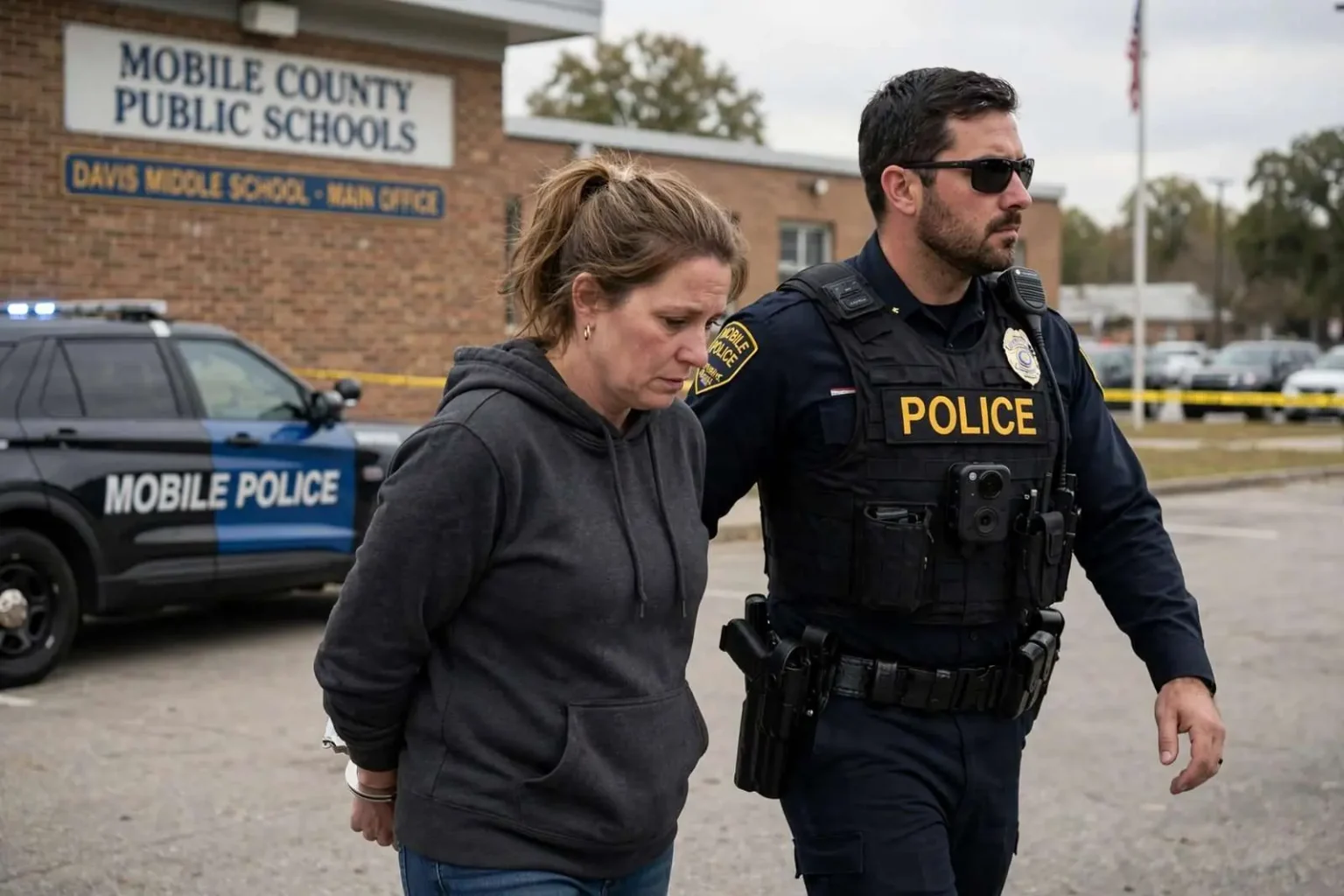
Mobile police arrested a mother after school administrators found her child in possession of suspected drug paraphernalia, according to a department release. Officers were called to the school Thursday around 2 p.m. after staff discovered the item. When they arrived, officers contacted the child’s mother, who consented to a search of her home. Police said drugs were found inside the residence, leading to the arrest of 40-year-old Karla Frye. The Department of Human Resources was notified, and the case has been turned over to that agency.
The sequence began inside the school, where administrators followed standard procedure after discovering the item: they secured it, kept the student separated from other students and called police rather than handling the situation themselves. Mobile County schools train staff to treat suspected drugs or paraphernalia found on campus as a law enforcement matter, both to protect the student body and to preserve any evidence.
Officers who responded to the school around 2 p.m. Thursday interviewed the staff and the student, then contacted the child’s mother, Frye. During that conversation, she consented to a search of her home — a legal step that allowed officers to enter and search without a warrant. Police said the search turned up drugs inside the residence, and Frye was taken into custody.
The arrest ended the school-day portion of the incident, but it set two separate processes in motion: a criminal case against the mother and a child welfare investigation that has been handed to the state.
How schools handle suspected drugs
When staff at a Mobile school find suspected drugs or drug paraphernalia in a student’s possession, the response is designed to be quick and contained. Administrators retrieve the item, document the circumstances and involve the school resource officer or local police. Parents are contacted, and the student’s belongings and the evidence are handled according to district policy.
School officials walk a careful line in these situations. Their first duty is the safety of all students, which is why the item is removed from circulation immediately. Their second duty is fairness to the student involved, which is why trained administrators — not teachers or other staff — conduct searches and handle interviews, and why law enforcement is brought in when contraband is found.
Depending on the circumstances, students found with drugs or paraphernalia face disciplinary consequences under the school system’s code of conduct, which can include suspension. But the student is also treated as a minor who may be a victim of circumstances at home — which is why agencies beyond the school system get involved in cases like Thursday’s.
The consent search that followed
After speaking with Frye at the school, officers asked to search her home, and she agreed. Under Alabama and federal law, a consent search is lawful when given voluntarily by someone with authority over the property, and no warrant is required. Officers documented the consent before proceeding.
The search of the residence turned up drugs, according to the department’s release, which formed the basis for Frye’s arrest. The 40-year-old was booked into custody, and the department said the case involves the child’s access to drugs and paraphernalia at home.
Consent searches are among the most common tools in cases where a child brings drugs or paraphernalia from home to school, since they allow officers to check the environment the child came from without the delay of obtaining a warrant. Evidence gathered during such searches is subject to review by prosecutors before any charges are filed.
The role of the Department of Human Resources
Police did not handle the welfare portion of the case. Instead, the Department of Human Resources was notified, and the case has been turned over to that agency. DHR’s child protective investigators assess whether the child is safe at home, whether a safety plan is needed and what services the family requires.
That referral is standard practice when a child is found with drugs or paraphernalia that investigators believe came from the household. DHR investigators work separately from the criminal case, interviewing the child, other household members and school staff, and inspecting the home environment.
The agency’s options range from closing the case with services in place, to safety plans that involve relatives, to court intervention if the child cannot remain safely at home. The agency’s findings can also inform the criminal proceedings against the parent.
Child welfare officials stress that the child’s needs come first in these cases: stability in school, counseling when appropriate and a safe living arrangement are the priorities while both investigations proceed.
Parental responsibility and the law
Alabama takes a hard line when parents expose children to drugs. In addition to drug possession offenses, the state’s chemical endangerment law makes it a crime to expose a child to an environment in which controlled substances are produced or distributed, and prosecutors can charge parents whose children have access to drugs in the home.
The specific charges against Frye were not detailed in the department’s release, but cases of this kind typically turn on where the drugs were found in the home, how accessible they were to the child and the child’s age. Evidence from the consent search, along with what school staff recovered, will shape the prosecution.
The Mobile County District Attorney’s Office will review the police report and determine the formal charges. Depending on the evidence, cases involving a child’s access to drugs can be resolved through plea agreements that include parenting requirements, treatment and supervision, or they can proceed to trial.
What happens at school for the student
While the adults in the case face the courts and the child welfare system, the student returns to a school routine managed by the district. Counselors and social workers are available in Mobile County schools for students involved in incidents like this, and DHR coordination with the school helps ensure the child’s needs are monitored.
School officials generally do not discuss individual student cases publicly, and the department’s release did not identify the school. That confidentiality protects the child, who is a minor, and keeps the focus on the adults responsible.
The incident is a reminder for parents that school administrators treat drugs and paraphernalia on campus as serious matters with consequences that reach well beyond the classroom — including, as in this case, into the family’s home and the child welfare system.
The Mobile Police Department’s school response
The Mobile Police Department fields calls from schools across the city throughout the year, ranging from fights and threats to drugs and thefts. Officers who respond to campus incidents coordinate with school administrators and, where school resource officers are assigned, with those officers first.
Thursday’s call came in around 2 p.m., near the end of the school day, and the response moved quickly from the campus to the family’s home. The department’s release praised the school staff’s handling of the discovery, which preserved the evidence and allowed officers to follow up immediately.
Police leaders in Mobile have emphasized the department’s focus on juvenile cases that signal trouble at home, and partnerships with DHR are a routine part of that work. When an arrest involves a parent and a school-age child, both agencies move in parallel to address the criminal and welfare sides of the case.
Resources for families
Families dealing with substance abuse in Mobile County have access to treatment programs, counseling services and support groups through regional providers. DHR also connects families to services as part of its child welfare work, and school counselors can point parents toward help before a situation reaches the point of an arrest.
Mobile-area organizations that work with families in crisis emphasize early intervention: parents who recognize a substance problem and seek treatment can often avoid the involvement of the courts entirely, and school staff are frequently willing to work with families who are addressing a problem openly. The concern for investigators and school officials alike is the child, and getting a family help early is the best protection a child can have.
Authorities urge adults to store medications and any controlled substances securely and out of children’s reach. In cases where a child brings drugs or paraphernalia to school, the discovery often reflects an environment where access was unguarded — the core issue investigators examine when deciding how to proceed.
The case against Karla Frye will proceed through the Mobile County courts, while DHR continues its assessment of the child’s welfare. The Gulf Coast Newsroom will provide updates as more information becomes available.
Incidents like Thursday’s also serve as a checkpoint for the district’s safety protocols. Administrators review how the discovery was handled and whether procedures worked as intended, and the coordination between school staff, officers and DHR becomes the template for future cases. For parents across Mobile, the case illustrates how quickly a school matter can escalate into a criminal and child welfare investigation once drugs enter the picture.


