Mobile Police: Accused Rapist Met Some Victims Through Citronelle, Waynesboro Churches
Mobile police say Gregory Renee Adams, 63, charged with multiple rape and sex-abuse counts, met some victims through churches in Citronelle and Waynesboro.
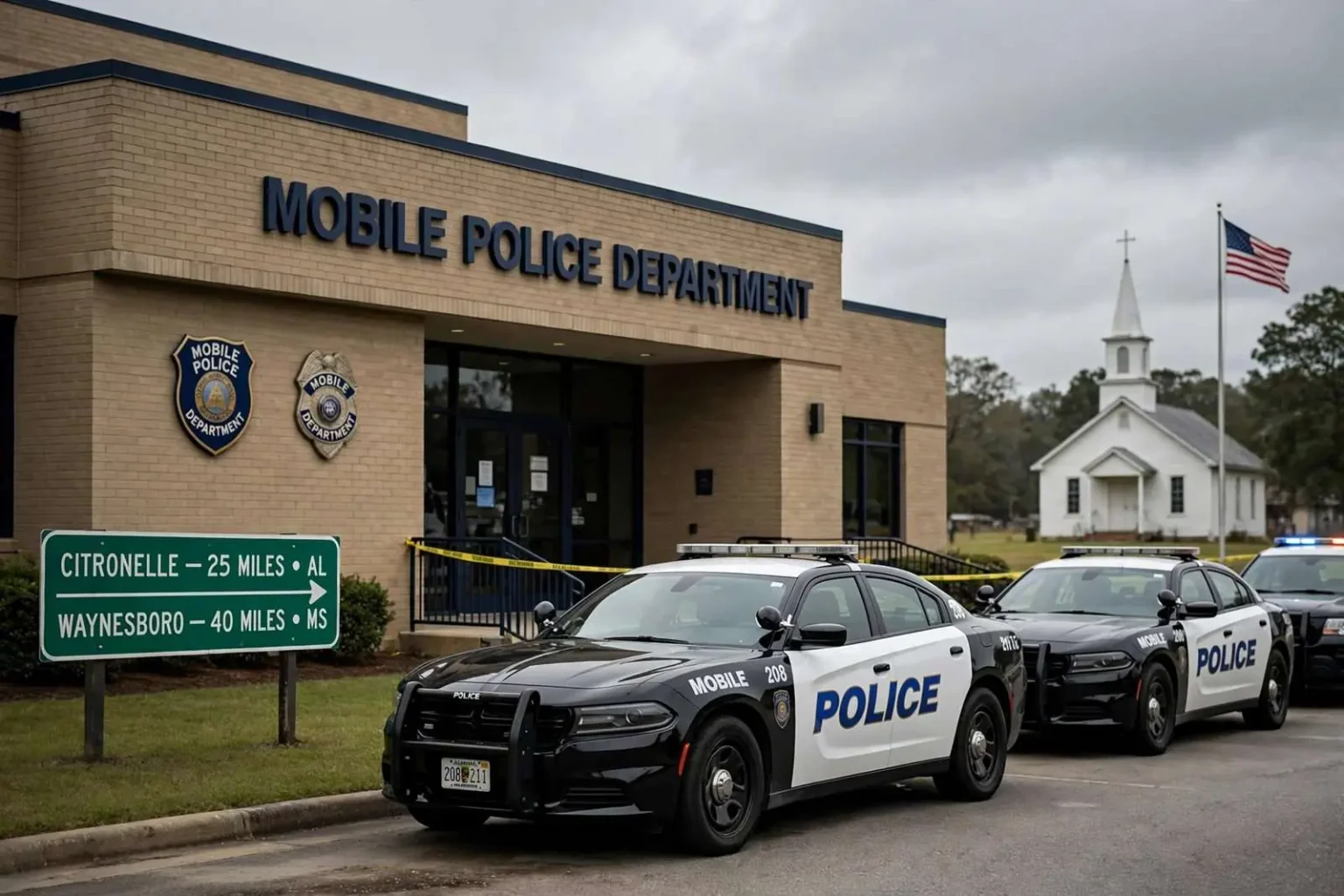
MOBILE, Ala. — Mobile police say a man charged with multiple rape and sex-abuse counts found some of his victims through churches in Citronelle, Ala., and Waynesboro, Miss. Gregory Renee Adams, 63, is charged with three counts of first-degree rape, two counts of second-degree rape, three counts of first-degree sodomy and two counts of sexual abuse.
After a multi-jurisdictional investigation in which several victims came forward, authorities arrested Adams. Public Safety Director Lawrence Battiste said there were four victims. The preliminary investigation suggested Adams contacted some of his victims through churches in Citronelle and Waynesboro, and investigators believe there may be more victims.
“It’s always somebody being brave enough to take the first step,” Battiste said of the victims coming forward. The Mobile Police Department urges other victims, witnesses or anyone with information to contact MPD at 251-208-7211 or the Mobile County Sheriff’s Office at 251-574-8633.
The case has unsettled two small communities that sit roughly forty minutes apart on opposite sides of the Alabama-Mississippi line, and it has drawn attention to a pattern that child advocates and prosecutors across the Gulf Coast have warned about for years: offenders who seek out trust-based community settings where they can meet vulnerable people away from public scrutiny. Investigators have not detailed how Adams allegedly came to know the victims, but the church connections described by police have prompted concern among congregations in both towns.
What the charges mean under Alabama law
The ten charges Adams faces carry very different weights under Alabama’s criminal code, and the split between first-degree and second-degree counts signals how prosecutors view the ages and circumstances of the alleged offenses. First-degree rape in Alabama generally involves sexual intercourse accomplished by forcible compulsion, or with a victim who is incapable of consent, or with a victim under a statutory age threshold. It is a Class A felony, punishable by up to life in prison.
Second-degree rape is typically charged when one party is an adult and the victim is below the state’s age of consent but older than the first-degree threshold, and it is classified one step lower. First-degree sodomy carries penalties comparable to first-degree rape, while second-degree sexual abuse covers unwanted sexual contact under circumstances that fall short of the felony sexual abuse statutes. Taken together, the indictment describes a pattern of alleged conduct rather than a single incident, which is common in cases where multiple victims come forward over time.
Prosecutors in Mobile County have historically pursued clergy-adjacent and community-trust cases aggressively, in part because juries here have shown a willingness to act on testimony from victims who disclose abuse years after the fact. Under Alabama law, civil statutes of limitations for child sexual abuse were extended by legislation passed in recent years, an acknowledgment that many survivors are not able to come forward until adulthood. Criminal timelines are stricter, but the multi-jurisdictional nature of this investigation suggests authorities believe the alleged conduct was recent enough to charge directly.
A multi-jurisdictional investigation
Investigations that cross state lines require coordination between city police, county sheriff’s offices and sometimes state and federal partners. Mobile sits just south of the Mississippi border, and Citronelle, in far northern Mobile County, is only a short drive from Waynesboro, the seat of Wayne County, Mississippi. A suspect with ties to communities in both states presents exactly the kind of case where no single agency holds all the pieces: victims may live in one state, incidents may have occurred in another, and witnesses may be scattered across both.
In such cases, detectives typically pool interviews, evidence and digital records through formal or informal task-force arrangements. Alabama investigators can coordinate with Mississippi counterparts through mutual channels, and charging decisions are made separately in each jurisdiction where an offense occurred. The Mobile Police Department has not said whether charges are pending in Mississippi, and authorities have released few details about where or when the alleged crimes occurred, consistent with the department’s practice in active sex-crimes investigations.
Public Safety Director Lawrence Battiste’s description of the case as ongoing — with investigators believing there may be additional victims — reflects the reality that sexual abuse cases rarely surface in full at first. Victims of abuse by a trusted community figure often wait years before disclosing, and one victim’s report frequently unlocks others. That dynamic is why investigators in cases like this one almost always end their public statements with an appeal for anyone with information to come forward, as MPD did by publicizing both its own tip line and the Mobile County Sheriff’s Office number.
The two agencies listed by police split responsibility for the county. The Mobile Police Department handles calls inside the city limits, while the Mobile County Sheriff’s Office patrols the vast unincorporated county that includes Citronelle and other northern communities. Sex-crimes detectives at both agencies work these cases jointly when the suspected conduct spans city and county lines, and victims can reach either agency regardless of where an incident occurred.
Why cases like this stay quiet so long
Advocates who work with survivors in southwest Alabama say the barriers to disclosure in small communities are formidable. In towns the size of Citronelle, population around 2,000, and Waynesboro, population under 5,000, a trusted congregation member is often a neighbor, a provider of rides to church, or someone whose family has known the victim’s family for generations. Fear of not being believed, fear of splitting a congregation, and fear of upending family relationships all weigh on victims — particularly children — who consider reporting.
Research on abuse in community settings consistently finds that offenders cultivate access and trust deliberately, positioning themselves in roles that put them near potential victims and lend credibility to their standing. Battiste’s remark that “it’s always somebody being brave enough to take the first step” captures the pattern that investigators across the region have observed: progress in cases like this one usually begins with a single person willing to speak, after which the case builds as corroboration emerges.
For congregations in both communities, the case has raised the practical questions that follow any such disclosure: how to screen volunteers, how to respond when an accusation involves a member, and how to support victims without compromising an investigation. Experts who train churches and youth organizations in Alabama generally recommend clear reporting channels, mandatory background checks for anyone working with children, and immediate referral of allegations to law enforcement rather than internal handling.
The geography of the case also explains why it moved slowly at first. Small towns along the state line share radio stations, church associations and family names, and word of an arrest can travel faster than official announcements. Detectives working the case have kept details close to the vest to protect the integrity of the interviews, and authorities have asked residents not to speculate publicly about the identities of the people involved.
Officials have not announced a court date or discussed the evidence in detail. As is standard practice, the charges against Adams are accusations, and he is presumed innocent unless and until proven guilty in court. The Mobile Police Department has said the investigation remains active, and detectives are asking that anyone with information call MPD at 251-208-7211 or the Mobile County Sheriff’s Office at 251-574-8633.
Resources for victims in the Mobile area
Beyond the police numbers, victims of sexual assault in Mobile County have access to a network of support services that investigators routinely reference when they make public appeals. Hospital-based sexual assault nurse examiner programs in the area can document injuries and collect evidence, and the family justice and advocacy organizations operating in southwest Alabama provide counseling, court accompaniment and help navigating the protective-order process. Advocates stress that a victim does not have to decide whether to press charges before seeking medical care or support.
Those who call the numbers released by police are typically connected with detectives who handle such reports directly, and advocates note that callers can ask to speak with someone confidentially before giving identifying details. Reports can also be made years after an incident; detectives in cold sex-crimes units do take and evaluate delayed reports, particularly when multiple victims describe similar conduct.
Anyone who believes they may have information is asked not to assume their details are already known to investigators. In multi-victim cases, even recollections that seem minor — a date, a location, a conversation — can corroborate another account and strengthen the overall case. Detectives can also advise callers on protective steps regardless of whether they wish to pursue a formal report.
The case remains under investigation, and additional charges are possible if more victims come forward. In a region where two communities on either side of a state line are now linked by a single investigation, authorities have made clear that the appeal for information is open-ended: the first step, in Battiste’s words, belongs to whoever is brave enough to take it.