
Mobile Police Arrest 19-Year-Old in Shooting Death of 15-Year-Old Anesa Baker
Mobile police arrested a 19-year-old in the shooting death of 15-year-old Anesa Baker at a Grand Hall teen party in April.
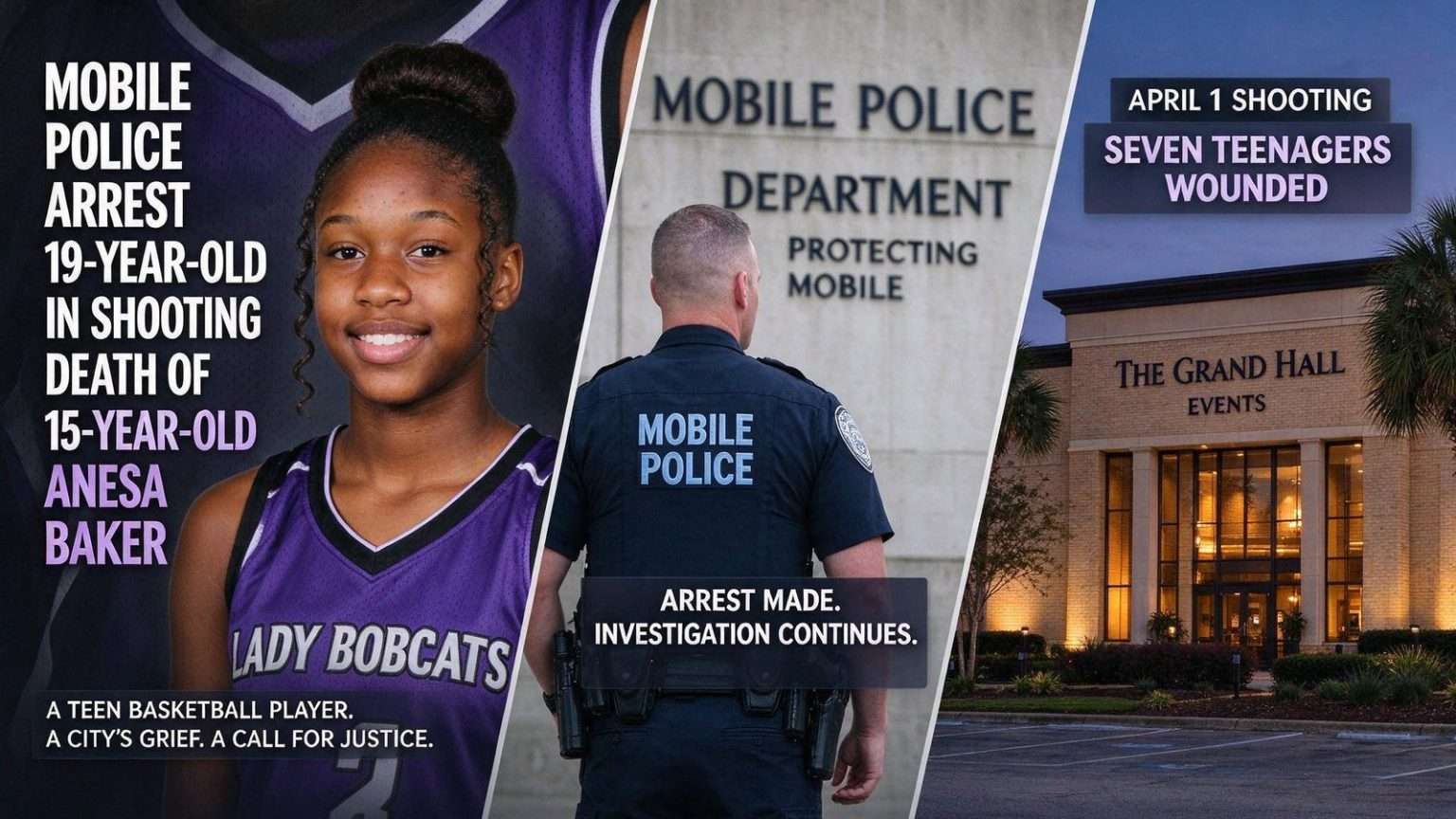
MOBILE, Ala. — Mobile police have charged a 19-year-old man in the shooting death of 15-year-old Anesa Baker, who was wounded when gunfire erupted at a teen party at The Grand Hall earlier this spring. Officers took Jamarkus Montrez Holifield into custody on a Wednesday and booked him in connection with Baker’s death. Police said the investigation remains active and that additional charges are possible.
The arrest closed one chapter in a case that had gripped the city for weeks, but for Baker’s family and teammates it marked a bittersweet milestone. Relatives and supporters had gathered at vigils and kept pressure on investigators through social media in the ten days between the shooting and Baker’s death, hoping an arrest would bring accountability. Police officials stressed that an arrest is only the beginning of a process that now moves into the courts, where prosecutors must present evidence before a judge and jury.
A Party Shooting With Seven Victims
The case traces back to April 1, when shots were fired at a pre-spring break party at The Grand Hall. Authorities said seven people were hurt, among them Baker, who clung to life for ten days before dying of her injuries on April 11. The scale of the shooting — a single burst of gunfire wounding so many teenagers — shocked residents across Mobile and drew attention from news outlets far beyond the Gulf Coast.
The Grand Hall sits along the Airport Boulevard corridor, a stretch of the city lined with event venues, restaurants, and businesses that routinely host gatherings for young people. Parties there and at similar venues across Mobile draw hundreds of teens on weekends, and the April 1 shooting reignited a recurring debate in the city about security requirements, parental oversight, and police presence at large youth events.
In the aftermath, investigators canvassed witnesses and reviewed evidence while city officials faced questions about how such gatherings are supervised. The wounded ranged in age, and hospitals in the city treated victims through the night of the shooting. Community leaders held meetings in the weeks that followed, calling for solutions to the youth violence that has periodically flared in Mobile despite years of anti-violence programming.
Police Chief Lawrence Battiste called it a significant case for the department. “This was a big case… there’s no reason that we should deal with our 15-year-olds dying at the hand of gunfire in our community,” Battiste said. His comments reflected a frustration shared by officers and residents alike: Mobile, like many mid-sized Southern cities, has struggled in recent years with shootings that claim young victims, and each case lands hard on the detectives who work them.
Baker’s basketball coach and family members were at police headquarters as Holifield was transported to jail. The coach said the family had hoped for an arrest and was relieved it came, though the moment brought back the pain of their loss. Baker was remembered by teammates and coaches as a dedicated player with a bright future, and her death prompted an outpouring of tributes from the local basketball community, where she had been a familiar presence on youth and school teams.
Suspect Previously Tied to Another Shooting
Holifield had also been arrested in connection with a November 2017 shooting at the Thomas Sullivan Community Center, where two teenagers — 15 and 16 years old — were found with non-life-threatening gunshot wounds. That incident began at a birthday party on Catherine Street before spilling into the community center parking lot. He was later released on bond in that case, according to jail records.
The earlier shooting occurred at a facility named for Thomas Sullivan, a Mobile police officer killed in the line of duty in 1979, and it added to a string of violent incidents at or near community gatherings that year. Court records in the 2017 case show the kind of slow timeline typical of criminal proceedings, with continuances and bond conditions stretching matters out over months. It remained unclear how the resolution of that earlier case would interact with the new charges.
How the Investigation Moved Forward
Battiste cautioned that the work is far from over. “Once you make the arrest you’ve got to have your court appearances, your bond hearings,” he said, noting investigators must be careful about how much detail they release while the case moves through the courts. Premature public discussion of evidence can complicate prosecutions, and detectives typically hold back witness statements and forensic findings until trial approaches.
The department’s approach reflected hard lessons from past Mobile homicide prosecutions, where cases have sometimes faltered when witnesses recanted or grew reluctant. In shootings with multiple victims, prosecutors often lean on the sheer volume of physical and testimonial evidence, but each of the seven people wounded that night represents a separate potential proceeding, and the state must coordinate its case carefully.
Police said additional charges remain possible as the investigation continues, leaving open the question of whether others will face counts connected to the party shooting. Detectives urged anyone with information about the April 1 gunfire to come forward, noting that tips from partygoers and residents near The Grand Hall had been central to building the case.
Gun Violence and Mobile’s Young People
Baker’s death added her name to a list of Mobile-area teenagers killed by gunfire that community advocates have read aloud at rallies and vigils in recent years. Local organizations have pushed mentoring programs, summer employment initiatives, and mediation efforts aimed at interrupting cycles of retaliation that often follow public shootings. Schools and churches in the neighborhoods most affected have hosted forums where parents and teens discuss conflict resolution and safety at parties.
City leaders have at times weighed tighter rules for commercial event venues that host teen parties, including requirements for off-duty officers, ID checks, and capacity limits. Enforcement, however, is complicated by the number of venues across the city and the reality that large gatherings can move from one location to another on short notice. The April 1 shooting put renewed urgency behind those conversations.
Nationally, criminologists noted a rise in violent crime during the pandemic era, and Mobile was not immune to the trend. Departments across Alabama reported staffing strains and increased caseloads, making community cooperation — tip lines, witness testimony, neighborhood watch participation — more important than ever for closing cases.
What Comes Next in the Case
Holifield’s case now moves through the Mobile County court system, beginning with initial appearances and bond proceedings before any trial. If convicted of capital or felony murder charges connected to a death, defendants face decades or more in prison; the specific charges determine the sentencing range. Prosecutors with the Mobile County District Attorney’s Office will review the evidence gathered by MPD homicide investigators before presenting the case to a grand jury for indictment.
For Baker’s family, the legal process will unfold over months or years, through hearings and filings that rarely move as quickly as the grief they follow. Advocates for victims’ families in Mobile County have long noted that the court calendar can feel punishing to those seeking closure, even as they acknowledge the safeguards built into the system.
The Mobile Police Department continues to ask anyone with information about the shooting at The Grand Hall to contact investigators or Mobile Area CrimeStoppers, where tips can be submitted anonymously. Officials repeated the same message they deliver in every homicide case: arrests are made when the community talks, and the case is only as strong as the witnesses willing to be heard.
A Community Remembering Anesa Baker
In the weeks after her death, Baker’s name appeared on banners, T-shirts, and social media posts across Mobile. Teammates described a player who showed up early to practice and lifted younger girls on her team, while her school community organized memorials that doubled as calls for peace. Her grandmother and other relatives appeared at community events urging young people to put down guns, turning private grief into a public appeal that resonated across the city.
The basketball community in Mobile is tightly knit, with school programs, church leagues, and travel teams overlapping across the city. Players and coaches from rival programs attended vigils, a reminder of how a single loss ripples through rosters across the Gulf Coast. Youth leagues observed moments of silence at games in the seasons that followed, and coaches used the case in conversations with players about the risks that follow large unsupervised parties.
The Grand Hall and Venue Safety Questions
The Grand Hall, like other event venues along Airport Boulevard, operates in a business corridor that comes alive on weekend nights. Questions raised after the shooting included how many adults were on site, what security screening was in place, and how the party was promoted. Cities across the country have wrestled with the same issues, and some have responded with ordinance changes requiring venue operators to hire licensed security, install metal detection, or limit attendance for events marketed to minors.
Mobile officials have historically preferred voluntary cooperation and police details over strict new mandates, but high-profile incidents tend to accelerate review. Whatever policy changes emerge, detectives noted that the underlying investigation depends on the people who were inside the hall that night — many of them teenagers frightened to come forward.
A Case With Implications Beyond One Arrest
Prosecutors will also have to account for the earlier 2017 case in how they approach charges and trial strategy, given that defense attorneys routinely scrutinize a defendant’s prior contact with the justice system for arguments about identity and credibility. The fact that the suspect in a prior community-center shooting was out on bond when the party shooting occurred will likely surface in bond arguments and sentencing discussions.
For now, the Mobile Police Department’s message remained forward-looking: the investigation is active, charges may grow, and the department wants to hear from anyone with information. Battiste’s words at the arrest — that no 15-year-old should die by gunfire in the community — framed the case as both a prosecution and a warning about the cost of gun violence among Mobile’s young people.
As the case proceeds, it will move through grand jury review, arraignment, and the long sequence of hearings that precede trial in the Mobile County courthouse. Each step will be watched by a family that waited ten days for word of Baker’s condition, then weeks more for an arrest, and now faces the slower wait for justice to run its course.


