

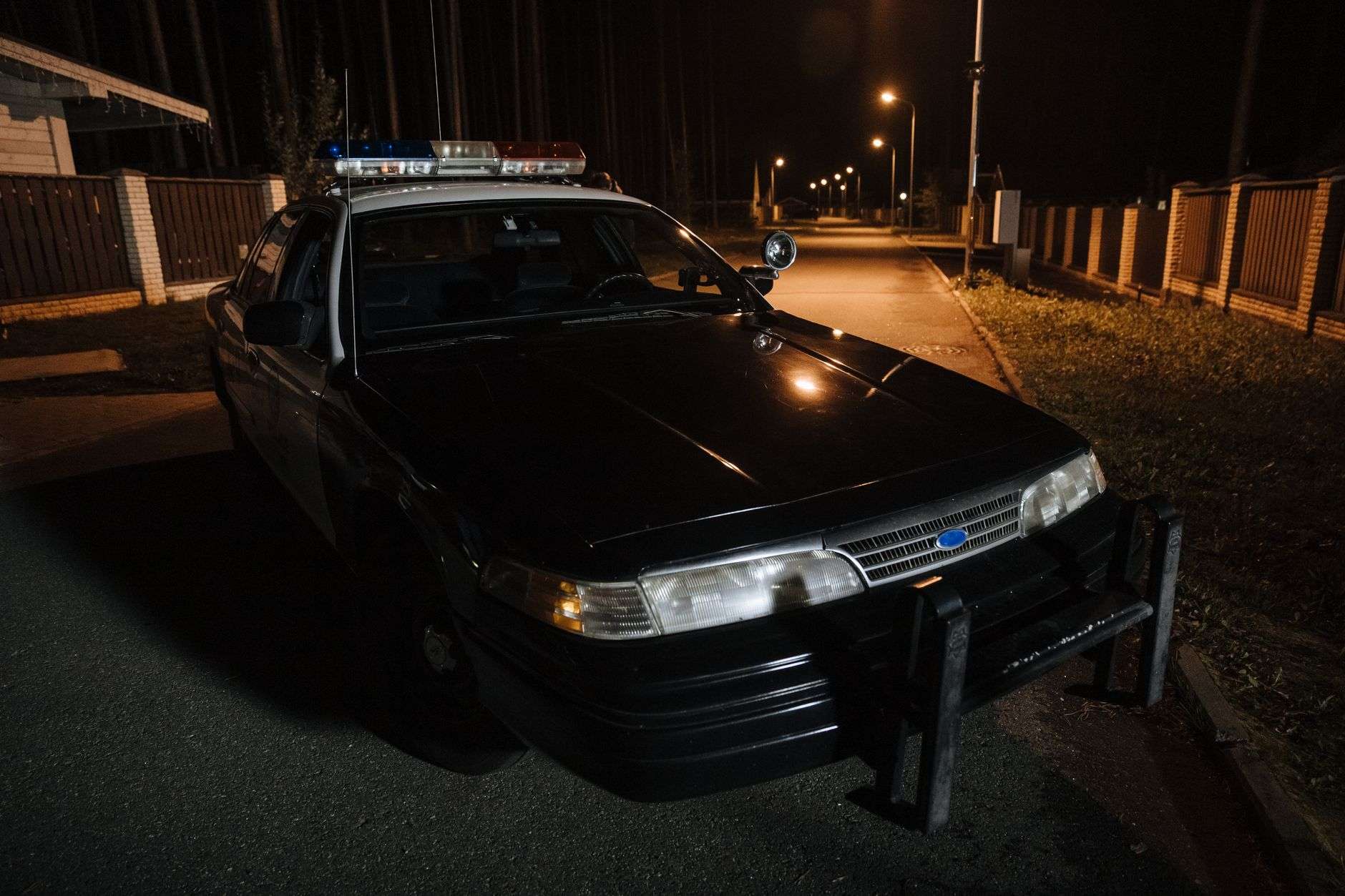
Mobile police are investigating a shooting that occurred in the Toulminville community, according to the Mobile Police Department. Officers responded to the 1900 block of Eoline Street on Monday evening, police said. Upon arrival, officers discovered a male victim who had sustained a non-life-threatening injury, according to MPD.
The response unfolded in one of Mobile’s most storied neighborhoods. Toulminville, located in the city’s northwest section along and near U.S. Highway 43, is a community whose roots reach back to the early 19th century, when it developed as a village on the outskirts of Mobile. Over generations it grew into a densely settled residential district, home to churches, schools, small businesses and long-tenured families, and its streets carry more than a century of the city’s history. Like many urban neighborhoods, Toulminville has worked in recent decades to balance that heritage with the challenges of crime and economic change, and residents have been active in neighborhood associations and community watch efforts aimed at keeping the streets safe.
For the officers who answered the call Monday evening, the sequence is a familiar one. A report of a shooting brings a patrol response first, with the initial crew securing the scene and providing aid, followed by investigators who take custody of the location. Emergency medical care for a victim with a non-life-threatening injury typically means treatment at the scene and transport to a local hospital, and in such cases the victim is often able to speak with investigators. Detectives then begin the slower work: canvassing for witnesses, collecting shell casings or other physical evidence, and pulling together any camera footage from homes or businesses along the block.
No arrests have been announced. Police said the investigation is continuing, and no additional details about a possible suspect or motive have been released. That silence at an early stage is standard practice rather than an absence of progress. Investigators withhold information that could compromise their work — details only the shooter would know, for example, are kept out of public releases precisely so that they can be used to test the credibility of anyone who claims knowledge of the crime. Early statements in shooting cases are also frequently revised as witnesses come forward and evidence is analyzed.
How shooting investigations proceed in Mobile
The Mobile Police Department investigates hundreds of shooting incidents in a typical year across its patrol precincts, and cases involving non-fatal injuries follow a defined path. The initial responding officers document the scene and the victim’s condition; the department’s investigative units then assume the case, working to identify suspects and establish what led to the gunfire. Detectives rely heavily on community cooperation, because witnesses who live on the block often hold the details — a description, a direction of travel, a familiar vehicle — that turn a case around.
That reliance runs both ways. Mobile residents with information about a shooting can contact the Mobile Police Department directly, and those who prefer not to give their names can pass tips through the department’s existing tip channels. Investigators consistently emphasize that even fragments of information — a partial tag number, an unfamiliar car seen twice in a day, a raised voice heard around the time of the incident — can supply the missing piece in a case that otherwise stalls. Callers do not need to know what the evidence is worth; detectives sort that out themselves. In neighborhoods like Toulminville, where many families have roots going back generations, the willingness of residents to speak with detectives has historically been one of the department’s most valuable investigative assets.
The department itself operates under the leadership of its police chief and is organized into patrol precincts and specialized investigative units, with officers assigned to beats covering the city’s districts from downtown to the outlying neighborhoods. Mobile, a port city of roughly 187,000 residents and the anchor of a metropolitan area approaching half a million people, sees the full range of urban crime, and the department’s leadership has repeatedly pointed to community partnerships — faith leaders, neighborhood groups, schools — as central to its strategy of prevention as well as enforcement.
What comes next in the case
Once detectives identify a suspect in a non-fatal shooting, the case moves to the Mobile County District Attorney’s Office, which reviews the evidence and decides on charges. Depending on the circumstances, shooting cases can be charged as assault offenses ranging from second-degree assault, a felony, up to attempted murder, and convictions can carry lengthy prison terms. Cases built on witness testimony frequently take weeks or months to develop, and prosecutors rely on the completeness of the police investigation — scene documentation, forensic results, witness interviews — when they take a file to a grand jury or negotiate a resolution. A victim’s cooperation is often the deciding factor in how far a case goes, which is one more reason investigators work to build trust with those hurt in these incidents from the first hospital-room contact onward.
For the people who live along Eoline Street, the practical questions are more immediate. A shooting in the evening hours disrupts a block: patrol cars with flashing lights, tape across a stretch of roadway, detectives going door to door. Residents can expect a visible police presence in the area while the scene is processed, and the department may increase patrols in the vicinity as a matter of course following violent incidents. Neighborhood leaders in Toulminville have historically encouraged residents to report suspicious activity promptly, on the theory that quick calls give officers the best chance of intercepting those responsible or preventing the next incident.
The timing of the shooting — Monday evening, a period when families are home and streets are typically active — means the pool of potential witnesses is a broad one. Evening incidents in residential blocks are often seen or heard by several households even when no one witnesses the trigger-pull directly, and detectives will typically return to the block more than once as initial reluctance gives way to cooperation.
Evening timing also shapes how a scene is worked. Darkness complicates the search for evidence, so investigators use portable lighting and may pause a grid search until daylight if the block is large or the evidence scattered. Households along the block should expect detectives to return during daylight hours as well, both to photograph the scene under better conditions and to follow up with residents who were not home the night before. Patrol supervisors will typically brief the officers working the area in the days that follow, so that anyone paying unusual attention to the block — or asking questions about the case — is noticed and reported back to investigators.
Gun violence and the broader picture
Non-fatal shootings represent the majority of gunfire incidents in most American cities, and Mobile is no exception. Each one leaves behind the same ripple effects: a hospital stay, a family in fear, a block on edge, and a case file that will consume investigative hours. Public health researchers who study gun violence have increasingly urged cities to treat each non-fatal shooting with the urgency once reserved only for homicides, noting that swift intervention after an initial incident can disrupt cycles of retaliation and that support for injured victims — medical, financial and psychological — improves outcomes for both the victim and the case.
Mobile has pursued a combination of enforcement and prevention in recent years, with programs that pair police work with community intervention, youth outreach and reentry support for people coming out of incarceration. The city’s violence-prevention conversations have repeatedly centered on the same themes: jobs and opportunity for young men most at risk of becoming shooters or victims, credible messengers in the neighborhoods, and fast, thorough investigation of every shooting so that disputes do not fester into reprisals.
For residents of Toulminville specifically, the neighborhood’s assets remain a source of stability. The area’s churches anchor much of its civic life, its proximity to downtown and to the city’s major medical centers makes it a convenient place to live, and community organizations have invested in everything from youth sports to cleanup campaigns. Longtime residents often describe the neighborhood’s identity in generational terms — grandparents, children and grandchildren on the same streets — and that continuity is precisely why shootings there draw such local concern.
Anyone with information about the shooting is encouraged to contact the Mobile Police Department. Tips can make the difference between a case that closes and one that lingers, and department investigators review every lead that comes in, no matter how small it may seem to the caller. Even an anonymous tip can be worked, and callers who wish to remain unidentified may do so. This is a developing story and will be updated as more information becomes available.