
Mobile SPCA moves to appointment-only adoptions during coronavirus
The Mobile SPCA shifted to appointment-only pet adoptions to protect staff during the coronavirus pandemic while continuing to help by phone and email.
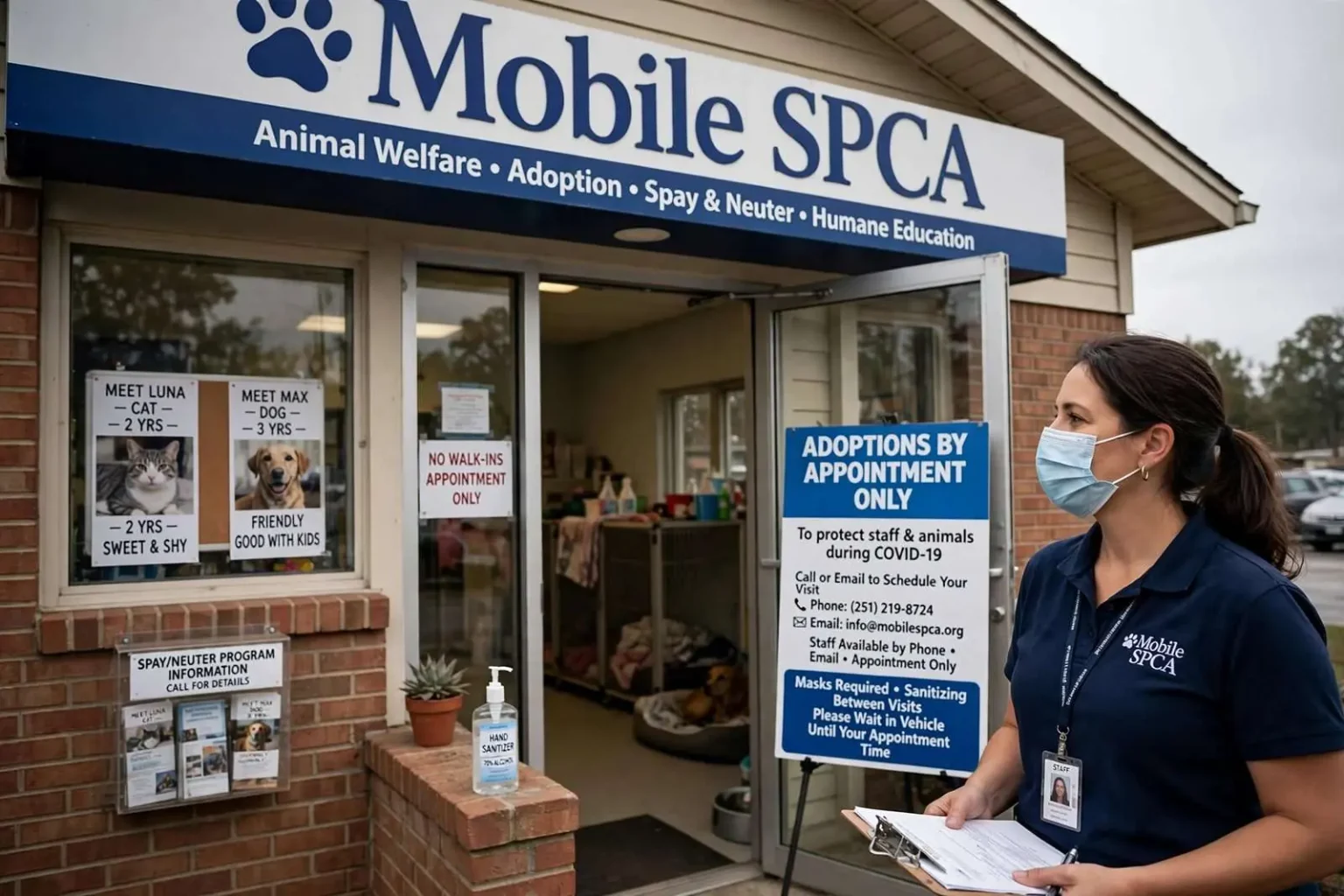
The Mobile SPCA is scheduling adoptions by appointment only out of concern over the coronavirus, aiming to avoid large groups gathering at the adoption center at one time. “With as many animals as we care for on a daily basis, we absolutely must safeguard our staff from infection,” Executive Director Janine Woods said. “We will still be working, and we will be glad to continue to help everyone over the phone, by appointment, or via email.”
The change came as part of the wave of adjustments that animal welfare organizations across the country made in the early weeks of the pandemic. Shelters had a specific problem: adoption events, walk-in visits, and volunteer shifts all involve crowds of people moving through indoor spaces, exactly the kind of contact public health guidance was telling everyone to avoid. The Mobile SPCA’s answer was to keep operating while moving every step of the adoption process behind a phone call and a scheduled time.
For potential adopters, the practical effect was simple. Instead of dropping in at the adoption center and browsing among the animals, visitors called or emailed ahead, spoke with staff about the animals they were interested in, and arranged a time to meet. The animals were still available, the staff was still working, and the matches were still being made, but the flow of people through the building was now spread out rather than gathered at once.
Who the Mobile SPCA is
The Mobile SPCA is a private, nonprofit animal welfare organization serving the Mobile area, and it has been part of the city’s landscape for decades. Unlike a municipal animal control agency, it is not a government department; it operates on donations, membership support, and fundraising, and it focuses on adoption, spay and neuter programs, and humane education rather than enforcement. Its adoption center houses cats and dogs awaiting new homes, and its programs reach well beyond the shelter walls.
The organization’s daily work is substantial. Caring for dozens of animals means feeding, cleaning, medical care, behavioral attention, and paperwork every single day of the year, most of it done by a combination of a small staff and committed volunteers. That volume is exactly what Woods pointed to in explaining the appointment policy: an operation that already handles this much daily work cannot absorb the disruption of a staff-wide illness, and protecting the people who do the work protects the animals who depend on them.
The Mobile SPCA’s model, like that of SPCA-affiliated organizations around the country, also emphasizes reducing the number of animals who need the shelter in the first place, through affordable spay and neuter services and education. Those programs continued alongside the adjusted adoption process, since the demand for them does not pause for a public health emergency.
Sheltering animals during a pandemic
The coronavirus era placed unusual pressures on animal shelters everywhere. Public health restrictions reduced volunteer numbers and eliminated the large adoption events that many shelters relied on to move animals into homes. At the same time, demand for pets actually rose in many places, as families spending more time at home looked for companionship, and shelters in some regions saw adoption interest surge. Managing that combination, high demand and reduced capacity, required organizations to reinvent their procedures quickly.
Appointment-based adoption became one of the most common solutions nationwide. Spreading visitors across scheduled slots let shelters control the number of people in the building at once, sanitize between visits, and give each family more focused time with the animals they came to meet. Many adopters found the process more personal than a crowded open-house event, even though it required more planning ahead.
Shelters also leaned on other tools during the period: virtual meet-and-greets by video, detailed photos and descriptions online, phone interviews, and expanded foster programs that moved animals into temporary homes instead of leaving them on-site. The Mobile SPCA’s approach, keeping staff available by phone, appointment, and email, fit squarely into that national pattern while keeping its own operation running safely.
What the appointment process looked like
Under the adjusted system, an adoption at the Mobile SPCA began with contact rather than a visit. A family interested in a dog or cat called the adoption center or sent an email, and staff answered questions about the animals available, the adoption process, and what to expect. Once an animal seemed like a possible match, the shelter scheduled a time for the family to come in and meet, keeping that time exclusive so that the center never held more than a small group at once.
The meeting itself worked much as it always had, just with more space and attention. Families spent time with the animal, asked staff about its history and temperament, and made their decision with the same guidance they would have received on a walk-in basis. What changed was the traffic: no waiting rooms full of other visitors, no crowded aisles, and a staff able to sanitize between appointments.
Staff also remained available by phone and email for the questions that come after an adoption, from settling a new pet into a home to training and medical follow-up. Woods’s message on that point was direct: the organization was still working, and the community still had access to its help, through channels that did not require gathering in the building.
Why staff safety mattered so much
The logic behind Woods’s decision runs through every shelter’s daily arithmetic. If staff members become sick, the animals in the building still need to be fed, cleaned, and monitored every day, and there is no way to pause that obligation. A shelter that loses a large share of its workforce at once faces a genuine crisis, not an inconvenience, because the animals cannot care for themselves. Protecting staff from infection was therefore not only a workplace health measure but a direct protection for the animals in the organization’s care.
The staff at the Mobile SPCA, like those at shelters across the country, continued their daily work throughout the period, caring for the same volume of animals under new rules. Volunteers, where present, faced additional restrictions, and many organizations filled gaps with fosters who took animals home temporarily, reducing both crowding and workload at the center itself.
For the community, the episode was also a reminder of how dependent the region’s animal welfare work is on a relatively small number of people. The Mobile SPCA’s ability to continue serving adopters through the pandemic depended on its staff staying healthy and on the public respecting the new procedures rather than showing up unannounced.
Adopting during the pandemic era
For Mobile-area families considering adoption during this period, the appointment system asked a little more preparation and offered a little more focus in return. Shelter staff generally recommended that adopters think ahead about their household: whether a dog or cat fit their space and schedule, how existing pets would adjust, and what kind of animal suited their experience level. Those conversations happened on the phone before anyone met an animal, which often made the in-person meeting more productive.
The broader effect of the pandemic on adoption culture has been lasting in many places. Shelters that adopted appointment systems, online profiles, and virtual introductions found that some of the tools worked well enough to keep, and many adopters came to prefer browsing animals online and scheduling a meeting to wandering a kennel. The emergency pushed animal welfare organizations several years forward in how they connect animals with homes.
What did not change is the underlying need. Animals continue to arrive at shelters across Mobile and Baldwin counties through no fault of their own, and organizations like the Mobile SPCA continue the daily work of feeding, healing, and rehoming them. During the coronavirus period, that work continued by phone, by email, and by appointment, one scheduled visit at a time, with the staff’s health and the animals’ care at the center of every adjustment made.
Supporting the shelter from home
The appointment-only policy also opened other ways for the community to help without visiting at all. Donations of money and supplies, the lifeblood of any nonprofit shelter, could be arranged over the phone or through the mail, and foster volunteers could take animals directly into their homes, freeing space and staff time at the center. For residents who wanted a pet but could not commit, fostering offered a middle path that also served the shelter’s pandemic needs.
Spay and neuter assistance, a core part of the Mobile SPCA’s mission, continued to be handled through contact with the office as well. Every litter prevented during the period meant fewer animals who would eventually need the shelter’s services, which is the quiet, cumulative work that animal welfare depends on regardless of what else is happening in the world.
The pandemic period tested every nonprofit in the Mobile area, and the ones that made it through did so by adapting while holding to their mission. The Mobile SPCA’s answer to that test was to keep its doors functionally open, its staff healthy, and its animals moving toward new homes, one appointment at a time. The phone lines stayed busy, the emails kept coming, and the work went on.


