Mobile, USA Health Building Electronic Queue System for Civic Center COVID Vaccines
Mobile and USA Health are creating an electronic registration system for Mobile Civic Center COVID-19 vaccinations, matching residents to eligibility tiers.
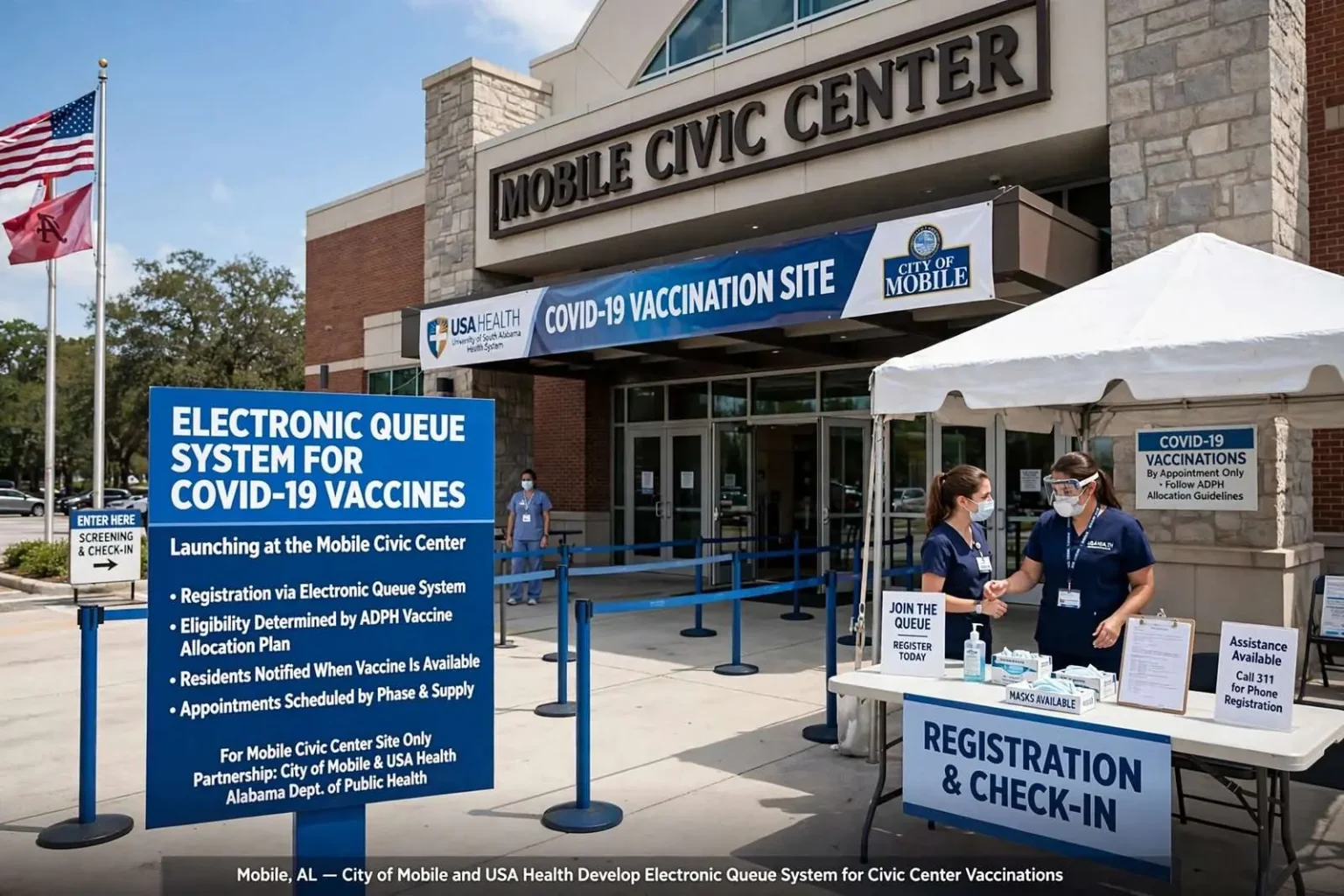
Mayor Sandy Stimpson says the City of Mobile and USA Health are developing an electronic registration system for COVID-19 vaccinations at the Mobile Civic Center. The announcement comes as health systems across Alabama and the nation work out how to move vaccine doses from arriving shipments into arms efficiently, fairly and at the scale a mass vaccination site requires.
The system will place people into a queue based on their eligibility under the Alabama Department of Public Health’s Vaccine Allocation Plan and contact them when a vaccine becomes available for them. In practical terms, the electronic queue replaces the improvisation of phone lines, forms and first-come lines with a managed list that matches each registrant to the moment doses and appointment slots can receive them.
The registration will apply only to those who want to receive their shot at the Civic Center. Mobile residents who obtain vaccinations through their physician, pharmacy or another provider will not sign up through the city system, and the city’s platform does not replace the state’s overall distribution effort — it organizes one site within it.
Why the Civic Center
The Mobile Civic Center, the city’s downtown convention and events complex, is the kind of facility mass vaccination requires. Its exhibition halls offer the open floor space needed for stations where registrants are checked in, vaccinated, observed for the required short waiting period and released — a flow that clinics, pharmacies and doctor’s offices simply cannot replicate at volume. The building’s location downtown, accessible from both sides of the bay via the Bankhead and Wallace tunnels and Interstate 10, also places it within reach of residents across Mobile and Baldwin counties.
Communities across the country converted convention centers, fairgrounds, stadiums and arenas into mass vaccination sites for precisely those reasons. The design of a large site matters: lanes for different populations,ADA-accessible paths, capacity to administer hundreds or thousands of doses a day and the cold-chain storage that modern vaccines require. A Civic Center operation also concentrates scarce resources — nurses, pharmacists, National Guard members and volunteers — in one place rather than spreading them thin across small clinics.
USA Health, the University of South Alabama’s health system, brings the clinical side of the operation. As an academic health system, it combines hospitals, physicians and the University of South Alabama’s medical education enterprise, and it has been among the region’s central players in the pandemic response, from testing to treatment to vaccination.
The allocation plan behind the queue
The Alabama Department of Public Health’s Vaccine Allocation Plan determines who is eligible for vaccination at any point in the state’s phased rollout, following the priority frameworks issued by federal health authorities. The phases — beginning with health care workers and long-term care residents, then expanding to older residents, essential workers and those with high-risk medical conditions — exist because vaccine demand in the early months of the rollout far exceeded supply, and someone had to define the order.
That is why the electronic queue described by Mayor Stimpson is built around eligibility. A registration system that ignored the allocation plan would promise appointments the supply could not honor, while one that follows the plan can place each registrant in line according to the phase they qualify under and contact them when their turn arrives. The queue, in other words, is not first-come-first-served across the whole population — it is first-come-first-served within each eligibility group, which is how fairness is managed when doses are scarce.
No timeline has been announced for when the electronic system will go live or when mass vaccinations will begin at the site. City and health system officials have cautioned that the schedule depends on the supply of vaccine allocated to Alabama and to the Mobile region, which has arrived in weekly shipments whose size has varied considerably since the first doses reached the state in December.
The supply constraint is the hidden variable behind every vaccine announcement of this period. Vaccine manufacturers produce doses in lots that are allocated to states by population and risk, states distribute them to counties and providers, and a mass site like the Civic Center can only move doses that actually arrive. When weekly shipments are large, a site can open broad eligibility and run at full capacity; when shipments shrink, appointments contract accordingly. That is why the city and USA Health have avoided committing to a launch date — the technology can be ready long before the doses are.
What registration will look like
For residents, the city’s message is that the Civic Center system is optional and specific: it applies only to those who want to receive their shot at the Civic Center. When the electronic system goes live, residents will be able to register through the channel the city and USA Health announce, providing the information needed to determine eligibility — age, occupation, health conditions, as the phases require — and joining the queue for their group.
Health officials across the country have learned lessons from the registration systems launched in the rollout’s early months. Simple forms work best; systems that require an internet connection disadvantage older residents, so telephone registration lines remain essential; and duplicate registrations have to be screened out so the queue reflects people, not multiple entries by the same person. A city running its own site has the advantage of scale and of a single, well-publicized channel, rather than the fragmented sign-up lists that frustrated residents in many communities.
The contact step — notifying registrants when a vaccine becomes available for them — is the piece residents will experience most directly. Rather than refreshing a website or calling a phone line repeatedly, people in the queue will be contacted as their eligibility phase opens and doses arrive, then scheduled for an appointment with a date and time. Scheduled appointments, in turn, let the site plan its staffing and minimize the lines and waiting periods that make large clinics difficult, particularly for elderly registrants.
The partnership behind the plan
The civic-center model relies on exactly the partnership the announcement describes. The City of Mobile provides the facility, its management and its communications reach; USA Health provides the medical personnel, protocols and clinical oversight; and the state health department provides the vaccine allocation and the eligibility rules the queue must follow. Mobile County’s emergency management and volunteer networks typically round out the staffing for operations of this kind, as they did during the pandemic’s testing surges.
Mayor Stimpson’s administration has framed the effort as part of the city’s broader role in the pandemic response — a role that has included supporting testing operations and communicating public health guidance as the situation evolved. The vaccination phase, by contrast, offers a more visible form of civic function: a downtown site where thousands of residents can be vaccinated in an orderly flow.
Residents with questions about the Civic Center registration — or about the other vaccination channels operating alongside it, including hospitals, physicians and pharmacies enrolled in the federal pharmacy program — can follow announcements from the city, USA Health and the Alabama Department of Public Health. The essential point for now is the one Stimpson’s announcement made: an electronic queue is being built, it will follow the state’s allocation plan, it will serve those who want the Civic Center site, and its opening date depends on the arrival of the doses that give it purpose.
Mass vaccination sites elsewhere in the country offer a preview of what Mobile’s Civic Center operation can become. Sites operating in convention centers and stadiums have demonstrated daily throughput measured in the thousands of doses, using assembly-line principles: one station for check-in and identity verification, one for the vaccination itself, and an observation area where recipients wait the recommended period so any immediate reaction can be treated on site. Clear signage, greeters, wheelchairs for those who need them and a smooth parking flow matter as much as the number of nurses on the floor.
The second dose complicates the logistics in a way ordinary clinics never face. The vaccines then in use require two doses separated by several weeks, and a mass site must either schedule a recipient’s second dose before they leave the building or track them down through the same electronic system that put them in the queue. Electronic registration earns its keep at precisely this step — the system that scheduled the first dose already holds the record needed to schedule, remind and confirm the second.
What it means for Mobile County residents
For residents of Mobile and the surrounding counties, the Civic Center site adds a large, predictable option to a vaccination landscape that otherwise depends on the luck of the draw — which pharmacy has doses this week, which physician’s office is enrolled, which online scheduler has an opening. A centralized queue with a known location and a fair ordering system reduces the frustration that characterized the rollout’s early weeks, when residents chased appointments across dozens of unconnected lists.
Older residents and those without internet access stand to benefit the most if the city pairs the electronic system with a phone-based registration line, as most communities operating such systems have done. The Alabama Department of Public Health and county health departments have also worked to reach underserved communities through churches, community organizations and mobile clinics, and a downtown site complements those efforts by adding capacity in a central location.
The city and USA Health have not announced when the electronic system will go live, when mass vaccinations will begin at the Civic Center, or which eligibility phase will be open when they do. Those details depend on vaccine supply and on the state’s allocation decisions. What is announced is the structure: an electronic registration system, a queue ordered by the ADPH Vaccine Allocation Plan, contact when a vaccine becomes available, and a site — the Mobile Civic Center — built to move large numbers of Mobile residents from the queue to immunity.
Until the system opens, residents remain free to pursue vaccination through every other channel in operation, and those who prefer the Civic Center site will be able to register once the city and USA Health announce the launch. In a rollout governed by scarcity, the queue’s promise is simply that of order: an accurate place in line, a notification when it is your turn, and a downtown site ready to receive you when it is.