Rose Season Arrives in Mobile, and a Wine Buyer Makes His Annual Case for Pink
Rose wines reach the shelves in late spring and vanish by midsummer. In April 2008 a Mobile wine merchant explained how they are made, why they were long dismissed, and which French bottles to buy first.
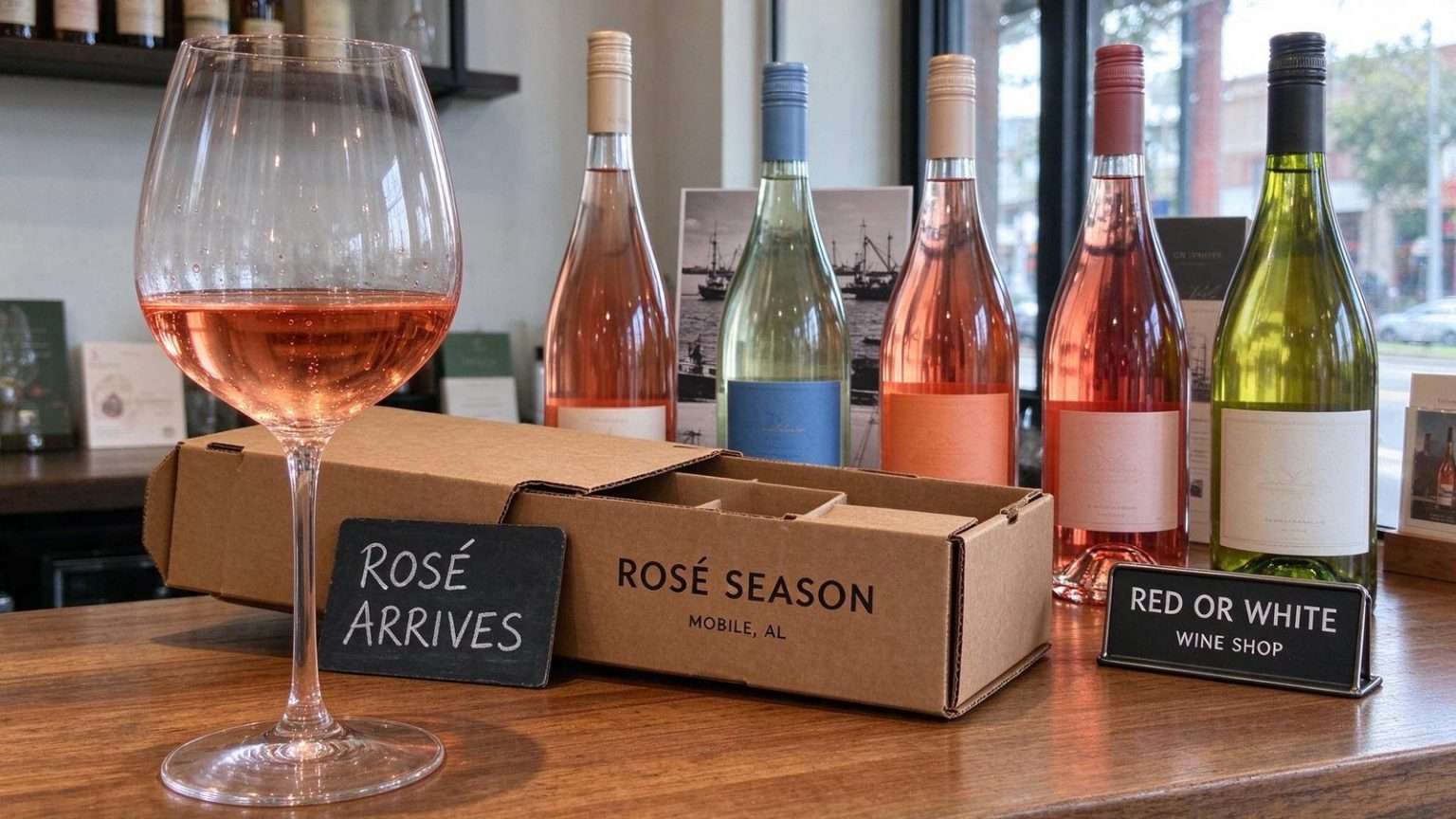
By the end of April in Mobile, Mardi Gras, Lent and Easter have all come and gone, and the long stretch of heat is visible from where you stand. In the wine trade, that calendar has a specific consequence: the rose wines arrive. They do not stay long. In a column published at the end of April 2008, the general manager of Red or White, the wine shop at 1801 Old Shell Road, warned Mobile drinkers not to be relaxed about it. These wines are released right about now, he wrote, and many will disappear before midsummer. Read the article, get pumped up, and attack.
A Convert’s Testimony
The merchant’s enthusiasm was the enthusiasm of someone who had once been on the other side. When he moved to New York City about six years earlier, he admitted, he belonged to the large portion of the wine community that assumed “if you do wine, you don’t do pink.” The blame, he argued, belonged to the bulk White Zinfandel industry, which had convinced a generation that any low-alcohol drink of that color was truck-stop refreshment. He compared it to the lingering damage jug wines did to the name Chablis, and to the blow that Sideways dealt to Merlot producers. Misconceptions of this kind, he noted drily, are not unusual in the wine world.
His conversion came at a buyer tasting at the Chelsea Wine Vault, where he was expected to taste through the spring rose arrivals with what he described as an Alabama frown on his face. A teacher of his once said that ignorance is a wonderful place to start, so he started pouring. There was no junk. The wines were focused and complete, some soft and some intense, most of them dry, and where a little residual sugar remained it was held in check by enough acidity to keep the wine from turning fat and lazy. “These were, indeed, ‘real wines,'” he wrote. “I stood corrected.”
How Rose Is Actually Made
The column’s most useful passage explained the production, because the production explains the scarcity. Color can be obtained two ways: by blending red and white wine (rare, and illegal in most of Europe for still wines labeled as rose) or by limited skin contact with red grapes — the saignée method, where juice is “bled off” a red wine fermentation after a few hours, or direct pressing, where red grapes are pressed immediately and the juice sees only brief skin contact. The latter methods produce the pale salmon, onion-skin, and coral hues that characterize serious rose. The winemaker decides the color by deciding the contact time — hours, not days.
This production reality creates the seasonal rhythm. Rose is made to be drunk young. The limited skin contact means less tannin, less phenolic structure, less to preserve the wine through years in bottle. Most rose is released the spring after harvest, meant to be consumed within a year or two. A few structured roses from Tavel, Bandol, or certain Navarra producers can age five to ten years, but they are the exception. The merchant’s warning — “they do not stay long” — is a function of the category’s nature, not just supply and demand.
Mobile’s Wine Culture and Climate
Mobile’s relationship with wine has historically been shaped by its port culture and its climate. The Port of Mobile has imported wine since the colonial era — Spanish sherry, Portuguese Madeira, French Bordeaux — supplying a city where the heat and humidity made beer spoil and spirits too heavy for daily consumption. The wine shop at 1801 Old Shell Road, Red or White, opened in the early 2000s as part of a wave of specialty retail that followed the loosening of Alabama’s alcohol laws. The state’s transition from a control system to a licensed retail model in the 2000s allowed independent shops to curate selections that the state-run ABC stores never carried.
The Gulf Coast climate makes rose particularly relevant. A crisp, dry rose at 50 degrees is one of the few wines that tastes refreshing in 90-degree heat with 80 percent humidity. Heavy reds feel oppressive; oaky whites can feel flabby. Rose’s acidity, low alcohol (typically 11-13%), and serving temperature make it a functional match for the environment. The merchant’s column implicitly acknowledged this: the wines arrive in April because that’s when Mobile needs them. The seasonal release calendar of European producers — particularly in Provence, the Loire, and the Rhône — aligns almost perfectly with the Gulf Coast’s transition from spring to summer.
Provence, the Loire, and the Benchmarks
The column highlighted the classic regions. Provence, centered around the coastal appellations of Côtes de Provence, Coteaux d’Aix-en-Provence, and Coteaux Varois, produces the palest, driest, most delicate roses — the “onion skin” style that has become the global benchmark. The Loire Valley, particularly Anjou, Touraine, and Sancerre, offers roses with more weight and fruit, often from Cabernet Franc, Gamay, or Pinot Noir. Tavel, in the southern Rhône, is the only French appellation dedicated exclusively to rose; its wines are darker, richer, and capable of aging. Spain’s Navarra and Rioja produce Garnacha-based roses with bright strawberry notes. Italy’s Chiaretto (from Bardolino) and Cerasuolo d’Abruzzo offer Mediterranean alternatives.
The merchant’s tasting at the Chelsea Wine Vault likely featured a cross-section of these styles. The buyer tasting format — where retailers taste through a distributor’s portfolio to make purchasing decisions — is the primary mechanism by which small shops like Red or White access the global wine market. Distributors in Alabama, operating under the three-tier system, allocate limited quantities of sought-after roses to their accounts based on past sales, relationship, and the shop’s ability to move volume quickly. The merchant’s urgency — “many will disappear before midsummer” — reflects the reality that distributors’ rose allocations are finite and not replenished once sold out.
The White Zinfandel Shadow
The column’s reference to White Zinfandel touches on a wound in American wine culture that still shapes consumer perception. In the 1970s, Sutter Home’s White Zinfandel — a sweet, blush-colored wine made from Zinfandel grapes with minimal skin contact and arrested fermentation — exploded into a cultural phenomenon. At its peak in the 1980s, White Zinfandel outsold all other domestic wines combined. It introduced millions of Americans to wine, but it also cemented the association: pink equals sweet, simple, unsophisticated. The backlash among wine professionals was fierce, and for decades “serious” drinkers avoided anything pink on principle.
The merchant’s “Alabama frown” at the Chelsea tasting was the face of that prejudice. His conversion — realizing that serious rose is dry, structured, and food-friendly — mirrors the journey the broader wine market has taken over the past 15 years. Rose consumption in the U.S. has grown at double-digit rates annually since the early 2010s, driven by millennial consumers who never drank White Zinfandel and have no prejudice against pink. Import data shows French rose imports alone have increased more than 500 percent since 2005. The category has moved from seasonal novelty to year-round staple in many markets, though the spring release cycle remains the peak moment for selection and freshness.
Food Pairing and the Gulf Coast Table
The column’s implicit argument for rose’s versatility finds its fullest expression on the Gulf Coast table. Mobile’s cuisine — a Creole-inflected blend of French, Spanish, African, and Native American traditions — runs heavily toward seafood, spice, and acidity. Grilled fish with lemon-herb butter, shrimp and grits, crab claws with remoulade, oysters on the half shell, blackened redfish, gumbo with a dark roux and okra — these dishes demand wines with acidity to cut richness, fruit to complement spice, and enough structure to stand up to assertive flavors without overwhelming delicate proteins. Rose, particularly the dry, mineral-driven styles from Provence and the Loire, hits all three notes.
The merchant, writing for a Mobile audience, would have known this instinctively. The Old Shell Road location of Red or White sits in Midtown, a corridor of restaurants that have elevated Mobile’s dining scene over the past two decades — from the French-inspired Noble South to the seafood-focused Wintzell’s Oyster House to the Caribbean-influenced Von’s. A wine shop that understands the local palate stocks accordingly. The spring rose allocation at Red or White would have been curated with Gulf Coast cuisine in mind: lighter roses for raw bar work, weightier roses for blackened and grilled dishes, sparkling roses for celebration and fried seafood.
The Economics of the Spring Release
The column’s urgency — “read the article, get pumped up, and attack” — reflects the economic reality of the three-tier system. Alabama’s alcohol distribution is controlled by a handful of major distributors who allocate limited quantities of imported rose to retail accounts. The most sought-after producers — Château d’Esclans (Whispering Angel), Domaines Ott, Château Minuty, Commanderie de Peyrassol — sell out their U.S. allocations within weeks of release. A small shop like Red or White receives a fraction of what it could sell, and once the allocation is gone, there is no reorder until the following vintage.
This scarcity drives the “attack” mentality. Savvy retailers buy their full allocation immediately, often committing in January or February based on the previous year’s sales. Consumers who wait until June find the shelves picked over. The merchant’s column was, in part, a service to his customers — a reminder that the window is narrow and the best wines go first. It was also a marketing tool: positioning Red or White as the place that gets the good stuff, knows when it arrives, and tells you to come get it.
Rose’s Evolution in the Mobile Market
By 2008, when the column was published, the rose renaissance was already underway nationally but had not yet fully reached the Gulf Coast. The subsequent decade would see rose transform from a niche category to a major revenue driver for wine shops, restaurants, and distributors alike. Red or White, like many independent shops, expanded its rose section from a few bottles to a dedicated wall. Restaurants added rose by the glass and by the carafe, recognizing that the category’s approachability and food-friendliness made it an easy upsell. The “rosé all day” meme, which peaked in the mid-2010s, was both a cultural phenomenon and a commercial accelerant.
The merchant’s 2008 column reads now as an early dispatch from the front lines of that transformation. His conversion story — from skeptic to evangelist — played out in wine shops across the country as buyers tasted the new generation of dry roses and realized the category had moved on from White Zinfandel. For Mobile, with its climate, cuisine, and port heritage, rose was always a natural fit. The spring release calendar just makes it official: the wines arrive when the heat arrives, and they don’t stay long.