Mobile Zoo Launches Fundraiser to Stay Open
Mobile's only zoo, in Wilmer, is at risk of closing after two decades and needs $14,000 for basic expenses like feed, utilities and maintenance.
Mobile’s only zoo is at risk of closing after two decades of serving the community, and its operators are asking local residents to help. The nonprofit, located in Wilmer, Alabama, needs $14,000 for basic expenses such as feed, utilities and maintenance — the unglamorous, unending costs of keeping hundreds of animals healthy and housed. A fundraising drive that began Jan. 13 had raised $2,653 by late February, leaving a substantial gap between what the zoo has collected and what it needs to stay open.
For a facility that receives no government funding, that gap is existential. The zoo’s operators say that without a surge of community support, the animals could lose their homes and the region could lose an attraction that has hosted generations of school field trips, birthday parties and family outings since it opened its gates in northwest Mobile County.
The plea comes at a difficult moment for small animal facilities everywhere. Rising feed costs, utility bills and veterinary expenses have squeezed small nonprofits for years, and attractions in rural areas feel the squeeze most sharply because their visitor base is thinner and their margins for error narrower. Unlike large city-funded zoos with endowments and municipal budgets, a small nonprofit zoo lives or dies on admission fees and donations, month to month.
More Than a Petting Zoo
This is no small roadside attraction. The Mobile Zoo houses lions, tigers, bears, panthers, leopards, lemurs, peacocks, llamas and more, with animals given generous outdoor space. The collection spans continents and habitats, giving visitors in the Mobile area a chance to see animals they might otherwise only encounter on television — an experience the zoo’s supporters say is especially valuable for children from families who cannot travel to larger zoos in New Orleans, Atlanta or Birmingham.
The facility’s animals carry stories of their own. A litter of Siberian tigers was once featured on the television program Wild Things, and chimpanzee Joe appeared in the Hollywood film Buddy before retiring to the zoo. Those connections to film and television gave the zoo a measure of national attention over the years, but the staff say the animals’ daily roles are simpler and more important: they are residents with a permanent home and ambassadors that teach visitors about wildlife.
Many of the animals were rescued from circuses, abusive owners or worse fates. That rescue mission shapes the zoo’s identity. For big cats and primates that spent years in inadequate conditions elsewhere, the zoo’s outdoor habitats represent a final refuge — a place where they can live out their lives in peace. Closing the facility would mean finding new placements for animals that are often old, special-needs or otherwise difficult to relocate, and sanctuaries with space to take them are scarce.
Unlike city-funded zoos, the facility receives no municipal money and has depended on donations from local businesses and grocery stores. Supporters over the years have ranged from feed stores to civic groups, and the zoo’s continued operation has always been a community project in the truest sense, sustained by people who value having such a resource in western Mobile County.
It has also served the community directly, hosting macaques from the University of South Alabama’s primate lab for student behavior studies. That partnership gave university students hands-on observation experience while providing the animals with care and housing, an arrangement that reflects the zoo’s quiet role in the region’s educational ecosystem. Local students at every level, from elementary field trips to college practicums, have passed through its gates over two decades.
How to Help
Admission is $8.50 for adults and $7.50 for children and seniors. Every admission directly supports the care of the animals, and the zoo’s operators say regular visitors — including members who come repeatedly through the year — provide some of the most reliable support the facility receives. Gift shop purchases and special event attendance add to that base.
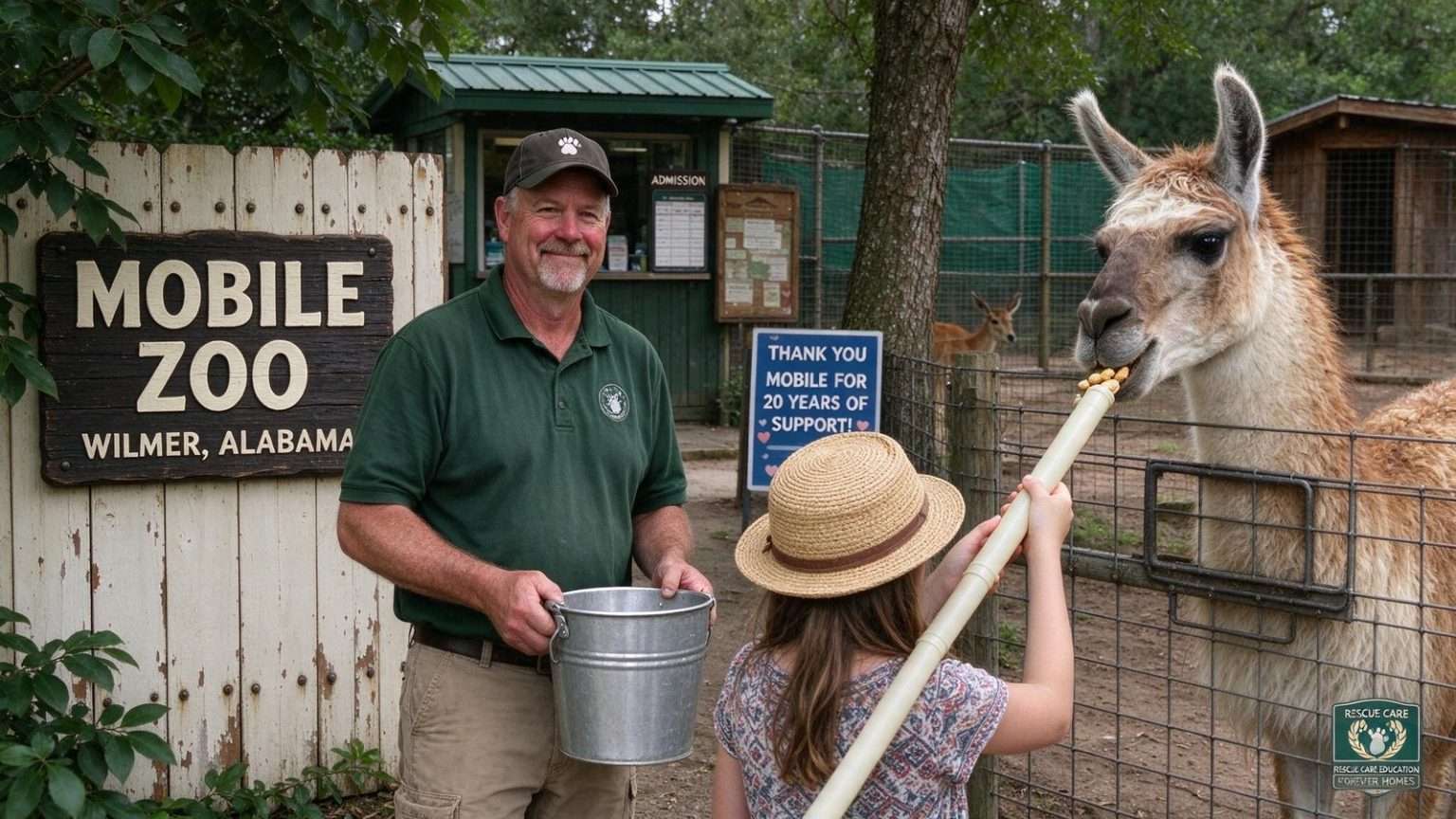
The zoo sells peanuts at the entrance so visitors can feed many animals through PVC tubes, and accepts meat donations toward big-cat feedings. The feeding experience is one of the zoo’s signature attractions, letting children hand-feed animals safely through the tubes and creating the kind of close encounter that turns a casual visit into a lasting memory. Hunters and families with freezer stock who donate meat help the zoo offset one of its largest recurring costs, the food bill for its carnivores.
Contributions of any size, including as little as $5, can be made through the zoo’s website, along with memberships and supplies such as fencing. The operators stress that small donations add up, and that material gifts — fencing materials, building supplies, tools — can be as valuable as cash because they reduce capital expenses that would otherwise come out of the same strained budget. Memberships offer a way for families to support the zoo while enjoying repeat visits throughout the year.
Community organizations looking for service projects have options as well. The zoo’s grounds and habitats require continuous upkeep, and volunteer labor — from fence repair to cleanup days — stretches the budget further. The operators say groups that adopt a project or sponsor an animal’s care can see exactly where their help goes, a transparency that small nonprofits count on to build lasting donor relationships.
What the Community Stands to Lose
Losing the Mobile Zoo would take a fun, safe outing away from area schools and nursing homes, and would end the forever homes it provides for rescued wildlife. Teachers across the region have long relied on the zoo as an affordable destination where a classroom of students can see exotic animals without an expensive trip to a major city. Senior groups and nursing home residents count its quiet paths and animal encounters among their regular outings.
The zoo’s location in Wilmer also makes it a piece of the rural economy of northwest Mobile County, drawing visitors who stop at local businesses on their way in and out. Small attractions like the zoo serve as anchors for rural communities, and their loss is felt beyond the gate.
The operators say the two decades of support the community has given the zoo prove that Mobile values the facility — and that the current fundraising gap is a solvable problem if enough people pitch in. The $14,000 need, divided across the thousands of families who have visited over the years, comes down to a modest ask from each household that has ever enjoyed the place.
For now, the animals remain in their habitats, the gates remain open and the fundraising drive continues. The zoo’s supporters say the next few months will determine whether Mobile keeps its only zoo or becomes one of the few metro areas of its size without one — and they are asking everyone who cares about the animals, or about affordable family outings on the Gulf Coast, to help close the gap while there is still time.
A Rural Refuge With a National Past
The zoo’s Hollywood connections may surprise visitors who know it only as a local outing. The television feature on its Siberian tiger litter and the screen career of chimpanzee Joe belong to an era when the facility drew attention from well beyond the Gulf Coast, and longtime staff tell those stories to visitors as part of the zoo’s living history. But the operators are quick to note that fame was never the point — the mission has always been rescue, care and education, and that mission is what the current fundraising drive is designed to protect.
The rescue work continues to be the heart of daily operations. Exotic animals that outgrow private owners’ capacity to care for them, or that are surrendered from roadside attractions and traveling shows, need placements that few facilities can offer. The zoo’s staff have built the expertise to handle animals with difficult histories, and its habitats are designed to give former performers and rescued pets the outdoor space and routine they need to live comfortably. Each animal that arrives represents a responsibility the zoo carries for the rest of that animal’s life, with no expectation of replacement or turnover.
The University of South Alabama partnership remains one of the clearest examples of the zoo’s educational value. Behavioral observation studies with the macaques give students research experience that cannot be replicated in a classroom, and the arrangement reflects the zoo’s standing among the region’s academic institutions as a genuine scientific resource rather than merely a tourist stop.
Every Dollar Lands Close to the Animals
Because the zoo is small, supporters can trace their contributions to visible results. A donation to the feed budget is measured in the diets of named animals; a gift of fencing is a rebuilt habitat boundary; a membership is a season of visits for a family that lives minutes away. The operators say that directness is part of what keeps donors coming back — there is no bureaucracy between a contribution and the animal it helps.
The $2,653 raised so far shows that support is real, but the pace must quicken to meet basic expenses. The zoo’s staff are continuing to welcome visitors daily, host school groups and post updates on the animals, even as they work the phones and the website to close the funding gap. Their message to the community is straightforward: the zoo has been here for two decades, it has never asked for much, and right now it is asking.