Enrollment Climbs at Mobile’s Most Pure Heart of Mary Catholic School
Enrollment is up at Most Pure Heart of Mary Catholic School in Mobile, aided by Alabama Accountability Act scholarships for families in need.
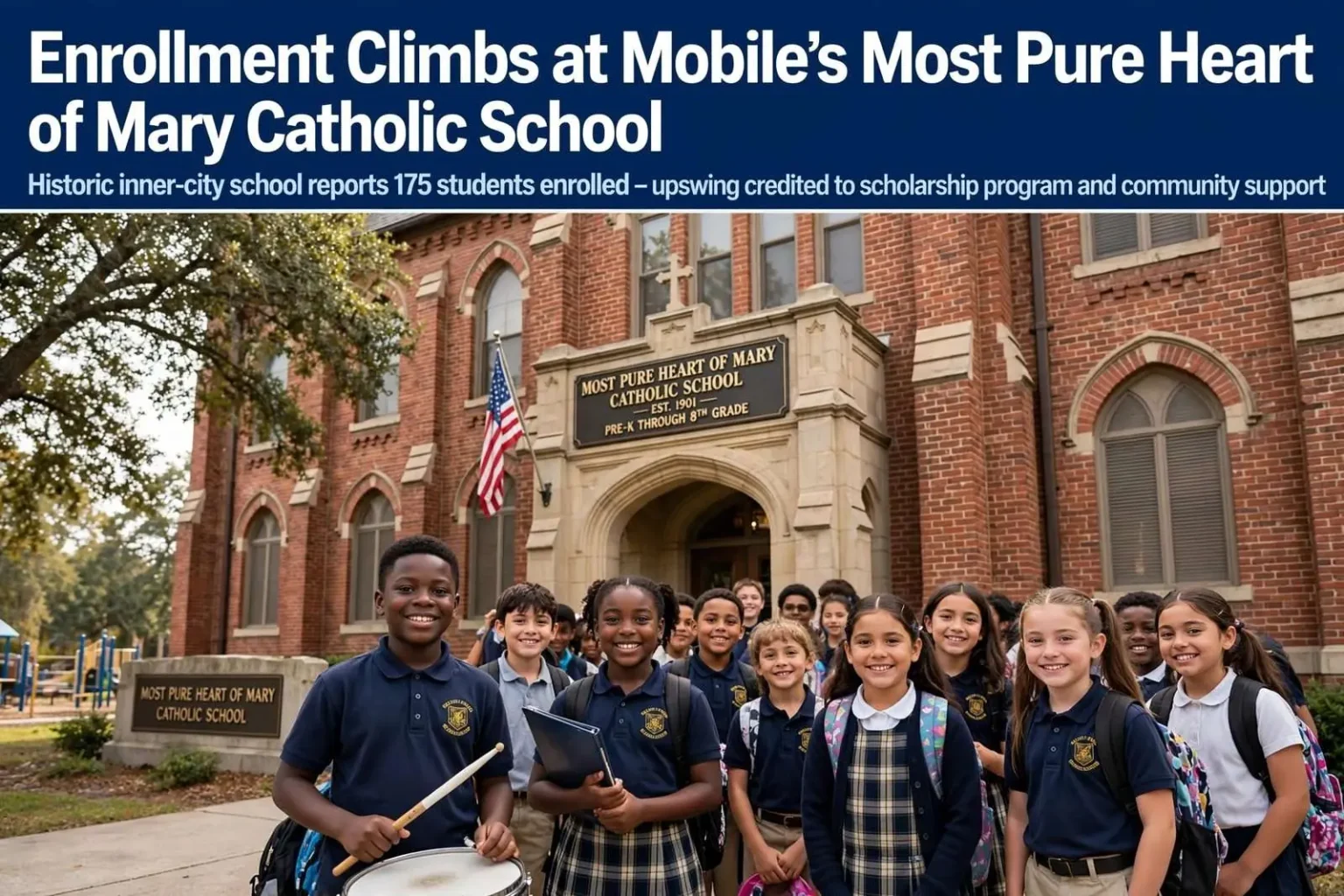
Despite years of rumors suggesting otherwise, Most Pure Heart of Mary Catholic School in Mobile says it’s on the upswing, not the decline, according to Principal Jamie Crain. Enrollment at the historic inner-city school now stands at 175 students, with room to grow to as many as 200.
Crain credits a series of changes at the pre-K through eighth grade school, including a long-term strategic plan and a more organized network connecting faculty, parents and alumni. She said the school has intentionally stayed small, a quality many families say they value. Tuition runs $2,995 per year for a single child, dropping to $1,500 for siblings, and more than a third of students now receive tuition assistance through the Alabama Opportunity Scholarship Fund, part of the state’s Alabama Accountability Act.
That scholarship support, Crain said, has made a real difference for families who were increasingly stretched thin by the economic downturn. Many students come from families with deep ties to the school, including multiple generations of alumni, and Crain said parents make real sacrifices to keep their children enrolled. Most of the scholarship recipients live within the attendance zones of Mobile County public schools designated as chronically low-performing under the Accountability Act, including Denton, Mae Eanes, Mobile County Training, Scarborough and Washington middle schools. Because of how the state’s application deadlines are structured, the school has continued accepting transfers throughout the fall semester.
Beyond scholarship-driven growth, Crain pointed to a rise in parent volunteering and increased financial support from alumni and parishioners in recent years. The school added new music programs this year, including a schoolwide choir and a middle school drumline, both of which were set to perform at a fundraiser concert featuring musician Kenny Neal.
Most Pure Heart of Mary traces its roots back to 1901 and once operated a high school before McGill-Toolen Catholic High School was integrated in 1964. During the Civil Rights era, the parish and school served as a meeting place for the Neighborhood Organized Workers, and the church remains part of the African American Heritage Trail of Mobile today.
How the scholarships work
The Alabama Accountability Act, passed by the Legislature in 2013, gives state income tax credits to people and businesses that donate to nonprofit scholarship-granting organizations such as the Alabama Opportunity Scholarship Fund. Those organizations award scholarships to lower-income students, with priority for students zoned to public schools the state designates as failing, so they can attend private schools.