New State Veterans Service Office Opens in Chatom for Washington County Veterans
A new Alabama State Veterans Service office in Chatom helps Washington County veterans apply for compensation, education benefits, VA home loans and more.
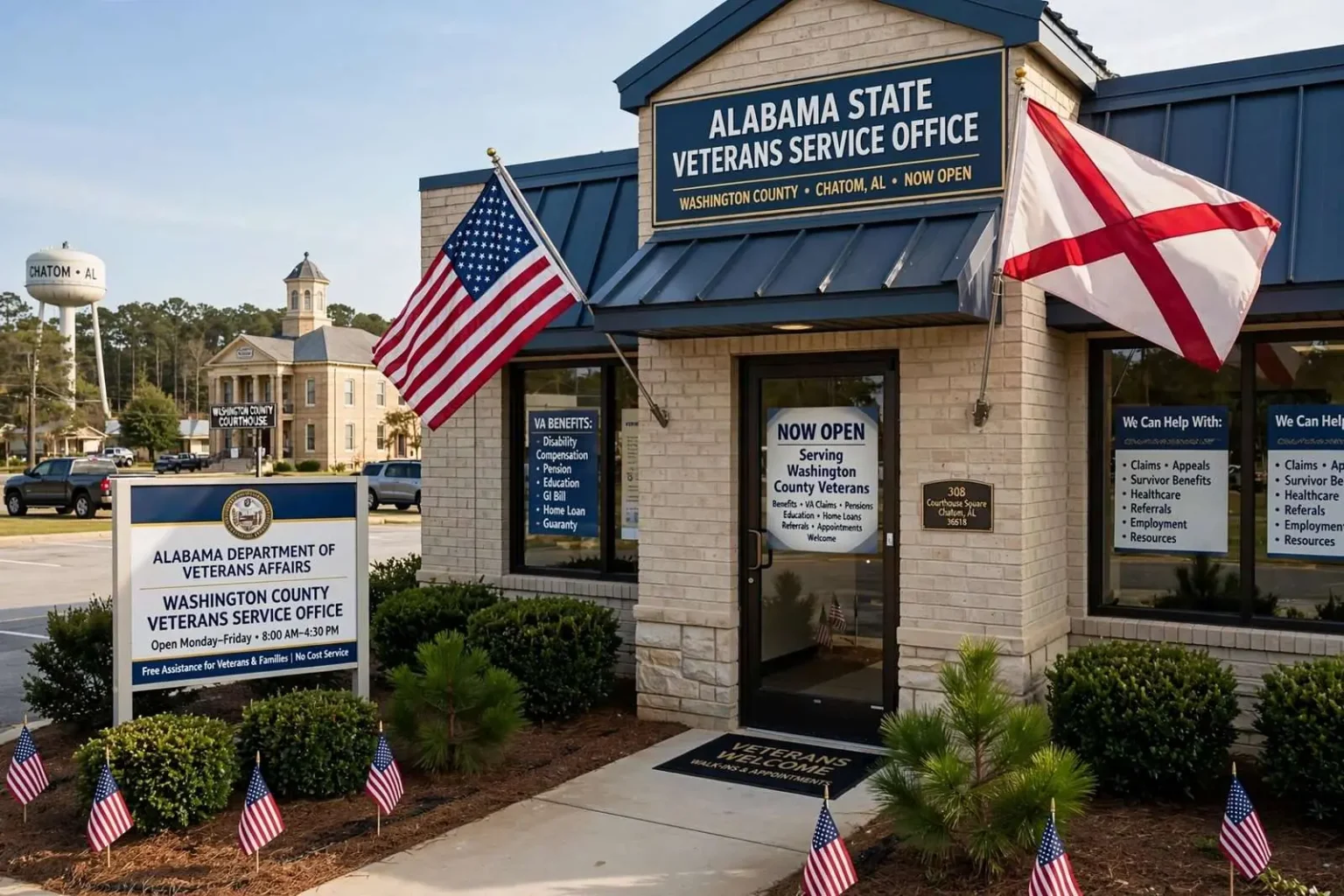
Veterans in Washington County now have a closer place to turn for help with their benefits. A new Alabama State Veterans Service office has opened in Chatom, giving local veterans and their families a nearby point of contact for state and federal veterans’ services — and removing what had been a long drive to a larger city for many rural households in southwest Alabama.
Washington County, stretching across Alabama’s southern tier west of Mobile, has a veteran population scattered across small towns like Chatom, McIntosh, Millry and Leroy. For years, veterans seeking help navigating claims and benefits often had to travel to Mobile or beyond to sit down with an accredited service officer. The new office brings that help to the county seat, within reach of residents across the county’s rural road network.
What the Office Offers
The service center helps veterans apply for a range of benefits, including compensation and pension benefits, educational benefits, and VA home loans. Staff can also connect veterans with referral services for needs such as temporary housing, healthcare, counseling, and job placement. Those functions cover the most common questions veterans face after service: filing an initial claim for a service-connected condition, appealing a decision, using education benefits earned through service, and securing home financing through VA-backed lending.
Accredited service officers do the detailed work that makes claims succeed — gathering military records, documenting medical evidence, completing the Department of Veterans Affairs’ forms correctly and tracking a claim through the system. For older veterans, and for families filing survivor benefits, that paperwork assistance is often the difference between a claim filed and a claim abandoned. The referral side of the office extends its reach beyond claims: a veteran facing homelessness, a health crisis or a rough transition to civilian employment can be pointed to the right program through a single local visit.
Why It Matters Locally
For veterans in rural communities like Chatom and the surrounding towns of Washington County, traveling to a larger city for benefits paperwork has long been a hurdle. A local office means claims assistance and referrals are available without a long drive to Mobile or beyond. The practical obstacles of rural access are well documented: limited transportation, work schedules, health conditions and the simple distance across a large, sparsely populated county all discourage veterans from pursuing benefits they have earned, and claims systems that depend on documentation reward veterans who can make repeated in-person visits.
The opening adds Chatom to the network of state veterans service offices across Alabama that assist former service members with navigating U.S. Department of Veterans Affairs programs. The Alabama Department of Veterans Affairs operates offices in counties across the state, staffed by service officers trained in federal and state benefits, so that no veteran’s access depends entirely on living near a major city. Each county office functions as the local front door to that system, handling walk-in questions, scheduled appointments and follow-ups on pending claims.
State benefits are part of the picture as well. Alabama offers programs for its veterans beyond the federal system, including property tax exemptions for disabled veterans, educational benefits for qualifying families and state veterans homes that provide long-term care. A county-level office is where residents learn which of those programs they qualify for and how to apply, making the local presence valuable even for veterans whose federal claims are already in progress.
Veterans in Rural Alabama
Washington County’s veteran community reflects the broader pattern of rural Alabama, where military service has long been a common path for young people leaving small towns. The county’s residents have served across generations of American conflicts, and like many rural counties, it sends a disproportionate share of its sons and daughters into the armed forces relative to its population. Those veterans age in place in the communities they came from, which is why access to services near home matters more in counties like Washington than a statewide average would suggest.
Rural veterans nationally face documented challenges in using their benefits: longer distances to VA medical facilities, thinner transportation options, and lower awareness of programs they qualify for. Outreach offices like the one in Chatom are the standard response, because the most effective fix for underuse of benefits is putting a knowledgeable person in the same room as the person who earned them. Families benefit too — spouses and survivors navigating Dependency and Indemnity Compensation, burial benefits and survivor pensions have somewhere local to ask their questions.
Chatom, the county seat, is a natural location for the office. The town anchors county government and sits at the junction of U.S. Highway 84 and Alabama Highway 56, making it reachable from the county’s outlying communities. A veteran from Millry or Vinegar Bend, from Fruitland or Deer Park, can reach the county seat far more easily than downtown Mobile, and the county courthouse footprint means many residents already make routine trips there.
How the System Works
The U.S. Department of Veterans Affairs administers the major benefit programs — disability compensation for service-connected conditions, pensions for wartime-era veterans with limited income, education programs including the GI Bill, and the home loan guaranty that helps veterans buy houses with favorable terms. Navigating those programs requires documentation from military service, medical evidence and correctly completed applications, which is precisely the work service offices exist to support.
Service officers are accredited to represent veterans before the VA, and their assistance is free — a point officials emphasize because paid “claim consultants” charge veterans for help they can receive at no cost from a state office. In a claims process where incomplete documentation is the leading cause of delay, a local officer’s review before filing saves months of back-and-forth and raises the odds of a complete, accurate first submission.
The Chatom office’s arrival gives Washington County veterans something their neighbors in larger metros have long had: a standing, local, professional point of contact for every stage of the benefits system, from a first question about eligibility to an appeal after a decision. For a county where the nearest VA facilities and major service centers sit a considerable drive away, the opening amounts to bringing a piece of the federal benefits system home to the people it serves.
The referral services the office coordinates deserve particular attention in a rural county, where nonprofit and government resources exist but are scattered across the region. A veteran who needs temporary housing can be connected with shelters and transitional programs in the region; a veteran struggling with the mental health aftermath of service can be pointed toward counseling options, including VA-covered care; and a veteran looking for work can reach employment programs that translate military skills into civilian credentials. Knowing which door to knock on is often the hardest part of getting help, and the office’s staff do that sorting for walk-ins every day.
Healthcare access remains a separate but related issue for Washington County veterans. The nearest VA medical centers and outpatient clinics require travel out of the county, and community care arrangements — where the VA pays for local civilian providers — require enrollment and authorization that a service office can help explain. Transportation assistance programs, including volunteer driver networks that serve rural veterans for medical appointments, are another referral the office can arrange, and awareness of them alone removes a barrier for older veterans who no longer drive long distances.
Local officials have long emphasized that county-level services like this one function as economic and civic infrastructure as much as individual assistance. Benefits paid to veterans flow into local economies — home loans bought with VA guaranties, disability compensation spent at county businesses, education benefits used at regional campuses — and helping residents claim the federal support they have earned is one of the few ways a rural county office directly strengthens the whole community’s finances.
The office also shortens the feedback loop on claims that stall. A veteran whose paperwork sits in the federal queue can have a local officer check status, supply additional evidence and communicate with VA regional offices on the claimant’s behalf — follow-up work that is far more likely to happen when the officer is twenty minutes away rather than across the bay. Officials describe that ongoing case management as the quiet majority of what county offices do, even though initial claims get most of the attention.
Veterans and families in Washington County seeking assistance can contact the Chatom office about eligibility, required documents and appointment scheduling, with service officers available to walk claimants through each step. For a county that has sent generations of its residents into uniform, the new office is a practical acknowledgment: service earned these veterans their benefits, and now getting those benefits no longer requires leaving the county to get started.