

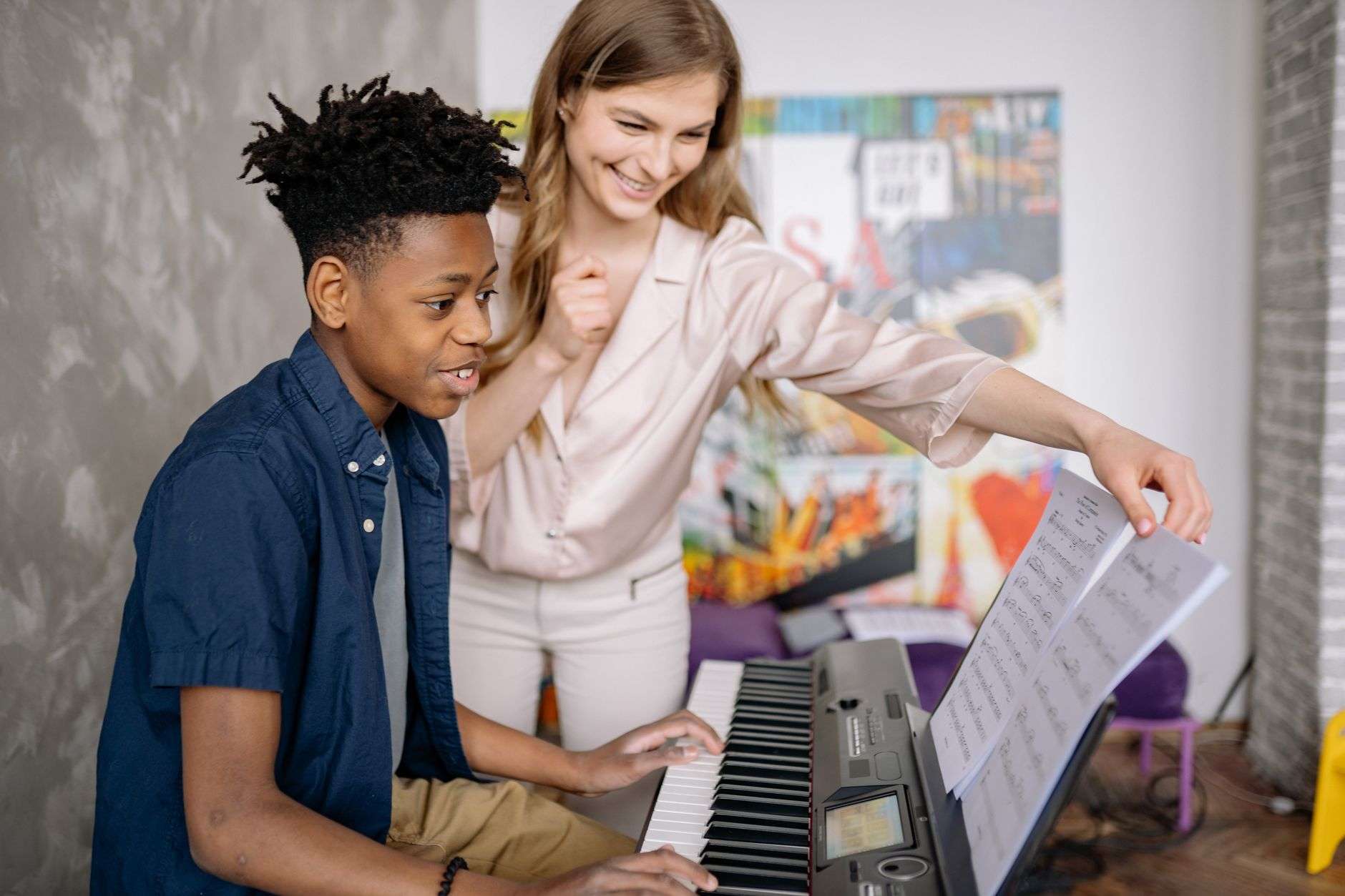
Families across southwest Alabama and southeastern Mississippi have a new opportunity to bring music into their homes at no cost. The Wilcox Gallery Music Studio in Chatom is now accepting applications for its 2026-2027 season, offering free group instruction in piano and violin to children and adults ages 7 and up. The program, now entering its ninth year, has become a fixture of arts education in Washington County and the surrounding rural communities it serves.
For many families in the region, the announcement marks the only realistic path to formal music lessons. Private instruction in piano or violin typically carries a per-lesson cost that adds up quickly, and in small towns the nearest qualified teacher may be a drive of an hour or more. By offering group classes at no charge, the Music Studio removes both obstacles at once — the tuition bill and the distance.
A long-running commitment to free arts education
The Wilcox Gallery was established by the late Edith Jordan Wilcox with a mission to promote the arts in Washington County and the rural areas nearby through hands-on educational programs. That founding purpose has shaped everything the gallery has taken on since, from visual arts programming to the music instruction that now anchors its calendar. The Music Studio has grown out of that mission, and over its eight previous seasons it has provided free instruction to hundreds of students who might not otherwise have access to formal music lessons.
By removing the cost barrier, the program has made it possible for families throughout the region, regardless of income, to introduce their children, or themselves, to piano and violin. Organizers have long emphasized that the doors are open to adults as well as children, a deliberately broad posture that reflects the reality that many adults in rural communities never had the chance to learn an instrument growing up and would like one now.
Alicia Atcheson, executive director of the Wilcox Gallery, said the studio’s leadership is looking forward to another year of growth for both new and returning students. “We are excited to welcome both returning and new students to the Music Studio this fall,” Atcheson said. “Over the years, we’ve had the privilege of watching students grow not only as musicians but also in confidence. We look forward to investing in another year of musical growth, as well as introducing new students to the joys of music.”
That confidence-building element is one returning families tend to mention most. Learning an instrument in a group setting gives students regular, low-pressure opportunities to play for others, and teachers and parents alike often report that the practice habits and poise students develop carry over into schoolwork and public life. For a program that has now operated across nine seasons, those outcomes have become part of its reputation in the community.
University of Mobile partnership brings skilled instructors
A key element of the program is its partnership with the University of Mobile, through which graduate-level music students serve as instructors for the Chatom classes. That arrangement gives local participants access to instruction from musicians pursuing advanced training, while also giving university students real-world teaching experience in a community setting. The pairing has proven durable across multiple seasons, and it is a large part of how a small-town gallery has been able to sustain free lessons at all.
The arrangement is a two-way investment. Graduate instructors bring current conservatory-style training in technique, repertoire and pedagogy to Chatom, while the rural classroom gives those young teachers something a university studio cannot: the experience of adapting instruction to mixed groups of beginners, children and adults with widely varying levels of preparation. Organizers say that experience shapes the instructors as much as it shapes the students.
Classes are organized in a group format and are designed to accommodate both beginners who have never picked up an instrument and more advanced musicians looking to continue developing their skills. Group instruction also builds in an element that private lessons lack: students learn alongside peers, hear others work through the same difficulties, and progress together as a small ensemble-in-the-making rather than in isolation.
Why programs like this matter for rural communities
Free, sustained music instruction is relatively rare in small towns like Chatom, where school arts budgets and private instructors can be limited compared to larger metro areas. Community-supported programs such as the Wilcox Gallery Music Studio help fill that gap, giving children and adults a structured way to build musical skills, discipline, and confidence close to home. As the studio enters its ninth season, its continued partnership with the University of Mobile and its free-of-charge model stand out as a notable resource for families throughout Washington County and neighboring communities in Alabama and Mississippi.
The longevity itself is the remarkable part. Rural arts programs often survive on short grants and volunteer energy, and many fold within a few seasons when funding dries up or founders move on. A program that has run for eight consecutive seasons and is planning a ninth has beaten those odds through an unusual combination of an endowed founding mission, a steady supply of trained instructors from a university partner, and a community that keeps showing up.
Research on music education has consistently linked instrumental study with benefits beyond music itself — improved concentration, patience, fine motor control and memory, along with the social development that comes from working toward shared performances. In communities where children may have limited access to enrichment activities of any kind, advocates say, those spill-over effects make free music instruction one of the highest-return investments a small town can make in its young people.
For adults, the value runs differently but just as deep. Returning adult students in community music programs frequently describe lessons as a hobby that doubles as stress relief and a social outlet, something that can be scarce in rural areas where after-work options are limited. The studio’s ages-7-and-up policy acknowledges that musical learning does not have an expiration date.
What happens next
Once applications are in, the studio’s staff and its University of Mobile instructors will organize the season’s class rosters, matching students by instrument and level. Families accepted into the program can expect a schedule of regular group lessons through the academic year, with the typical rhythms of a music studio — technique fundamentals, repertoire, and the gradual build toward playing for an audience.
For now, the message from the gallery is straightforward: apply before the July 31 deadline, reach out with questions rather than assume, and plan to commit to the season. As Atcheson’s remarks suggest, the program’s leaders view each new class of students as a continuation of Edith Wilcox’s founding idea — that the arts belong in Washington County’s small towns as surely as they belong anywhere else, and that cost should never be the reason a child never learns to play.
Two instruments, two different paths
The choice between piano and violin shapes what a student’s first year looks like. Piano beginners get an instrument where a correct note is always available at the press of a key, which makes early progress feel immediate and lets students hear harmony and melody together from the first weeks. Violin beginners face a steeper technical curve — pitch is created by finger placement rather than by keys — but teachers often point out that the instrument rewards persistence with a distinctive singing tone and a central place in ensemble playing.
Offering both, in group form and at no charge, gives families a genuine choice rather than whatever single option a town happens to have. Some students arrive committed to one instrument; others sample both before settling in. Either way, the studio’s approach treats the first season as an introduction rather than a commitment, which lowers the stakes for families still deciding whether music lessons fit their lives.
Group instruction carries particular advantages for beginners. Students see classmates working through the same difficulties, learn that mistakes are a normal part of practice, and get frequent low-pressure chances to play in front of others. Music educators have long argued that this peer setting builds staying power — students in group programs are often more likely to continue past the first year than those learning alone, precisely because the class becomes a small community with its own momentum.
The adult learners add a different texture to the classroom. In rural programs that admit adults alongside children, teachers commonly find that older students bring discipline and motivation while younger ones bring speed of acquisition, and the two groups learn from watching each other. For parents who sit in on lessons anyway, the open age range means the family can learn together instead of simply chauffeuring.
Chatom’s place in the program’s reach
Chatom, the county seat of Washington County, sits in a part of Alabama where the nearest sizable music retail store or conservatory-style teacher can be an hour’s drive away. Hosting the program in town keeps participation practical for working families: lessons happen close to home, on a schedule families can plan around, without a long round trip attached to every session.
That local base is also what lets the program extend outward. Because the studio has a stable home and a recurring instructor pipeline, families from communities across southwest Alabama and into southeastern Mississippi can plan around a known season, a known deadline and a known location. Programs without such an anchor tend to serve only whoever happens to hear about them; the Music Studio’s nine-season history has made it a known quantity across the region.
Organizers note that word of mouth has been among the program’s most effective recruiters — returning students telling classmates, grandparents mentioning lessons to neighbors, church and school communities passing along each season’s application window. Families considering the 2026-2027 season are encouraged to rely on the official channels, however: the gallery’s Facebook and Instagram pages for the application forms, and the gallery’s email and phone contacts for questions about openings, waiting lists or anything else the posted materials do not answer.