Snook Foundation Counterclaim: Fired Employees Blame Trustees for $2.5 Million Pension Dispute
Thomas and Heather Lee, two of the former employees accused in the Foley-based Snook Foundation’s $2.5 million pension dispute, say in a federal counterclaim that Marjorie Snook approved their pension plan and the board failed in its oversight.
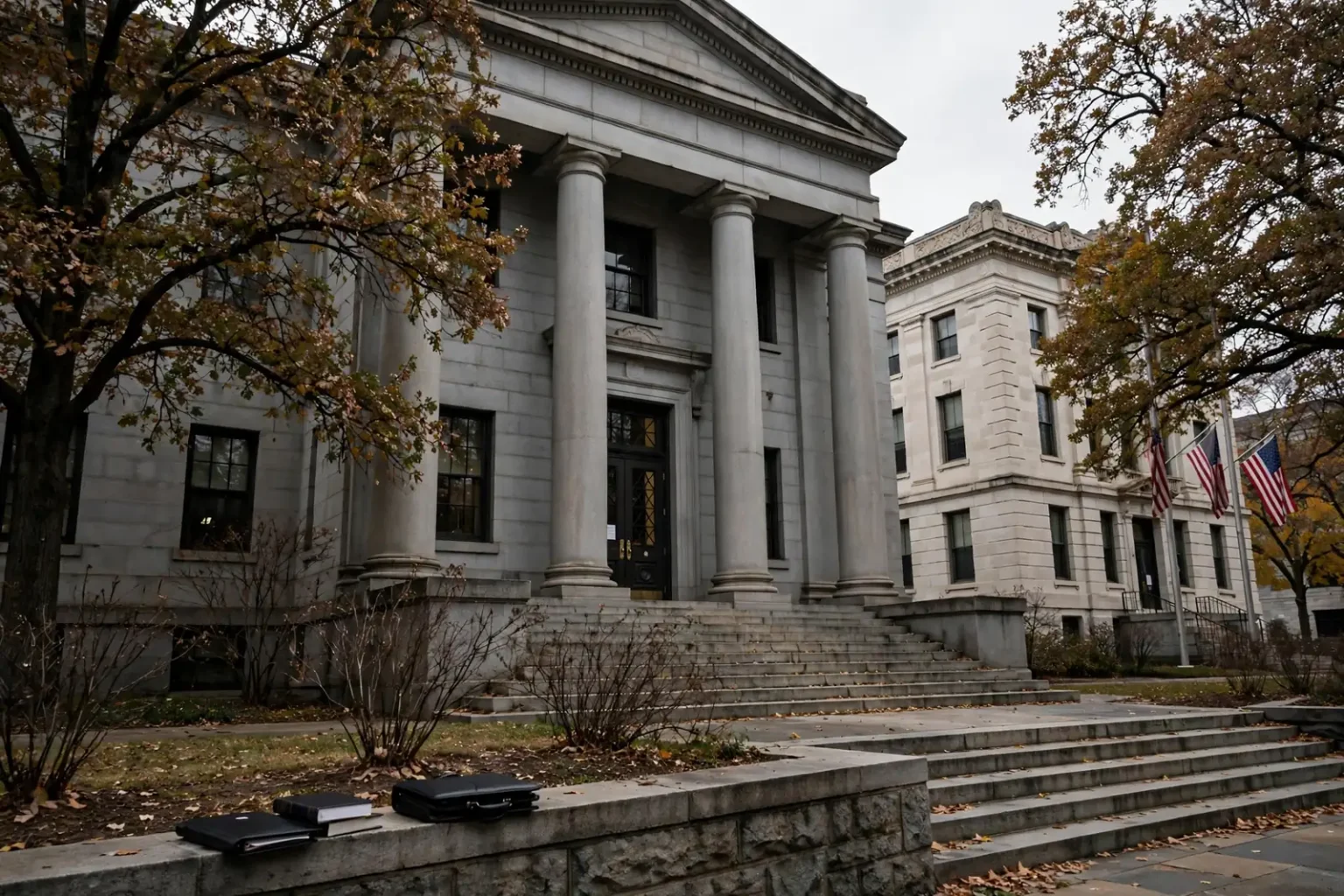
FOLEY, Ala. — Two of the former employees accused of costing a Baldwin County charity $2.5 million have answered with a Snook Foundation counterclaim of their own, arguing in federal court that they did nothing wrong and that the real problem lies with a board of trustees that failed to oversee the foundation’s finances for years.
The answer and counterclaim, filed this week on behalf of Thomas E. Lee II and his wife, Heather Lee, flips the foundation’s accusations back on its board. The filing says the trustees, not the Lees, are responsible for any losses and asks the court to release disputed retirement money to the couple, along with back pay and other relief.
The foundation and its attorney have declined to comment on the case.
How the dispute began
Earlier this fall, the Snook Foundation filed suits against three former employees, Brenda Lee, her son Thomas E. Lee II and his wife, Heather Lee, as well as against an accountant and his firm. The suits claim the Lees set up a pension plan without authorization and then funded it with unapproved payments from the foundation over a period of several years.
The foundation is a Foley-based nonprofit founded by the late John McClure Snook, a business leader who ran a local telecommunications company. His widow, Marjorie Younce Snook, now 91, has presided over the board of trustees since his death. The foundation, which has assets of more than $20 million, makes grants to a wide range of educational and civic organizations.
The suit against Thomas and Heather Lee is now in federal court, while claims against Brenda Lee are proceeding in Baldwin County Circuit Court. All of the cases are civil matters. No one has been charged with a crime, and the allegations on both sides have not been proven.
The Lees’ version: a plan chosen by the chair
In the new filing, the Lees’ attorney, David P. Martin, rejects the claims of wrongdoing. He argues that the couple acted in good faith while employed by the foundation, only to be victimized and defamed by the board after Marjorie Snook announced she would step down and trustees began second-guessing decisions she had made.
“In September of 2025, Marjorie Snook announced to the Board that she would soon be stepping down as Chairperson of the Board,” the filing says. “Following her announcement, Board members began to search and inquire more about financial matters that were available to them for years. Members decided to make efforts to rescind and claw back money that was approved for the Lees by Ms. Snook.”
According to the counterclaim, Snook was presented with several options for staff retirement plans in 2018 and chose one after discussions with the foundation’s accountant and a plan administration vendor.
“The Lees did not request this Plan, nor make any decisions on the type of Plan, nor determine the amount of funding for the Plan,” the filing says.
The counterclaim describes the plan as a reward for long service and an incentive for continued employment, and it portrays it as consistent with Snook’s generosity toward both employees and board members.
“Ms. Snook appeared at all material times to be a competent and savvy Chairperson for the Board,” the counterclaim says. “She was very strict in her business dealings and dictated responsibilities and requirements that all employees followed.”
“A matter of public record”
A central theme of the Lees’ response is that nothing was hidden. The foundation has suggested its trustees were unaware of the Lees’ roles, salaries and retirement funding, even though much of that information appeared in public documents.
“At all relevant points, this information was public record,” the filing says. “The Lees never withheld or concealed any matter from Ms. Snook or the Board. Plan information has always been a matter of public record for the world to see. If the Board members did not take time to view the information, or if Ms. Snook did not share information this was due to their own neglect and failure to honor their fiduciary duties.”
Private foundations such as the Snook Foundation must file annual information returns with the IRS, and those returns are available to the public. As South AL News previously reported, the foundation’s own public filings listed salaries and contributions to employee benefit plans for the Lees in recent years.
The counterclaim argues that the foundation’s own complaint proves the Lees’ point.
“The allegations in the complaint asserted by The Snook Foundation demonstrate that each Board member violated these fiduciary duties by ignoring the existence of a Plan document, ignoring public filings, ignoring tax returns and [by remaining] unaware of the Plan and finances of The Snook Foundation for years on end,” it says.
Turning the accusation on the trustees
The filing goes further, accusing the board of the same kind of misconduct the foundation alleges against the Lees.
It says the board members “are guilty of malfeasance, breach of fiduciary duties, and neglect in performing their roles as trustees for the Plaintiff and all losses are due to their failures.”
“The real problem is communication between Board members as the Chairman of the Board signed checks and the alleged failure to communicate with other Board members is not grounds to sue and retaliate for Board failures,” the counterclaim says.
Trustees of a charitable foundation generally owe it fiduciary duties, including a duty of care, which requires them to act with reasonable diligence in overseeing the organization, and a duty of loyalty, which requires them to act in the organization’s interest. Whether the Snook trustees met those obligations, and whether that question has any bearing on the foundation’s claims against the Lees, are matters the court may ultimately have to decide.
What the Lees are asking for
The Lees were fired in April. In the counterclaim, they allege that after their firing the board:
- Blocked payment of retirement benefits they say they are rightfully owed
- Refused to provide plan-related documents they say were required by law
- Pressured them to waive any claim to those benefits
They are asking the court to release the disputed retirement funds, plus interest; to award back pay and continued pay until they can find comparable jobs; and to grant other relief.
Disputes over retirement benefits often turn on federal law. The Employee Retirement Income Security Act, known as ERISA, governs most private-sector employee benefit plans, sets requirements for how plans are administered and gives participants rights to certain plan information. The Lees’ attorney previously cited ERISA in moving the foundation’s suit against the couple from state court to federal court.
Judge strikes bid to add trustees as defendants
Martin also tried to bring Marjorie Snook and four other trustees into the case as third-party defendants: Mort Swaim, Rosemary Johnston, Billy Lambert and Melanie Smith.
U.S. Magistrate Judge Katherine P. Nelson rejected that move on procedural grounds. She struck the third-party defendants and the related third-party claims. Her order did not affect the answer or the counterclaim allegations against the foundation itself.
Nelson did leave a path open. She gave Martin until Nov. 6 to file an amended answer adding the trustees as defendants in the Lees’ counterclaim. Alternatively, she wrote, a third-party complaint could be filed “as a separate pleading.”
Under the federal rules of civil procedure, a defendant who wants to bring new parties into a lawsuit has to follow specific procedures, and the proper route depends on the nature of the claims. A counterclaim is a claim a defendant brings against the party that sued it, while a third-party complaint brings in someone who was not originally part of the case. Nelson’s order did not decide whether the trustees can be held responsible; it addressed only how such claims must be filed.
Brenda Lee also denies wrongdoing
In Baldwin County Circuit Court, a filing on behalf of Brenda Lee denies the allegations of malfeasance against her and presents an array of arguments that the foundation’s claims are not actionable.
As South AL News previously reported, Brenda Lee’s earlier answer denied the foundation’s allegations against her and raised defenses including the statute of limitations, laches, waiver and estoppel. Those defenses generally argue that a plaintiff waited too long to act or accepted conduct it now challenges.
A prominent Baldwin County charity
The Snook Foundation is one of Baldwin County’s best-known charitable givers. John McClure Snook led Gulf Telephone, and the foundation he established has supported a wide variety of educational and civic causes in the county. The Snook name appears on a YMCA in Foley and a library in Summerdale.
The dispute over the pension plan has drawn attention in part because of that profile, and in part because it raises questions about how a foundation with assets of more than $20 million was overseen during the years in question.
What happens next
The next key date in federal court is Nov. 6, the deadline Nelson set for the Lees to file an amended answer adding the trustees as counterclaim defendants, or to pursue a separate third-party complaint.
The foundation will have an opportunity to respond to the counterclaim, and the court will eventually address the competing claims. In the circuit court cases, the foundation’s claims against Brenda Lee and against the accountant and his firm remain pending.
In civil cases, the party bringing a claim carries the burden of proving it. The foundation must prove its allegations against the Lees, and the Lees must prove the claims in their counterclaim. No court has found that any party acted improperly.
Key facts
- The foundation’s claim: Former employees set up and funded an unauthorized pension plan, costing the charity about $2.5 million
- The Lees’ response: Marjorie Snook chose and approved the plan, the information was public, and the board failed in its oversight duties
- Counterclaim requests: Release of retirement funds with interest, back pay, continued pay until comparable employment and other relief
- Trustees named in the struck third-party claims: Marjorie Snook, Mort Swaim, Rosemary Johnston, Billy Lambert and Melanie Smith
- Judge: U.S. Magistrate Judge Katherine P. Nelson
- Deadline: Nov. 6 for an amended answer adding the trustees as counterclaim defendants
- Status: Civil litigation; no criminal charges; allegations on both sides unproven