Alabama Oyster Season Opens Nov. 2 in Three Grids Near Dauphin Island as Populations Stay Low
Alabama’s oyster season opens Nov. 2 in the Cedar Point East, Cedar Point West and Heron Bay grids near Dauphin Island, with daily limits and no set closing date as oyster populations remain low.
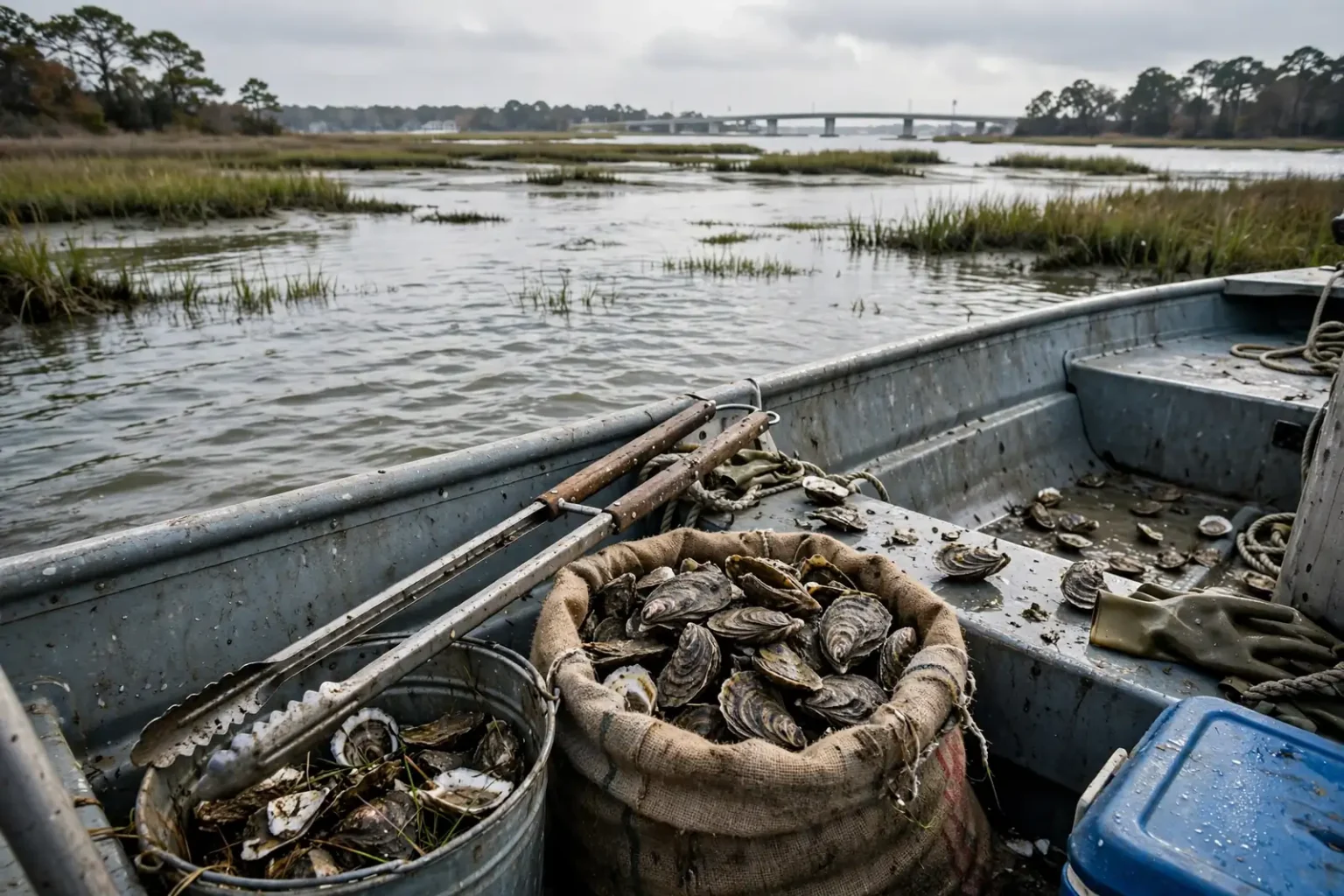
DAUPHIN ISLAND, Ala. — Alabama’s 2026 oyster season will open Monday, Nov. 2, but harvesters will find only a small slice of Mobile Bay available as state biologists keep a close watch on oyster populations that remain low on the state’s public reefs.
The Alabama Department of Conservation and Natural Resources’ Marine Resources Division announced that harvesting will be limited to three designated areas, the Cedar Point East, Cedar Point West and Heron Bay grids, near the north end of the causeway leading to the Dauphin Island Bridge. Harvest will be allowed Monday through Friday from 7 a.m. to 2 p.m. for both commercial and recreational oyster catchers.
No closing date has been set. Instead, the division will decide when the season ends, and whether individual grids need to close sooner, based on daily reports collected through its Oyster Management Stations.
Oyster populations remain low
Marine Resources Division surveys conducted in 2026 found that oyster populations on Alabama’s public reefs continue to be low. Since the early 2000s, the state’s oysters have faced a series of environmental stresses, including extended droughts, flooding rains in the Mobile Bay watershed and extreme summer heat.
Those conditions can take a heavy toll. Oysters depend on a fairly narrow balance of fresh and salt water. Heavy rains and high river flows can push too much fresh water into the bay for long periods, stressing or killing oysters, while droughts can raise salinity enough to favor predators and diseases that thrive in saltier water. Prolonged heat adds further stress, particularly when combined with low oxygen in bay waters.
Because of the low numbers, the division said it will carefully monitor oyster landings throughout the season to determine when, and which, grids should close.
Season at a glance
- Opening date: Monday, Nov. 2, 2026
- Open areas: Cedar Point East, Cedar Point West and Heron Bay grids
- Harvest days and hours: Monday through Friday, 7 a.m. to 2 p.m.
- Harvest method: Tongs and hand only
- Closing date: To be determined based on daily landings reports
Rules for commercial harvesters
All commercial oyster catchers, regardless of age, must hold a commercial oyster catcher’s license to take part in the harvest.
Commercial harvest is limited to eight sacks per person, per vessel, per day. That limit applies to the vessel as a whole regardless of how many licensed harvesters are on board, so two or three licensed catchers working from the same boat share the same eight-sack limit.
Information about commercial licensing and regulations is available from the Marine Resources Division office at 2 North Iberville Drive on Dauphin Island.
Rules for recreational harvesters
Recreational oyster catchers do not need a license, but they must report their catch and purchase a recreational harvest tag at a Marine Resources Division Oyster Management Station.
- Recreational harvesters may take up to 100 legal-size oysters per person, per day.
- The minimum legal size is 3 inches.
- Recreational harvest is allowed only in the same grids and during the same hours that are open to commercial harvesters.
- Commercial and recreational oysters may not be transported together on the same vessel.
Oysters are typically measured from the hinge to the opposite edge of the shell along the longest dimension. Undersized oysters should be returned to the reef so they can continue to grow and spawn, which is especially important in a year when populations are already low.
Check in before you go
Before starting a harvesting trip, harvesters must stop at the Oyster Management Station across from Jemison’s Bait and Tackle to drop off their Oyster Management Station ID cards and confirm which grids are open. Grid openings and closures will be posted at the station and on the Marine Resources Division’s social media accounts.
Harvesters can also view the open areas and their exact locations within the designated grids on the division’s Oyster Management Station Oyster Grid Map.
- Oyster Management Station: 16871 Dauphin Island Parkway, Coden, AL 36523
- Station hours: Monday through Friday, 8 a.m. to 3 p.m.
Because grids can close on short notice when landings indicate the harvest should be cut back, checking the station or the division’s social media before each trip is the best way to avoid heading to an area that has been shut down.
Why daily reporting matters
The Oyster Management Station system gives state biologists a near real-time picture of how many oysters are being taken from each grid. Rather than setting a fixed season length in advance, the division can use those daily numbers to decide when an area has been fished enough to protect the remaining oysters and the reef’s ability to rebuild.
That approach reflects a cautious strategy for a resource that has struggled for much of the past two decades. Public reefs depend on surviving adult oysters to spawn and on hard shell surfaces where young oysters, known as spat, can attach and grow. Leaving enough oysters and shell behind gives reefs a better chance to recover when environmental conditions improve.
A valued tradition on the Alabama coast
Oyster harvesting has deep roots in south Mobile County and on Dauphin Island, where generations of families have worked the reefs and processed the catch. In recent years, as wild harvests have declined, oyster farming has grown along the Alabama coast, giving restaurants and seafood lovers another source of local oysters. The wild season, however, remains an important tradition for both commercial oyster catchers and recreational harvesters.
Harvesters with questions about the season, licensing or recreational tags can contact the Marine Resources Division office on Dauphin Island or visit the Oyster Management Station in Coden during its weekday hours.