ADEM Seeks $38,600 Penalty From Axis Landfill Operator Over Leaking Liquid, Uncovered Waste
ADEM has proposed a $38,600 penalty against EcoSouth Services, operator of the Axis Industrial Landfill, citing liquid seeps, uncovered waste and a release into a nearby wetland. The company disputes several findings, and the order is open for public comment.
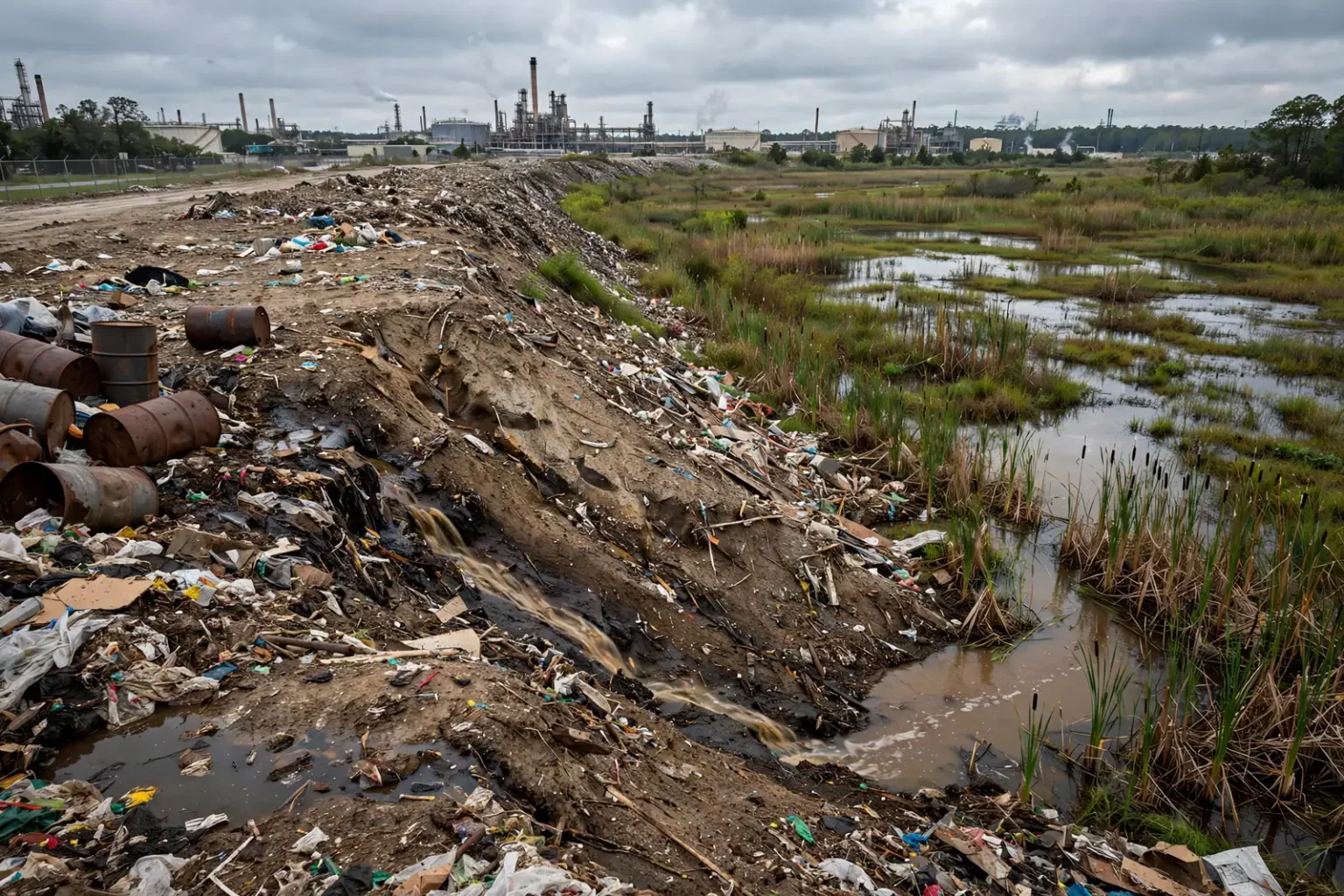
AXIS, Ala. — Alabama’s environmental regulators are seeking a $38,600 civil penalty from the company that runs the Axis Industrial Landfill in north Mobile County, alleging a string of operating problems over nearly two years that included pooled and seeping liquid from the landfill’s waste, garbage left uncovered and, on one occasion, liquid that escaped a containment area and reached a nearby wetland.
The proposed Axis landfill penalty is laid out in a draft consent order between the Alabama Department of Environmental Management and EcoSouth Services of Mobile, the landfill’s operator. The order is not final. It must go through a public notice period of at least 30 days, during which residents and other interested parties may submit comments before the department decides whether to issue it.
What inspectors say they found
According to the proposed order, ADEM inspections conducted from December 2023 through September 2025 documented pools and seeps of liquid at the site. The department characterized the liquid as coming from the landfill’s waste, a type of runoff that landfill operators are required to keep contained and manage.
During one inspection, ADEM said, liquid escaped a containment area and made its way into a nearby wetland.
The department’s list of alleged problems also included:
- Waste that had not been covered as required
- Erosion that left garbage exposed
- A working area, the active portion of a landfill where waste is placed, that ADEM said was larger than allowed
- Metal drums found in the waste area
Daily and periodic cover, typically a layer of soil or an approved alternative material, is a basic requirement for landfills. It helps keep rainwater from soaking through the waste, limits odors, blowing litter and pests, and reduces the chance of contaminated runoff leaving the site. Keeping the working face small serves similar purposes by limiting how much waste is exposed at any one time.
Company disputes several findings
EcoSouth Services disputes several of the department’s conclusions. In its response, the company said that some of the liquid inspectors observed may have been stormwater rather than liquid that had passed through waste. It also argued that some of the inspection reports describe the same condition on different dates, in effect counting one problem more than once.
The company further said that construction work connecting newer and older sections of the landfill contributed to some of the pooling that inspectors documented.
As is common in ADEM settlements, EcoSouth neither admits nor denies the alleged violations under the proposed order. The company says it has worked to correct the conditions cited by the department.
No additional corrective action required
ADEM’s proposed order states that inspections conducted in 2026 found no instances of noncompliance at the landfill. Because of that, the settlement does not require the company to take any further corrective action beyond paying the penalty.
The department also said it found no evidence that the alleged violations caused irreparable harm to people or the environment.
If the order is issued, EcoSouth would have 45 days to pay the $38,600 penalty.
How ADEM consent orders work
A consent order is a negotiated settlement between ADEM and a regulated company or local government. Rather than pursuing a contested enforcement action through an administrative hearing or the courts, the department and the facility agree on a penalty and, when needed, a list of steps the facility must take to fix problems and prevent them from happening again.
Alabama law requires the department to weigh a number of factors when setting a civil penalty, including how serious the violations were, the operator’s standard of care, any economic benefit the operator gained by not complying, the operator’s efforts to minimize or correct the problem, its history of previous violations and its ability to pay. Proposed orders typically explain how the department applied those factors in arriving at the final dollar amount.
Before a proposed consent order takes effect, ADEM publishes a notice and opens a comment period of at least 30 days. Members of the public can review the proposed order and submit written comments. The department considers those comments before deciding whether to issue the order as written, change it or withdraw it. That is why, as the proposed order itself notes, the document does not establish that the settlement is final.
About the Axis landfill
The Axis Industrial Landfill is in Axis, an unincorporated community in north Mobile County along the U.S. 43 corridor, an area known for its concentration of chemical plants and other heavy industry near the Mobile River.
Industrial landfills generally take non-hazardous solid waste from commercial and industrial sources, such as manufacturing byproducts and construction materials, rather than the household trash collected at curbside. Like other solid waste disposal facilities in the state, they operate under permits issued by ADEM, which sets requirements for how waste is placed, covered and contained and for how liquids and stormwater are managed on site.
Liquid that forms when rain filters through buried waste is a central concern at any landfill because it can pick up contaminants from the material it passes through. Facilities are designed with liners, collection systems and containment areas to capture that liquid and keep it from reaching groundwater, streams or wetlands. Stormwater that falls on covered or undisturbed areas of a site, by contrast, is generally handled separately, which is why the distinction EcoSouth draws in its response matters to how the alleged violations are characterized.
Why wetlands matter
Wetlands across coastal Alabama act as natural filters, slowing and cleaning water before it moves into rivers and Mobile Bay, while also providing habitat for fish, birds and other wildlife and absorbing floodwater. Because of those functions, any release of liquid from a waste site into a wetland draws close attention from regulators, even when, as ADEM concluded in this case, there is no evidence of irreparable harm.
What happens next
The next step is the public comment period. Once ADEM publishes notice of the proposed order, residents will have at least 30 days to review it and submit comments. After the comment period closes, the department will decide whether to issue the order.
If ADEM issues the order without significant changes, EcoSouth Services will have 45 days to pay the $38,600 penalty. Because the department’s 2026 inspections found the landfill in compliance, no additional corrective measures would be required under the settlement.
Residents who want to see the full proposed order or submit comments can find information through ADEM’s public notice listings, which identify the facility, the proposed action and how and where comments may be submitted.