Regions Revealed as Buyer of $190 Million in Escambia Prison Bonds After Name Was Redacted
The Alabama Department of Finance says Regions Capital Advantage bought $190.19 million in bonds at 4.86% to help build the new Escambia Men's Prison Facility, a private sale that kept the buyer's name out of public filings.
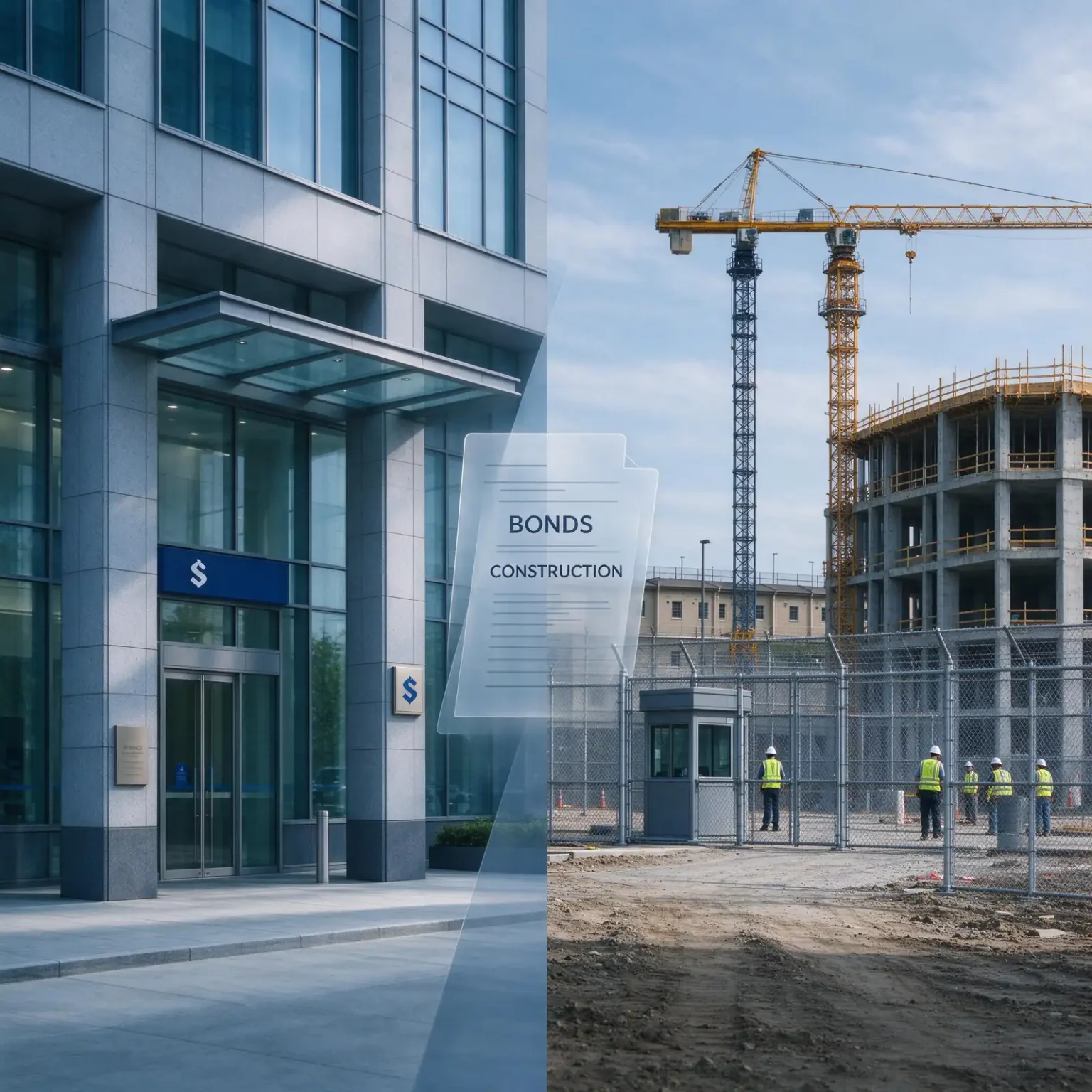
MONTGOMERY, Ala. — Regions Bank, through its Regions Capital Advantage division, bought more than $190 million in Escambia prison bonds sold this month by the state’s prison finance authority, the Alabama Department of Finance confirmed this week, ending questions about a buyer whose name had been blacked out of public records.
The Alabama Corrections Institution Finance Authority, known as ACIFA, issued $190,190,000 in bonds on Oct. 6 to help pay for construction of the new Escambia Men’s Prison Facility in Escambia County. The bonds were sold in a private transaction, known as a direct placement, rather than offered to investors on the open market.
Ethan Girona, a spokesman for the Alabama Department of Finance, identified the buyer in a statement Wednesday, Oct. 28.
“Regions Capital Advantage, Inc. purchased the 2026 Bond at an interest rate of 4.86%, with the bond callable on or after July 1, 2032,” Girona said.
Terms of the Escambia prison bonds
According to a document filed on the Electronic Municipal Market Access system, the public database for municipal bond disclosures run by the Municipal Securities Rulemaking Board, the bonds will mature in 2046 and carry an annual interest rate of 4.86%. Interest payments are due twice a year, in January and July, beginning next year.
The state has the option to “call” the bonds, or pay them off early, beginning in July 2032. Call provisions allow a borrower to refinance if interest rates fall or to retire debt ahead of schedule.
The buyer’s identity was redacted from the filing when it was first posted. The Department of Finance said that was a result of how the deal was structured.
“The bonds were issued at an interest rate of 4.86%. The transaction was completed through a competitive request for proposals (RFP) process and structured as a private placement. Accordingly, the initial purchaser’s name was redacted in the publicly available document,” Girona said in an earlier statement.
Direct placements have grown more common among state and local governments over the past 15 years, in part because they can be completed quickly and with fewer upfront costs. Because a bank loan of this kind is not offered to the investing public, it does not carry the same disclosure package as a public offering, and issuers are not always required to post the full terms. Groups that represent public finance officers have encouraged governments to voluntarily disclose bank loans and direct placements so that taxpayers and investors in the issuer’s other bonds can see how much debt has been taken on. In this case, the authority did post a document on the federal disclosure site, but with the purchaser’s name blacked out until the state identified Regions on its own.
A message seeking comment was left with Regions, which is headquartered in Birmingham.
Why the state chose a direct loan
In its statement, the Department of Finance said the authority chose a direct loan to line up the new borrowing with the optional redemption date of bonds it sold in 2022.
“To align the additional indebtedness with the optional redemption date of its Series 2022 A Bonds, the Authority elected to pursue a direct loan through an invitation for bids,” the statement said. “This approach was intended to secure more favorable rates and lower issuance costs than might otherwise have been achieved through a traditional public bond sale.”
In a traditional public sale, investment banks known as underwriters buy a bond issue and then resell the bonds to their clients, who collect the interest payments. That process involves underwriting fees, an official statement for investors and a period of marketing. In a direct placement, a single lender, often a bank, buys the entire issue and holds it, which can reduce costs and paperwork.
Girona described the financing as a step forward for the state’s corrections system.
“The Alabama Department of Finance was pleased to assist the Alabama Corrections Institution Finance Authority (ACIFA) with the issuance of $190.19 million in bonds to support the phased construction of the new Escambia Men’s Prison Facility,” Girona said. “This project represents an important investment in Alabama’s correctional infrastructure, addressing challenges associated with aging facilities while providing modern infrastructure to support the state’s long-term correctional needs.”
“The Department of Finance appreciates the opportunity to support ACIFA in advancing this project and ensuring the financing process is conducted in a responsible and cost-effective manner,” he added.
Albritton: ‘They got a better deal’
State Sen. Greg Albritton, R-Atmore, the outgoing chair of the Senate Finance and Taxation General Fund Committee, which oversees the Alabama Department of Corrections budget, said Tuesday that he knew the bonds had been sold but did not know who the lender was.
“I think because they got a better deal,” Albritton said of the decision to use a direct placement. “The amount that was borrowed and things such as that, it seemed to be the appropriate way to move.”
Albritton, whose district includes Escambia County, said the direct placement also allowed the sale to go forward “without fanfare and without difficulty.” He pointed to the public opposition that surrounded the state’s last prison bond sale.
“Last time we tried to sell bonds, but it was a matter that it went to a point that we had riots in England, in San Francisco, in Birmingham, because Alabama was trying to sell bonds to build prisons,” he said.
“Going public isn’t always the best thing to do,” Albritton said. “Not only did that affect the public market, but it also affected people even willing to loan. It may have been that the public market would not have made the purchase.”
ACIFA approved the borrowing in August
ACIFA is made up of state legislators and state officials and oversees the financing of state prison projects. In August, the authority approved a bond issue of up to $195 million for the new Escambia County prison. The final sale came in just under that ceiling, at $190.19 million.
The Escambia prison is expected to cost between $700 million and $900 million, according to Albritton, meaning the new bonds cover only part of the total. The Department of Finance described the bonds as supporting the “phased construction” of the facility.
Escambia County is already home to several state prisons near Atmore, including Holman and Fountain correctional facilities.
A troubled first bond sale for the Elmore prison
The state took a very different route when it financed its other new mega-prison, in Elmore County.
In 2022, Alabama tried to sell $725 million in bonds publicly for the Elmore prison but raised only $509 million in the initial offering. Bill Poole, then the state finance director, blamed a “lack of interest in long-term maturities” in the bond market.
The Elmore bonds were underwritten by investment banks Frazer Lanier and Stephens, with Wells Fargo and Raymond James also participating. Those firms bought the bonds and resold them to their clients.
Activist investors had urged buyers to avoid the bonds, citing ongoing violence in Alabama prisons and questions about whether new buildings would solve the crisis. At the time, Poole said the activists’ campaign was not a “significant factor” in the results of the sale.
Costs climb for Alabama’s new prisons
Alabama’s prisons have struggled for decades with overcrowding, understaffing and violence. In December 2020, the U.S. Department of Justice sued the state, alleging that conditions in its men’s prisons violated the Constitution’s ban on cruel and unusual punishment.
In 2021, state lawmakers approved a $1.3 billion plan to build two 4,000-bed men’s prisons, one in Elmore County and one in Escambia County. Supporters said the new facilities would need fewer staff, be safer than the aging prisons they replace and allow the Department of Corrections to close older facilities.
Since then, costs have soared. The Elmore County prison, named for Gov. Kay Ivey, has cost $1.25 billion on its own, nearly the entire amount once expected to cover both prisons. The company in charge of building it missed a completion deadline earlier this month.
With the Escambia prison now projected at $700 million to $900 million, the combined cost of the two facilities is expected to far exceed the original $1.3 billion estimate.
What the Escambia prison bonds mean for taxpayers
Bonds issued through ACIFA are repaid over time, with interest, from state funds appropriated for the Department of Corrections. At 4.86% interest on $190.19 million, the state’s annual interest cost on the new debt would be roughly $9.2 million a year before any principal is repaid, though the actual payment schedule depends on how and when principal is retired under the bond terms.
The 2032 call date gives the state the flexibility to refinance the Regions loan, potentially together with the 2022 Elmore bonds, if market conditions are favorable at that time.
What comes next
Construction of the Escambia Men’s Prison Facility is expected to continue in phases. State officials have not publicly said when additional financing for the project will be sought, or what form it will take.
Lawmakers on the General Fund budget committees will continue to oversee corrections spending when the Legislature convenes for its next regular session.