Pedestrian killed in Clarke County crash near Jackson
A pedestrian was struck and killed on Walker Springs Road on the outskirts of Jackson in Clarke County, according to the sheriff's office.
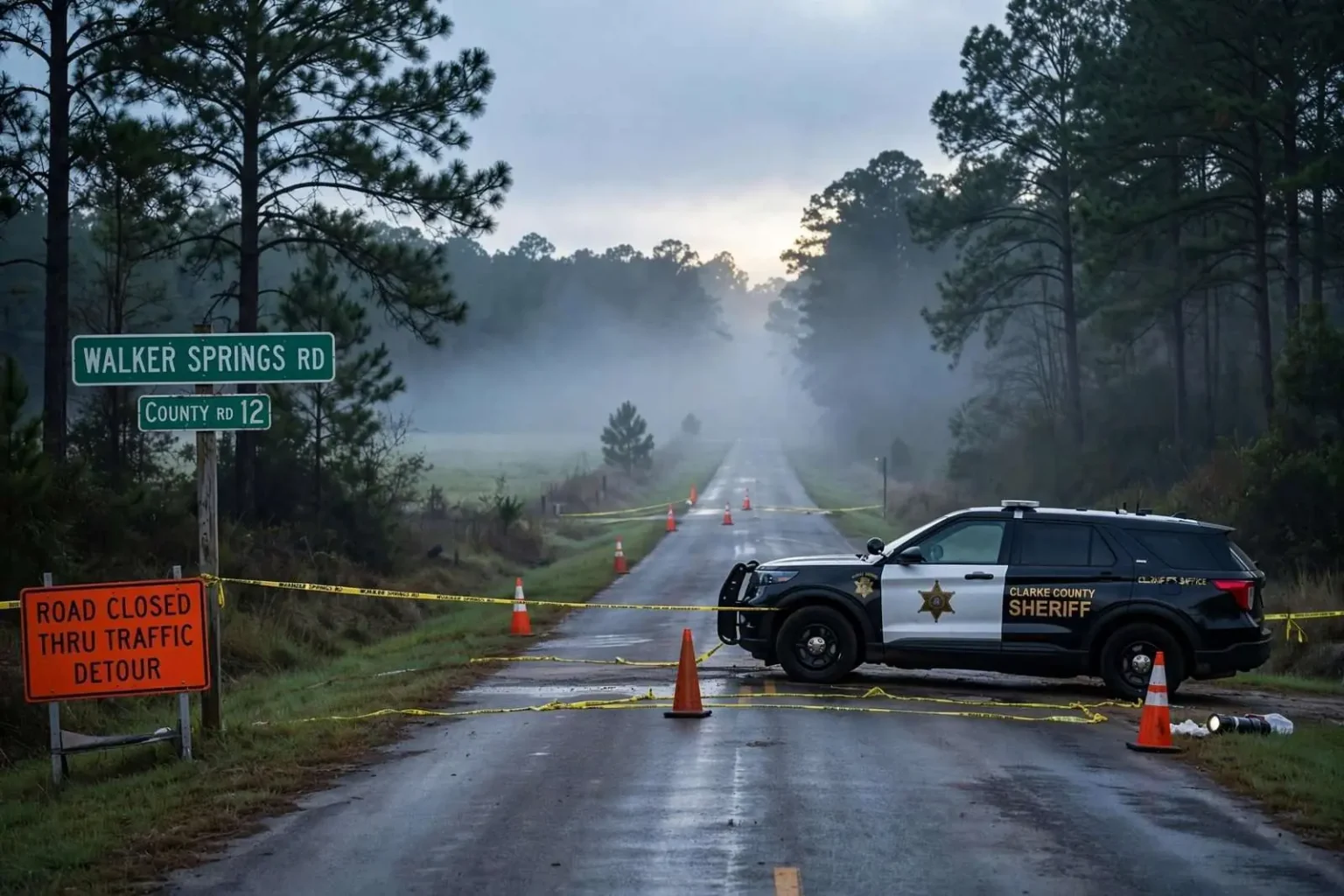
CLARKE COUNTY, Ala. — A pedestrian was killed early Wednesday morning in a crash on the outskirts of Jackson, according to the Clarke County Sheriff’s Office. The crash occurred on Walker Springs Road, a route that carries local traffic between Jackson and the small communities to the southwest of the city. Authorities said a man was struck and killed, but he has not been identified pending notification of his family.
The Clarke County Sheriff’s Office said deputies responded to the scene during the pre-dawn hours, when visibility along rural roadways is at its lowest and traffic is sparse. Details about the vehicle involved and the events leading up to the collision have not been released. Investigators said they are working to gather more information and will provide updates as they become available.
Fatal pedestrian crashes are among the most difficult incidents rural law enforcement agencies handle, in part because the victim is often unable to speak for himself and there may be no witnesses other than the driver. In cases like this one, investigators typically work backward from physical evidence left at the scene to establish where the pedestrian was walking, where the vehicle was traveling, and how the two came together in the dark.
The scene on Walker Springs Road
Walker Springs Road is a two-lane rural highway that leaves the western edge of Jackson and winds through the timber and farmland of southern Clarke County toward the Walker Springs community. Like many roads of its kind in southwest Alabama, it has long stretches without sidewalks, streetlights, or wide paved shoulders, which leaves anyone traveling on foot exposed to passing traffic. Early morning darkness compounds that risk, particularly in areas where the tree line runs close to the pavement.
Jackson is the largest city in Clarke County and serves as a commercial hub for the surrounding rural communities, which means residents of outlying areas regularly travel the corridor into town for work, supplies, and services. People walking along county roads in the early hours are not uncommon in rural Alabama, whether they are dealing with a disabled vehicle, walking to or from a job, or simply moving between homes when no other transportation is available.
Sheriff’s deputies closed or restricted the roadway while they processed the scene, a standard practice in fatal crashes that allows investigators to photograph, measure, and document evidence before it is disturbed. The length of such a closure depends on the complexity of the scene and whether specialized reconstruction personnel are called in to assist.
How the identification process works
Because the man has not been identified, the next step will fall largely to the Clarke County Coroner’s Office, which works with law enforcement to establish identity through personal effects, physical descriptions, and, when necessary, scientific means such as fingerprint comparison or dental records. Under Alabama law, the name of a deceased person is generally withheld until relatives have been located and formally notified, a courtesy that protects families from learning of a death through news reports or social media.
In cases where a victim carries no identification and no one has reported a missing person, the process can take longer. Investigators will canvass the area, check with residents and businesses along Walker Springs Road, and review any available reports of people seen walking in the vicinity. Once identity is confirmed, the coroner and sheriff’s office typically release the name along with preliminary findings about the cause and manner of death.
The investigation will also seek to determine whether the driver involved remained at the scene. Leaving the scene of a fatal crash is a serious felony under Alabama law, and authorities have not said whether a vehicle has been located or whether any charges are anticipated. Those questions will be answered as the evidence is reviewed.
Pedestrian danger on rural Alabama roads
Clarke County is a largely rural county of roughly 22,000 residents spread across a wide geographic area, bordered by the Tombigbee and Alabama rivers. Its road network is dominated by rural two-lane highways where speed limits are relatively high and lighting is minimal. Traffic safety advocates have long noted that pedestrians struck on high-speed rural roads face far worse outcomes than those hit in urban areas, because drivers have less time to react and emergency medical help is farther away.
Nighttime hours are especially dangerous for people on foot. Without reflective clothing or a light source, a pedestrian can be nearly invisible to a driver until the vehicle is dangerously close. Safety officials routinely urge anyone who must walk along a rural roadway after dark to face oncoming traffic, stay as far off the pavement as possible, and carry a flashlight or wear bright or reflective materials.
What comes next
The Clarke County Sheriff’s Office said it will release additional details as the investigation permits, including the victim’s identity once his family has been notified. Updates may also clarify the circumstances of the crash, the vehicle involved, and whether any enforcement action will follow.
Anyone who may have witnessed the crash or who has information about the incident is typically asked to contact the Clarke County Sheriff’s Office or the agency’s tip line. Even small details — a vehicle seen on the road, a person observed walking in the area — can help investigators reconstruct the sequence of events that led to the man’s death.
The impact on the Jackson community
News of a fatal crash on a familiar stretch of road reverberates quickly through a small city like Jackson. With a population of roughly 5,000 people, the city functions as the commercial and medical center of Clarke County, and many residents drive Walker Springs Road daily. Crashes that claim a life in the community are felt not as distant statistics but as events touching neighbors, coworkers, and schoolmates.
Local churches, civic groups, and neighbors often rally around the family of a crash victim, particularly when the deceased is a longtime area resident. Until the man is identified, however, the community can only wait for authorities to complete the notification process, and speculation about the circumstances serves no purpose while the investigation remains active.
How fatal crash investigations unfold in rural counties
In a county with a small sheriff’s office, a fatal crash investigation can draw on assistance from outside agencies. Depending on the circumstances, the Alabama Law Enforcement Agency’s Highway Patrol Division may provide reconstruction support, and district attorneys’ offices review the findings when criminal charges are a possibility. The goal of the process is not only to determine fault but to give the family a complete and accurate account of what happened to their loved one.
Investigators will document skid marks, debris fields, and vehicle damage, and they will examine sight lines and lighting conditions at the time of the crash. In pedestrian cases they also look at where the victim was walking relative to the travel lane, whether the roadway offered any safe passage for foot traffic, and whether impairment on the part of the driver or the pedestrian may have played a role. Toxicology testing is standard in fatal crashes and can take weeks to return from the lab.
The timeline for a final determination is rarely quick. Preliminary findings may be released within days, but complete reports, including reconstruction results and toxicology, often take weeks or months. Families are generally kept informed by the investigating agency and the coroner’s office as those results arrive.
A reminder about roadway vigilance
Fatal crashes involving pedestrians on rural Alabama roads occur every year, and safety officials use such incidents to remind drivers and walkers alike of the shared responsibility for avoiding them. Drivers are urged to slow down in areas where pedestrians may be present, to scan the shoulders of the roadway as well as the lane ahead, and to be especially attentive during the low-light hours around dawn and dusk.
For residents of Clarke County and surrounding areas, the crash on Walker Springs Road is a stark reminder that a routine morning drive can intersect with a tragedy in an instant. Law enforcement officials stress that cautious speeds, undivided attention, and patience on rural highways save lives, both for those behind the wheel and for those who have no choice but to travel on foot.
Neighbors in the Walker Springs area describe the road as a familiar route for early-morning travelers, and several residents reported seeing emergency vehicles heading out of town before daybreak. Incidents of this kind often prompt renewed attention from county officials to signage, shoulders, and visibility along rural routes, though any changes would follow the completion of the investigation rather than precede it.
The Clarke County Sheriff’s Office continues to investigate. As updates become available, they are expected to include the victim’s identity, the findings of the initial scene review, and any decisions about charges. This story will be updated as more information is confirmed by authorities.