

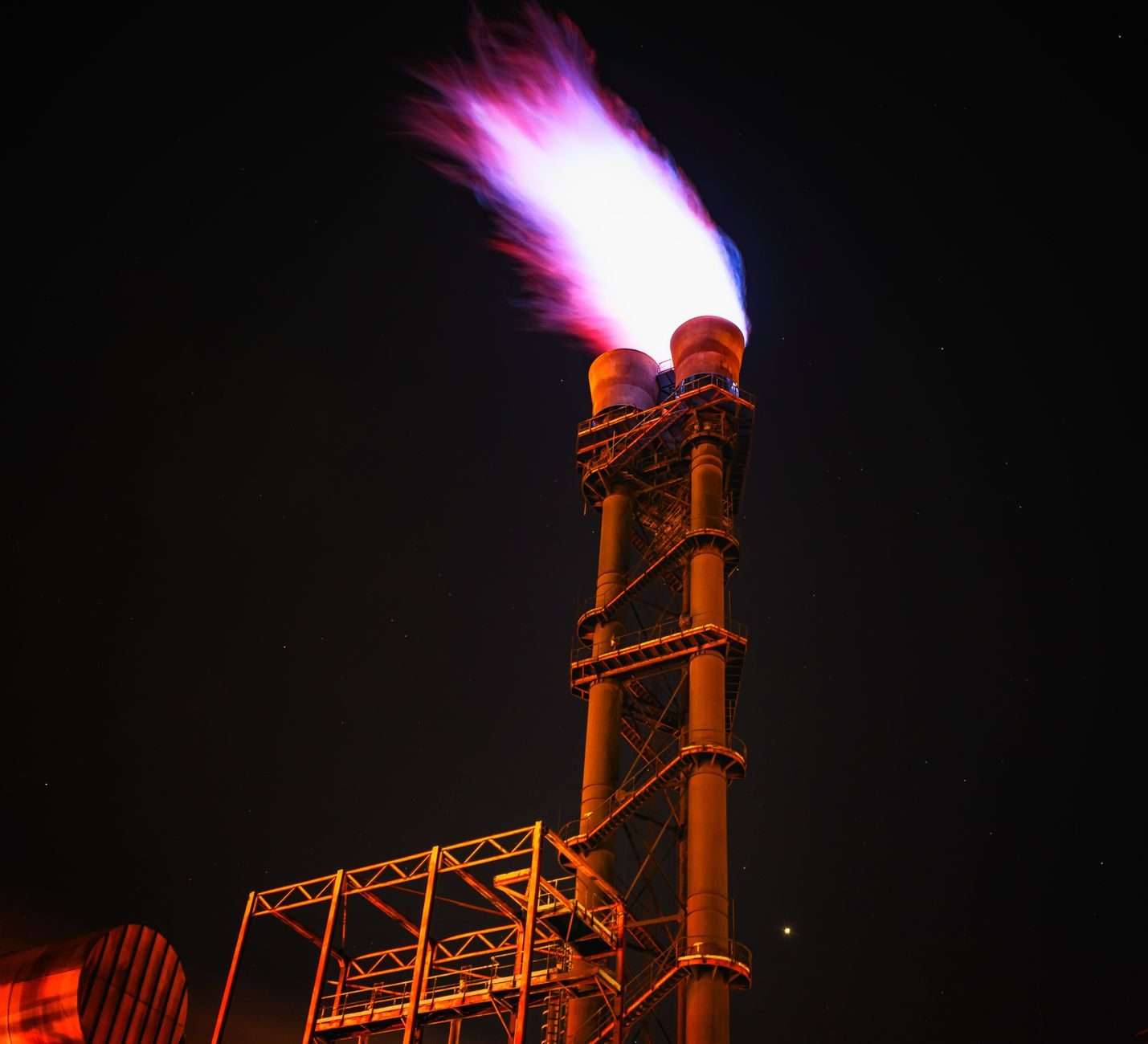
MOBILE COUNTY, Ala. — Residents near Lott Road and Suncrest Road in Prichard may hear unusual noise and see flames overnight. Officials want people to know it is planned.
A controlled flare-off is taking place in that area, according to officials with the Mobile County Emergency Management Agency.
The operation is expected to last until around 2 a.m. on Wednesday, Sept. 16.
EMA officials said residents may hear noises or see flames, and that there is no need to call 911 unless fire is spreading to a home or a road.
What a Flare-Off Is
Flaring is a controlled burn of gas, conducted deliberately rather than as the result of an accident.
The basic principle is that it is safer to burn gas under supervision than to release it into the air or to leave it pressurized in a line that needs work. Burning converts the gas largely to carbon dioxide and water vapor, and it does so at a designated point, at a designated time, with crews present.
Flares are used in several routine situations: clearing a pipeline segment before maintenance, relieving pressure in a system, purging equipment before it is opened, or disposing of gas that cannot be captured during a particular operation.
None of those are emergencies. All of them produce a visible flame and, frequently, a sustained roaring or rushing sound that carries well beyond the site.
Why It Looks Alarming
The reason emergency management agencies issue notices like this one is that a flare-off looks, from a distance and especially at night, very much like a fire that has gotten out of control.
A flare can throw a substantial column of flame. At night, it can light up cloud cover and be visible from neighborhoods well away from the actual location. The accompanying noise is often described as a jet engine or a sustained roar, and it does not stop the way an ordinary fire’s sound would.
Without advance notice, a flare-off reliably generates a wave of 911 calls. That is the specific problem the notice is meant to prevent — not because residents are wrong to call about fire, but because dispatch resources tied up on a known, planned operation are unavailable for genuine emergencies elsewhere in the county.
When Residents Should Still Call
The EMA’s guidance drew a clear line: no need to call 911 unless fire is spreading to a home or a road.
That is the distinction that matters. A controlled flare stays at its source. Flame or fire moving away from the site — into vegetation, toward a structure, or across a roadway — is not part of the operation and should be reported immediately.
Anything else residents observe overnight in that area, including a tall flame and a persistent roaring sound, is consistent with what officials have said to expect.
Timing
The flare-off is scheduled to continue until roughly 2 a.m. Wednesday.
Overnight scheduling for operations like this is standard. It puts the work during the lowest-traffic hours, which reduces the number of people passing the site and limits the disruption to nearby commercial activity — though it does mean residents are most likely to notice the flame against a dark sky.