
Prichard Man Killed in Head-On Crash That Closed Celeste Road in Chunchula
Derek E. White, 58, of Prichard was killed in a head-on crash on Celeste Road near Citronelle, ALEA says; the road reopened by evening.
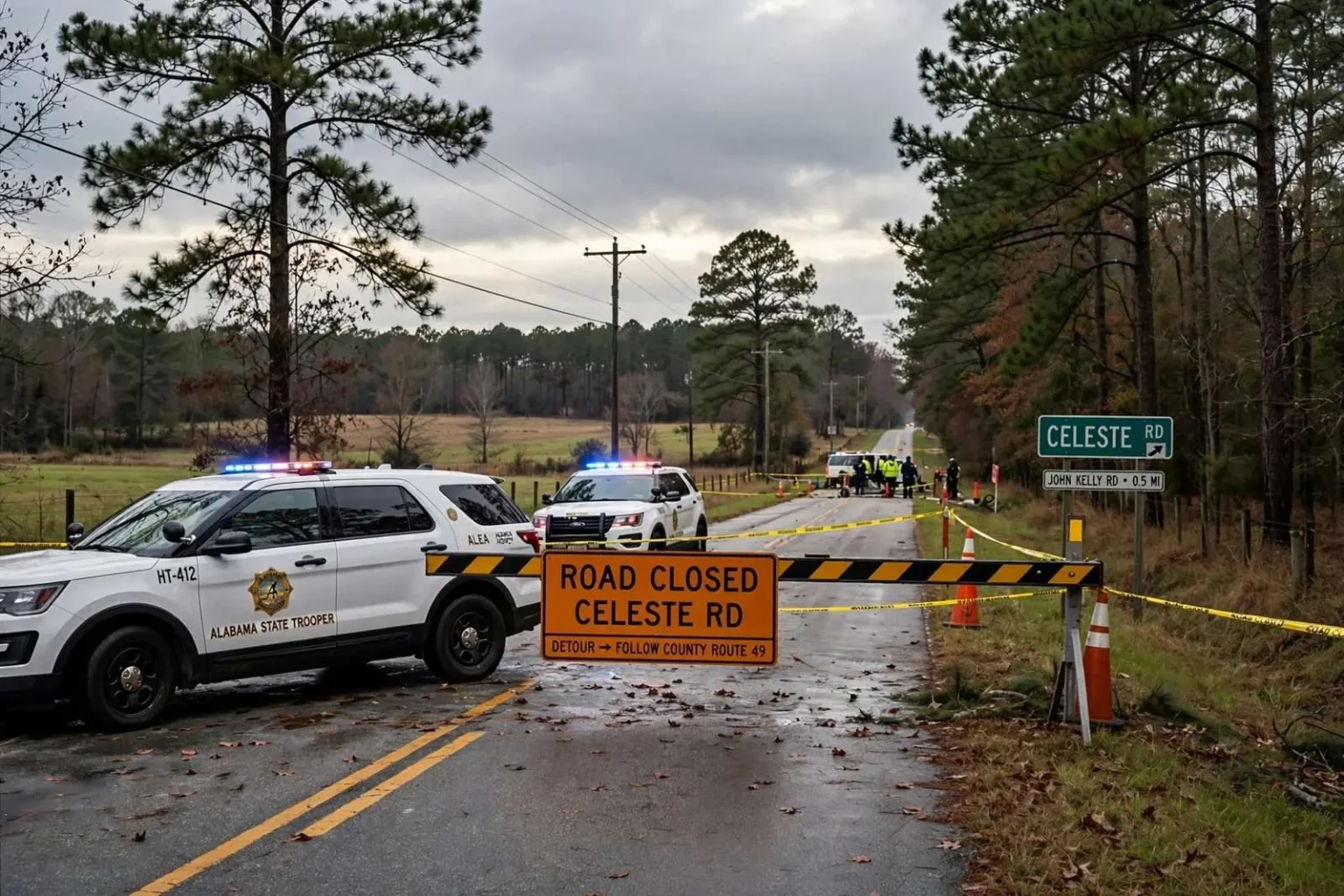
A 58-year-old Prichard man died Wednesday afternoon in a head-on collision on Celeste Road in the rural Chunchula community of northern Mobile County, according to the Alabama Law Enforcement Agency. ALEA identified the victim as Derek E. White, who was driving a 1997 Pontiac Bonneville when it struck a 2007 Dodge Ram head-on around 12:32 p.m. on April 6. The crash occurred near John Kelly Road, roughly nine miles south of Citronelle. White was pronounced dead at the scene.
The collision unfolded on a stretch of road where two-lane traffic, limited shoulders and rolling terrain are part of daily life. Head-on crashes of this kind are among the most serious incidents troopers respond to in rural parts of the county, because there is little separation between opposing lanes of travel and no median to absorb the force of impact. The vehicles involved spanned a decade of automotive design, and neither carried the kind of advanced collision-avoidance equipment that has become common in newer models. Investigators had not released information about what caused the Pontiac and the Dodge Ram to cross paths in opposing lanes.
News of the fatality spread quickly through the small communities of northern Mobile County, where residents often learn of serious wrecks through fire departments and local officials before formal reports are issued. For families who travel Celeste Road every day, the closed lanes and the presence of troopers at the scene were a sobering reminder of how quickly a routine drive can turn tragic.
A Rural Corridor in Northern Mobile County
Chunchula sits in the largely rural northern reach of Mobile County, an unincorporated community where farmland, pine stands and scattered homes define the landscape. Unlike the densely developed corridors closer to the city of Mobile, roads here tend to be narrow, tree-lined and traveled at highway speeds despite their two-lane configuration. Celeste Road serves as one of the local connectors in this network, linking neighborhoods and farms while carrying traffic between the Citronelle area and communities farther south.
The crash site near John Kelly Road lies along a section that serves both local residents and through travelers. Roads of this type see a steady mix of passenger cars, pickup trucks, school buses and commercial vehicles, and drivers routinely encounter curves and limited sightlines. When a crash blocks a road like Celeste, there are few immediate alternatives, and traffic must detour onto other rural routes that are often just as narrow.
About nine miles to the north, the city of Citronelle anchors the northern end of this part of the county, offering the nearest concentration of emergency services and civic institutions. The distance between Chunchula and the nearest major hospitals in the Mobile area means that response times for serious rural crashes run longer than they would in the city, which is one reason local fire and rescue departments play such an outsized role in incidents like this one.
How Troopers Work a Fatal Rural Crash
The Alabama Law Enforcement Agency’s Highway Patrol division is the lead investigative authority for crashes involving death or serious injury on roads across the state. When a fatal collision occurs, troopers respond to document the scene, interview witnesses, examine the vehicles and reconstruct the sequence of events that led to the impact. That work includes measuring skid marks and final resting positions of the vehicles, looking at roadway conditions and sight distance, and determining whether impairment, speed or a medical event may have contributed.
Because the crash involved a fatality, the investigation is more detailed than what follows an ordinary wreck. Troopers closed both lanes of Celeste Road while they worked, a standard step that protects the scene and allows investigators to gather the information a county coroner, insurance carriers and, in some cases, prosecutors may later need. ALEA had not released further details about the circumstances of the collision, and the agency typically does not speculate about causes while its review is underway.
The Road Closed Through the Afternoon
The wreck forced troopers to close both lanes of Celeste Road for the balance of the afternoon, snarling travel for anyone who relies on the route to move between Chunchula, Citronelle and the communities in between. With no divided highway nearby, drivers found their way around on the parallel county roads that thread through the area, adding time to trips to work, school and appointments.
Citronelle Fire & Rescue confirmed the fatality on social media within hours of the crash, an unusually fast public account of an incident still under investigation. Citronelle Mayor Jason Stringer also shared word of the fatality as first responders worked the scene. In rural Mobile County, fire departments and municipal leaders often serve as the most immediate source of information, relaying road conditions and safety warnings to residents who might otherwise drive into a closed stretch of highway unaware.
The involvement of Citronelle’s fire and rescue personnel reflects the mutual-aid pattern common across northern Mobile County. Volunteers and career responders from the small municipalities and outlying fire districts routinely answer calls well beyond their corporate limits, because the distances are long and the number of stations is limited. A midday crash on Celeste Road draws on that same network of neighbors helping neighbors.
By early evening the road had reopened to traffic, and the visible signs of the investigation were gone. What remained was the quieter aftermath: a family in Prichard coping with a sudden loss, and a community left to absorb the news of a violent collision on a road many of them drive without a second thought.
Head-On Crashes on Two-Lane Roads
Head-on collisions account for some of the deadliest crashes on rural two-lane roads, even though they represent a small share of total wrecks. The physics are unforgiving: when two vehicles traveling in opposite directions meet, their combined closing speed is the sum of both, and older vehicles without modern airbag and structural protections offer their occupants far less margin. Roads with no center median or turn lanes leave drivers with little room to recover when a vehicle drifts or crosses the centerline.
Factors that investigators typically examine in crossover crashes include driver attention, speed, fatigue, impairment and medical emergencies, along with roadway elements such as curve geometry, pavement condition and visibility. Weather, sun glare and the behavior of oncoming traffic can all play a role. In this case, ALEA said only that the Pontiac Bonneville and the Dodge Ram collided head-on around 12:32 p.m., and troopers continued working to determine what caused the vehicles to collide.
For drivers on roads like Celeste, safety specialists have long pointed to a handful of habits that reduce risk: keeping right and slowing in curves, using headlights even in daytime, being patient about passing on two-lane stretches, and buckling up on every trip. None of those habits eliminates the danger of an oncoming vehicle crossing the line, but they give drivers more time and space to react when something goes wrong in the opposing lane.
The Impact on the Prichard and Chunchula Communities
Prichard, the victim’s hometown, is one of the older cities in the Mobile metropolitan area, sitting just north of the city of Mobile along the Mobile-Tensaw delta’s western edge. Its residents commute throughout the county for work, and crashes on the rural roads to the north reach into the city’s extended family networks. News that a neighbor had died on a weekday drive through Chunchula traveled quickly through churches, workplaces and social media circles that tie the county’s communities together.
For the residents of Chunchula and the outlying areas around Celeste Road, the crash was a stark event in a quiet setting. Rural communities often know the families involved in local fatalities, and the closure of a main connector road is felt by everyone from school-run parents to farmers moving equipment. The afternoon-long shutdown also served as a practical reminder that when a serious wreck occurs on the rural network, the detours can be long and the delays significant.
What Happens After an ALEA Investigation
When troopers complete a fatal crash investigation, the findings typically support a range of follow-up actions. The report documents the facts for the family and for the county coroner’s records, and it can become the basis for citations or criminal charges if evidence shows a violation contributed to the death. ALEA does not announce potential charges while its work continues, and the agency had released no further details in this case beyond the basic circumstances of the collision.
The process can take weeks, particularly where reconstruction is involved. Investigators reconcile physical evidence from the scene with statements from witnesses and data from the vehicles themselves. Older vehicles like the 1997 Bonneville and the 2007 Dodge Ram lack the event data recorders that are standard in newer models, which sometimes leaves investigators relying more heavily on physical evidence and witness accounts.
A Reminder of Risk on the Rural Network
Mobile County’s rural northern communities have watched traffic grow over the years as development pushes outward from the city, and the two-lane roads that serve them were never designed for the volume they now carry. Serious crashes on routes such as Celeste Road recur as a matter of local memory, and each one renews conversations among residents about speed, passing behavior and the need for caution on curves and hills.
For now, the facts remain those that ALEA provided: Derek E. White, 58, of Prichard, died at the scene of a midday head-on collision near John Kelly Road; the other vehicle, a Dodge Ram, was struck as the two met in opposing lanes; Celeste Road was closed for the afternoon and reopened by early evening; and troopers were still investigating what caused the crash. No further information had been released.
Anyone who traveled Celeste Road that Wednesday afternoon saw the machinery of a rural Alabama fatality response at work: troopers diverting traffic, fire and rescue personnel staging equipment, and neighbors passing word along by phone and social media. It is a routine the county knows too well, and one that ends, for one family in Prichard, in a loss that no reopened road can undo.


