Prichard police say no foul play suspected in Whistler Street death
Prichard police are investigating after a body was found on Whistler Street, but say they do not suspect foul play at this time.
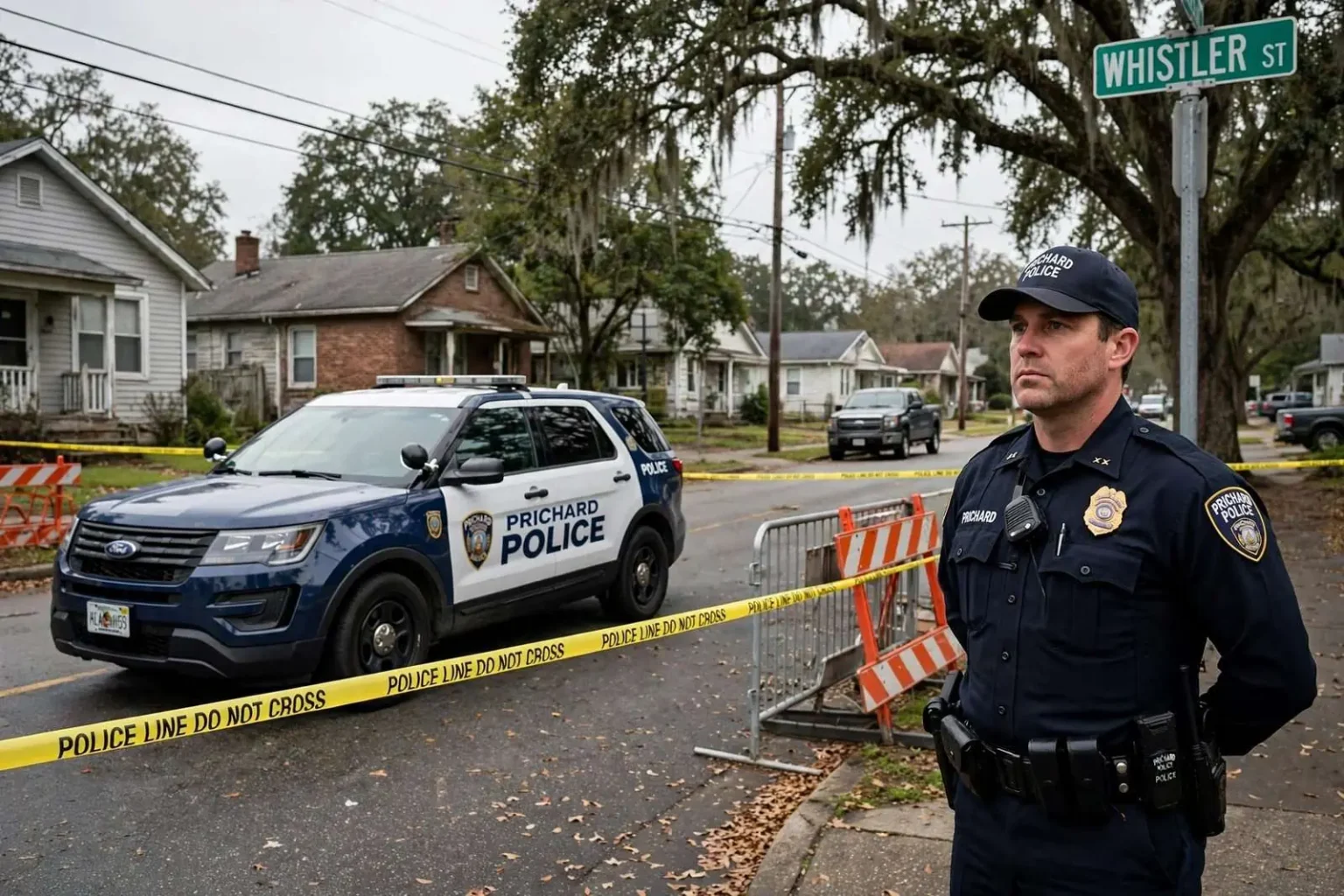
Prichard police are investigating after a body was found on Whistler Street on Friday, but investigators say they do not suspect foul play at this time. A crew was at the scene gathering information as the inquiry began, and no further details have been released. The discovery of a body in a residential neighborhood is a somber event for any community, and the early determination that foul play is not suspected shapes how the investigation proceeds from its first hours, even as the questions that remain, who the person was and how they died, await the formal work of identification and examination.
The distinction between a death investigation and a criminal investigation is central to understanding cases like this one. When a body is found and there are no immediate signs that a crime occurred, police agencies still respond with a full investigative posture, securing the scene, documenting everything present, and coordinating with the coroner or medical examiner who has legal authority over the remains. The absence of suspected foul play means investigators are not treating the death as a homicide at this stage, but it does not mean the case is closed. Every unexplained death receives a cause and manner determination through official channels before the record is complete.
Whistler Street sits in the historic Whistler community, a part of Prichard with deep roots in the area’s industrial past. The community grew up around the rail lines and industry of northern Mobile County and was absorbed into the city of Prichard as that city developed through the twentieth century. Today it is a residential neighborhood, the kind of place where a police presence on a Friday draws immediate attention from the people who live there, and where the discovery that brought that presence becomes the subject of conversation among neighbors long before any official account is issued.
The City and Its Police Department
Prichard is a city of roughly twenty thousand residents in Mobile County, situated just north of Mobile along the corridors that connect the port city to the industrial and residential areas of northern Mobile County. Incorporated in the early twentieth century, Prichard grew rapidly in the decades after World War II as a suburb of Mobile, and its history reflects the broader story of the Gulf Coast’s industrial and residential development. Like many small cities, Prichard maintains its own police department, whose officers handle the full range of calls that come with serving a community of its size, from traffic and property matters to the most serious investigations.
Death investigations test a department’s resources and procedures in particular ways. Patrol officers typically secure the scene first, establishing a perimeter and beginning the documentation that preserves conditions as they were found. Detectives follow with the interviews and inquiries that build a picture of the circumstances, and department leadership decides early which outside agencies to bring in. In a death investigation, that coordination almost always includes the county coroner’s office, whose responsibilities are set by state law and whose determination of cause and manner of death is a formal part of the legal record.
The statement that no foul play is suspected at this time is measured language that investigators use deliberately. The phrase signals what the initial scene assessment and early information suggest, while the words “at this time” preserve the ability to change course if later findings point in a different direction. Investigators are trained to hold that openness, because early scenes can mislead in either direction, and a death that looks unremarkable can prove otherwise once examination and interviews are complete. The public statement, in turn, is designed to inform without prejudging the outcome.
How a Death Investigation Proceeds
The early steps of a death investigation follow a pattern that serves both the family of the deceased and the integrity of the case. The scene is secured and photographed, and the position and condition of the body and everything around it are documented in detail. Investigators canvass the area for witnesses, ask nearby residents what they saw and heard, and gather any surveillance footage that businesses or homes in the area may have captured. That groundwork, done in the first hours and days, is the foundation on which every later determination rests.
Identification of the deceased comes through established procedures, and it proceeds with dignity even when the process takes time. Once the person is identified, the next of kin are notified before names are released publicly, a practice that reflects both the department’s obligations to the family and the standards of responsible reporting. In cases where foul play is not suspected, the department typically releases limited information while the matter moves through the coroner’s process, balancing the public’s interest in knowing what happened with the family’s privacy in a moment of loss.
The medical examination is the step that turns initial impressions into official determinations. An autopsy and the associated toxicology work establish the cause of death, the medical reason a person died, and contribute to the manner of death, the formal classification, such as natural, accident, or suicide, that the coroner’s office certifies. That work takes time, sometimes weeks where laboratory testing is involved, which is why early statements from police in these cases are deliberately limited. The gap between a scene that suggests no foul play and a certified cause of death is filled by that examination, and only when it is complete is the official account of the death finished.
What No Foul Play Suspected Means for the Community
For the neighborhood where a body is found, the early finding that foul play is not suspected matters in practical and emotional terms. Residents who feared a violent crime in their midst receive, in that phrase, the first measure of reassurance, and the intensity of concern that surrounds an unsolved violent death gives way to the quieter sadness of a loss whose circumstances will likely prove less menacing than first feared. At the same time, the discovery itself leaves an impression, and neighbors are left to wonder about a person who died where they were found, and about what brought them there.
Communities in and around Prichard know that death investigations can move in stages, and the crew gathering information at the scene on Friday was the visible first stage of a process that continues mostly out of public view. Detectives follow up on the interviews taken at the scene, coordinate with the coroner’s office, and assemble the file that documents the death. Most of that work produces no headlines, and in cases where the initial assessment holds, the matter concludes without ever generating the kind of public accounting that violent deaths receive. The absence of further details released to the public reflects that trajectory.
The way local news and residents handle cases like this one matters to the family of the deceased. A person found dead in a neighborhood is someone’s relative, and the days after such a discovery are among the hardest a family will ever face. Speculation about circumstances, names shared before confirmation, and rumors that fill the space where facts have not yet been released all add burden to people already grieving. The disciplined approach, reporting what has been confirmed, noting what remains unknown, and respecting the process that will answer the open questions, serves both the community’s need to know and the family’s need for space.
As of now, the confirmed facts in the Whistler Street case are the ones the department has shared: a body was found on Friday, Prichard police are investigating, foul play is not suspected at this time, a crew gathered information at the scene, and no further details have been released. Those facts describe an investigation in its early chapters, moving through the established procedures that every unexplained death in Alabama follows, from scene documentation through identification to the medical examination that will determine what happened. For the residents of Whistler Street and the broader Prichard community, the finding that foul play is not suspected closes the door on the worst version of the story, and the work that remains belongs to the investigators and the coroner’s office, whose conclusions will complete the record of a death that began with a discovery on a Friday.
The coroner’s role in Alabama death investigations is defined by state law, and it operates independently of the police investigation even as the two proceed in parallel. The coroner has the authority to take custody of remains, order examinations, and certify the cause and manner of death, and police departments coordinate with that office from the first hours of any discovery. In Mobile County, that coordination is routine, shaped by decades of practice in which law enforcement, forensic examination, and the courts each handle the piece of the process the law assigns to them. The result is a system designed so that no single judgment, however experienced, determines the outcome of a death investigation alone.
Statistics on how unexplained deaths resolve offer useful context for early findings like the one in this case. Across jurisdictions, a large share of deaths initially reported without signs of foul play are ultimately classified as natural or accidental, resulting from medical events, falls, exposure, or other circumstances that leave no indication of violence. Toxicology and examination sometimes reveal factors that were invisible at the scene, which is part of why the examination exists, but the early scene assessment made by trained investigators is, in the great majority of cases, confirmed by what follows. That track record is what allows departments to make measured public statements in the first days of an investigation.
Prichard’s residents have seen the city’s police work through serious cases over the years, and the department’s handling of death investigations follows the professional standards those cases established. Departments of every size train for them, because no community is exempt from unexplained deaths, and the procedures that govern a scene on Whistler Street are the same ones that would apply anywhere in Mobile County. What varies is the texture of the neighborhood, the witnesses available, and the circumstances of the person found, and those particulars are what detectives begin assembling once the scene itself is secured and documented.
The days ahead will follow the pattern that death investigations always follow, even when they never become criminal cases. The coroner’s office will complete its examination, the police will close out the investigative file with their findings, and the record will be complete in the way the law requires even if much of it is never made public. For the people who live along Whistler Street, the Friday discovery will settle into the neighborhood’s history, and for the family of the person who was found, the official answers will come through the channels that exist to provide them, with the finding that foul play was not suspected standing as the first and most significant of them.