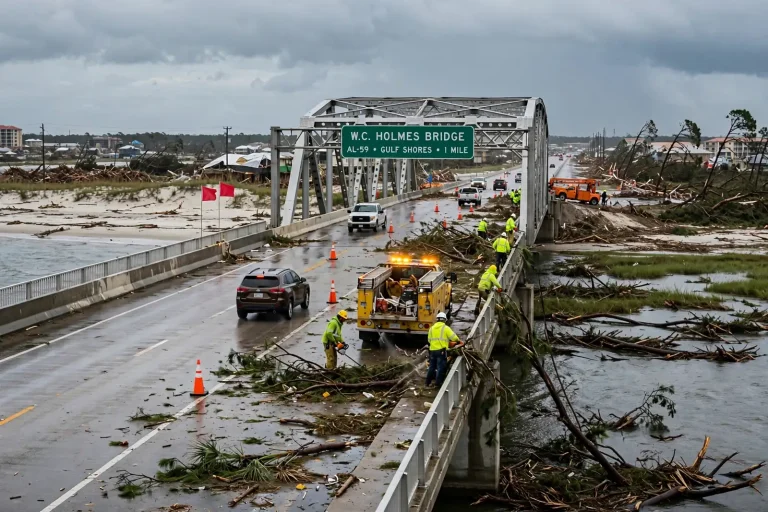
Sea Stand Recruits Volunteer Performers for Free Gulf Coast Concerts After Oil Spill
Sea Stand called on musicians and performers to donate free Gulf Coast concerts after the 2010 oil spill, aiming to support beach tourism and local.
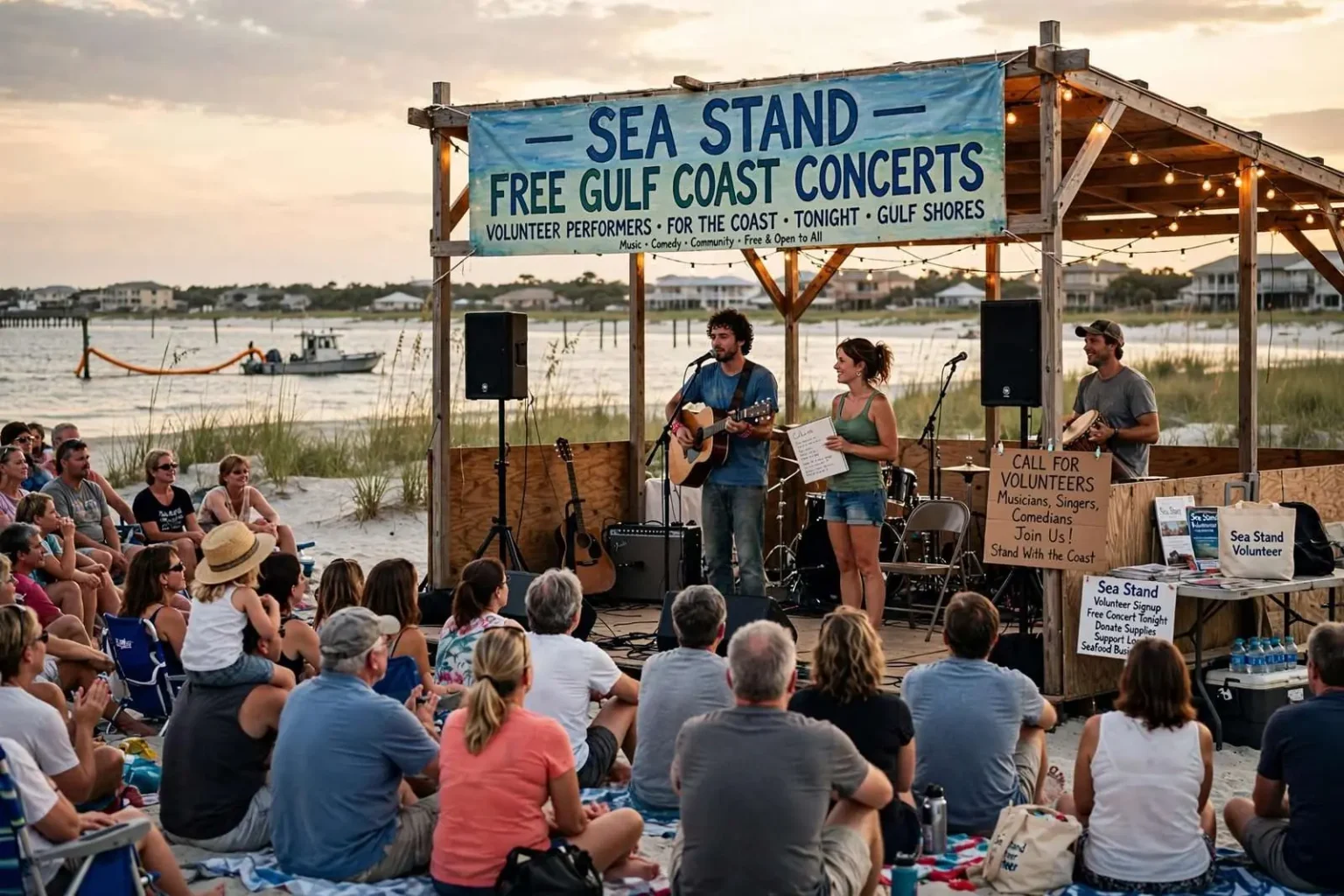
As the Deepwater Horizon oil spill continued to threaten Alabama’s coastline in the summer of 2010, a grassroots effort called Sea Stand began recruiting musicians, comedians, and other performers to donate their time for a series of free concerts along the Gulf Coast. The idea was born in the middle of a crisis, when the region’s usual confidence in its beaches had been shaken and every canceled vacation rippled through paychecks from Gulf Shores to Bayou La Batre. Rather than waiting on someone else to act, the organizers behind Sea Stand built a volunteer-driven response that put the community’s creative talent on stage in service of the coast it calls home.
Organizers said the goal was straightforward: draw residents and visitors back to the beaches, give a boost to struggling local businesses, and show public support for the coast and its marine life while cleanup and recovery efforts were underway offshore. The concerts were designed to do what a press conference cannot, which is to remind people that the Gulf Coast is a place worth visiting, worth celebrating and worth defending. Free admission lowered the barrier for families who were tightening budgets that summer, and every performance doubled as a gathering point for residents who wanted to stand together.
The oil spill, which began in April 2010 after an explosion on the Deepwater Horizon drilling rig in the Gulf of Mexico, had already led to closed fisheries, tar balls washing ashore, and a steep drop in tourism across coastal Alabama. The explosion killed eleven workers and triggered one of the largest environmental disasters in American history, with oil flowing from the wellhead for months while skimmers, booms and cleanup crews worked along the shoreline. For a coastal economy that depends on visitors, seafood and the water itself, the timing could hardly have been worse, arriving at the start of the peak summer season.
A call for volunteer performers
Sea Stand’s organizers asked artists, comedians, and other entertainers to contribute a night of free performances as part of the initiative, framing the concerts as a community-driven response rather than a political statement. The recruitment effort spread through the region’s close-knit music community, where word of mouth travels quickly and where many performers had their own ties to the water, from fishing families to venue owners whose summer calendars had gone quiet. Volunteering a set became a way for artists to contribute something concrete when so much about the disaster felt out of their hands.
“An environmental show of unity” is how organizers described the effort, emphasizing that the goal was to rally residents around the coast rather than to weigh in on the broader debate over the spill’s cause or cleanup. That framing was deliberate. The summer of 2010 produced plenty of argument about drilling policy, regulatory failure and corporate responsibility, but Sea Stand kept its focus on the people and places closest to the water, giving residents an outlet that was positive, communal and local.
The push for free entertainment came at a time when many coastal Alabama communities, including those along Mobile Bay and the Baldwin County beaches, were searching for ways to keep tourists coming despite the spill’s impact on the region’s image. Hoteliers and restaurant owners reported cancellations even on days when the sand was clean and the water was open, because headlines had convinced travelers that the entire Gulf was awash in oil. Local officials and tourism groups fought that perception with updates, webcams and promotions, and community events like Sea Stand’s concerts fit squarely into that strategy.
Music as an economic lifeline
Local musicians and performers who took part in similar efforts that summer often played beachfront venues, hoping to remind visitors that the beaches remained open even as environmental concerns dominated headlines. A full stage on a summer night sends a signal that no advertisement can quite match: people are out, the lights are on, and the coast is still itself. For venues that had watched their crowds thin, a free concert night could mean an evening of brisk business even when the performer was playing for free.
The stakes were enormous for a tourism economy that in a normal year fills Gulf Shores and Orange Beach with families from across the Southeast during the summer months. When visitors stay away, the losses cascade quickly through the region, hitting not just hotels and restaurants but charter boat captains, bait shops, surf instructors, souvenir stands and the seasonal workers who staff all of them. Seafood houses faced a second front, as closed fishing waters cut supply and as questions about safety kept even available product from moving the way it should.
Commercial fishing communities felt the disaster most acutely of all. From Bayou La Batre, a working waterfront long known for its shrimp fleet and boatyards, to the oyster beds and crabbers working Mobile Bay, harvesters watched their grounds close and their livelihoods freeze. Tar balls reaching Alabama’s beaches were more than a nuisance; they were evidence that the threat was real and immediate, and each report fed the cycle of canceled trips that the concerts were designed to interrupt.
Part of a wider Gulf Coast response
Sea Stand’s recruitment effort reflected a broader pattern that summer, as arts and entertainment groups across the Gulf Coast organized benefit shows and free events aimed at supporting tourism-dependent local economies during one of the region’s most difficult stretches in recent memory. From New Orleans to the Florida Panhandle, stages that summer hosted everything from benefit concerts raising relief funds to festivals rebranded around supporting local seafood. The creative community’s response became one of the defining features of the recovery, a reminder that the coast’s identity is rooted in culture as much as commerce.
That cultural dimension mattered in ways that are easy to underestimate. The Gulf Coast’s economy depends on an image, an accumulated belief among millions of travelers that the beaches are beautiful, the seafood is safe and the welcome is warm. Disasters damage that belief even when they leave the sand untouched, and rebuilding it takes repeated, visible demonstrations that life along the coast goes on. Every free show, every packed venue and every photo of a crowd with the water in the background worked against the narrative of a closed coast.
The events also gave residents something they badly needed that summer: a reason to gather. Coastal Alabama’s communities are tight-knit, and the spill left many people feeling powerless as they watched the news from the water they fish, swim and work on. Concerts and community shows converted that anxiety into solidarity, and the money spent that night at a local restaurant or bar stayed in the local economy where it was needed most.
The mechanics of organizing free concerts in the middle of a disaster were themselves a testament to volunteer energy. Stages had to be secured, sound equipment borrowed or donated, permits arranged and schedules filled, all while the news from offshore grew worse. Performers adjusted to stripped-down lineups and unfamiliar rooms, and organizers leaned on the same networks of friends and venues that keep the Gulf Coast’s live music scene running in ordinary times. That do-it-yourself character defined Sea Stand and its counterparts across the region.
For the performers, the summer also offered a kind of creative subject matter that only a crisis provides. Songwriters along the Gulf wrote about the water, the fishermen and the wait for good news, and their sets that season often carried the weight of what everyone in the crowd was living through. Comedy, too, played its part, offering audiences the release of laughter in a stretch when levity was scarce. The full range of entertainment the organizers sought reflected an understanding that morale is an economic resource, and that keeping spirits up keeps the coast open.
What Sea Stand’s effort meant for the coast
Efforts like Sea Stand did not clean a single barrel of oil from the Gulf, and no one involved pretended otherwise. What they did was address the other disaster unfolding in parallel, the economic and psychological one, by keeping communities engaged and visitors willing to come. As cleanup progressed and beaches reopened over the following months, that steady drumbeat of local activity helped coastal Alabama claw back a season that had seemed lost in June.
The summer of 2010 is now remembered along the Gulf Coast as a test of the region’s resilience, and the response included everything from federal cleanup operations to the smallest volunteer efforts. Sea Stand’s free concert series stands in the second category, proof that a grassroots group with a simple idea could contribute to recovery in a way that played to the coast’s strengths. The musicians and comedians who donated their nights, the organizers who coordinated the events and the residents who showed up all took part in the same project: standing with the coast when it needed it most.
A decade and more later, the image of performers giving their time on Gulf Coast stages while an oil spill threatened offshore remains a defining memory of that summer. It captures how the region sees itself, a place where the response to hardship is a gathering, a song and a shared determination to keep the doors open. That spirit carried coastal Alabama through the spill’s darkest weeks, and it remains part of the reason the beaches from Dauphin Island to Gulf Shores still draw the crowds they do today.