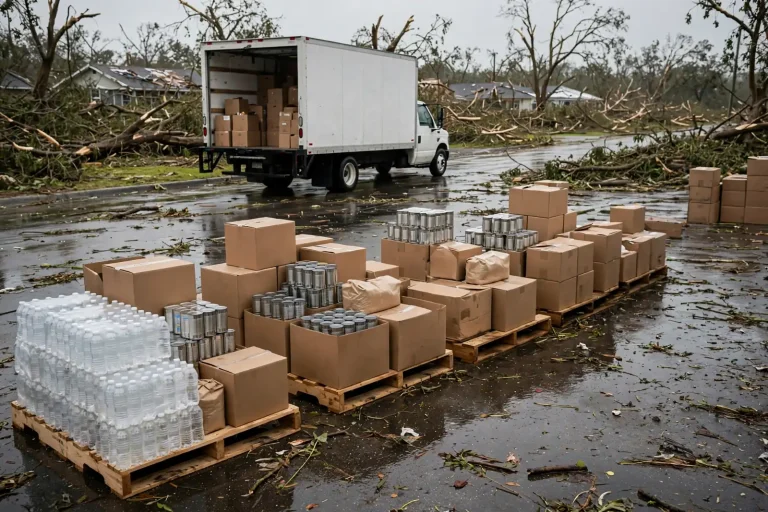
Alabama’s Shelby Warned Justice Budget Would Cripple Local Police and Sheriffs
Chairing the Senate subcommittee that funds the Justice Department, Alabama's senior senator told Attorney General Alberto Gonzales the administration's budget would gut aid to state and local law enforcement.
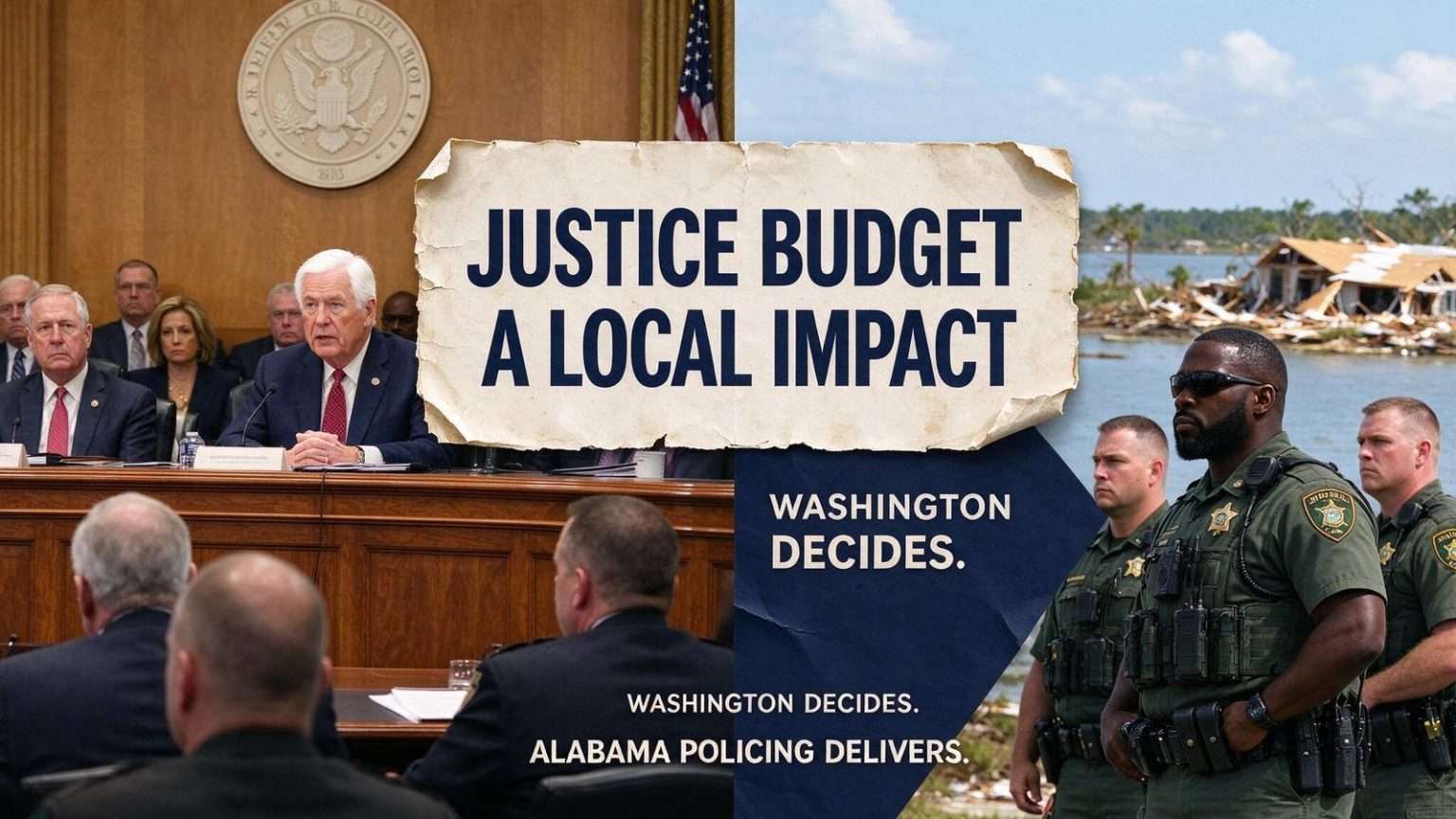
Alabama’s senior U.S. senator, chairing the Senate subcommittee that writes the check for the entire Department of Justice, told the nation’s top law enforcement officials that their own budget request would cripple the police departments and sheriff’s offices that do most of the actual policing in America.
Sen. Richard C. Shelby, R-Ala., chairman of the Commerce, Justice, Science and Related Agencies Subcommittee, convened the hearing to examine the proposed Justice Department budget, with Attorney General Alberto Gonzales, FBI Director Robert Mueller, DEA Director Karen Tandy, ATF Director Carl Truscott and U.S. Marshals Service Director John Clark seated before him.
The department’s request came to $20.8 billion, a 0.5 percent decrease from the previously enacted level. It proposed increases for the FBI, the U.S. Attorneys and the Marshals Service. It paid for those increases, Shelby said, by gutting everything else.
“It proposes unacceptable cuts to local law enforcement assistance programs and other critical areas,” Shelby said, citing a $1.6 billion decrease for state and local law enforcement programs.
“State and local law enforcement agencies are the foundation for our nation’s law enforcement community,” he said. “These proposed cuts have the potential to significantly weaken the ability of these agencies to protect our communities from traditional acts of crime, to maintain vigilance in the war on terror, and to prepare for catastrophic disasters. Continually proposing major reductions for local law enforcement assistance programs will cripple the police and sheriff’s departments which are fixtures in our communities.”
The Point Along the Gulf Coast
The argument had unmistakable resonance along the Gulf Coast. Shelby framed the entire hearing against “the budget constraints weighing upon us due to the war on terror and the natural disasters that devastated the Gulf Coast,” a reference that in Alabama meant Hurricanes Ivan and Katrina, and the sheriff’s departments and municipal police forces still absorbing their aftermath.
Hurricane Ivan had come ashore near Gulf Shores in September 2004 as a Category 3 storm, battering Baldwin County’s beach communities and knocking out power across the region for weeks. Less than a year later, Katrina’s eastern eyewall raked Mobile County in August 2005, flooding waterfront districts, tearing off roofs across the city, and leaving damage across south Mississippi visible from the Alabama line. For police and sheriff’s departments from Dauphin Island to Fairhope, the storms meant destroyed patrol vehicles, flooded substations, overtime budgets blown through in a single event, and years of roof repair and rebuilding that competed with every other claim on local revenue.
Against that backdrop, a $1.6 billion cut to federal assistance programs was not an abstraction. Federal grants — the Byrne formula and discretionary grants that fund task forces, the COPS hiring programs that put officers on the street, and the homeland security pass-through dollars that equip local first responders — make up a slice of small-department budgets that local property and sales taxes cannot easily replace, particularly in the small towns of southwest Alabama.
What the assistance programs actually pay for
The programs targeted for reduction operate at street level. Byrne grants have historically financed multi-jurisdictional drug task forces — the kind of shared operations that let a small county sheriff’s office participate in drug interdiction far beyond what its own budget could sustain. COPS funding has paid officer salaries during the first years of new hires, allowing departments to grow without permanent payroll commitments they could not later shed. State and local assistance dollars have purchased radios, body armor, evidence systems and training that departments across Alabama would otherwise defer indefinitely.
In Alabama’s smaller counties, where sheriff’s offices routinely cover hundreds of square miles with a few dozen deputies, those federal dollars are the difference between a functioning drug enforcement program and none at all. Municipal departments along the Gulf Coast, still carrying storm-related debt, read the proposed cuts the same way: as Washington easing its share of a burden the hurricanes had made heavier, at the very moment local agencies were being asked to stand up both disaster response and the war on terror.
Shelby’s position as chairman made him the decisive audience for his own argument. The Commerce, Justice, Science subcommittee drafts the annual appropriations bill that funds the Justice Department, the FBI, the DEA, the ATF and the Marshals Service, and its chairman decides which priorities reach the Senate floor. An Alabama senator holding that gavel and pressing the department on local cuts carried a message the agency heads before him could not easily dismiss.
The Battle Over Priorities
The arithmetic of the budget exposed the philosophy behind it. The request moved money toward federal agents and federal prosecutions — FBI field operations, U.S. Attorneys, the Marshals — and away from the pass-through programs that fund local police. Federal officials defended the shift as a focus on the counterterrorism mission that dominated the post-September 11 Justice Department. Shelby’s answer was that the counterterrorism mission runs through local law enforcement: the tips, the traffic stops, the community contacts that surface threats first pass through the patrol officer and the county sheriff, and those officers cannot be replaced by federal agents.
He pressed the department on the pattern as much as the single-year proposal, noting that “continually proposing major reductions” showed the cuts were not an anomaly but a habit. Administrations of both parties had periodically sought deep reductions in state and local assistance, leaving Congress to restore them annually — a cycle that made grant funding unreliable for departments trying to plan multi-year operations. For Shelby, the annual fight itself was part of the damage: a sheriff cannot hire a deputy on a grant that survives one budget at a time.
The witnesses facing him represented the full span of federal law enforcement. Gonzales, then leading a Justice Department under sustained pressure over its own management controversies, defended a budget that preserved the department’s core federal functions. Mueller’s FBI was in the middle of its post-9/11 transformation from a crime-fighting agency into a domestic intelligence service, and Tandy’s DEA and Truscott’s ATF were carrying drug and weapons enforcement missions that had absorbed much of the resources local task forces once provided.
The constitutional bargain behind local policing
Underlying the hearing was an old structural fact of American law enforcement: policing is fundamentally a state and local function. There is no national police force with general authority; the approximately 18,000 agencies that answer 911 calls in America are municipal, county, state and tribal. The federal role in funding them is a policy choice, made through programs Congress created, and it can be unmade the same way. That is why an appropriations subcommittee hearing, ordinarily a dry exercise, becomes a moment of consequence for every department in the country — the check Washington writes, or declines to write, shapes patrol staffing in places like Prichard, Bayou La Batre and Brewton.
For Alabama specifically, Shelby’s chairmanship came with an obligation he had long articulated: the state’s Gulf Coast had absorbed two of the costliest hurricanes in American history inside a year, and federal recovery was a continuing commitment. Justice Department assistance was one strand of that recovery, alongside FEMA and the storm-related programs that rebuilt infrastructure. Cutting the law enforcement strand while the region still carried its storm burden struck him, and the local officials he represented, as a broken sequence.
The hearing thus framed a question that has outlasted the specific budget: whether federal counterterrorism spending can coexist with, rather than crowd out, the local policing grants that keep small-city and county departments whole. Shelby’s subcommittee controlled the answer, and his closing message to the department’s leadership was that Congress, not the administration, would write the final version — with state and local assistance restored as the subcommittee moved the bill.
The consequences of the proposed cuts were most visible in the places least able to absorb them. Alabama’s larger departments — Birmingham, Huntsville, Mobile — could rearrange priorities and absorb a grant loss with pain but not collapse. The state’s rural sheriff’s offices had no such margin: drug task force participation, school resource officers and radio replacements frequently exist on paper only because a federal line item exists. A $1.6 billion national reduction distributed across the states meant fewer task force positions in places where the task force was the entire drug enforcement strategy.
The hurricane dimension compounded the math along the Gulf. Baldwin County’s population growth after Ivan and Katrina added demands on deputies and municipal police even as storm costs consumed reserves. Mobile County’s agencies faced a recovery zone stretching from the flooded waterfront to the storm-battered communities down the bay, with overtime and equipment costs that outlasted the emergency declarations by years. Grants designed for exactly this situation — helping local agencies through disaster aftermath and into long-range readiness — were the programs on the chopping block.
Shelby’s examination of the witnesses also carried the practical tone of a chairman who would decide the outcome. The department heads could explain the budget; they could not pass it. The subcommittee’s mark would set the real numbers, and Gulf Coast delegations in both the House and Senate had already demonstrated their willingness to restore disaster-affected funding lines. The hearing functioned as a warning shot: the administration’s request would be treated as a proposal to be corrected, not a plan to be enacted.
The episode remains a snapshot of a recurring federal argument — federal priorities versus local policing, counterterrorism budgets versus community grants — played out by an Alabama senator with the power to settle it for a cycle. For the police chiefs and sheriffs along the Gulf Coast who watched the hearing, the takeaway was simpler: their state’s senior senator held the gavel, understood what the storms had cost their departments, and was prepared to use the appropriations process to keep the federal commitment intact.
What the departments did with restored funding — the deputies hired, the task forces sustained, the equipment replaced — became the quiet measure of the subcommittee’s work in the years that followed, and the reason the chairman’s warning about crippling local law enforcement was taken as seriously in Bay Minette and Mobile as it was in the hearing room in Washington.