

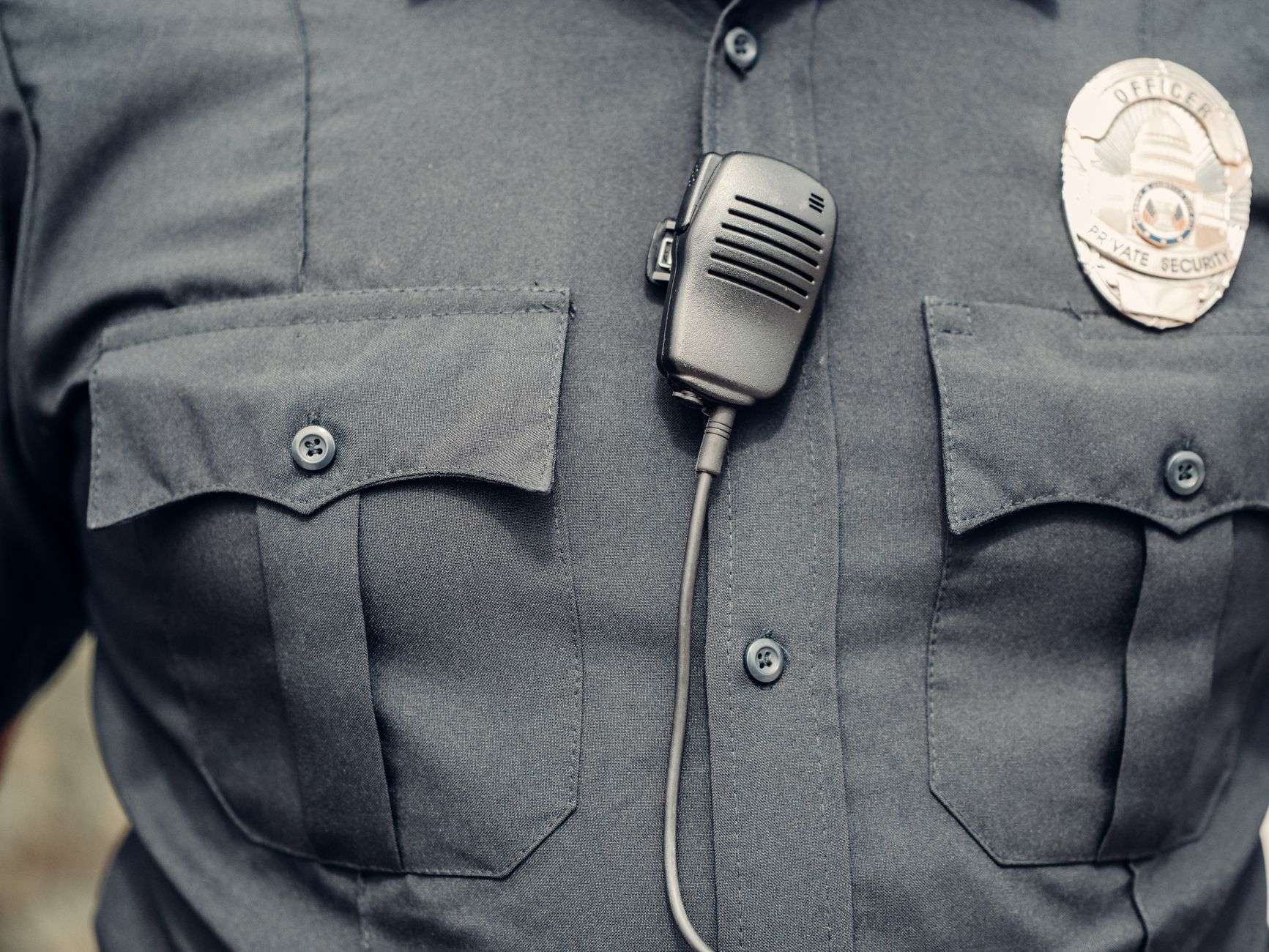
Spanish Fort police officers will soon be equipped with body cameras, new tasers and a drone after the City Council unanimously approved an agreement with Axon Enterprise Inc. and its Canadian affiliate. The council’s resolution authorizes Mayor Brad Bass to sign the contract, clearing the way for the police department to modernize several pieces of frontline equipment in one coordinated purchase rather than piecemeal acquisitions.
The measure passed without opposition, reflecting broad support among council members for outfitting officers with updated technology. While the resolution itself does not list a purchase price, city documents show the Axon quotes total more than $75,000, spread across several overlapping contracts and payment schedules.
That includes roughly $22,923.80 over five years for six Axon Body 4 cameras, an eight-bay charging dock and virtual training valued at $1,475. The body camera package will put a recording device on every officer working the street, capturing video and audio of traffic stops, calls for service and other public interactions from the officer’s point of view.
A separate line item covers $23,855 for an Axon Air Skydio X10 drone package, giving the department an aerial tool that can support search operations, traffic crash reconstruction and other calls. Modern police drones can be deployed within minutes to search wooded areas for a missing person, map a serious crash scene from above without closing a road for hours, or give commanders a live view of a developing situation before officers move in.
The largest piece of the agreement is $28,794.96 over four years for TASER 10 units and related officer training. The latest generation of Axon’s less-lethal devices is designed to give officers a defensive option short of a firearm, and departments across the country have updated their inventories as older models are phased out of production and support.
Body Cameras Become the Standard in Alabama
Body-worn cameras have become increasingly standard across Alabama law enforcement agencies in recent years, giving departments a documented record of officer interactions that can be used for training, evidentiary purposes and public accountability. Departments that once debated whether the devices were worth the cost have largely shifted to debating which vendor and storage plan works best, as courts, prosecutors and the public increasingly expect video evidence in disputed encounters.
For a city like Spanish Fort, where officers handle everything from interstate traffic to residential calls along the Eastern Shore, the footage serves double duty: it protects officers against unfounded complaints and provides prosecutors with objective evidence that can resolve questions about what happened during an arrest.
Axon, the equipment’s manufacturer, is one of the largest suppliers of body cameras and less-lethal weapons to police departments nationwide. The Arizona-based company has grown from its origins as a taser maker into a full-service law enforcement technology provider, offering cameras, digital evidence management, dispatch software and drone programs to agencies of every size.
Buying Through a Purchasing Cooperative
The city plans to purchase the equipment through Sourcewell, a national government purchasing cooperative that allows municipalities to buy from vetted vendor contracts without running an individual competitive bid process. The Minnesota-based cooperative serves tens of thousands of government entities across the country, aggregating their purchasing power to negotiate contracts with major suppliers. Member cities can select from pre-negotiated pricing on everything from police cruisers to playground equipment, saving staff time and often securing better terms than a small city could negotiate alone.
City Attorney David Conner told the council that the Alabama Department of Examiners of Public Accounts has approved Sourcewell for this type of municipal purchasing, which streamlines the process for the city. That approval matters for small and mid-sized Alabama municipalities, which must otherwise navigate state bid law requirements that can stretch a routine purchase into a months-long procurement. By relying on the cooperative’s competitively awarded contracts, Spanish Fort can move from approval to deployment far faster while still documenting a defensible purchasing decision.
The cooperative purchasing route has become common across Baldwin County as the county’s municipalities have grown rapidly over the past two decades. Growth brings both bigger budgets and bigger expectations: residents of fast-growing suburbs expect departments equipped like their counterparts in larger metros, and councils have generally been willing to invest in technology that improves response times and accountability.
Growth Pressures on a Shoreline City
Spanish Fort, located in Baldwin County along the eastern shore of Mobile Bay, has been one of the fastest-growing cities in south Alabama in recent decades. Sitting just across the bay from Mobile and along the U.S. 98 and Interstate 10 corridors, the city blends bedroom-community subdivisions with a busy retail district that draws shoppers from across the county. Its police force consequently patrols a jurisdiction that includes quiet neighborhoods, congested commercial strips and a stretch of interstate that sees heavy freight and commuter traffic daily.
That mix of call types is precisely what makes the new equipment package a fit, police technology observers note. A drone can cover the expansive timbered tracts and marsh edges around the city faster than a grid search on foot. Body cameras document the volume of traffic stops generated by the interstate corridor. And modern less-lethal options give officers tools calibrated for encounters that range from shoplifting disputes to violent confrontations.
The five-year camera contract and four-year taser agreement also reflect how police technology is now sold: as a service. Rather than a single large purchase, agencies pay annually for hardware, software, cloud storage and support bundled together. That smooths out budget spikes for a city of Spanish Fort’s size and ensures the equipment is replaced on a predictable cycle rather than worn until failure.
What the Equipment Means for Residents
For residents, the most visible change will likely be the cameras. Officers wearing body cameras record from the moment they activate the device, and the resulting footage becomes part of the department’s digital evidence library. In disputes over traffic stops, arrests or use of force, that recording often provides the fastest path to the truth, benefiting complainants and officers alike. The virtual training included in the camera package will also allow officers to rehearse scenarios on screen, supplementing the live training that smaller departments struggle to schedule.
The TASER 10 replacement cycle matters to public safety in a quieter way. Less-lethal devices wear out, and training requirements evolve with each new generation. By bundling the hardware with officer training over four years, the department ensures its officers stay current on deployment policies and on when — and when not — to deploy the devices.
The Skydio X10 drone may draw the most public curiosity. Unlike hobbyist aircraft, modern public-safety drones are designed for rapid deployment, autonomous flight paths and thermal imaging, all of which have proven their worth in searches for missing children and elderly residents across the Gulf Coast region. They also document crash and crime scenes with a precision that speeds investigations and reduces the time roads must remain closed.
Unanimous Support and What Comes Next
The council’s unanimous vote signaled that the expenditure faced no organized opposition, even in a year when municipal budgets everywhere are under strain. Council members have generally framed technology purchases of this kind as basic equipment rather than extras, comparable to radios, cruisers or protective vests.
With Mayor Bass authorized to sign, the department can now move forward on ordering and deployment timelines set by the contracts. Officers can expect training on the new cameras and tasers as each element arrives, and residents will likely see the devices in use within months. The agreement positions the department alongside a growing list of Baldwin County agencies that have adopted integrated camera, drone and less-lethal programs from the same vendor, keeping Spanish Fort’s police force current with the technology standards now expected of law enforcement across Alabama.
The Broader Shift in Police Technology
Spanish Fort’s move mirrors a transformation underway in police departments of every size across the Gulf Coast. A decade ago, a city of this size might have had a handful of dash cameras and little else. Today, integrated systems tie together body cameras, in-car video, drone footage and digital evidence storage into a single platform, and agencies increasingly sign multi-year service agreements with a single vendor to keep all of it compatible.
That consolidation carries practical benefits for small departments with limited administrative staff. Evidence files from a body camera can be linked automatically to a corresponding case number, shared with the district attorney’s office electronically and retained on a schedule that satisfies state evidence rules — all without an officer driving a DVD to the courthouse. For prosecutors handling everything from DUI cases to capital crimes, the shift to digital evidence has changed daily practice in courtrooms across Baldwin and Mobile counties.
It also reflects changed public expectations. Residents who grew up with dashboard and doorbell cameras now assume, often correctly, that their encounters with police were recorded. Departments that adopted cameras early found the devices resolving complaints quickly and often exonerating officers whose actions were questioned. Civil rights advocates, for their part, have pointed to the same footage in cases where officers fell short. The technology, in other words, cuts in both directions, which is precisely what accountability proponents intended.
As the Axon equipment arrives in the coming months, Spanish Fort residents will see officers wearing the Body 4 cameras, and the department’s new drone will occasionally be visible over searches and crash scenes along the city’s busy corridors. City officials have not announced a formal rollout date, but the unanimous council approval and the streamlined Sourcewell purchasing path mean the department will not have to wait long to put its new tools to work for a growing Eastern Shore city.