Study: Apartment rents rise fastest in Mobile’s Oakleigh, Washington Square area
A new Rent.com study finds one-bedroom apartment rents rose fastest near Mobile's Washington Square, climbing 7.55 percent to an average of $1,002 a month.
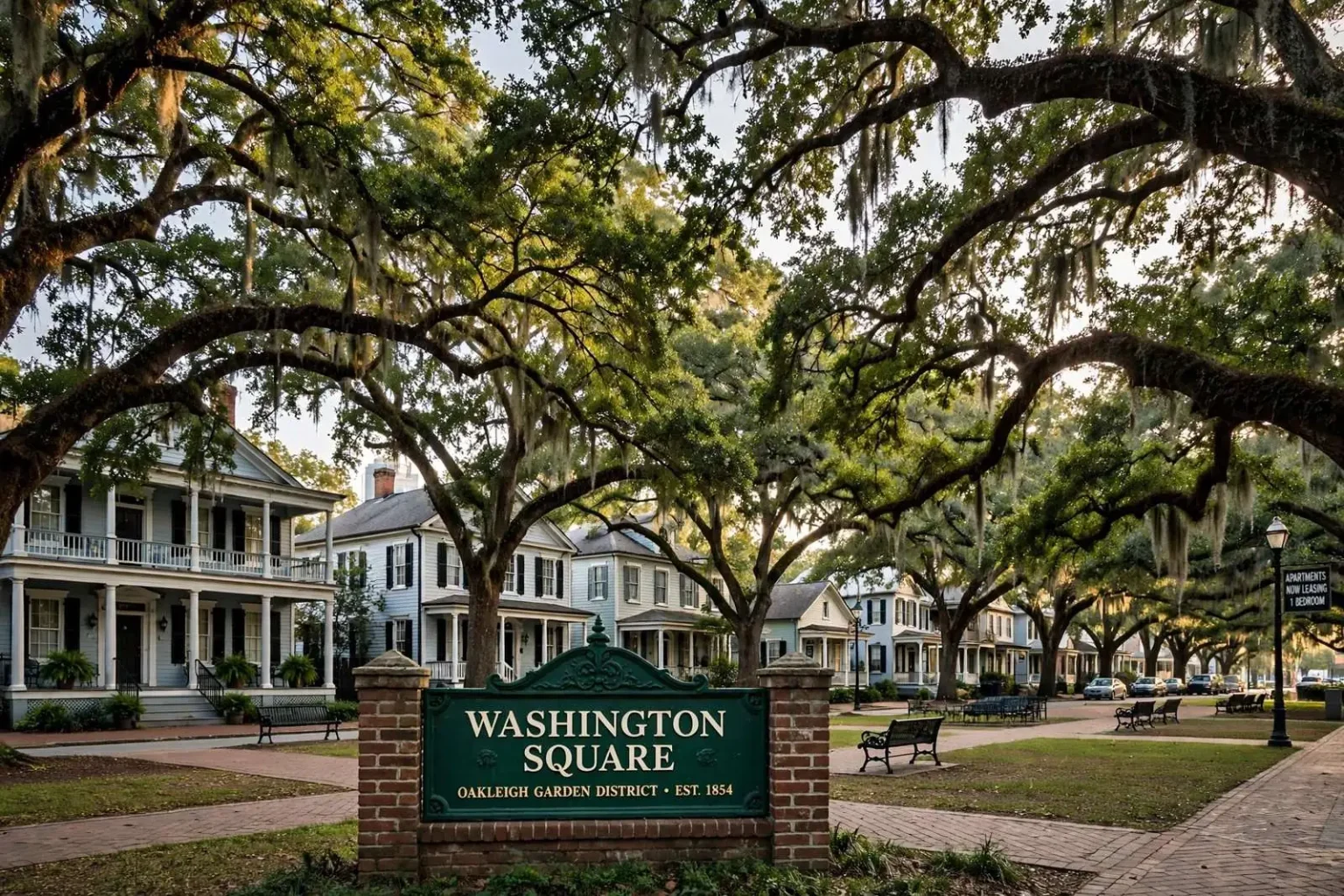
MOBILE, Ala. – Apartments near Washington Square in Mobile’s Oakleigh Garden District saw the largest jump in rent over the past year, according to a new study from Rent.com. The average rent for a one-bedroom apartment near Washington Square rose 7.55 percent last year to $1,002 per month, making it among the most expensive in the city.
The finding puts the leafy streets around Washington Square — the heart of the Oakleigh Garden District, one of Mobile’s oldest and most walkable neighborhoods — at the front of a rental market climbing unevenly across the city. While some West Mobile complexes held prices flat over the study period, demand for intown living pushed the district’s one-bedroom rents past the thousand-dollar mark.
The study found the second-highest rents in the Thornhill neighborhood of West Mobile, which includes the Stone Ridge Apartment Homes. One-bedroom rents there average $929 but did not increase from the prior year — evidence that the city’s most expensive submarkets and its fastest-growing ones are not always the same place.
How the Neighborhoods Ranked
Rent.com’s review of Mobile broke the city into recognizable neighborhoods and apartment clusters, then compared average one-bedroom rents from December 2018 to December 2019. The company based its data on average one-bedroom rents, reviewing Mobile neighborhoods with sufficient available inventory on Apartment Guide and Rent.com — meaning the rankings cover complexes actively listing units on those platforms rather than every rental in the city.
The result is a snapshot of where Mobile’s rental costs actually moved during 2019, with intown districts leading the charge and several West Mobile areas posting smaller gains or none at all.
The Overton area, including Lakeview at Cottage Hill and other complexes along Cottage Hill and Grelot roads, saw a 5.72 percent increase, with average rents of $737 per month. The Llanfair area, including the Maison De Ville apartments, averaged $641 after a 4.75 percent rise. The Bolton area, including Windsor Place, Crossings at Pinebrook, Estates at Lafayette Square and Hamptons at Pine Bend, saw rents climb 2.45 percent to an average of $658 per month.
Washington Square and the Oakleigh Garden District
The Oakleigh Garden District occupies some of the most desirable geography in Mobile: a grid of historic homes and oak-lined streets between Government Street and Springhill Avenue, anchored by the antebellum Oakleigh mansion and its museum complex. Washington Square sits at its center, and the surrounding blocks mix restored cottages, converted apartments and small commercial strips within walking distance of downtown.
That walkability is the district’s chief draw for renters. Residents can reach midtown restaurants, government offices and the central business district in minutes, avoiding the cross-town commute that defines life in West Mobile. Demand for that convenience shows up directly in the rent numbers: a 7.55 percent single-year increase is substantially faster than typical rent growth, and it pushed the area’s $1,002 average to among the most expensive in the city.
The district’s housing stock also limits how quickly supply can respond. Historic neighborhoods cannot easily add large new apartment complexes, so when demand rises, existing units absorb the pressure through higher asking rents rather than new construction.
West Mobile: Bigger Inventory, Slower Growth
West Mobile tells the opposite story — larger inventories, newer complexes and slower price growth. The Thornhill neighborhood, home to Stone Ridge Apartment Homes, posted the city’s second-highest average at $929 for a one-bedroom, yet its rents did not increase at all from the prior year. The area’s high base price reflects the quality and age of its apartment stock rather than recent scarcity.
Along the Cottage Hill and Grelot road corridors, the Overton area’s complexes — including Lakeview at Cottage Hill — raised rents 5.72 percent to an average of $737. Those corridors carry much of West Mobile’s apartment inventory, sitting between the shopping and dining concentrations along Airport Boulevard and the employment centers spread across the city’s western reaches.
Farther south, the Llanfair area averaged $641 per month after a 4.75 percent rise, with Maison De Ville among its marquee properties. The Bolton area, home to Windsor Place, Crossings at Pinebrook, Estates at Lafayette Square and Hamptons at Pine Bend, posted the smallest increase among the study’s ranked areas at 2.45 percent, reaching an average of $658 per month.
The pattern across West Mobile is consistent: submarkets with plenty of competing complexes and steady construction pipelines can raise prices only modestly, because a renter priced out of one property simply signs across the street. Intown districts without room to build face no such check.
Why Mobile’s Rents Keep Climbing
The 2019 increases documented in the study did not happen in a vacuum. Mobile’s rental market has been tightening for years as the city’s economy diversified beyond its traditional port and shipbuilding anchors. Growth in aerospace, healthcare and logistics employment along the Gulf Coast corridor has brought new workers to the metro area, many of whom rent for their first years in town.
Household formation trends add to the pressure. Younger renters have increasingly favored apartments close to restaurants, nightlife and employment over single-family homes in outlying areas, and Mobile’s intown neighborhoods — Oakleigh Garden District chief among them — are where that preference lands. Property owners in those districts have responded the way owners in supply-constrained neighborhoods everywhere do, by testing higher rents each time a unit turns over.
At the same time, the cost of building new rental housing has risen across the region, from land prices intown to construction and insurance costs that climb along the Gulf Coast. New complexes that do open tend to price at the top of the market, pulling averages upward even in West Mobile, while doing little to relieve demand at the moderate end where Llanfair- and Bolton-area properties compete.
What $1,002 Buys — and What It Means
The Washington Square area’s $1,002 average for a one-bedroom is a notable threshold for Mobile, a city where median incomes remain well below the national average. A one-bedroom at that price consumes a substantial share of a typical local household’s budget, particularly for single renters. It also signals how far the market has moved from the bargain reputation Mobile’s rental scene carried for years relative to other Gulf Coast cities.
For renters weighing intown convenience against West Mobile space, the study’s numbers frame the trade-off precisely. Choosing the Overton area’s $737 average over Washington Square saves roughly $265 a month — real money, though the intown premium buys walkable access to downtown Mobile that no West Mobile corridor can match. The Llanfair and Bolton areas offer entry points below $700 for renters whose priorities run to cost and newer construction over location.
The study also carries a message for the city’s investors and planners. A 7.55 percent one-year jump in the Oakleigh Garden District is the kind of signal that attracts redevelopment interest, and Mobile’s intown revival — from Midtown infill to downtown residential conversions — suggests the pressure on Washington Square-area rents is structural rather than temporary. Renters in the district should expect more of what the study documented: steady, market-leading increases on a limited supply of units.
Reading the Numbers Carefully
As with any market study, the Rent.com data comes with boundaries worth understanding. The company reviewed only neighborhoods with sufficient available inventory on Apartment Guide and Rent.com, and it measured average asking rents for one-bedroom units over a single December-to-December window, from December 2018 to December 2019. Complexes that never list vacancies on those platforms — including many smaller intown properties and single-family rentals — are invisible to the data.
Asking rents also differ from what current tenants pay. Property owners test new prices when units turn over, so long-term tenants in the same neighborhoods may be paying well below the averages in the study. The figures describe the market a new renter faces today, not the market existing residents have locked in.
Those caveats do not change the study’s central finding: during 2019, the fastest-rising rents in Mobile clustered around Washington Square in the Oakleigh Garden District, while the city’s other major apartment submarkets rose more slowly or held steady. Thornhill’s combination of high prices and zero growth, alongside the Bolton area’s modest 2.45 percent climb, shows the divergence clearly.
What Comes Next for Renters
For the city’s renters, the lesson is that location now carries a measurable, growing price. The gap between the Washington Square area’s $1,002 average and the $641 Llanfair area average widened over the course of a single year, and nothing in the market’s trajectory suggests that gap will close on its own. Renters priced out of the Oakleigh Garden District have few substitutes that offer the same walkability at similar cost, which is precisely why landlords there can raise rents faster than the citywide norm.
The study’s ranked areas give Mobile renters a practical map of the market as 2020 began: the top of the market intown at Washington Square, a second tier of newer West Mobile stock around Thornhill, a broad middle along Cottage Hill and Grelot roads, and value options in the Llanfair and Bolton areas. Where rents head from here will depend on the same forces the 2019 data captured — intown demand, regional employment growth and the limited ability of historic districts to add supply.