Bomb Technicians Haul 100 Sticks of Dynamite From Home Near Sweet Water High
State, federal and local bomb technicians removed and disposed of 100 sticks of dynamite from a Marengo County home near Sweet Water High School on Nov. 19 while school operations were paused.
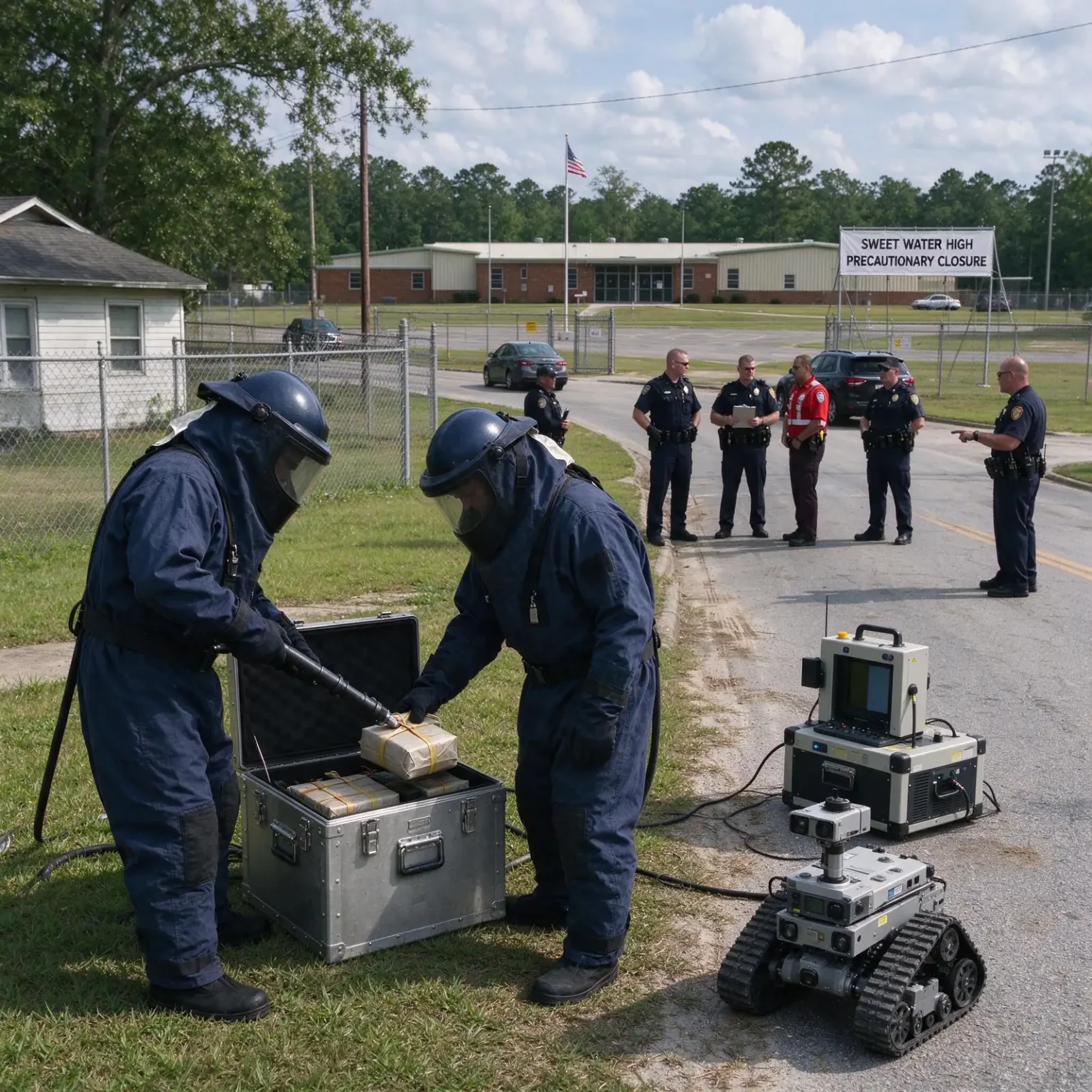
SWEET WATER, Ala. — A cache of 100 sticks of dynamite was taken out of a Marengo County home on Thursday, Nov. 19, in a disposal operation that drew bomb technicians from local, state and federal agencies and led to a pause in operations at nearby Sweet Water High School. The Sweet Water dynamite was found at a residence roughly 800 feet from the school, and classes and other school activities were suspended as a precaution while specialists worked to remove and dispose of the explosives safely.
Why the School Paused Operations
The Tuscaloosa County Sheriff’s Office, whose Hazardous Device Unit took part in the operation, said school operations were halted to protect students, teachers and staff during the disposal work. A distance of 800 feet is a little more than two football fields, close enough that officials chose not to take chances while the explosives were being handled and moved.
Precautionary closures and evacuations like this are standard practice when bomb technicians work with explosives near occupied buildings. Responders establish a safety perimeter around the work area, keep people outside it and limit the number of personnel who are close to the material. A school day can be disrupted as a result, but the approach is designed to ensure that no one is in harm’s way if something goes wrong.
No injuries were reported in connection with the operation.
A Multi-Agency Operation
The removal brought together a long list of agencies, reflecting both the hazards involved and the specialized training required to handle explosives. Bomb technicians from the Tuscaloosa County Sheriff’s Office Hazardous Device Unit worked alongside technicians from:
- the Alabama Law Enforcement Agency
- ATF, the federal agency formally called the Bureau of Alcohol, Tobacco, Firearms and Explosives
- the FBI
- the Tuscaloosa Police Department
Support on the ground came from agencies closer to home. Law enforcement help came from the Marengo County Sheriff’s Office and the Sweet Water Police Department. Fire and rescue support was provided by Sweet Water Fire and Rescue, South Marengo Fire and Rescue and Surginer’s volunteer firefighters. The Alabama Forestry Commission, the state agency responsible for protecting forests and fighting wildfires, also assisted.
Specialized bomb squads are not based in every county, so rural communities in west Alabama often rely on regional teams from larger agencies when explosives are discovered. Every certified public safety bomb technician in the United States is trained at the FBI’s Hazardous Devices School, located at Redstone Arsenal in Huntsville, which gives Alabama a direct connection to the national program that prepares these specialists.
Questions That Remain Unanswered
Authorities have not said how the dynamite came to be kept at the home, how long it had been there or how it was discovered. They also have not said whether anyone has been or will be charged in connection with it. Officials have not publicly named anyone connected to the property, and no allegation of wrongdoing has been announced. Officials have also not described how the explosives were ultimately destroyed.
The Tuscaloosa County Sheriff’s Office described the essential facts of the operation, and any further details would be expected to come from the investigating agencies.
Why Old Dynamite Is So Dangerous
Although it is not known how old the dynamite in Sweet Water was, explosives experts consistently warn that aging dynamite is among the most hazardous materials a person can encounter. Traditional dynamite contains nitroglycerin absorbed into a filler material. Over time, and especially when stored in heat and humidity, the nitroglycerin can seep out of the sticks, a process often described as sweating. The leaked liquid or the crystals it can form may be extremely sensitive to shock, friction or heat.
That is why bomb technicians treat any old dynamite as unstable, even if it appears intact, and why they take careful measures to move it, if they move it at all. Depending on the condition of the explosives, specialists may choose to destroy them in place or transport them to a remote location under controlled conditions.
How Explosives Are Regulated
Under federal law, ATF regulates the manufacture, sale, possession and storage of commercial explosives. Businesses and individuals who deal in or use explosives generally must hold a federal license or permit, and explosives must be stored in approved containers known as magazines that meet specific construction and location standards. Those rules include requirements on how far magazines must be kept from inhabited buildings, roads and other structures.
In decades past, dynamite was more commonly used on farms and rural properties for tasks such as clearing stumps, breaking up rock or digging ditches, and it is not unheard of for forgotten explosives to turn up in barns, sheds or homes in rural areas. Officials have not said whether anything like that applies in this case, and investigators have not indicated why the explosives were at the Sweet Water residence.
What to Do If You Find Explosives
Public safety agencies give the same advice to anyone who finds dynamite, blasting caps, old military ordnance or anything else they suspect may be explosive:
- Do not touch, move or try to open it. Even gentle handling can be enough to set off deteriorated explosives.
- Leave the area. Get yourself and others a safe distance away, and keep children and pets out of the area.
- Call 911. Tell dispatchers exactly what you found and where it is. Avoid using a cellphone or radio right next to the item.
- Wait for professionals. Local law enforcement will contact a trained bomb squad to assess and handle the material.
ATF also operates a toll-free line, 1-888-ATF-BOMB, for reporting information about explosives and bomb-related crimes.
How Bomb Squads Approach a Job Like This
While the specific steps taken in Sweet Water have not been detailed, bomb technicians across the country follow a common playbook when they respond to explosives. The first priority is establishing a perimeter and making sure everyone who does not need to be near the material is moved away. Technicians then assess the explosives from a distance whenever possible, often using remote-controlled robots equipped with cameras, along with portable X-ray equipment, to evaluate condition and packaging.
When a technician must approach, he or she typically wears a heavy protective bomb suit and limits time near the material. Fire crews frequently stand by during such operations in case a fire breaks out, and emergency medical personnel are often staged nearby. Because these jobs are deliberate by design, they can take hours, which helps explain why a precautionary pause at a nearby school can last for much of a day.
School Safety Plans and Precautionary Closures
Schools generally maintain emergency plans that spell out how to respond to threats ranging from severe weather to hazardous materials incidents in the surrounding neighborhood. Depending on the situation, those plans may call for keeping students inside, relocating them, dismissing early or suspending activities entirely. Decisions are usually made in coordination with law enforcement and emergency management officials, who can judge how close a hazard is and how long it is likely to last. In Sweet Water, officials opted to suspend operations, the most cautious of those choices.
About Sweet Water
Sweet Water is a small town in southern Marengo County, in west Alabama’s Black Belt region, where local schools are often central to community life. Marengo County lies along the Tombigbee River, with Linden as its county seat and Demopolis as its largest city. In a community the size of Sweet Water, an event that suspends operations at the high school and brings in teams of state and federal bomb technicians draws widespread attention, and the response from multiple area fire departments and the Alabama Forestry Commission reflects how small towns pool resources when an unusual emergency arises.
What Families Should Know
The suspension of school operations was a short-term safety measure tied to the disposal work, and officials did not indicate any ongoing danger to the school once the explosives had been removed. Parents with questions about how the school handled the day, or about safety procedures in general, can contact school administrators directly. Anyone with information about the dynamite who has not already spoken with authorities may contact the Marengo County Sheriff’s Office.
Officials have not announced any further developments. Updates on the investigation, including any decisions about charges, would come from the agencies involved.