‘Thank You Linemen’ Campaign Invites Storm Crews Back to a Restored Mobile
Mobile businesses and officials launched 'Thank You Linemen,' a campaign honoring crews who restored power after Hurricane Sally left 500,000 in the dark.
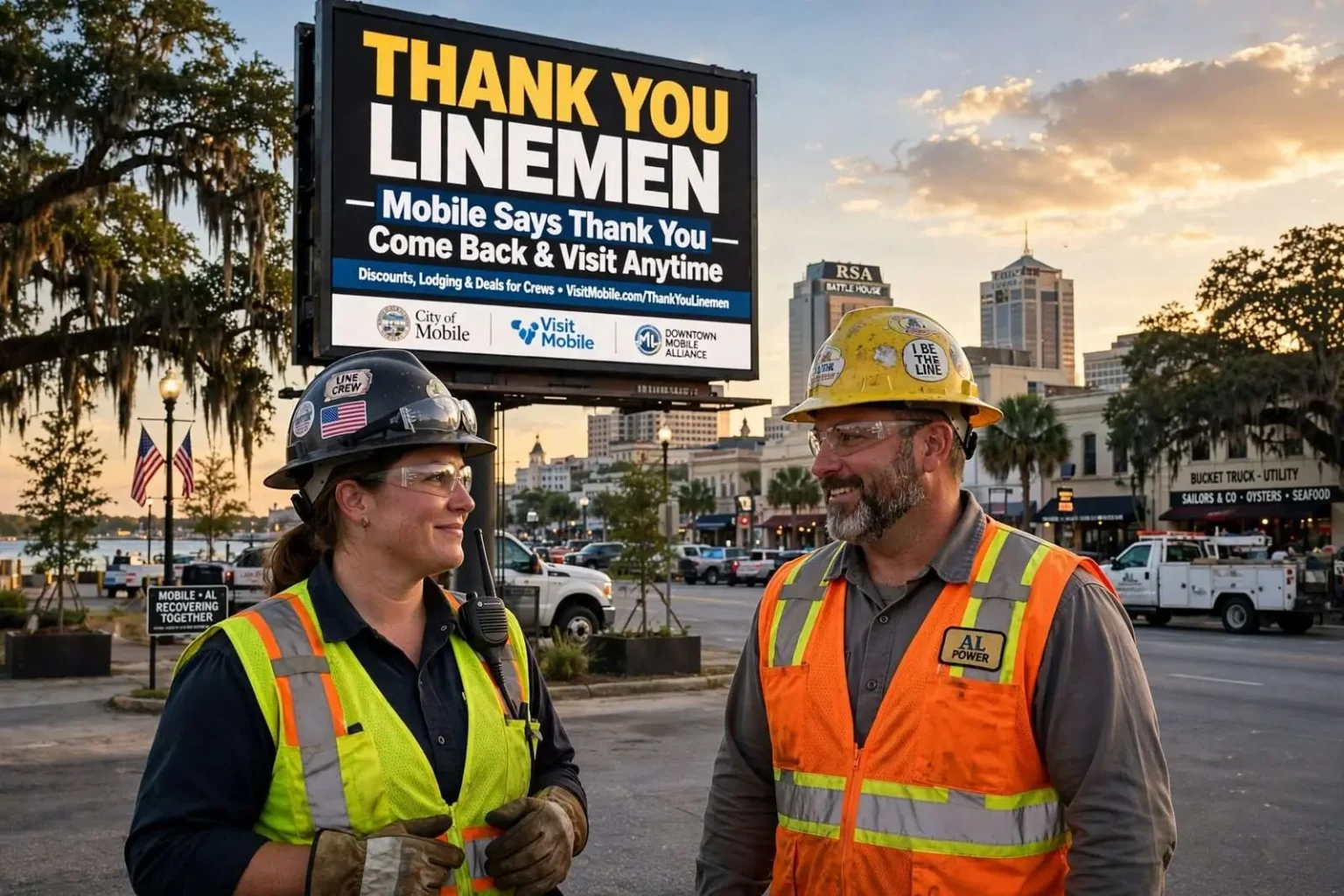
The crews who came from across the country to restore power after Hurricane Sally are getting a public thank-you — and an invitation to come back and enjoy the city they helped get back on its feet. The City of Mobile, Visit Mobile, the Downtown Mobile Alliance and local businesses have teamed up on the “Thank You Linemen” campaign, which is running in several cities where the workers came from.
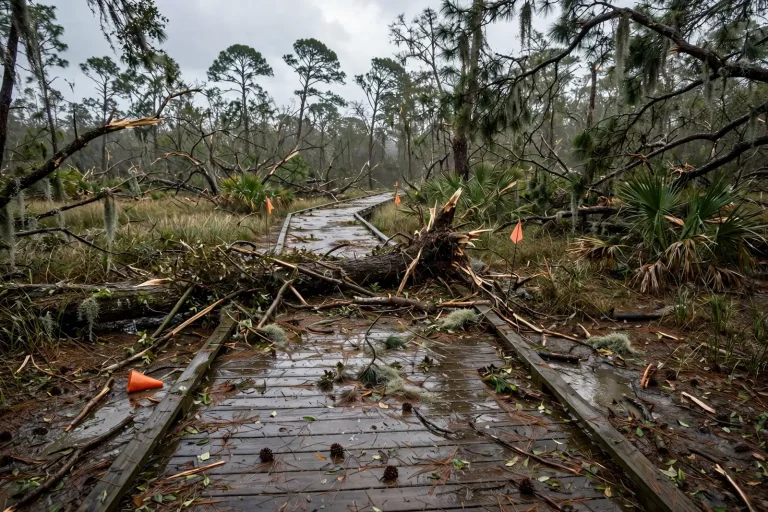
At least 500,000 Gulf Coast residents were left in the dark when Sally came ashore, slamming into the Alabama coast with destructive winds that snapped pines like matchsticks, peeled siding off homes and collapsed stretches of the region’s electrical grid. Utility workers poured into the region from around the country in the storm’s aftermath, working long shifts in sweltering heat to rebuild lines pole by pole in neighborhoods from Bayou La Batre to Daphne.
Now, months after the storm, the region is making a point of remembering who showed up. The campaign is aimed squarely at the traveling utility crews who rarely get credit: the men and women who climb poles in the dark, sleep in parking-lot trucks and move on to the next disaster without ceremony. Mobile’s message is that they are welcome back — this time without the chainsaws.
Billboards Across the Southeast
Billboards carrying the message are up in Birmingham, Atlanta, Biloxi/Gulfport, Macon and Mobile, with discounts for linemen also offered through the Visit Mobile website. The placement was deliberate: instead of simply running ads at home, organizers put the thank-you where the workers actually live, so that a lineman in Georgia or Mississippi might drive past a sign on the commute and see Mobile saying his name.
Mayor Sandy Stimpson’s office and the Mobile City Council contributed to the billboard fund, alongside a corporate donation drive and a public GoFundMe. The mix of funding sources mattered to organizers, who wanted the campaign to feel like a community effort rather than a marketing buy — government, businesses and ordinary residents all chipping in to fund a message of gratitude.
“We all felt the pain and the struggles of not having our power for the first time in about 16 years,” said Emily Gonzalez, vice president of marketing and communications for Visit Mobile. “We were really in need, and they were here to take care of us.”
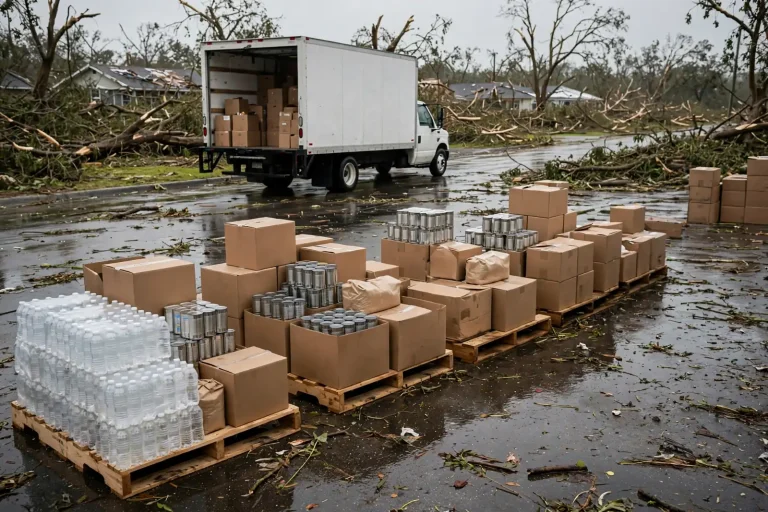
For longtime residents, the outage was a reminder of how quickly a modern city can be knocked back to candlelight. Refrigerated medicine spoiled, traffic signals went dark at busy intersections, gas stations without generators went dry, and families who stayed through the storm sweated through nights without air conditioning. Restaurants that could open cooked on propane and fed line crews parked outside; hardware stores sold out of generators in the first days after landfall.
Sally’s Mark on the Coast
Hurricane Sally made landfall on the Alabama coast as a strong Category 2 storm, but its defining feature was pace: the storm crawled, dropping torrents of rain across Baldwin and Mobile counties and pushing storm surge into Pensacola Bay and Mobile Bay alike. Roads that residents had driven for decades were undermined by flooding, and downed trees closed blocks upon blocks for weeks.
Against that backdrop, the speed with which crews restored power became a point of local pride and gratitude. Crews staged in fairgrounds and hotel parking lots, and residents grew used to the sight of bucket trucks on nearly every corner. The recovery also drew a wider lesson about mutual aid in the utility industry, where utilities across a region routinely send their own crews and equipment to whichever member is hit hardest — an arrangement that means the Gulf Coast’s lights came back on with the help of strangers from hundreds of miles away.
Organizers have compiled a list of nearly 100 companies that sent utility workers to the area, gathering contact information in hopes of welcoming them back. The list spans utilities and contractors from across the Southeast and beyond, and it has become the campaign’s working database: each company can be reached with information about lodging discounts, restaurant specials and events as they roll out.
“You helped get us back up and running, you helped get the lights on — come enjoy it when it’s actually a little more fun to be here,” Gonzalez said. The invitation, she added, is meant to be more than words: the discounts offered through the Visit Mobile website give crews and their families concrete reasons to book a return trip, whether for Mardi Gras, a spring fishing weekend or a summer stay on the water.
Will Kiser, senior vice president of Hargrove Engineers + Constructors, called the effort a way to give back. Hargrove, an engineering and construction firm with deep Gulf Coast roots, joined the business coalition behind the campaign, which has also enlisted restaurants, attractions and hotels to extend offers to visiting linemen.
Downtown Mobile has a particular interest in seeing the workers return. The hospitality sector absorbed a double blow from the pandemic and the storm, and every visitor campaign of this kind doubles as an argument for the city itself: the museums, the festivals, the waterfront parks and the restaurant scene that make a trip worthwhile even without a storm to clean up. For crews used to seeing a community at its worst — debris-choked streets, dark intersections, long lines for fuel — the campaign offers a chance to meet it at its best.
What the Campaign Means Locally
The thank-you effort also reflects how Gulf Coast communities have redefined recovery in the years since a string of hurricanes taught the region hard lessons. After major storms in decades past, gratitude to line workers tended to be expressed in newspaper editorials and church suppers; the “Thank You Linemen” campaign is that instinct updated for the age of social media, out-of-home advertising and coordinated destination marketing.
It also carries a practical undercurrent for the region’s future. Storm season along the northern Gulf Coast runs from June through November, and residents know that Sally will not be the last hurricane to reach the Alabama coast. Building goodwill with the utility community is, in a sense, infrastructure: the next time crews face a decision about staging, logistics and community support, Mobile wants to be the kind of place they remember fondly.
Local business owners who joined the discount program described it as both gratitude and self-interest, honestly stated. A lineman who returns for a vacation becomes a customer, a reviewer and a storyteller — and the storm crews who saw Mobile’s restaurants feeding them for free in the darkest days of recovery are exactly the visitors most likely to spread the word about what the city offers in calmer weather.
The City Council’s contribution to the billboard fund was among the least controversial votes of its year. Members who normally split on spending questions found little to argue about in a campaign that thanked workers who had kept neighborhoods safe and businesses alive, and the public GoFundMe drew small donations from residents who wanted to add a personal note to the city’s official gratitude.
The campaign’s organizers say the model could outlast the Sally recovery. Cities across the Southeast have watched the effort and considered similar tributes after their own disasters, since the blueprint — billboards in the crews’ hometowns, a compiled list of participating companies, discounts coordinated through the destination marketing organization — is simple enough for any city to copy and inexpensive relative to its visibility.
A Thank You Meant to Be Personal
For Gonzalez, the message is simple: a thank-you from everyone in Mobile — “not just from the city… but from the individual people” — for workers who get so little credit throughout the year. That framing is the heart of the campaign. Utility restoration is usually measured in outage statistics and repair timelines, but the people doing the measuring are not the ones on the poles.
The distinction shows up in the details of the effort. Rather than honoring a single utility or a single crew, the campaign reaches out to the hundreds of individuals who rotated through the region during the recovery, many of whom worked other storms before and after Sally with barely a pause at home. The billboard message is addressed to them as people — fathers, mothers, neighbors — rather than as equipment operators.
Residents who want to take part have several easy avenues: watching for the glowing thank-you billboards while traveling through Birmingham, Atlanta, the Mississippi Gulf Coast or Macon; sharing the campaign on social media; and, most practically, using the discount program’s partners when they see utility workers in town, since crews remain a familiar sight on the Gulf Coast whenever strong storms pass through.
Businesses interested in adding offers for returning linemen can join through the campaign’s organizers, and the list of participating companies continues to grow as word spreads. Visit Mobile continues to update the discount information on its website, giving traveling crews and their families a one-stop place to plan a return visit.
A year after the storm, Mobile has restored most of what Sally broke: the trees replanted or cleared, the roofs patched, the traffic lights back on their timers. What the “Thank You Linemen” campaign is working to restore is something less visible — the connection between the people who lived through the outage and the strangers who came to end it. The billboards now standing in five Southeast cities say it plainly: the lights are on, the city is itself again, and the workers who made that true are welcome back anytime.
For more information about the campaign and the discounts available to utility workers, visit the Visit Mobile website. The billboard campaign continues in Birmingham, Atlanta, Biloxi/Gulfport, Macon and Mobile, and organizers say they will keep it running as long as it keeps reaching the crews who earned it.