Thomasville Firefighters Trade the Engine for a Storybook at Summer Library Program
Two Thomasville firefighters read to children at the public library's Local Legends Story Time on July 2, then walked the crowd outside for an up-close look at a fire truck.
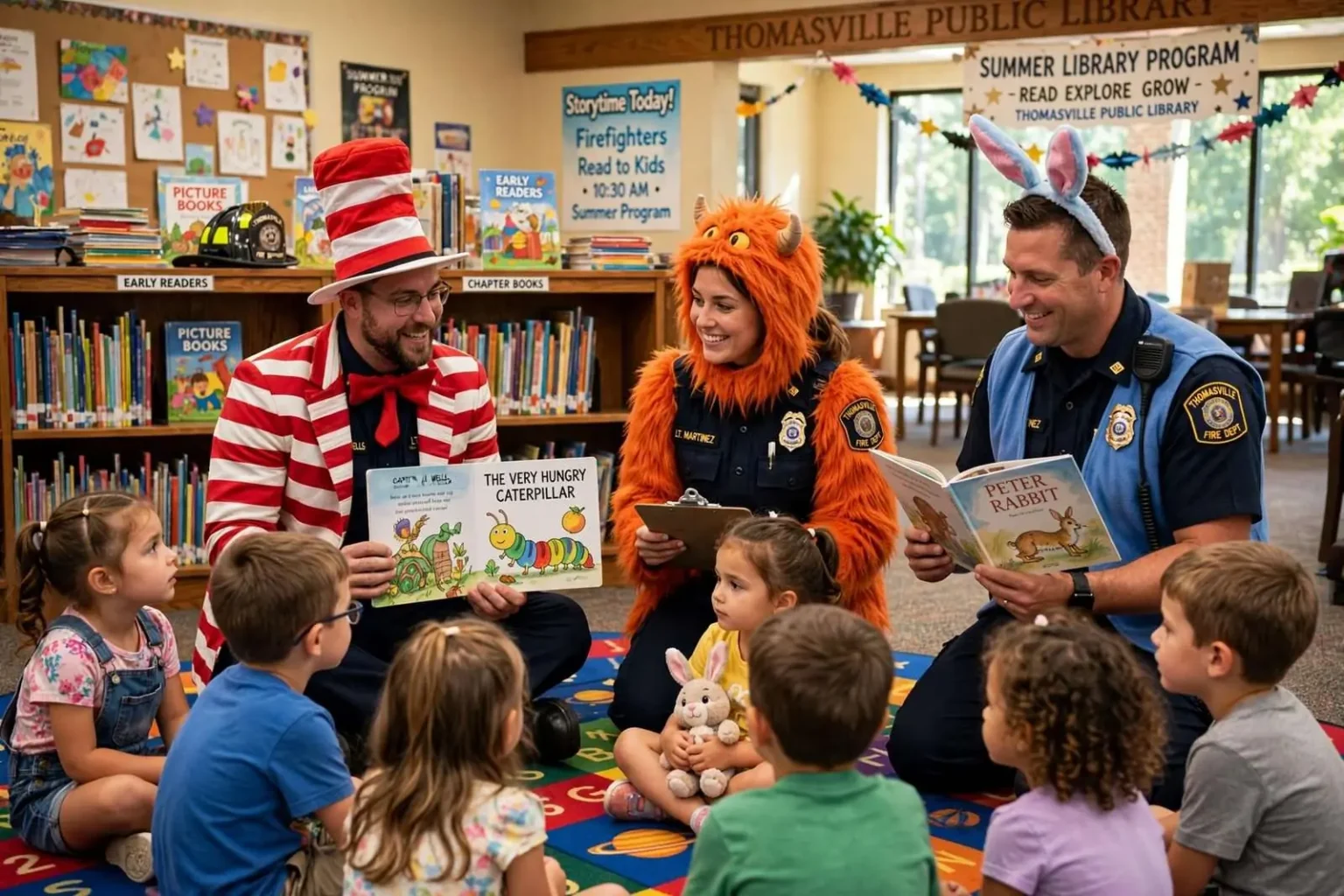
Members of the Thomasville Fire Department traded in their firefighting gear for a different kind of costume recently, gathering at the local library dressed as characters from children’s books to read to kids as part of a community literacy event. The visit was part of a national program that brings first responders into schools and libraries to model reading for young children, and the Thomasville firefighters leaned into the spirit of the day with full character costumes.
Why Firefighters Read to Kids
The “firefighters read to kids” tradition has been a fixture of elementary school and library programming across the country for years. The combination of uniforms, sirens and physical bravery tends to capture young children’s attention in a way that makes the underlying message — that reading is important and that adults take it seriously — stick with them. The visits are also an opportunity for firefighters to engage with their community in a non-emergency setting, which helps build the kind of trust that makes their emergency response work more effective.
For libraries and schools, the visits are a way of reinforcing early literacy messaging with a touch of spectacle. Children who might otherwise be reluctant to sit through a typical storytime often pay closer attention when the reader is wearing a fire helmet or carrying a ladder, and the costumes in particular make the visits memorable in a way that plain-clothes readings are not.
Thomasville’s Fire Department and the Community
Thomasville, the Clarke County seat in southwest Alabama, has a volunteer and career fire department that serves both the city and surrounding rural areas. The department’s members are deeply integrated into the community, and visits like the recent library reading are part of a broader pattern of engagement that includes school safety talks, station tours and participation in local events.
The library visit also gave the department a chance to highlight its reading-and-literacy emphasis. Several departments across the country have adopted early-literacy programs as part of their community outreach, recognizing that the same children they protect during emergencies are the ones who benefit most from reading interventions in their earliest years.
How the Visit Played Out
Firefighters arrived at the library in costume, with members dressing as characters from a range of children’s books. The selections included classic picture-book characters as well as more recent favorites, and the firefighters rehearsed their readings in advance to make sure they could deliver each story with the kind of pacing and expression that holds young listeners’ attention.
Children who attended the reading sat on the floor at the front of the room, and the firefighters moved through the audience between books to answer questions and pose for photographs. The format is familiar from school visits and library storytimes across the country, but the costumes added a layer of visual interest that made the day especially memorable for the youngest attendees.
What the Library Gets Out of It
Library programming relies on community partners to keep events fresh and to reach audiences who might not otherwise visit the library. Visits from local first responders, particularly ones that involve costumes and interactive elements, are an effective way of bringing families into the library who might otherwise associate the building with study space or quiet reading rather than with the kind of events their children want to attend.
The Thomasville Public Library has hosted firefighter readings in past years, and the recent visit continued a tradition that library staff say has been effective at building regular attendance at children’s programming. Library staff worked with the fire department in advance to select age-appropriate books and to coordinate the logistics of the visit, and the collaboration is one of several the library maintains with local first responders and civic organizations.
What Comes Next
The success of the recent visit has prompted the library and the fire department to discuss additional programming in the coming months, including a possible station tour for children who attended the reading and their families. Station tours are a popular way for fire departments to engage with young families, and the follow-up programming is intended to build on the goodwill generated by the library visit.
For the firefighters themselves, the day was also an opportunity to practice the public-speaking and storytelling skills that are an increasingly important part of community engagement work. Fire departments across the country have come to recognize that the public-facing work their members do outside of emergencies is part of how they build the kind of community trust that makes their emergency response work more effective, and events like the Thomasville library reading are a small but meaningful piece of that broader effort.
Why These Visits Matter in Small Towns
In small towns like Thomasville, the fire department’s community-engagement work tends to be more visible than it would be in a larger city, because the department’s members are also more likely to be the same people residents see at the grocery store, the post office and the high school football game. That kind of visibility makes library visits and school programs especially valuable, because they reinforce the connection between the department and the families it serves in a way that lingers long after the event itself is over.
For young children in Thomasville and Clarke County more broadly, the visit is also a chance to see firefighters as approachable adults rather than as emergency responders who arrive in the worst moments of a family’s life. That kind of early positive exposure can shape how children think about first responders for years to come, and it makes the eventual moment when they do need help less frightening than it might otherwise be.
How Library Programs Connect to Early Literacy
The Thomasville library visit sits inside a broader national conversation about the importance of early literacy interventions. Research has repeatedly shown that children who are read to regularly from birth develop larger vocabularies, stronger pre-reading skills and better long-term academic outcomes than children who are not. Library programs that model reading for parents and create positive associations with books are one of the most effective ways to encourage that habit in families that might not otherwise pick up books at home.
Bringing first responders into those programs adds an element of community trust that is hard to manufacture in other ways. Children who see firefighters and police officers enjoying a story are absorbing a message about reading that carries far beyond the library walls, and parents who attend those events are getting a reminder about the importance of daily reading that comes from an unexpected and authoritative voice.
The Role of Costumes in Children’s Programming
Costumed readings are a popular format for children’s programming because they combine two things young children love — dress-up and stories — into a single event. The firefighters who dressed as book characters for the Thomasville visit were playing into a tradition that librarians and teachers have used for decades to engage reluctant readers, and the format worked just as well with the firefighters reading as it does with librarians in costume.
The choice of book characters also gave the firefighters an opportunity to talk with the children about the stories themselves, not just about fire safety. That kind of crossover — where the visit is about the books rather than about the firefighters’ day jobs — tends to produce more engaged listeners, and it is one reason library visits by community partners are often more effective than school visits by the same partners.
Looking Ahead
The library and fire department have signaled that they plan to continue the costumed-reading tradition in future visits, and the recent turnout has prompted conversations about expanding the program to include other community partners. Local librarians, teachers and civic leaders are all potential partners for similar events, and the library’s experience with the firefighter reading is likely to shape how those partnerships develop.
For Thomasville families, the visit was also a reminder of how many community institutions are invested in the same goal: helping children develop a love of reading that will serve them for the rest of their lives. The firefighters who showed up in costume were part of that broader effort, and their willingness to participate signals how seriously the local fire department takes its role in the community beyond emergency response.
The library has scheduled additional storytime events for the coming weeks, and the firefighter visit is expected to draw new families who might not have attended library programming in the past. Library staff will be watching turnout closely as they plan future collaborations with community partners.
Families interested in upcoming storytime events can find the schedule on the library’s website and Facebook page. The library welcomes new families at any of its regular programs and encourages parents and caregivers to bring their children in for the next available session.