

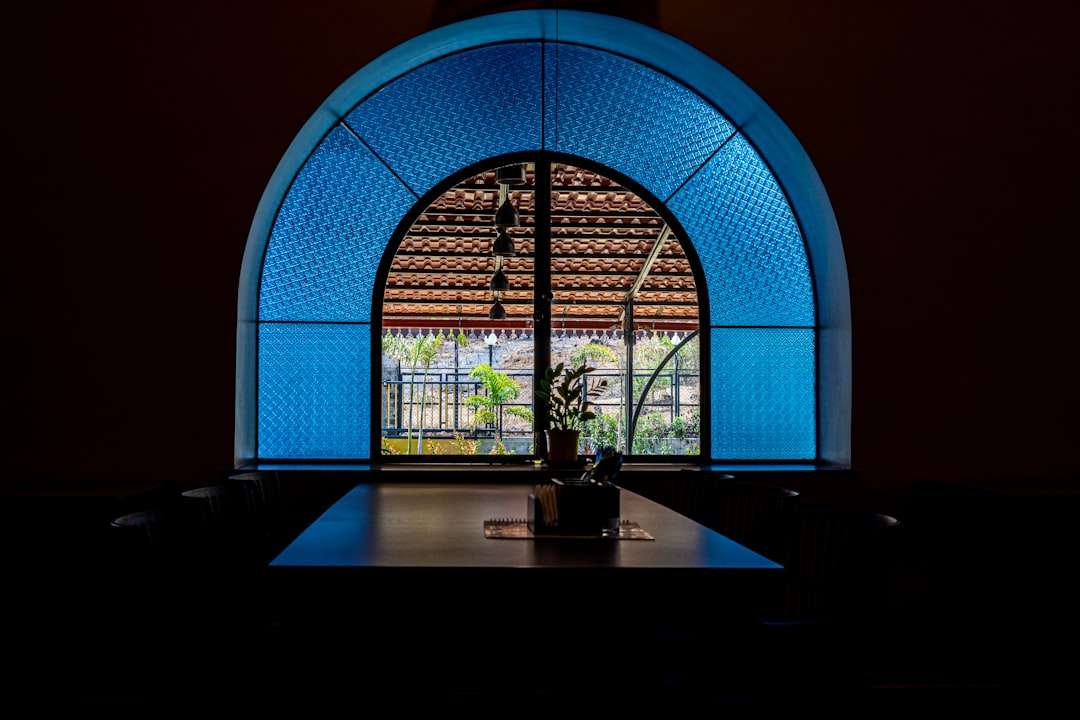
After 45 years of serving barbecue plates and welcoming regulars through its doors, Dick Russell’s BBQ in Tillman’s Corner is closing for good — and this weekend, the community will get a chance to take a piece of it home. The longtime Mobile-area restaurant, which announced its closure in mid-July, is holding a public estate sale Saturday, offering everything from dining chairs to light fixtures to the restaurant’s well-known styrofoam cups. For many in southern Mobile County, the sale is less a liquidation than a farewell, one last chance to walk through a place that has been part of the fabric of daily life since the 1980s.
Tillman’s Corner is an unincorporated community on Mobile’s southern edge, a commercial crossroads that grew up where the highways leading down to the bay and the beaches meet the residential neighborhoods of the city’s outskirts. It has never had its own city hall or downtown square, but over the decades it has built an identity out of the businesses, schools and churches that anchor life there. Dick Russell’s BBQ was one of those anchors. Longtime residents can chart their family histories against the restaurant: first dates in the booths, team dinners after Little League games, Friday lunches that stretched long past the lunch hour.
A Community Fixture Since the 1980s
Dick Russell’s BBQ has been part of the Tillman’s Corner community, an unincorporated area on Mobile’s southern edge, since the 1980s. Over four and a half decades, the restaurant became more than a place to grab lunch — it grew into a gathering spot where generations of families marked birthdays, caught up over coffee, and settled into the same booths week after week. That long history is part of why the announcement of its closure last month hit so many people in the Mobile area. For a restaurant to operate in the same community for 45 years is no small feat, and its shutdown marks the end of an era for South Alabama’s local dining scene.
The restaurant’s longevity is worth sitting with for a moment. The dining landscape of south Mobile County has changed repeatedly since the 1980s — chains have come and gone, shopping centers have been rebuilt, and the growth that spread down U.S. 90 and Airport Boulevard transformed the area from a quiet crossroads into a busy commercial corridor. Through all of that, Dick Russell’s kept serving the same kind of plates it always had, in the same building, to many of the same families. A restaurant that lasts 45 years in one place does not survive on the food alone; it survives because the community decides, year after year, that it wants the place to be there.
News of the closure spread through Tillman’s Corner quickly after the announcement in mid-July, and the reaction — on doorsteps, in church lobbies and across social media — made clear how many people counted the restaurant among their personal landmarks. Some remembered being carried in as children by parents who had themselves been regulars. Others recalled specific booths, specific orders, specific holidays when the dining room filled with extended families who had no interest in cooking. That is the role a true neighborhood restaurant plays: it becomes the default answer to a hundred small occasions.
Lining Up for a Piece of History
Former office manager Stephanie Chestnut said the emotional pull of the restaurant was obvious even before the estate sale officially opened. People were already waiting in the parking lot Friday morning hoping to buy items once the doors opened. “We know a lot of people in our community wanted pieces,” Chestnut said. “We’ve got people that want to take a chair home just because they remember sitting in it when they were a kid.”
That impulse — to own a fragment of a place that mattered — is a familiar one whenever a beloved institution closes. When a school consolidates, people ask for yearbooks and gymnasium bleachers. When a landmark store shutters, they ask for the sign. The Dick Russell’s estate sale was built around exactly that instinct, and the response confirmed how deep the attachment ran before a single item was priced.
The sale includes a wide range of items pulled from the restaurant’s dining room and kitchen: cups, light fixtures, baskets, tables, chairs, decor and more. Chestnut said one item in particular has generated steady requests. “I had a lot of people asking me for Dick Russell styrofoam cups,” she said. “I’ve got a bunch of those still left.”
It might seem odd that disposable cups would rank among the most sought-after artifacts of a 45-year restaurant, but anyone who spent time in Tillman’s Corner understands it. Those cups were part of the everyday ritual — the to-go orders that crossed the counter by the thousands, the refills carried to regulars’ tables, the cups that ended up in truck consoles and kitchen cabinets across southern Mobile County. A branded cup is a small thing, but a small thing repeated for decades becomes a symbol.
Estate sales of this kind also serve a practical purpose for the families and staff behind a closing business. Restaurants accumulate an enormous inventory of equipment and furnishings, most of it too ordinary to sell through any other channel and too good to discard. Opening the doors to the public turns the closing into a community event instead of a quiet shutdown, and it gives regulars a constructive way to participate in the goodbye.
Employees Reflect on Decades of Loyal Customers
For the staff who spent years behind the counter, the closure is bittersweet. Former employee Marilyn Hall said watching the restaurant wind down has been especially hard because of the relationships built with regulars over the years. “We have a lot of loyal ones who came every morning, drank coffee, sit for an hour or two,” Hall said, describing the customers who treated the restaurant like a second home. “They are here six, seven days a week and they’re heartbroken,” she added. “We’re heartbroken.”
The morning coffee crowd Hall described is a fixture of small restaurants across South Alabama, and it is easy to underestimate what it represents. For retirees, shift workers and early risers, the daily table is often the most reliable social contact of the day — a standing appointment where news is exchanged, grandchildren are photographed and local events are debated. When a restaurant like Dick Russell’s closes, it does not just remove a menu; it dissolves a daily circle of friends who may have known each other for twenty or thirty years.
That is why restaurant closures land differently than other business closures. A hardware store closing is an inconvenience. A gathering place closing leaves a hole in the week itself. Regulars will have to find a new place to be, but the particular mix of people, food and memory that made Dick Russell’s what it was cannot be reconstituted down the road.
Hall said she had expected to spend the rest of her career at Dick Russell’s. “It’s sad because I was planning on retiring from here,” she said, noting that every piece of furniture and every fixture leaving the building carries a memory for the people who worked there.
Her remarks capture a side of the closure that customers rarely see. For staff, a long-serving restaurant is a workplace in the fullest sense — the setting of an entire career, with all the professional pride, inside jokes and hard shifts that a working life accumulates. Employees who spend decades in one kitchen know the regulars’ orders by heart, watch their children grow up and eventually start bringing their own children around. Closing such a place ends not only a business relationship but a web of personal ones, and the grief among longtime staff is real.
Looking Ahead
Even as the physical restaurant closes, Chestnut said the bonds formed inside it will outlast the building itself. “We will forever love Mobile,” she said. “This has been very difficult for us to move on in our lives as well. And love, that’ll never change.”
The estate sale is open to the public Saturday from 8 a.m. to 2 p.m. Organizers expect steady turnout throughout the day as longtime customers and curious neighbors alike stop by to browse what remains of the Tillman’s Corner institution and, for many, to say a final goodbye.
For those planning to attend, the scale of the event is worth understanding. Estate sales like this one typically open with the most complete selection, but the steady stream of visitors expected Saturday means the inventory will thin as the day goes on. Early arrivals will have the best choice of furniture and fixtures; later shoppers may still find smaller keepsakes such as the cups Chestnut mentioned, along with decorative items and kitchen pieces. Cash-based, first-come sales of this kind move quickly, and popular items rarely last through a full day.
What happens to the building afterward remains the quieter question hanging over the sale. Tillman’s Corner has few structures with as much accumulated local meaning as a restaurant that operated for 45 years, and whatever occupies the site next will inherit a location that generations of Mobile County residents associate with pulled pork, sweet tea and a particular kind of unhurried hospitality.
The closure also adds to a running conversation in Mobile about the pace at which longtime local restaurants are disappearing. Independent eateries face the same pressures everywhere — rising food and labor costs, shifting habits, the simple difficulty of handing a business to a next generation. When one of them goes, the community tends to realize only afterward how much it relied on the place and how few substitutes there really are. Chains can replace the food. They cannot replace the owner who remembers your order, the booth your family always took, or the four decades of small talk that made the room feel like an extension of home.
For now, though, the focus in Tillman’s Corner is on Saturday. From 8 a.m. to 2 p.m., the doors will open one last time, and the community will file through to take home chairs, cups and fixtures — small pieces of a place that, for 45 years, held a neighborhood together. The goodbyes will be unhurried, the stories will be long, and the memory of Dick Russell’s BBQ will stay with the people who made it what it was long after the tables have left the dining room.