A Familiar Face Returns: Tim Fuhrman Expected to Lead the FBI’s Mobile Office
Tim Fuhrman, who once served as assistant special agent in charge in Mobile, was expected to return as the head of the FBI's Mobile office, succeeding Debra Mack after her early retirement.
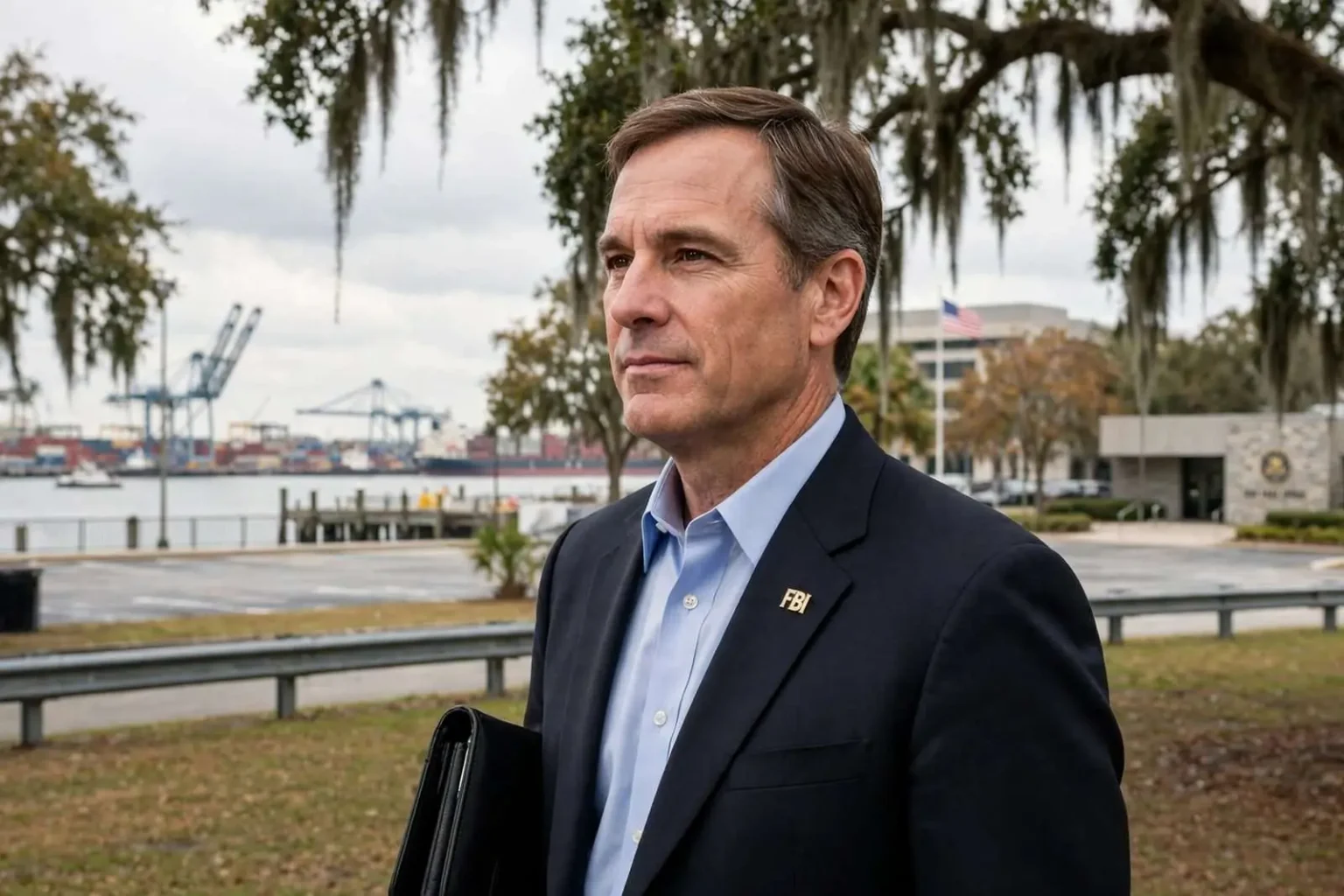
The FBI’s Mobile office was in line for a new leader in the fall of 2009, and the man expected to take the job was already well known to local law enforcement. Tim Fuhrman, who previously served in Mobile as assistant special agent in charge, was set to return to the city as special agent in charge of the office, according to sources familiar with the assignment. He would succeed Debra Mack, who recently took an early retirement rather than accept a transfer out of Mobile.
Not a stranger
Fuhrman’s prior tour in Mobile left him with the kind of standing that matters in a field office whose work depends on relationships with sheriff’s deputies, city police detectives, district attorneys and federal prosecutors. He holds a law degree. During his earlier assignment he and his wife, who taught school in the area, lived in Rock Creek, the Fairhope-area community that has become home to a good number of the region’s professionals and public servants. The household detail is more than color; a supervisor who has lived on the eastern shore, crossed the bay with the commuters and gotten to know the area’s civic and legal circles arrives with connections that a newcomer would need a year to build.
For an agency that rotates senior personnel through unfamiliar territory as a matter of policy, sending back a supervisor who already knows the courthouse, the coastline and the county lines is a meaningful advantage. The FBI moves its executives every few years by design, on the theory that fresh eyes prevent an office from going stale and insulate managers from becoming too close to the local institutions they may one day have to investigate. But the policy carries a cost in start-up time, and in a division as busy as Mobile’s, a leader who can function at full speed from the first week is a notable asset.
The change in command also came in an unusual way. Field office heads in the bureau typically leave for another assignment in the rotation, but Mack chose early retirement rather than accept the transfer, a decision that left the Mobile post open and made room for the unusual step of bringing back a supervisor with local history. Such transitions draw attention inside the building and out, because the special agent in charge sets the priorities, the tone and the external relationships that shape everything a division does.
What the job entails
The special agent in charge oversees FBI operations across the bureau’s Mobile division, which covers the southern portion of Alabama and reaches from the Mississippi line to the Florida Panhandle border, including Mobile and Baldwin counties and the rural counties to the north. It is a territory whose caseload is unusually varied for its size: public corruption investigations that reach into city halls and county commissions; violent crime and gang task forces; drug trafficking cases tied to the Gulf; white-collar and mortgage fraud; and, since 2001, a substantial counterterrorism and port security portfolio built around one of the nation’s busier deepwater ports.
Each of those lines of work ties back to the geography. The Port of Mobile, one of the largest deepwater ports on the Gulf of Mexico, moves container traffic, coal, forest products and offshore energy cargo, and it anchors a counterterrorism and security mission that involves the bureau’s joint terrorism task force, the Coast Guard, Customs and Border Protection and dozens of other agencies. The Gulf’s shipping lanes and the interstate corridors that run north from the coast have long made the region a route for narcotics trafficking, sustaining the drug and violent crime work that fills the division’s task forces. And the growth of Baldwin County, one of the fastest-developing counties in the state, feeds a steady volume of financial fraud cases that follow growth wherever it goes.
Public corruption work may be the division’s most distinctive mandate. Alabama’s long history of federal prosecutions of local officials, from county commissioners to state legislators, has made the FBI’s public corruption program a fixture of the state’s political landscape, and Mobile’s office has repeatedly been at the center of it. Cases of that kind depend on patient investigative work and on the credibility the office maintains with jurors and the public, which is one more reason continuity and reputation in the special agent in charge’s chair matter.
The office’s place in the region
Mobile’s federal law enforcement community had been in the news repeatedly in the preceding years, and the office’s work in public corruption and violent crime had kept the division visible both locally and within the bureau. The field office sits within a broader federal presence in the city that includes the United States Attorney’s Office for the Southern District of Alabama, the District Attorney’s Office in Mobile County and the county sheriff’s office, plus a deep bench of municipal police departments from Mobile and Prichard to the growing communities across the bay in Baldwin County. The special agent in charge is, in practice, a senior partner in all of those relationships, and the division’s effectiveness is measured as much in the cooperation it sustains as in the cases it closes.
The timing of the 2009 transition also placed Fuhrman at the head of the office during a period of evolving national priorities. The years after September 11 had shifted resources toward counterterrorism and intelligence, but the financial crisis that broke in 2008 had just created a historic wave of mortgage and securities fraud work for field divisions across the country. South Alabama, with its construction boom along the eastern shore and its share of collapsed lending operations, was not exempt, and the division’s white-collar squad faced a caseload that grew with every new disclosure from the crash. Balancing those demands against an unchanged counterterrorism mission and the division’s traditional criminal programs was the central management challenge for whoever held the post.
A leader with local roots
What made the appointment notable, sources said, was the combination of seniority and familiarity. A special agent in charge typically arrives knowing the bureau well but not the territory; Fuhrman knew both. His earlier tour as assistant special agent in charge had put him second in the local hierarchy, working alongside the same deputies and prosecutors he would now lead the office in partnering with, and his wife’s work as a teacher in the area connected the family to the schools and civic life of the community in a way that few postings allow.
Rock Creek, the Fairhope-area community where the family had lived, is characteristic of the eastern shore neighborhoods where the region’s professional class settles: established homes under spreading oaks, a short drive to the Fairhope pier and the schools of central Baldwin County, and a commute across Mobile Bay into the city. An FBI supervisor living there is a neighbor to judges, attorneys, physicians and business owners whose paths cross his professionally, a fact that carries both advantages for cooperation and the careful boundaries that come with a law enforcement role.
For the men and women of the Mobile division, the return of a former assistant supervisor to the top job meant a leader who already knew the squads, the pending matters and the institutional history without a learning curve. For the region’s law enforcement partners, it meant a familiar voice in the monthly meetings where task force priorities are set. And for the public, it signaled continuity in an office whose work, from port security at one of the nation’s busiest deepwater ports to corruption cases in city halls across southern Alabama, rarely pauses for a change of command. The assignment was expected to be finalized as the fall of 2009 advanced, putting a known figure formally in charge of the FBI’s work across the southern tier of Alabama.
Inside a busy field division
The Mobile division’s scale rewards a leader who can delegate. Between the port’s security mission, the task forces that pair FBI agents with state and local officers, the squads handling white-collar and public corruption work, and the support staff who keep evidence, records and administration moving, the special agent in charge functions less as an investigator and more as an executive: setting priorities, allocating agents across competing demands and representing the bureau to the community. The job also carries a public role, from press conferences on significant arrests to appearances before civic groups, and in a city the size of Mobile the person in the chair is a visible public figure.
Recruitment and community outreach round out the mandate. The bureau draws its agents from colleges and professions nationwide, and field offices like Mobile play a part in maintaining the pipeline, working with area universities and law schools and with the region’s large veteran population. Community relations programs, from citizens academies to outreach through churches and schools, give the division channels into neighborhoods whose trust it needs, and the special agent in charge is expected to keep those channels open. An officeholder with family ties in the community, as Fuhrman had, steps into that part of the role with a head start.
The division’s coverage area demands travel as well. Southern Alabama stretches from the Mississippi line across Mobile and Baldwin counties and up through rural counties toward Montgomery’s suburbs, and the office’s responsibility runs from the small towns along the Tombigbee and Alabama rivers to the beach communities at the state’s southern tip. Agents work out of the Mobile headquarters and satellite posts, and the special agent in charge answers for the bureau’s performance across all of it, a span of territory where a single squad might handle a fraud case in Foley, a gang investigation in Prichard and a corruption inquiry in a county courthouse to the north.
Continuity in a season of change
Leadership changes at field offices always ripple through pending matters, since investigations in progress depend on relationships with prosecutors and cooperating witnesses that a departing supervisor has cultivated. The unusual circumstances of this transition, an early retirement rather than a routine reassignment, and a successor drawn from the office’s own recent past, minimized those ripples. Files did not have to explain themselves to a stranger; priorities did not have to be rebuilt from scratch; and the office’s standing commitments to its partners survived the change of command intact.
The fall of 2009 assignment placed Fuhrman in the chair at a moment when the FBI’s workload in the region showed no sign of shrinking. The port continued to grow as an economic engine, with expansion projects on the horizon that would only enlarge the security mission; Baldwin County’s population kept climbing, feeding construction and lending activity of every description; and Alabama’s public corruption docket remained among the most active in the country. Into that environment came a supervisor with a law degree, prior Mobile service, local family roots and the confidence of the partners he would be working with, a combination that made the appointment unusual and, in the judgment of those familiar with the office, well matched to the job.