
Transformer Explodes as Firefighters Battle West Mobile House Fire on Cody Road
Firefighters fought a house fire on Cody Road North in West Mobile around 1:30 a.m. Thursday as an electrical transformer near the home exploded.
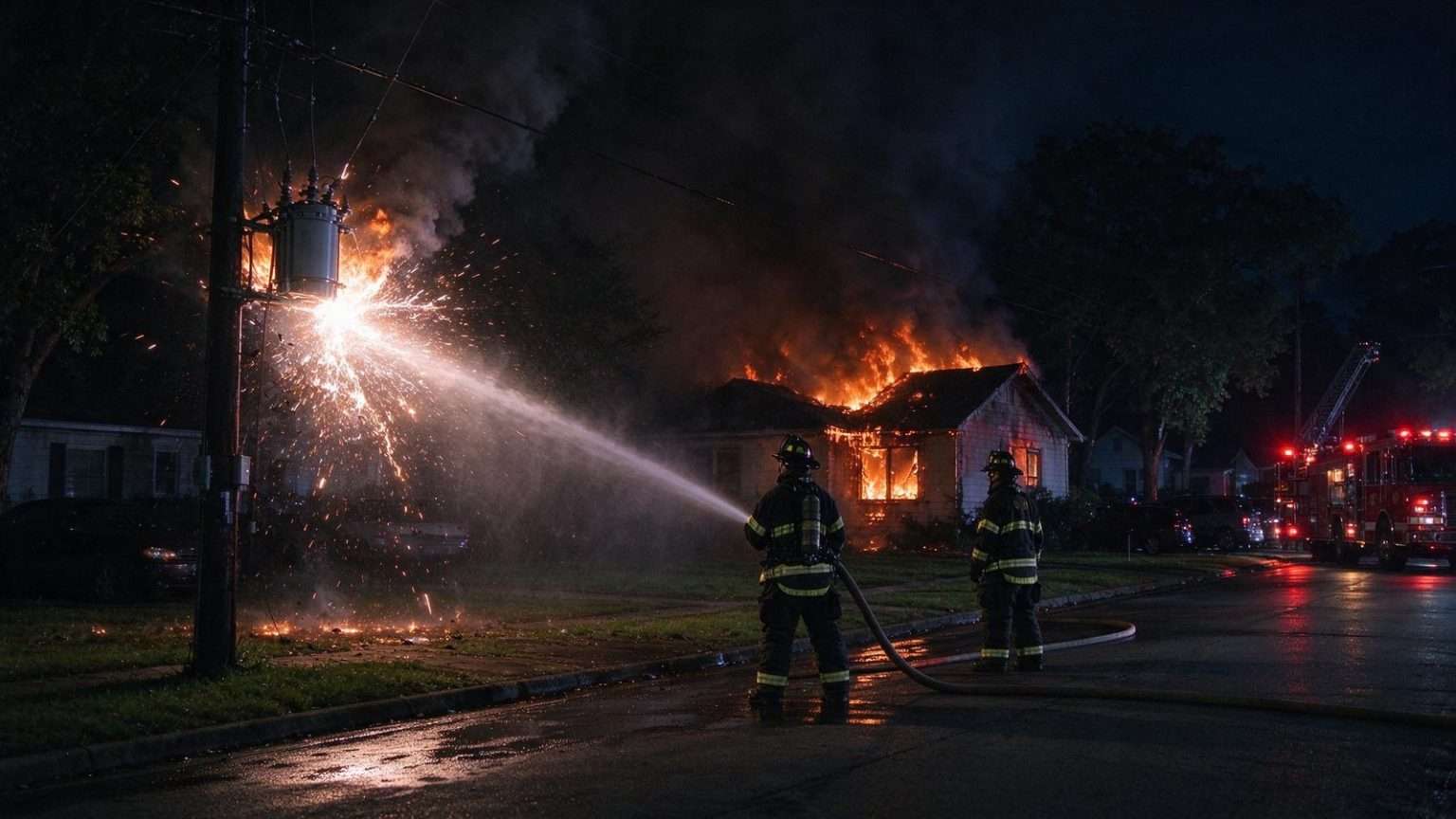
MOBILE, Ala. — Firefighters responded to a house fire in West Mobile early Thursday morning, and an electrical transformer near the home exploded as crews worked the scene, adding danger to an already serious response. The fire was reported around 1:30 a.m. at a residence in the 1255 block of Cody Road North, and emergency crews arrived to find the structure burning.
The transformer explosion during the response underscores the hazards that electrical infrastructure can create during a structure fire. Transformers serving residential streets carry high voltage, and fire damage to poles, lines, or the equipment itself can cause catastrophic failures while crews are working nearby. Mobile Fire-Rescue crews establish a perimeter around energized equipment during fires of this kind, and utilities are notified so power can be cut while suppression work proceeds.
Details about injuries or the extent of the damage were not immediately available early Thursday. The cause of the fire remains under investigation, and investigators will work to determine whether the blaze originated in the home or in the electrical equipment that serves the street before ruling on the official cause.
A late-night response on Cody Road
Cody Road North runs through the West Mobile neighborhoods between Airport Boulevard and Highway 98, an area of subdivisions, older homes, and wooded lots that Mobile Fire-Rescue serves from stations spread across the western part of the city. A 1:30 a.m. fire report from that corridor brings an assignment of engines, a ladder truck, medics, and a command officer, with additional units added depending on what the first crews find on arrival.
Nighttime house fires are among the most dangerous calls firefighters run. Occupants may be asleep, delaying discovery and escape, and visibility inside a burning structure at 1:30 a.m. is near zero until crews bring their own lighting. Crews arriving at the 1255 block of Cody Road North found a structure already burning, and their work — search for occupants, attack the fire, protect exposures — proceeded in the dark with the added complication of the exploding transformer nearby.
The transformer explosion would have been heard across the neighborhood and produced a flash and smoke visible for blocks. Utilities in the Mobile area respond to these events by de-energizing the affected lines, and fire crews hold back from the equipment until the power company confirms the lines are dead. That coordination is standard, but it takes time, and it slows the initial stages of a fireground while crews work around energized hazards.
Electrical fires and residential risk
The proximity of the explosion to the house raises the question investigators will answer: whether the fire damaged the transformer, whether a failure in the transformer ignited the fire, or whether the two events had separate causes. Electrical equipment failures are a known cause of residential fires, and so are the household conditions — overloaded circuits, aging wiring, space heaters, and faulty appliances — that account for a large share of home fires nationwide.
Fire investigators from Mobile Fire-Rescue’s fire prevention and investigation division handle cause determinations in cases like this one. They examine burn patterns, the condition of the home’s electrical panel and wiring, and any equipment involved, and they coordinate with the utility when the distribution system is part of the picture. A determination can take days or weeks, and the results feed both the official record and, when the findings point to systemic problems, broader safety awareness.
Residents across West Mobile saw the response and heard the explosion, and questions about the neighborhood’s electrical infrastructure will persist until the investigation reports its findings. Utility equipment failures in residential areas are typically repaired by the power company promptly, and any damage to the lines serving the street would have been addressed as part of the Thursday response.
The occupants of the home, if any were inside when the fire began, would have faced the disorientation that makes early-morning fires so lethal. Smoke alarms remain the single most effective protection, waking sleeping residents in time to escape, and fire officials across Alabama urge homeowners to test alarms monthly and to place them on every level of the home and outside sleeping areas. The American Red Cross and local fire departments distribute free alarms to households that need them, part of a national campaign that has measurably reduced fire deaths.
Escape planning is the other half of that protection. Families who have agreed on two ways out of every room and a meeting place outside move faster in a real fire, and the minutes saved are often the difference between a close call and a tragedy. Fire officials recommend practicing home escape plans with children twice a year, treating the drill as routinely as an alarm test.
How Mobile Fire-Rescue works a structure fire
Mobile Fire-Rescue operates from stations across the city and handles a high call volume that includes structure fires, medical emergencies, and vehicle accidents. On a working house fire, the first-arriving officer establishes command, determines whether anyone is inside, and assigns incoming units to attack, search, or water supply. Aerial units position for ventilation and roof access, and medics stand ready to treat anyone rescued or injured.
The transformer explosion adds a utility hazard to that standard picture. Electricity travels through transformers at distribution voltage — thousands of volts — and an exploding unit can scatter debris and oil while leaving lines energized. Crews coordinate with the electric utility throughout the incident, and suppression tactics adjust around the hazard until the power is confirmed off.
Damage assessment follows once the fire is out. Crews check for hidden fire in walls and attics, board openings to secure the structure, and hand the scene over to investigators once suppression work is complete. Displaced residents are assisted by family, neighbors, or the Red Cross, which responds to residential fires across the region with emergency lodging and immediate needs.
The investigation into the cause of Thursday’s fire in the 1255 block of Cody Road North remains active, and details about injuries and the extent of damage will be released as they are confirmed. The explosion of the transformer near the burning home will be part of that determination, and the findings will be made public once investigators complete their work.
West Mobile has seen its share of structure fires over the years, and the corridor around Cody Road is typical of the risks: neighborhoods built out over several decades, with homes ranging from newer construction to older houses whose wiring may predate modern electrical loads. Fire officials point to that aging housing stock as a factor in electrical fires, as older panels and circuits struggle to carry the demands of contemporary households.
The timing of the fire — around 1:30 a.m. Thursday — placed it in the overnight hours when residential fires are deadliest. National fire data consistently shows that the risk of dying in a home fire is higher at night, when residents are asleep and detection depends entirely on working smoke alarms. That is the statistical backdrop against which investigators will weigh what happened on Cody Road North.
Neighbors who were awake in the early hours described the sequence that emergency response produces: the glow and smoke of a structure fire, the arrival of engines with lights cutting through the dark, and then the transformer explosion, which would have added a flash and a bang to a scene already drawing attention. The event left the block talking, and the questions residents raise afterward — about the neighborhood’s equipment, about the house, about safety — are the ordinary aftermath of any serious fire.
Transformer explosions and what they mean
Pad-mounted and pole-mounted transformers fail for several reasons: lightning, equipment age, animals or branches causing short circuits, vehicle strikes, and damage from fires themselves. When a unit fails violently, the result is a loud explosion, a flash, and sometimes an oil fire at the equipment site. Utility crews respond to isolate the failed equipment and restore service to the rest of the street, which typically leaves some customers without power until repairs are complete.
For fire crews, an exploding transformer is a live hazard that changes the geometry of the fireground. Lines that are down or energized limit where apparatus can position and where firefighters can work, and the incident commander must balance the speed of fire attack against the electrical danger until the utility confirms de-energization. The coordination between fire and utility crews is rehearsed and routine, but it adds minutes at a stage of a fire when minutes matter.
Investigators will consider the transformer’s failure as part of the cause determination. If the fire spread to the equipment, the explosion is a consequence of the fire; if the equipment failed first and ignited the house, the cause lies with the electrical system. The distinction matters for the official record, for the utility’s own review, and for any insurance questions the homeowners face afterward.
After the fire is out
The days following a house fire are consumed with the practical work of recovery. The American Red Cross of Alabama responds to residential fires across the region, providing emergency lodging, food, clothing, and assistance navigating the first days after a loss. Insurance adjusters assess the damage, and families decide whether a fire-damaged home can be repaired or must be rebuilt.
For the neighborhood, a fire of this kind leaves its mark in the sight of a damaged house and the memory of the night’s noise, and it renews the practical habits that fire prevention advocates promote: tested smoke alarms, clear escape plans, and attention to the electrical condition of older homes. Those measures are the everyday defenses against exactly the kind of event that struck the 1255 block of Cody Road North early Thursday morning.
Mobile Fire-Rescue crews responded to the house fire in the 1255 block of Cody Road North around 1:30 a.m. Thursday, and an electrical transformer near the home exploded as they worked the scene. The cause of the fire remains under investigation, and details about injuries and the extent of the damage were not immediately available.


