Tropical Storm Bertha Submerges Most Sea Turtle Nests Along Alabama’s Gulf Coast
Photos show most sea turtle nests along Alabama's Gulf Coast beaches submerged after Tropical Storm Bertha, though Share the Beach also found new nests and turtle tracks in the dunes.
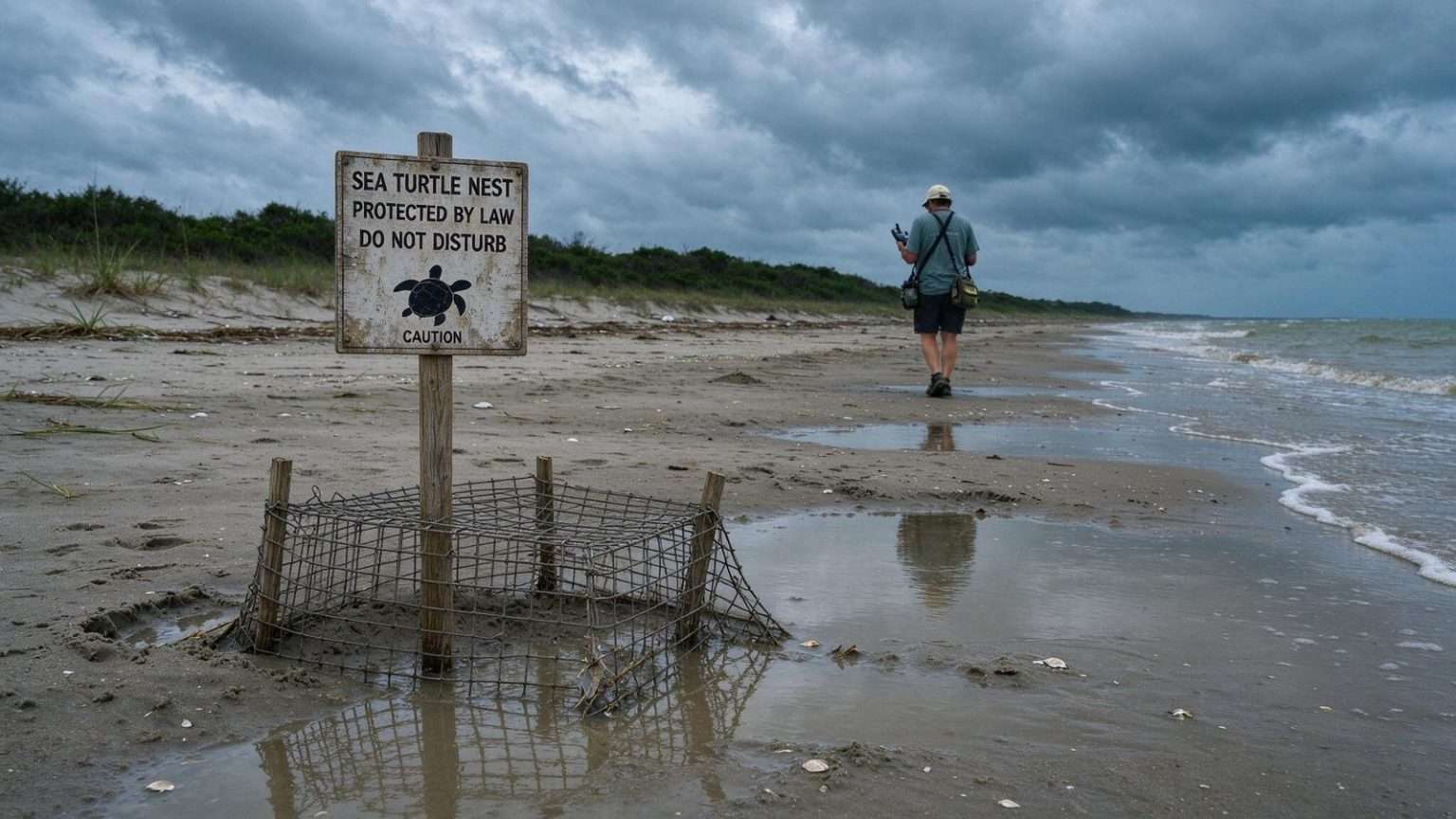
Tropical Storm Bertha’s surge left a significant mark on sea turtle nesting sites along Alabama’s Gulf Coast beaches this week, with photos showing most, if not all, of the tracked nests submerged in water. The flooding renewed long-standing concerns among coastal biologists about how vulnerable the state’s turtle nests are when storms push the Gulf over the beach during the heart of nesting season.
Share the Beach, the volunteer organization that monitors sea turtle nests along the Alabama coast, said there are currently 72 known nests spread across the state’s beaches. The group’s volunteers and team leaders walked the sand in the days after the storm passed, photographing each marked site and recording how much of each nest had been overtaken by water. The images they shared showed nests that are normally high and dry sitting in standing water or partially scoured away by the retreating surf.
Despite the storm’s impact, the organization reported some encouraging signs alongside the damage: volunteers discovered at least two new nests during their post-storm surveys, along with turtle tracks found high in the dunes, suggesting some nesting turtles instinctively sought higher, safer ground before the storm hit. Those tracks — the distinctive paired marks a female loggerhead leaves dragging herself up the beach — told researchers that at least some turtles climbed well past the usual nesting line, laying their clutches above the reach of the surge.
Officials with Share the Beach said they plan to use GPS coordinates recorded for each nest to guide excavation efforts at as many locations as possible, with the goal of rescuing viable eggs and any surviving hatchlings that were affected by the flooding. Because every nest the group monitors is located and logged with GPS when it is first found, crews can return to the exact spot even if the storm erased the surface markers, wire cages, and warning signs that normally identify a nest.
Why flooding is so dangerous for a clutch of eggs
Sea turtle nesting season along the Alabama Gulf Coast typically runs from May through October, with loggerhead sea turtles making up the majority of nests on local beaches. A nest laid in early summer is still underground during the peak of hurricane season, which means an entire two-month incubation period spent at the mercy of the weather. Bertha’s timing was especially unwelcome because so many of the season’s clutches were in their final weeks, close enough to hatching that excavation crews hope to recover healthy, developable eggs.
Female turtles return to the same general stretch of coastline where they hatched to lay their eggs, burying them in the sand where they incubate for roughly two months before hatching. This natal homing is what makes the Alabama coastline a generational nesting ground: the turtles now coming ashore are, in many cases, the daughters and granddaughters of turtles that hatched on these same beaches decades ago. Losing a season’s clutches to a storm does not erase the population on its own, but it removes an entire year’s contribution from the beaches those turtles will keep returning to.
Because nests sit close to the surface, storm surge and beach erosion pose one of the biggest natural threats to a successful hatch. A clutch is typically buried less than two feet down in loose sand, close enough that prolonged flooding saturates the egg chamber and deprives developing embryos of the air pocket they need. Standing water can also cool the nest below the temperatures that determine hatchling sex ratios, and heavy erosion can dump a clutch into the surf weeks before the hatchlings inside are ready to emerge.
That is why excavation matters so much after a storm. When trained teams dig into a flooded nest within the right window, they can pull out eggs that are still viable and relocate them to drier sand, or free hatchlings that have already developed and are simply trapped in a waterlogged chamber. Left alone, a fully submerged nest frequently fails to produce a single emerging hatchling; dug promptly, it can still yield a meaningful share of the original clutch.
How the monitoring network works
Share the Beach relies on a network of trained volunteers who patrol Alabama’s beaches each morning during nesting season to locate and mark new nests, and the group works closely with coastal cities and Alabama wildlife officials to protect nesting sites from both storms and human disturbance. The morning patrols follow a practiced routine: volunteers walk the beaches at dawn looking for fresh crawls, verify that a turtle actually nested rather than making a false approach, stake and sign the site, and record its coordinates before the day’s foot traffic can erase the evidence.
The organization’s work continues through the summer. Volunteers monitor each nest for signs of the depression and tracks that signal an emergence, count hatched and unhatched eggs when a nest is excavated after hatching, and help stragglers that emerge during the day reach the water. During storm threats, the coordination with municipal public works departments and state wildlife biologists becomes especially important, since decisions about which nests to dig, which to leave, and how to handle recovered eggs require permits and trained hands.
The two new nests found after Bertha passed were a reminder that the nesting season continues regardless of the weather. Female turtles come ashore roughly every two weeks during a season to lay multiple clutches, so the beaches will keep receiving new nests into the late summer even as storm systems come and go. The tracks found high in the dunes gave volunteers particular confidence that some turtles had made sound choices about where to deposit this season’s eggs.
The law protects what is left on the beach
Sea turtles are protected under state and federal law, and disturbing a nest or hatchlings can carry legal penalties. All sea turtle species that nest on the Alabama coast are listed as threatened or endangered under the Endangered Species Act, which means touching a nesting female, digging into a nest, or handling hatchlings without authorization is a federal offense as well as a violation of state wildlife rules. The restrictions extend to beach practices that disorient hatchlings, including artificial lighting that draws emerging turtles away from the Gulf instead of toward it.
For beachgoers, the post-storm period calls for extra care. Nests that were marked before Bertha may now be harder to spot, with cages and stakes knocked down or buried, and hatchlings can emerge at unexpected times from disrupted nests. Volunteers ask visitors to fill in holes they dig, knock down sandcastles before leaving, remove chairs and umbrellas at night, and never shine flashlights or phone lights on the beach after dark during hatching season.
Residents who spot turtle tracks, a nesting female, or hatchlings wandering away from the water are encouraged to keep their distance and report the sighting to Share the Beach or state wildlife officials rather than intervening. Unauthorized relocation of eggs, however well intentioned, can destroy a clutch that trained crews would have saved.
With 72 nests still on the books and excavation crews working from their GPS logs, Share the Beach says the season is damaged but not lost. The next several weeks will show how many of Bertha’s victims can be recovered — and how many of the turtles that climbed to safety in the dunes turn out to have beaten the storm on their own.
The GPS-based excavation plan also highlights how much sea turtle conservation has changed in the decades since nest monitoring began on the Alabama coast. Early volunteer programs marked nests with little more than stakes and flags, and a storm that erased the markers effectively erased the nest. Modern programs log precise coordinates for every nest the moment it is found, photograph the site, and keep season-long records that allow crews to work efficiently even after a storm has reworked the entire beach profile.
What comes next for the 72 nests
In the days ahead, Share the Beach teams will prioritize nests based on their stage of development and how completely they were flooded. Nests that were days from hatching get the most urgent attention, since hatchlings in a waterlogged chamber can survive briefly but will drown or exhaust themselves if they cannot dig out. Nests that were submerged early in incubation face a harder prognosis, because saturated sand chokes off the gas exchange that developing embryos depend on over the long weeks before hatching.
The decision of whether to excavate, relocate, or leave a nest alone is not made casually. Federal and state permits govern the handling of protected sea turtle eggs, and moving a clutch carries its own risks — embryos can be damaged by rotation or jostling, and relocated nests hatch less reliably than undisturbed ones. That is why the work falls to trained, permitted volunteers and biologists rather than well-meaning beach visitors, even when a nest’s situation looks desperate from the boardwalk.
The group’s post-storm surveys will also feed the longer record that researchers use to understand storm impacts on nesting success along the northern Gulf Coast. Storm seasons arrive every year, and the data from each flooded season helps biologists refine guidance on where and how nests are marked, when relocations are justified before a storm rather than after, and which beach segments consistently produce nests that survive.
For now, the count stands at 72 known nests, at least two new nests added after the storm, and excavation crews preparing to work from GPS coordinates across the length of the Alabama coast. Volunteers say the season’s outcome now depends on how much of the damage can be undone before the remaining clutches run out of time.