Tuberville Doubles Down on Return-on-Investment Message, Singles Out Gender Studies at Alabama Colleges
At the Albert Patterson Gala, Gov.-elect Tommy Tuberville said a four-year degree isn't for everybody and criticized gender studies and sociology degrees, putting programs at UA, Auburn and South Alabama in focus.
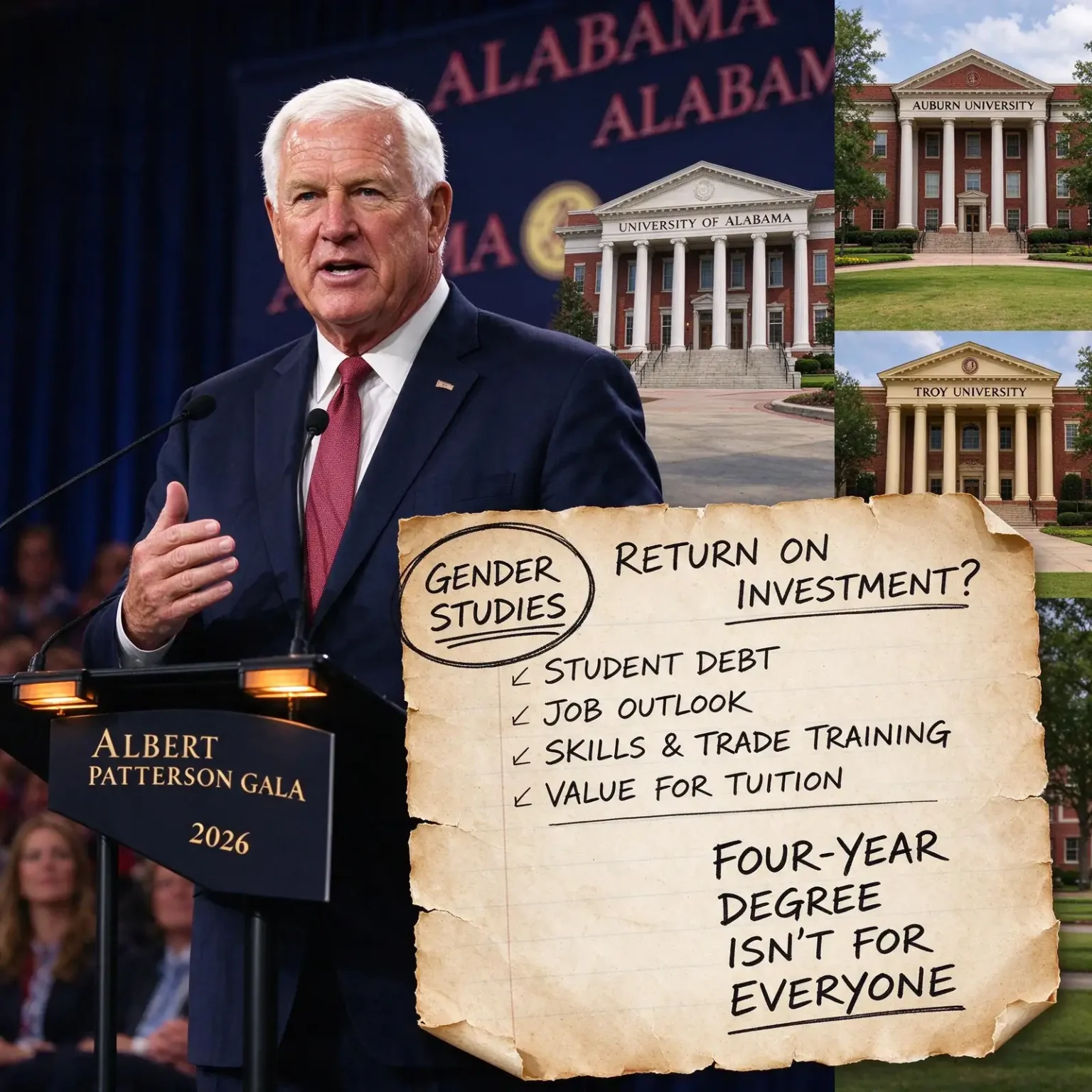
LEEDS, Ala. — Gov.-elect Tommy Tuberville is renewing his call for Alabama’s colleges and universities to take a hard look at what students get for their tuition, singling out gender studies and sociology degrees in remarks at the 2026 Albert Patterson Gala and naming the University of Alabama, Auburn University and Troy University as schools that contacted him after he raised the issue during the campaign.
Tuberville, who will take office in January after winning the Nov. 3 governor’s race, said he is not retreating from comments he made before the election questioning whether a four-year degree is the right path for every student. His remarks put a spotlight on a debate that has been building in Montgomery for several years over the cost of higher education, workforce training and the content of some university programs.
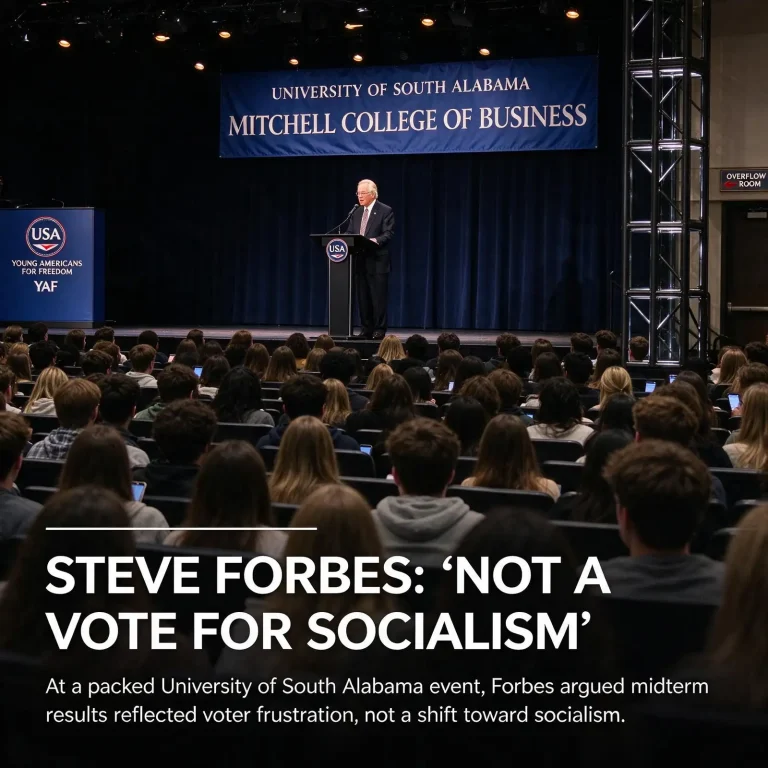
The governor-elect’s comments also drew attention to the gender studies programs offered at public universities across Alabama, including the University of South Alabama in Mobile.
What Tuberville Said
Speaking to gala attendees, Tuberville framed his concern around return on investment for students and their families. He said universities reached out to him after he raised the subject on the campaign trail.
He said people need to understand that a four-year degree isn’t for everyone, recalling that before the election, representatives from Alabama, Auburn, and Troy called him questioning his statement that kids don’t need to attend a four-year school, and he maintained they don’t.
He then pointed to specific fields of study.
He told attendees that if a school teaches gender studies, he doesn’t want his child there, and he doesn’t want a sociology degree costing a hundred thousand dollars. He said parents spend or borrow a hundred thousand dollars for a degree, yet graduates can’t get a job at Walmart, and urged stopping that nonsense, emphasizing teaching kids to work and use their hands.
The “Coach” reference is a reminder of Tuberville’s long career in college football before politics, including 10 seasons as Auburn’s head coach. He went on to serve one term in the U.S. Senate before running for governor. His emphasis on skilled trades and alternatives to a four-year degree has been a recurring theme of his campaign and transition.
A Debate Already Under Way in Montgomery
Tuberville’s comments arrive in a state where lawmakers have already acted on some concerns about university programs. In 2024, the Legislature passed and Gov. Kay Ivey signed SB129, a law that restricts diversity, equity and inclusion offices at public universities, schools and state agencies and bars them from requiring students or employees to affirm a list of what the law calls “divisive concepts.” The law does not prohibit faculty from discussing those subjects in academic instruction.
Some lawmakers have pushed further. Last November, state Rep. Susan DuBose, R-Hoover, called for each university to end funding for gender and women’s studies programs. Gender studies programs at Alabama universities have continued to operate, and several remain listed in university catalogs.
Supporters of those programs and of liberal arts education more broadly have generally argued that such courses teach critical thinking, research and writing skills and help students understand history and society. Universities describe the programs as interdisciplinary, often offered as minors that complement a student’s primary major rather than as stand-alone degree tracks.
Gender Studies at the University of South Alabama
The University of South Alabama offers a minor in Gender Studies through its College of Arts and Sciences. The university describes the program this way:
The Gender Studies program at the University of South Alabama is described as an interdisciplinary program within the College of Arts & Sciences, comprising students, teachers, and researchers focusing on gender, sexuality, and gender identity dynamics. The minor offers a wide range of courses across humanities, social sciences, and natural sciences.
The program description calls gender studies the perfect complement to any major, stating that examining how gender intersects with race, class, ethnicity, and sexuality gives students a broader and deeper understanding of cultures and societies.
Course offerings connected to the program include:
- Solidarity and Social Change, a three-hour course described as exploring ways to fight injustice and dismantle systemic oppression, and offering a framework for activism.
- Black Women and Activism, a three-hour, fully online course that, according to its description, addresses the need to recognize and validate contributions made by Black women from the late 19th century to the present, drawing on womanist and feminist theory.
- Contemporary Social Movements, which the course description says will examine the #MeToo Era, Black Lives Matter, and Woke Movements, and how gender, race, and sexuality intersect with those protests.
Programs at Auburn and the University of Alabama
Auburn University, where Tuberville coached, offers undergraduate and graduate minors in Women and Gender Studies. One course in the program drew attention in reports last November for its assigned readings, which included a 2007 ethnography by sociologist C.J. Pascoe about masculinity and sexuality among high school students, whose title includes an anti-gay slur, and the sociology textbook “Gender: Ideas, Interactions, Institutions,” now in its second edition.
The textbook includes the story of Thomas Beatie, a transgender man who drew national attention in 2008 when he became pregnant; the book notes that Beatie made headlines when he became pregnant with the first of three children. Critics cited the passage as an example of the program’s direction.
At the University of Alabama, the Department of American Culture & Society houses programs in Women’s Studies, African American Studies, American Studies and Sociology. Through the Department of Gender and Race Studies, known as Women’s Studies until November 2009, students can earn a minor in Women’s Studies, a graduate certificate or a Master of Arts in Women’s Studies.
Students pursuing the master’s degree must take two of four core courses:
- WS 503, Teaching Gender & Race (3 hours)
- WS 530, Feminist Theory-Contemporary (3 hours)
- WS 535, Black Feminism (3 hours)
- WS 550, Intro to Women’s Studies (3 hours)
Programs Elsewhere in Alabama
Several other public universities in the state also offer gender or women’s studies coursework, largely as minors.
The University of Alabama at Birmingham offers an interdisciplinary minor through its Women’s and Gender Studies Program, which the university says provides a cross-cultural, feminist understanding of gender and sexuality from the home to the global arena, along with a critical investigation of standard academic discourses. Courses at UAB include Racism, Sexism and Other Isms; Human Sexuality; LGBT History; Gender, Politics, & Policy; and Gendered Lives: Sociology of Sex and Gender.
The University of Alabama in Huntsville offers a minor in Women’s, Gender, and Sexuality Studies. According to the university, the program promotes social awareness of women’s issues and issues important to gender and sexual minorities in the Huntsville and North Alabama communities through guest speakers and theater, art, music, and literary events. Classes include Intro to Women’s, Gender, and Sexuality; Gender & Sexuality in Latin America; and Intro to Ethics and Nonverbal Communication.
The University of North Alabama offers a Women’s Studies minor, described as a multi-disciplinary program that places women at the center of inquiry, giving students the chance to explore the relationship between theory and practice and to celebrate the achievements and contributions of women worldwide and in all fields of study.
What It Could Mean Going Forward
As governor, Tuberville will not directly control university curricula. Alabama’s public universities are governed by their own boards of trustees, and the governor serves as president ex officio of several of those boards, including those of the University of Alabama System and Auburn University. The governor also proposes the state’s education budget each year, which the Legislature then debates and approves, giving the office significant influence over higher education funding.
Tuberville did not outline a specific policy proposal on gender studies or sociology programs in his gala remarks. His comments signal that questions about the value of certain degrees, the cost of college and the role of technical and trade training are likely to remain part of the conversation when the Legislature convenes in 2027 under a new governor.
For families in the Mobile area weighing college options, the University of South Alabama, Bishop State Community College and Coastal Alabama Community College offer a range of four-year, two-year, certificate and workforce training programs. Students and parents can compare program costs, graduation rates and post-graduation earnings through the U.S. Department of Education’s College Scorecard website.