Tuberville Says He Backs Police ‘One Hundred Percent’ but Wants Alabama Rules on Flock Cameras
U.S. Sen. Tommy Tuberville says he backs Alabama law enforcement's use of Flock cameras but wants rules on the technology written by Alabamians, not the company that makes it.
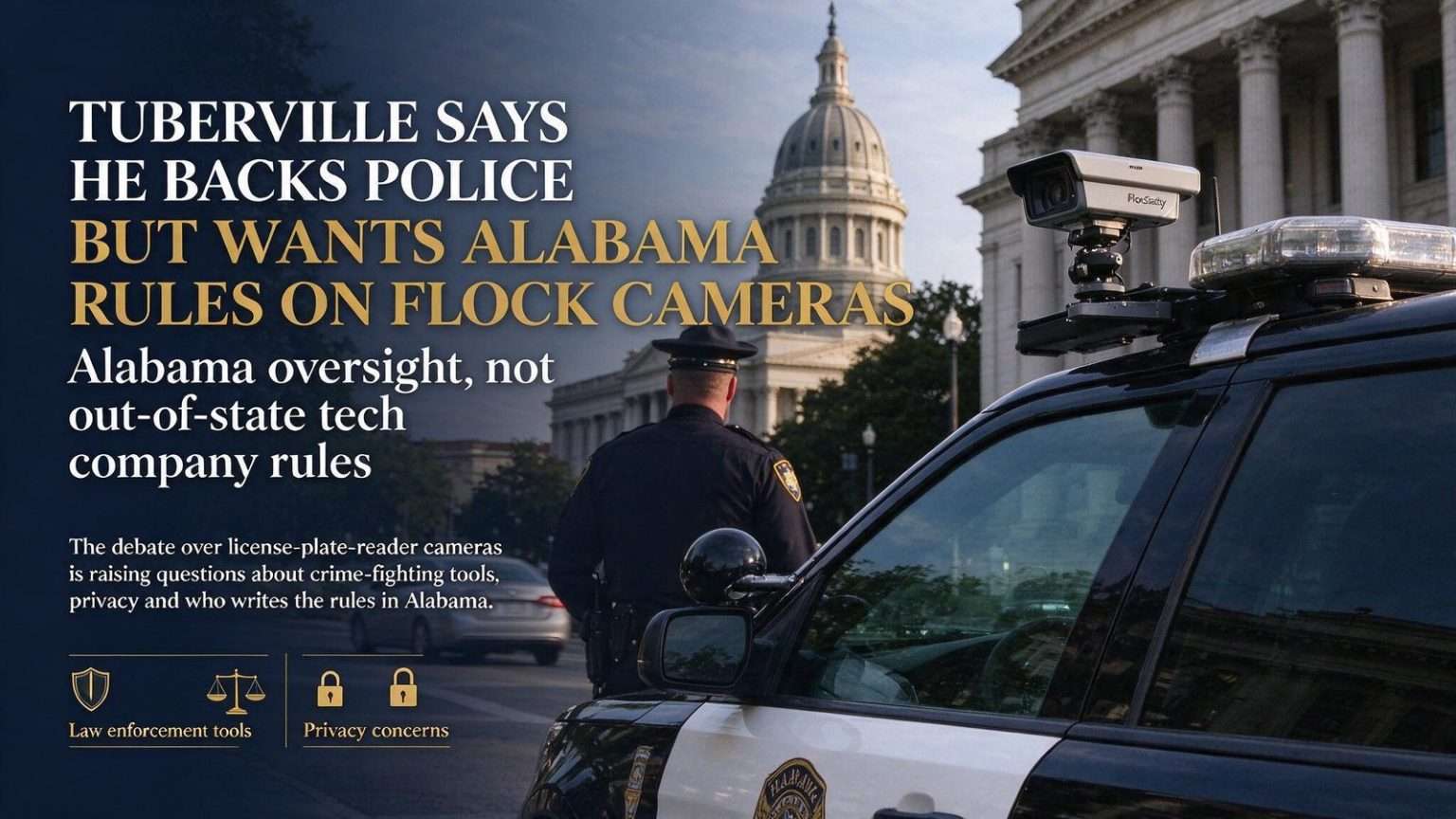
U.S. Sen. Tommy Tuberville says he fully supports Alabama law enforcement having access to the tools they need to fight crime, but he is raising questions about how Flock Safety cameras are being deployed and regulated across the state. Tuberville addressed the debate Thursday, Aug. 20, telling reporters that any technology as powerful as the license-plate-reading camera network needs oversight written by Alabamians, not dictated by an out-of-state technology company. "I back our law enforcement one hundred percent, and I want them to have every tool they need to catch criminals and bring people home safely," Tuberville said. "But I understand why some Alabamians have real privacy concerns about these cameras." "A tool this powerful needs rules written by Alabamians, not by a tech company in Atlanta," he continued.
"We should be able to track and prosecute criminals while protecting our citizens."
What Are Flock Cameras?
Flock Safety's automated license plate reader cameras are used by an estimated 7,000 law enforcement agencies nationwide, including numerous departments across Alabama. The devices photograph passing vehicles and their plates, allowing officers to search for cars connected to crimes, Amber Alerts or other investigations. Supporters say the network has helped police departments make faster arrests, while critics argue the always-on surveillance raises serious constitutional and privacy questions. The debate has intensified in recent weeks after a national investigation identified instances in which the technology was abused, prompting Alabama residents to press local governments for answers. Multiple law enforcement officers in the state have already been disciplined after allegedly misusing the camera system.
Residents Voice Privacy Concerns
At a recent local meeting, Gulf Shores resident Vicki Brown was among the Alabamians who pushed back on the cameras' growing footprint. "Do you want cameras watching you, your grandchildren, every day?" Brown said. "We are being subjected to an intrusion of our privacy."
Other Alabama Leaders Weigh In
Tuberville isn't the only Alabama political figure grappling with the issue. Doug Jones, the Democratic candidate for governor, said he does not believe the state needs to ban the technology outright but acknowledged concerns about how it could be misused. "Those systems are only as good as the people that are running or have access to them," Jones said.
Republican Alabama Auditor Andrew Sorrell has also raised concerns, saying on social media that the cameras conflict with constitutional protections against unreasonable searches and seizures. Other state lawmakers have begun asking similar questions as the technology's use expands across Alabama communities. As the debate continues, Tuberville's comments suggest any future guardrails on the camera network are likely to be shaped by state-level decision-making rather than by the company that manufactures the systems.
How other states regulate plate readers
A number of states have written their own rules for automated license plate readers. New Hampshire, which has the strictest law, requires plate images captured by police readers to be purged within three minutes unless they lead to an arrest, a citation or protective custody, or match a vehicle in a missing- or wanted-person broadcast. Maine limits the use of the systems to certain public safety purposes and bars keeping the data for more than 21 days.